Cat Care Guide
Can Dogs and Cats Share Water Bowls, Beds and Brushes?
Short answer
Mostly, yes: a healthy dog and cat can share water bowls, beds, cooling mats and brushes, cleaned between pets. Food, the litter box and most toys stay separate; pets take turns with lick mats and carriers. Pause sharing during illness, fleas or skin problems, and ask your vet if the dog’s flea treatment is safe around cats.
What to share and what to keep separate, at a glance
One rule sits behind every row: sharing should be clean and optional. Neither pet should have to get past the other to drink, eat or rest, and anything that touches a mouth, a coat or skin gets cleaned before it changes hands.
| Item | Share? | What makes it work |
|---|---|---|
| Water bowl | Usually | Wash daily; add a bowl only the cat can reach |
| Food bowls and meals | No | Feed apart; the cat eats up high or behind a gate |
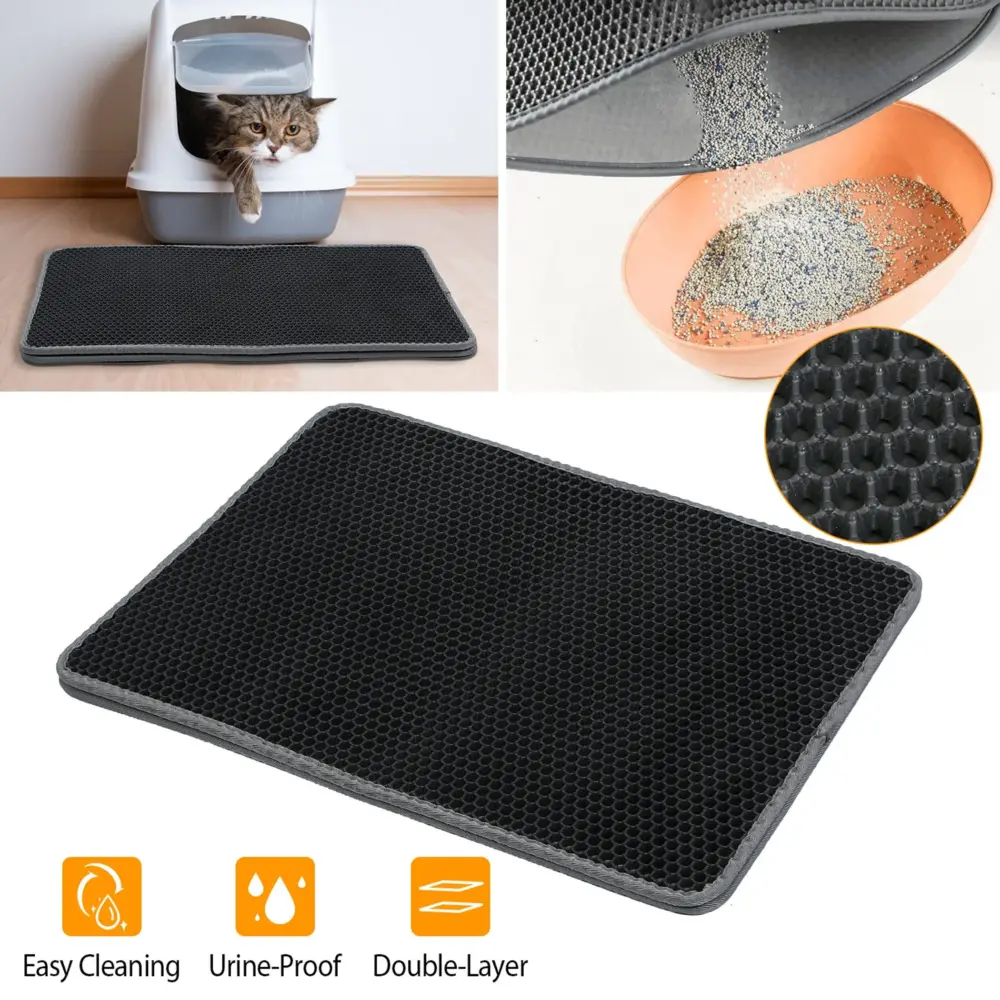
| Litter box | No | Place it where the dog can’t get in |
| Beds and cooling mats | Yes, by choice | Each pet also has a spot of its own |
| Lick mats | One at a time | Wash between pets, or one mat each |
| Brushes and nail grinders | Yes | Match the coat; clean between pets |
| Carriers | Not at once | One pet per carrier; wash the pad between |
| Toys | Rarely | String, small and battery toys stay with the cat |
How much they can share also depends on the pair: a dog and cat who already nap back to back can share more than two still sorting out the house rules. With more than one cat, the counting rule in our multi-cat household setup guide applies on top.
Shared water bowls, and why a cat may want its own
A shared water bowl is usually fine for healthy pets who don’t squabble over it. The problems are mostly practical: dogs drink in sloppy laps, leave crumbs and drool behind and can drain a bowl in one go, and the bowl tends to sit on the dog’s side of the kitchen, where a cat may not want to stand with her back to him.
Cats are pickier drinkers, too. International Cat Care’s advice on encouraging a cat to drink notes that cats prefer not to drink next to their food and like a wide, full bowl that their whiskers don’t brush. So a cat may happily drink from a wide dog bowl that’s kept clean, yet refuse one parked beside the dog’s dinner. For the bowl styles and spots that get a cat drinking, see how to get a cat to drink more water.
- Keep the shared bowl if it works, but add at least one only the cat can reach: on a counter, a windowsill, a cat tree platform or behind a baby gate.
- Set the cat’s water apart from her food and the litter box, in a wide, shallow bowl.
- Wash and refill every bowl daily. Our guide to how often to wash dog bowls covers the slimy film, the dishwasher and cat bowls.
- Check the shared bowl at bedtime, since a thirsty dog can leave it nearly empty overnight.
If either pet suddenly drinks much more or less than usual, tell your veterinarian.
Food, mealtimes and the litter box: keep them separate
Food is the one thing dogs and cats shouldn’t share, for nutrition as much as manners. The AKC’s article on dogs eating cat food explains that cat food is much higher in meat-based protein, and that a regular habit of it can lead to stomach upset, obesity and pancreatitis in dogs, while dog food lacks enough taurine and vitamin A for a cat. A stolen mouthful now and then probably won’t harm your dog; daily access to the cat’s bowl is the problem.
- Feed at set times instead of leaving food out. A cat that grazes leaves a bowl the dog will find.
- Give the cat a dining spot the dog can’t reach: a counter, a sturdy shelf, a cat tree, or a room behind a gate or a closed door.
- Feed the dog at the same time, somewhere else, so he’s busy with his own bowl.
- Pick up bowls when the meal ends, wet food above all.
- Keep special diets apart. If either pet eats a prescription food or takes medicine in a meal, separate feeding is the only way to know the right pet got it.
The litter box is the cat’s alone
Many dogs raid the litter box, and the AKC’s article on why dogs eat cat poop warns that they can pick up internal parasites and harmful bacteria from it. Put the box where the dog can’t reach it, such as behind a baby gate the cat can jump or slip through, or try a covered or top-entry box, as long as your cat still uses it happily.
Beds, cuddlers and cooling mats
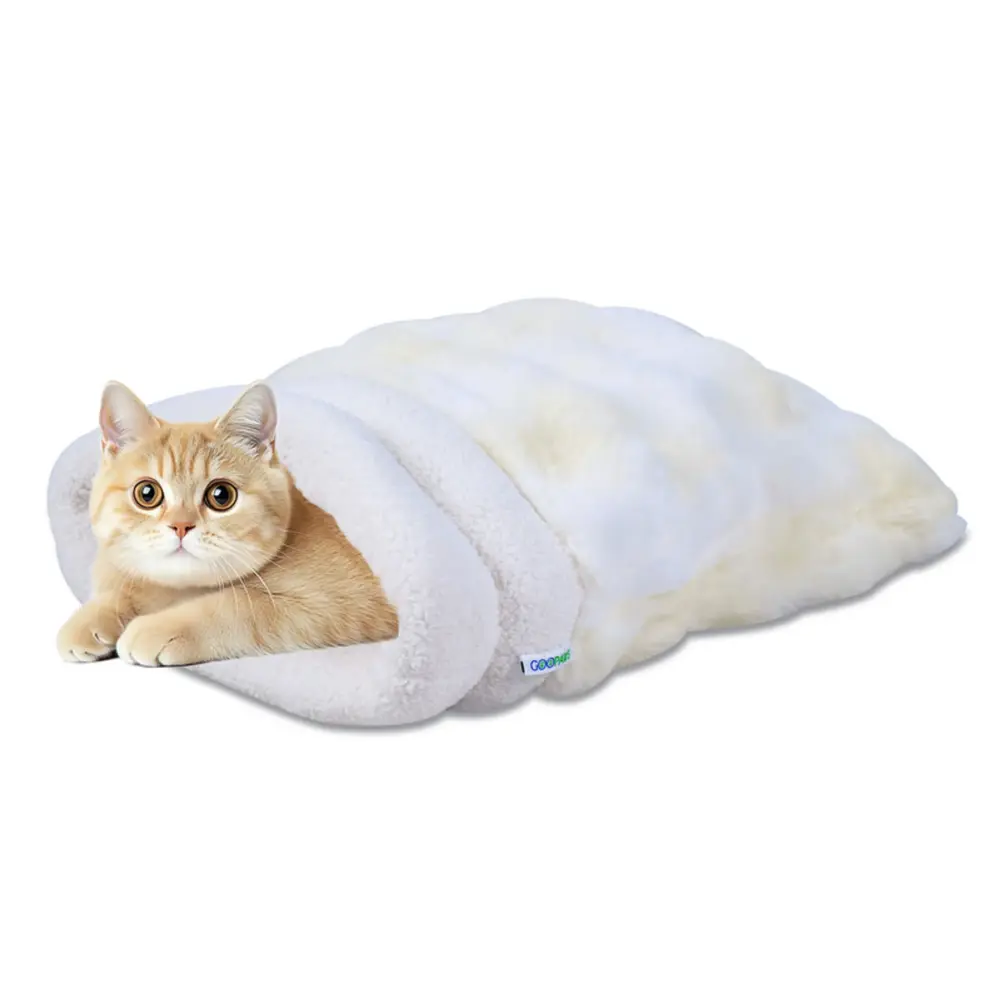
Plenty of dogs and cats nap curled up together, and a shared bed is fine when both chose it. The catch is that the dog usually wins any dispute over space, and some dogs guard favorite resting spots the way others guard food. So beds follow the water rule: share if they want to, but each pet also gets a place that’s only theirs.
- Put a cat bed up high. The AKC’s advice on helping dogs and cats live together includes shelves or tall cat trees for escaping unwanted canine attention, plus a permanent dog-free space with the cat’s own bed, water and litter box.
- Size the dog’s bed to the dog. A big dog folding himself into the cat’s bed usually wants a bed in that spot; give him his own there.
- Wash shared bedding more often, since it collects two coats’ worth of hair and dander. Follow the care label.
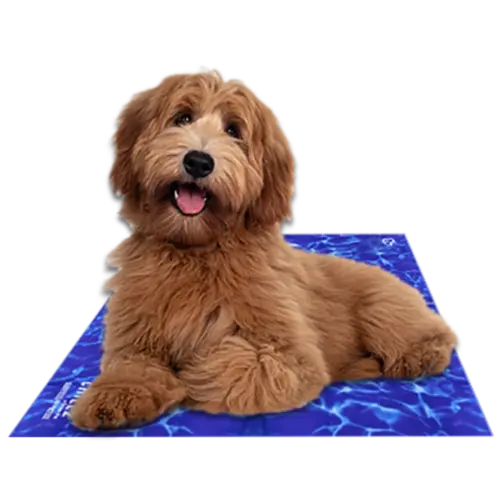
Two of the beds and mats we stock are sold for both species. The Armarkat cuddler is a plush, rimmed bed for cats and small dogs, so it only works as a shared bed if your dog is genuinely small; next to a larger dog, it’s the cat’s bed. The Chillz gel mat is easy to pass between pets on a hot day, but take it away from any pet that starts mouthing or digging at it.
Lick mats: one pet at a time, washed between
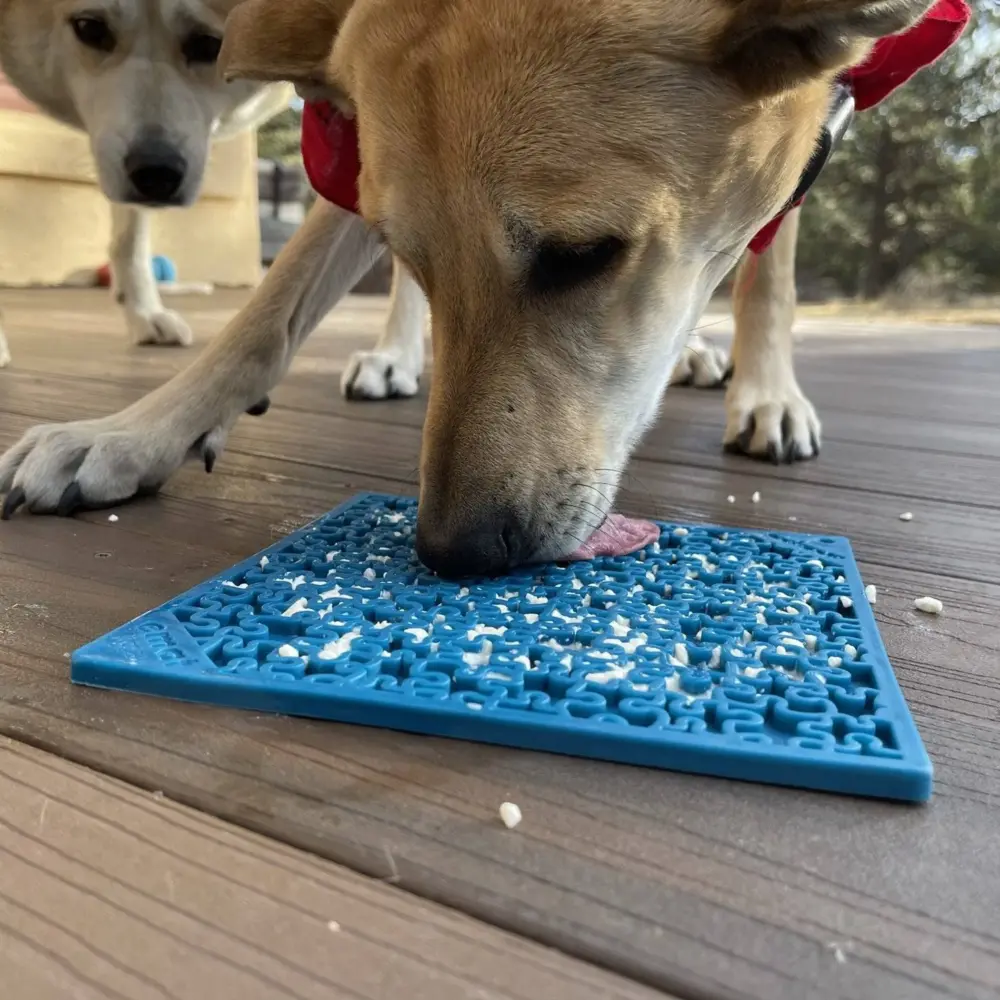
A lick mat can belong to the whole household, just not at the same moment. Put a dog and a cat at one mat and the dog finishes the cat’s share. The food differs too: xylitol-free peanut butter or banana on the dog’s mat doesn’t fit a cat’s meat-based diet, and the cat’s wet food isn’t an everyday dog snack.
- Serve each pet separately, in different rooms or with the cat up on her own surface.
- Wash the mat before it changes hands, rinsing it as soon as the first pet walks away, before food dries in the grooves.
- Stay nearby, and take the mat from either pet that starts chewing it.
- Count the spread as food, part of that pet’s daily intake rather than a free extra.
For spreads that suit each species, and how to freeze a mat for a longer session, see what to put on a lick mat.
These picks are limited to Nilosi’s own catalog, and each is sold for cats as well as dogs:
-
Armarkat
Ultra-Plush Cuddler Bed for Cats & Small Dogs, Choose size
Price range: $55.95 through $72.95
Why it fits: A shared bed only if your dog is truly small: made for cats and small dogs, the Small is 22 x 22 x 8 in, and it machine washes on a gentle cycle.
-
The Green Pet Shop
Chillz Cooling Gel Mat for Dogs & Cats, View product
$45.95
Why it fits: Sold for dogs and cats, it cools under pressure with no water, ice or power; wipe it with a damp cloth before the other pet takes a turn.
-
SodaPup
Jigsaw Enrichment Lick Mat for Dogs & Cats, Choose color
$25.95
Why it fits: Sold for dogs of all sizes and cats, made in the USA and dishwasher safe; the green and pink colors make it easy to keep one mat per pet.


Brushes, de-shedding tools and nail grinders
Grooming tools are the easiest things to share, because you choose them by coat, not species. A slicker brush suits medium to long hair on a collie or a long-haired cat alike, and a de-shedding tool is for double coats on either animal. If your dog and cat have similar coats, one tool serves both; if not, a second tool beats using the wrong one. Our comparison of the slicker brush and the deshedding tool explains which does what.
Cleaning a brush between pets
- Pull the hair off the pins or edge as soon as you finish with the first pet.
- Now and then, and always after a muddy or greasy coat, wash a manual brush in warm, soapy water, working an old toothbrush between the pins. Wipe a rechargeable mist brush or grinder instead of soaking it.
- Rinse it and let it dry completely before the next pet.
- Give a pet with a skin problem its own tool until your veterinarian says it has cleared.
Go lighter on the cat, and stop while she’s still relaxed. For a cat and a short-haired dog, the 3-in-1 mist brush is sold for exactly that pair; refill its small tank with clean water each session.
Nail grinders
A grinder shares well, too. The one we stock has a guard with openings sized for dogs, cats, rabbits and other small pets, and two speeds for small and large nails; start a cat on the lower one. Brush the nail dust out of the guard and grinding head between pets, and do each pet in its own session so neither waits through the noise.
Again limited to what we stock, these tools are each sold for dogs and cats:
-
Sakabase
Curved Slicker Brush, View product
$39.95
Why it fits: One brush for a dog and a cat who both have medium to long hair; pull the hair off the pins before you switch pets, and wash it now and then.
-
JESPET
De-Shedding Tool for Dogs & Cats, Choose size
Price range: $27.95 through $29.95
Why it fits: Made for double-coated dogs and cats, so one tool can serve a dog and a cat who both shed undercoat; clear the steel edge between pets.
-
Quiet Rechargeable Pet Nail Grinder, View product
$50.95
Why it fits: Its guard has openings sized for dogs, cats and small pets, with two speeds; brush the nail dust out of the guard before the next pet.



Carriers and travel gear
A carrier can be shared over time but never at once: one pet per carrier, every trip. Zipped in together, a dog and a cat can’t get away from each other.
Smell matters, too. International Cat Care’s advice on taking your cat to the vet says a cat is less stressed when her carrier smells familiar, and suggests washing the carrier bedding afterward to remove clinic smells. By the same logic, if the dog rode in it last, wash the pad and wipe the inside before the cat’s turn, then add some of her own bedding.
The Armarkat soft-sided carrier is made for cats and small dogs, so one carrier can handle vet trips for both in turn; if you fly, check your airline’s size limits first. A car seat cover or hammock can protect the seat for both pets, but it isn’t a restraint: the cat still rides in her carrier and the dog in his own restraint.
Toys that don’t cross species safely
Toys need the most care, because each species’ toys can be risky for the other.
- Wands, string, ribbon and feathers. VCA’s guide to cat play and toys says never to leave a cat alone with a wand toy, since cats can get tangled or swallow the string. A dog can chew one apart just as fast, so put wands away, out of both pets’ reach, after every session.
- Small balls and toy mice. A toy sized for a cat can be small enough for a dog to swallow or choke on. Pick them up whenever the dog is loose.
- Battery-powered cat toys. A motion-activated rolling ball is for the cat only. Batteries are dangerous if chewed or swallowed, so put it away when the dog could reach it.
- Torn dog toys. A plush the dog has opened leaves stuffing and a squeaker either pet could swallow. Throw it out rather than letting the cat inherit it.
Play itself can be shared with care. A cat’s chase game can turn into the dog chasing the cat, so play with them separately, or keep the dog behind a gate or settled on his bed while the cat plays.
When to keep everything separate
Everything above assumes both pets are healthy. Some common problems pass easily between a dog and a cat: fleas through shared beds and bedding, ringworm spores on brushes, bowls and bedding, and some intestinal parasites through the litter box.
- Ringworm or another skin problem. Ringworm is a fungal infection, not a worm, and VCA’s guide to ringworm in cats notes that its spores can stay dormant for up to 18 months on combs, brushes, food bowls and bedding. It can spread to people, especially children. If your veterinarian diagnoses it, separate the pets and their gear and follow your vet’s cleaning plan.
- Fleas. Fleas move freely between dogs and cats, so if one pet has them, assume the other does too. Treat every pet in the house with a product your veterinarian recommends for that species, and wash the bedding in hot water or replace it.
- Vomiting, diarrhea, coughing or any new illness. Give the sick pet its own bowls and bedding, and ask your veterinarian whether the other one should be kept apart, and for how long.
- A new puppy, dog or cat. Start with nothing shared: the newcomer gets its own bowls, bed and room, and sharing comes later, once both are relaxed together. Our guide to introducing a puppy to a cat covers those first weeks, and the AKC advises not leaving a new pair alone until you’re sure how they get on.
Safety note
Dog flea products can poison cats. Permethrin, used in some flea products for dogs, is highly toxic to cats, and International Cat Care’s page on permethrin poisoning warns that a cat can be poisoned simply by rubbing against a recently treated dog or sitting on the same furniture. If you use a permethrin product on your dog, it advises keeping the two apart for 72 hours, shared beds included. Never use a dog’s flea product on a cat, and if your cat has touched a freshly treated dog or starts trembling, twitching or walking unsteadily, call your veterinarian right away.
Related guides
-
Buying guide
Gifts for Senior Dogs and Cats: Warmth, Gentle Care and Easy Outings
Gifts that make life a little easier for an older dog or cat, chosen from our catalog: warm beds for cats and small dogs, a gentle brush for older coats, a lick mat, a cooling mat for warm sleepers and a backpack for small seniors who tire, plus what to skip and what needs a vet.
-
How-to
How to Groom a Senior Dog at Home: Brushing, Nails and Lump Checks
Many older dogs tire of standing, and shorter walks wear their nails down less. Here is how to set up a comfortable spot, brush gently by coat type, keep nails short, clean up between baths, check for lumps as you go and know when a groomer or veterinarian should take over.
-
Buying guide
Practical Gifts for Cat Owners: Litter, Shedding, Nails and Vet Trips
Useful gifts that take work off a cat owner's list: a trapping mat for tracked litter, a mist brush or slicker for shedding, a rake for hair in rugs, a quiet nail grinder and a top-opening carrier for vet trips, plus what to find out before you buy.