Puppies & Kittens How-to
How to Introduce a Puppy to a Cat: Safe Zones and Leashed Meetings
Short answer
Before the puppy comes home, give your cat a dog-free room with its litter box, food and water, plus high perches in shared rooms. Keep them apart for a few days, then swap scents, allow sightings through a gate and hold short leashed meetings the cat can leave. Supervise all time together until both stay relaxed, which can take weeks.
What you need before the puppy comes home
Most of the work happens before pickup day, so that your cat’s setup already feels normal by the time the puppy walks in:
- A dog-free room for the cat, with its litter box, food, water, a bed and a scratcher.
- A baby gate or two that your cat can jump or slip through and your puppy can’t, or a gate with a built-in cat door.
- High places in the shared rooms, such as a sturdy cat tree, a cleared shelf or the top of a bookcase.
- A crate or playpen for the puppy, for naps and for the times nobody can watch.
- A harness and a standard leash, plus small, soft treats the puppy loves.
- Two or three soft cloths for swapping scents.
- Something calm for the puppy to do, such as a lick mat or a chew toy.
We don’t sell gates, crates, litter boxes or cat trees. The rest of the puppy’s kit is on our new puppy checklist.
Vet visits first. Book the puppy’s first exam before the meetings start, and check that your cat is up to date as well. Ask about parasite control for both, since fleas pass easily between dogs and cats. If your cat is a senior or has health problems, mention the puppy plan: a bouncy puppy is a bigger change for a stiff or unwell cat.
Safety note
Check the puppy’s flea product. Some flea treatments made for dogs contain permethrin, which is toxic to cats. International Cat Care’s page on permethrin poisoning warns that a cat can be poisoned through contact with a recently treated dog, and advises keeping the two apart for 72 hours if you use one. Ask your veterinarian for a product that suits a home with a cat.
Two picks for the cat’s zone, limited to what we stock at Nilosi; you’ll find more in our cat essentials.
-
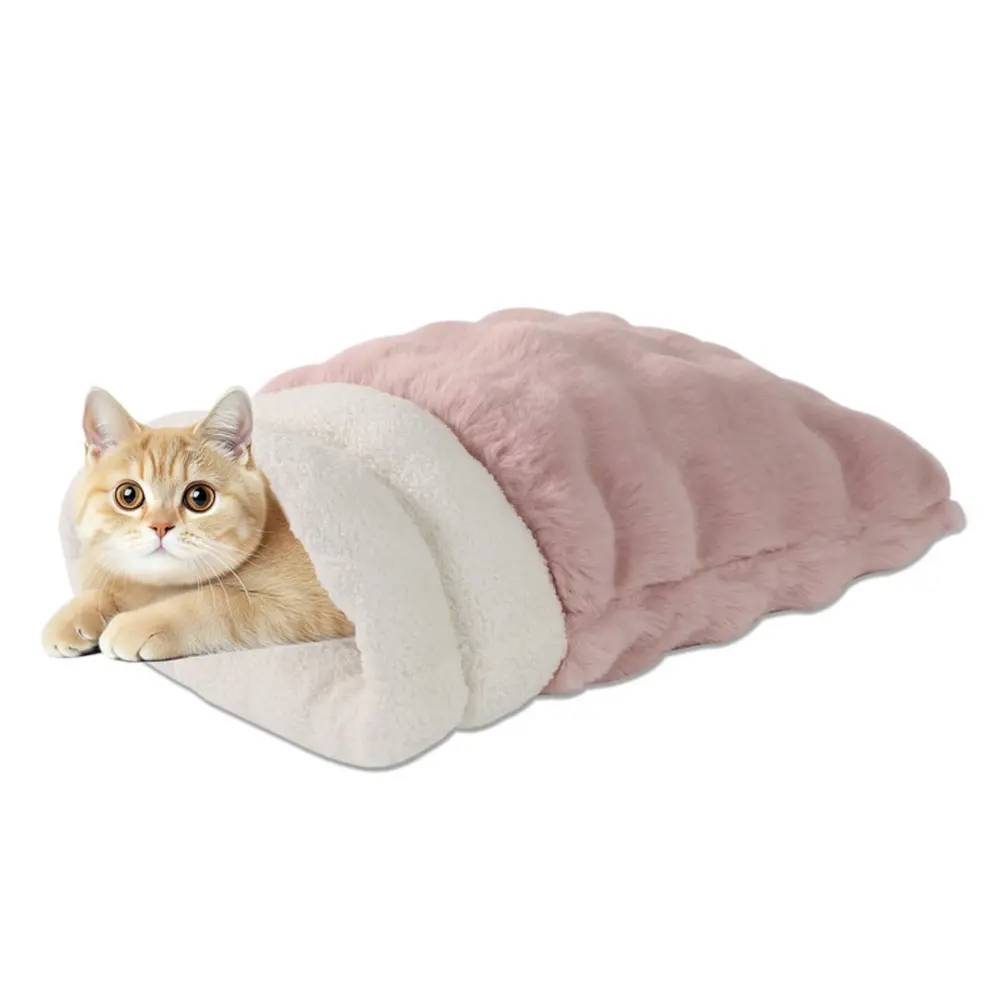
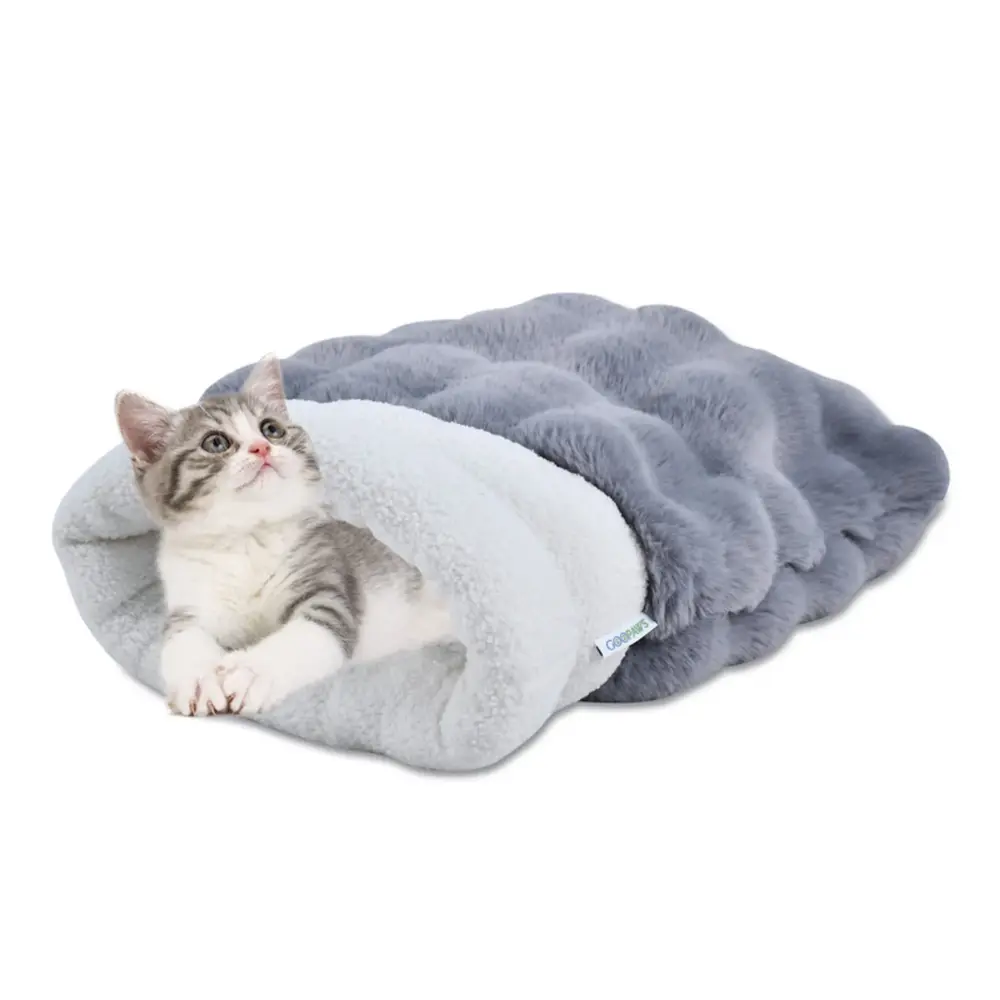
GOOPAWS
4-in-1 Self-Warming Cat Cave Bed, Choose color
$40.95
Why it fits: Gives your cat a covered hideout in its own room; set it up as a cave, then open it out into a mat once your cat relaxes.
-
Cat Scratcher Guy
Wooden Cat Scratcher with Reversible Insert, View product
$32.95
Why it fits: A scratching spot inside the dog-free room, so your cat can stretch and mark its territory there; catnip is included to draw it in.


Set up a dog-free zone and escape routes for your cat
One rule covers the whole setup: your cat should never have to get past the puppy to eat, drink, use the litter box or rest. The AKC’s advice on teaching dogs and cats to live together calls for a permanent dog-free space for the cat, closed off with baby gates or a cat door.
- Use a room your cat already knows, such as a bedroom or a home office, rather than a new spot in the same week the puppy arrives.
- Make any moves early. If the litter box or bowls need a new home behind the gate, move them a week or two ahead, so your cat isn’t adjusting to two changes at once.
- Give every shared room an exit and a perch. A cat on a shelf or a cat tree can watch the puppy from safety; a cat hiding under a bed can be followed there.
- Test the gaps. Some small puppies fit through cat doors or under gates, and a growing puppy may learn to jump a low gate, so check them against your own puppy, then recheck every few weeks.
- Keep your cat’s routine. Same mealtimes, same play sessions, same lap time.
Behind the gate, give your cat things to do as well as places to hide. Our indoor cat enrichment ideas cover climbing, scratching and short hunting games that work in a single room.
How to introduce a puppy to a cat, step by step
Puppyhood is a good time to start: the AKC notes that puppies socialized with cats are more comfortable around them as adults. Keep sessions to a few minutes, and move on only when both animals are calm at the current step.
- Keep them apart for the first few days. The puppy has its own area; the cat keeps its zone, plus the rest of the house while the puppy naps. Let them hear and smell each other through a door.
- Swap scents. Rub a cloth over the puppy and leave it near your cat’s treats, and give the puppy a cloth from the cat’s bed. If your cat hisses, move the cloth farther away for a few days.
- Feed on either side of a door. Start the bowls a few feet from the closed door, as the AKC suggests, and move them a little closer each day until both eat calmly right beside it.
- Let them see each other through a gate. Keep the puppy leashed on its side and let the cat come and go. Reward the puppy for looking back at you; stop after a minute or two, while both are calm.
- Let the cat explore around the pen. With the puppy resting in its crate or playpen, open the cat zone and let your cat choose how close to come. Watching from a perch counts as progress.
- Hold short leashed meetings. After some play and a potty break, bring the harnessed puppy into a shared room with perches. Reward sits, downs and glances at you; use “leave it” if it fixates. End within minutes.
- Build up slowly. Lengthen sessions while both stay relaxed, then let the leash trail while you watch, then take it off. Separate them whenever you can’t supervise.
The AKC suggests several short sessions a day for at least a week, and supervision until you’re sure of the outcome, which can take a few weeks or months. Some pairs end up napping side by side; others settle for calm distance, and that counts as success too. Teach “leave it” and “watch me” in a quiet room before you need them near the cat; our guide on how to leash train a puppy shows how to get a puppy comfortable in a harness first.
Tip
Use food with care around the cat. A puppy excited about treats may lunge if the cat wanders close to the pouch or the lick mat, and some puppies guard food. If yours stiffens, freezes or growls over food, keep food out of the meetings and ask a trainer for help.
For the gate sessions and leashed meetings, again limited to our own catalog:
-
Mr. Peanut’s
PetTrek Padded Harness and Leash Set, Choose size & color
Price range: $24.95 through $26.95
Why it fits: A padded harness and matching leash for the meetings, so a lunge toward the cat presses on the chest, not the neck; sizes XS to L.
-
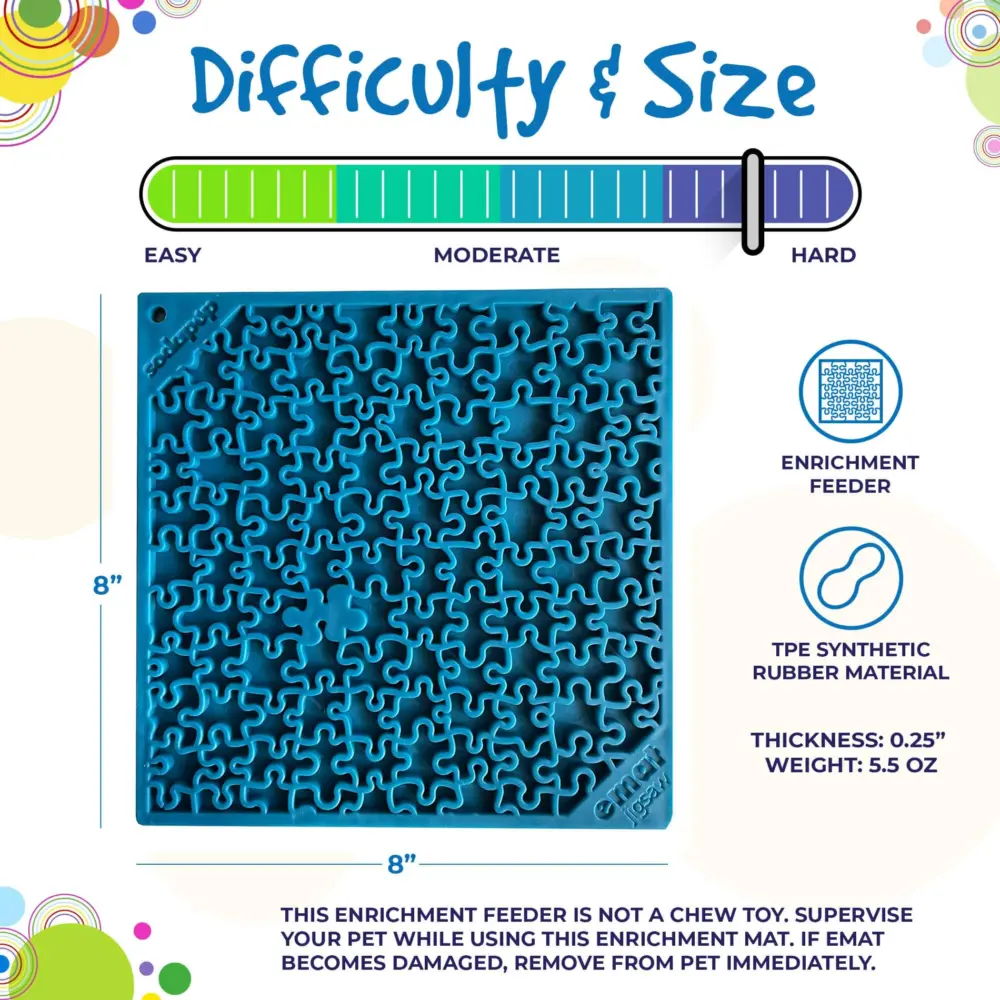
SodaPup
Jigsaw Enrichment Lick Mat for Dogs & Cats, Choose color
$25.95
Why it fits: A calm job for the puppy on its side of the gate: spread soft food in the jigsaw grooves and let it lick while your cat looks on.


Reading both animals: when to pause or go back a step
Watch both animals, not just the one making noise. A puppy can look friendly and still be far too much for the cat.
- The puppy is ready for more when it sniffs, looks away and comes back to you, takes treats, answers to its name and can settle on a mat while the cat moves around.
- Pause or go back with the puppy when it stares fixedly, freezes, whines, barks or lunges, play-bows and pounces again and again, or stops taking treats it usually loves.
- The cat is coping when it stays in the room or on a perch with a relaxed body, and eats and uses the litter box as usual.
- Pause or go back with the cat when it crouches with a tense body, tucks its tail, flattens its ears, arches with its fur on end or has wide pupils. International Cat Care lists these among the signs of stress in cats, along with hiding, not eating and toileting outside the box.
A hiss or a swat at a pushy puppy is your cat saying “that’s close enough.” If the puppy backs off, that’s a useful lesson; if it keeps coming, the session ran too long or the puppy was too wound up. Any chase, even a playful one, ends the session. The AKC advises preventing chasing from ever happening with your cat, and for a puppy a running cat is the best game in the house: each chase makes the next one more tempting.
Protecting the litter box, cat food and high ground
Puppies explore with their mouths, and the cat’s things are among the most tempting in the house. Our guide to what dogs and cats can share explains why food and the litter box stay separate for good; in the puppy months, watch these points:
- The litter box. The AKC’s article on why dogs eat cat poop warns that dogs can pick up internal parasites and harmful bacteria from it. Keep the box behind the gate, because a cat that gets ambushed there may start avoiding the box.
- The cat’s food. Feed your cat on a counter, a windowsill or behind the gate, at set times, and pick up the leftovers, so the puppy never learns that the cat’s bowl is a second dinner.
- The high ground. Keep perches clear and reachable, and don’t let the puppy camp under the cat tree or in the doorway to the cat’s room. A perch that’s out of reach at ten weeks may not be at five months, so recheck the heights as your puppy grows.
- Cat toys. Put wand toys and small balls away after play; a puppy will chew them and may swallow pieces.
- Your attention. Keep some one-on-one time with your cat every day, away from the puppy.
Mistakes that set the introduction back
- Holding the cat up to the puppy. A cat that can’t leave is more likely to panic, and to scratch you or the puppy.
- Letting them work it out. A puppy that learns chasing is fun keeps getting bigger and faster, while your cat stays the same size.
- Meeting in the cat’s room. The AKC suggests a neutral spot rather than either pet’s safe space; the dog-free zone should stay dog-free.
- Meeting with an overtired puppy. Tired puppies get nippy and pushy; our guide on how to calm an overtired puppy covers the signs. Aim for after a little play, not the end of a busy day.
- Scolding a hissing cat. The hiss is a warning, and a telling-off only adds to the stress of the moment.
- Dropping supervision too soon. A puppy that is calm on the leash may still give chase once it’s free and the cat runs.
Troubleshooting: lunging, hiding and swats
The puppy lunges, barks or won’t stop staring
Go back to the gate and add distance until your puppy can look at the cat and then back at you. Practice “leave it” and “watch me” at that distance, reward generously and keep sessions shorter. A puppy that stalks, freezes or fixates on the cat even from across the room needs a qualified trainer before you go further.
Your cat is hiding or has stopped eating
Give your cat a few quiet days in its zone, then restart one step earlier. Hiding for a while after a busy session is common. A cat that stops eating, or starts peeing or pooping outside the box, should see your veterinarian promptly, because these can be medical problems as well as stress.
The cat swatted the puppy
One swat that sends the puppy backing off is often the end of it, but check the puppy’s face. A scratch on or near the eye, squinting or a watery eye needs a veterinarian the same day. The AKC suggests keeping your cat’s nails trimmed, or covered with nail caps, to help prevent injuries to the dog.
When to call a trainer or your veterinarian
Get help sooner rather than later if:
- the puppy chases, stalks or pins the cat more than once, even in play;
- your cat spends most of its time hiding, or stops using rooms it used to;
- either animal is hurt, or a meeting turns into a fight;
- several weeks pass with no progress beyond the gate.
Start with your veterinarian, who can check for pain or illness behind a change in behavior and refer you to a veterinary behaviorist. A certified trainer who uses reward-based methods can help with the puppy’s side. Have an older dog as well? Our guide on introducing a puppy to an older dog covers that meeting, which works differently.
Related guides
-
How-to
Working From Home With a Cat: Fewer Paws on the Keyboard
A home-office plan for cat owners: a warm bed beside the desk instead of on it, cables and coffee out of reach, play before calls, midday puzzle and lick-mat jobs, a kind fix for keyboard walkers and a gentle switch back to office days.
-
How-to
How to Stop Your Cat From Waking You Up at Night
Cats wake you before dawn because it is hunting time, the gap since dinner is long and waking you has paid off before. Here is a three-step plan: a bedtime hunt and meal, breakfast that doesn’t depend on you, and a firm no-response rule, plus a night setup, troubleshooting and signs to see your vet.
-
How-to
How to Keep a Dog Calm and Safe During Fireworks
A fireworks plan for the Fourth of July and New Year’s Eve: ID and harness checks, an early walk and dinner, a quiet den, a licking job, how to comfort a scared dog, practice for next year, cats, and when to call your veterinarian.