How to Brush a Cat That Hates Being Brushed: A Two-Week Plan
How to brush a cat that hates being brushed comes down to keeping every session too short to fight: a few slow strokes on a spot your cat already enjoys, a treat, and the brush put away before your cat has had enough. Build up over about two weeks to a minute or two of calm brushing. Most of the work is reading your cat and stopping early.
Short answer: shorter sessions, better spots and a reward every time
- Sessions: a few seconds at first, building to one or two minutes. A short session that ends calmly beats a long one that ends in a swat.
- Spots: cheeks, chin, head and back first; belly, legs and tail later.
- Rewards: a small treat every session, even a ten-second one.
- Timing: when your cat is already relaxed, such as after a meal or before a nap.
- Tools: soft pins for short coats; a slicker with a light touch for medium and long coats.
- Stopping: at the first tail swish or skin twitch, not at the hiss.
Why some cats hate being brushed
A cat that hates being brushed is usually reacting to something specific:
- Pulling. A brush that snags on tangles, or pins pressed too hard, hurts.
- Sensitive spots. Many cats dislike being touched on the belly, legs, paws and tail.
- Being held. Holding a cat still teaches them that the brush means being trapped.
- Going on too long. Strokes that feel good at first become too much; a cat that bites when brushed has often just been brushed too long.
- A bad memory. One rough session tugging at knots can make a cat wary for a long time.
- Pain. Sore joints or irritated skin can make even a light touch hurt.
If your cat has suddenly started flinching, crying out or turning on you when touched in one area, ask your veterinarian before you go on. Sudden touch sensitivity can be a sign of pain, and no brushing plan fixes that. The same goes for a cat that has stopped grooming, or for bald patches, scabs or lumps.
Choose the gentlest brush for your cat’s coat
Pick the brush by coat length. A nervous cat needs a light hand more than a stronger tool.
Short coats: a mist brush with soft silicone pins
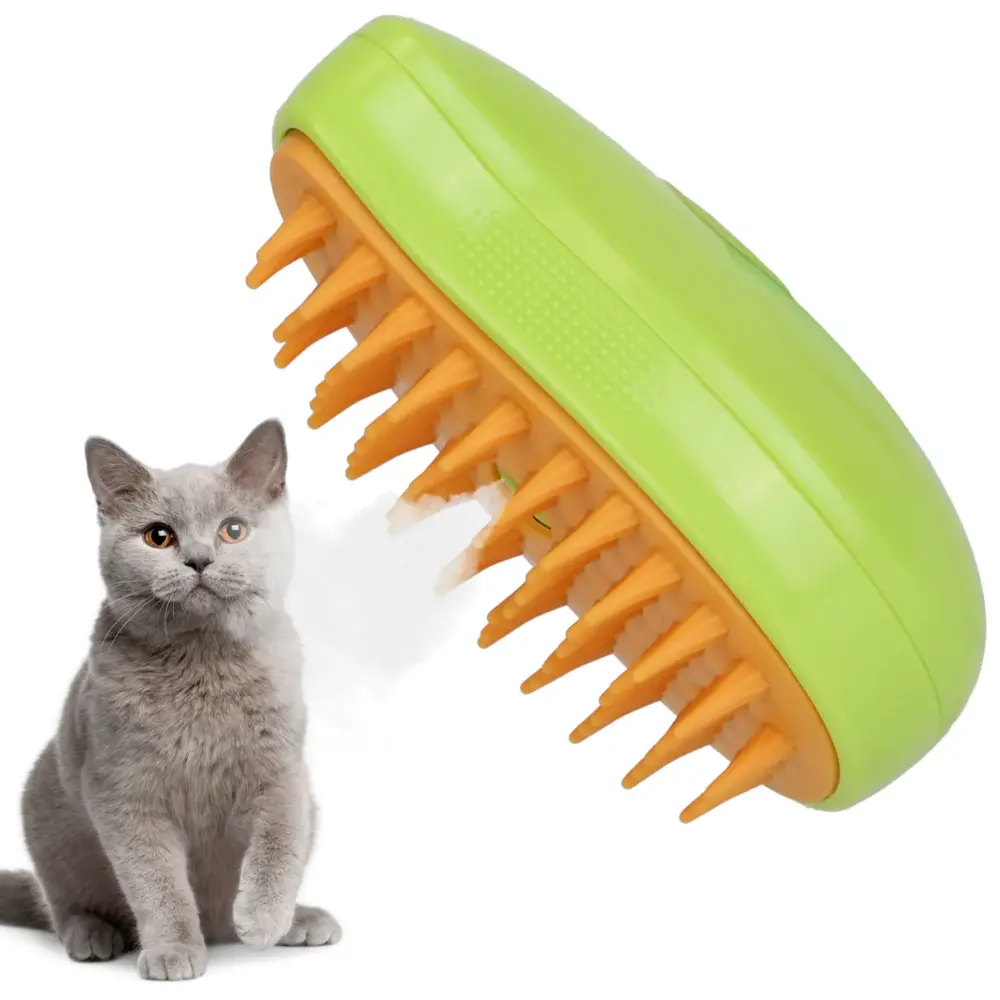
For a short-haired cat, the 3-in-1 Steam Grooming Brush has soft silicone pins that remove dead hair and gently massage the skin. Despite the name, it puts out a fine mist, not steam, from a small refillable tank, and the mist settles loose hair and dander onto the pins.
You press to mist, so you can brush dry until your cat accepts the brush itself. For the hair that escapes anyway, see our checklist for keeping a house clean with cats.
Medium and long coats: a curved slicker, used lightly
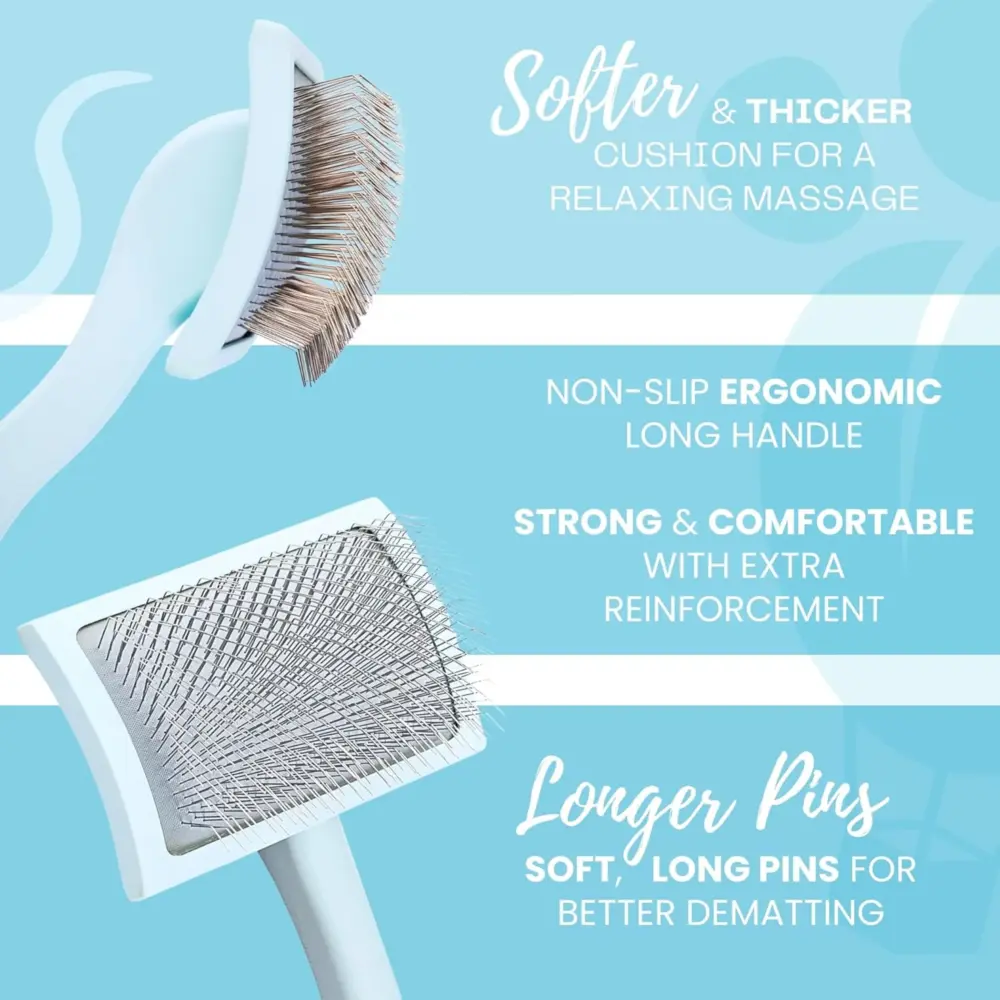
The Sakabase Curved Slicker Brush has fine, firm pins that reach the undercoat of medium and long coats, on a curved head that follows the body so more pins touch the coat with each stroke. Fewer strokes help with a cat who allows only a handful. Because the pins are firm, use the lightest pressure that still moves through the coat, and keep the brush off the face.
Every snag pulls, so tangles are a common reason long-haired cats resist. Hold a small knot at the base and brush from the ends inward. Leave tight mats to a groomer or your veterinarian, and never cut a mat out with scissors; cat skin is thin and easy to nick. The full long-coat routine is in how to groom a long-haired cat at home, mats included.
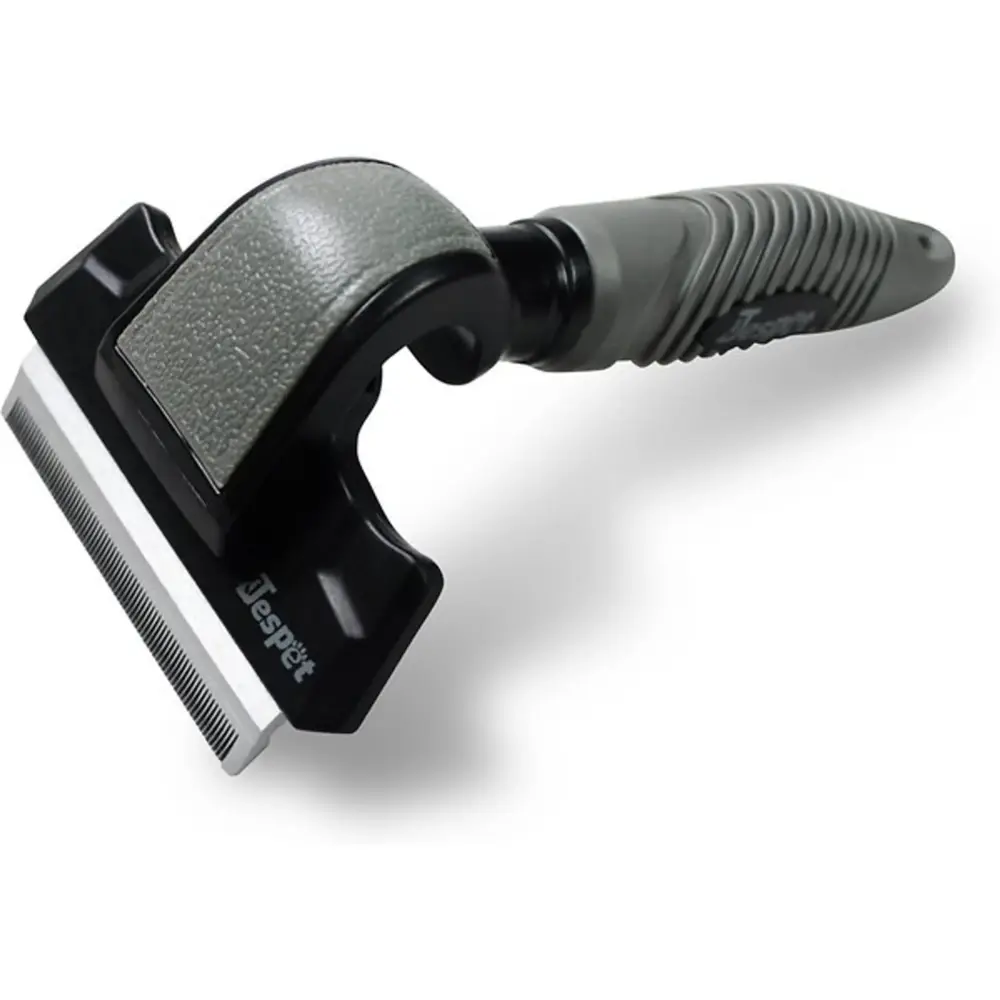
Leave any deshedding tool until your cat is relaxed about an ordinary brush: it is meant for thick double coats, and its edge catches and pulls on tangles. Our guide to slicker brushes vs deshedding tools explains which coat needs which.
-
3-in-1 Steam Grooming Brush for Cats & Dogs
$36.95
-
Sakabase
Curved Slicker Brush
$39.95


See the full dog and cat grooming range, or browse more grooming and shedding guides.
How to brush a cat that hates being brushed: a two-week plan
To get a cat used to brushing, do one or two sessions a day, move on only when your cat is relaxed at the current step, and go back a step after any objection. The days are a guide; some cats need a month.
- Days 1–2: the brush is just an object. Leave it where your cat rests, and give a treat when they sniff it.
- Days 3–4: touch, no strokes. Pet your cat’s cheek, then rest the back of the brush on the same spot for a second. Treat, and stop there.
- Days 5–7: one or two strokes. Brush slowly with the lie of the hair along the top of the back or, with a soft-pinned brush, along the cheek. Treat, then end the session.
- Days 8–10: about 30 seconds. Brush for a few seconds, then pause, take your hand away and let your cat decide whether to stay. Treat, and repeat.
- Days 11–14: a minute or two. Add the shoulders and the length of the back, then try one stroke on a new area at the end of the session.
Use tiny pieces of a favorite treat or a lickable treat, kept for brushing only. Some owners spread wet food thinly on a lick mat as a distraction; see what to put on a lick mat for a cat.
Once brushing is routine, the coat decides how often to do it; see our brushing schedule for short and long cat coats.
Where to start, and the spots to leave until later
Start where your cat already likes your hand. International Cat Care points to the cheeks and chin, where cats have scent glands, as places most cats are happy to be touched, and suggests contact of 3 to 5 seconds followed by a pause so the cat can choose whether to carry on. A soft-pinned brush can go along the cheek, well clear of the eyes; with a slicker, start at the back of the neck instead. The head, shoulders and back usually come next.
Leave these for later, roughly in this order:
- Sides and chest: usually the next areas a cat accepts.
- Legs and armpits: where long coats tangle.
- Belly and between the hind legs: sensitive for most cats, so a stroke or two at a time.
- Base of the tail and the tail: many cats object to these at first.
- Paws: last. The same slow approach helps with nails; see our guide to trimming a cat’s nails when your cat won’t let you.
Timing: after meals, before naps
A calm cat is far easier to brush. Good moments:
- After a meal, when many cats settle down to wash and doze.
- After a play session, once your cat has wound down.
- Before the usual nap, where your cat normally sleeps.
Avoid brushing when your cat is wound up, when visitors or loud noises are around, or just after a car trip or vet visit. Bring the brush to your cat rather than carrying them somewhere, and leave them a clear way out. Cats that feel free to leave are often more willing to stay.
Keep the same time and place each day: brush, treat, done.
Reading your cat: signs to stop before the swat
Cats usually warn before they swat or bite. Stop at the first of these signs, many of which appear in International Cat Care’s advice on grooming your cat:
- A tail that swishes, thumps or twitches at the tip.
- Skin that ripples or twitches along the back.
- Ears that flick, flatten or rotate backward.
- A sharp turn of the head toward your hand or the brush.
- Freezing, or a body that suddenly goes tense.
- Lip licking or swallowing.
- Head shaking, or a sudden quick burst of licking their own coat.
- A growl or hiss: you have already gone too far.
To stop, lift the brush away, lower your hands and let your cat go. Next time, end a little before that point. Never scruff, pin or scold a cat for objecting; it makes the next session harder.
If every session turns into a struggle, or you worry about being bitten or scratched, ask your veterinarian or a professional groomer for help. Cat bites can become infected, so wash any bite that breaks the skin and call your doctor.
Reluctant cat brushing FAQ
How long should a brushing session be for a nervous cat?
Start with a few seconds, even a single stroke, and build toward one or two minutes over a couple of weeks. End every session before your cat shows signs of discomfort, so the last thing they remember is the treat.
Why does my cat bite when I brush her?
Usually because a warning was missed: the session ran too long, the brush pulled a tangle or it reached a sensitive spot. Shorten sessions, stay on the areas she likes and stop at the first tail swish or skin twitch. If the biting is new, or happens when you touch one particular area, ask your veterinarian to check for pain.
What if my cat only lets me brush her back?
That is a good start, and the back collects plenty of loose hair. Keep brushing it, then add one stroke on the shoulder or side at the end of each session. If a long coat knots where she won’t let you reach, ask a groomer to help.
What if my cat won’t let me brush her at all?
Go back to the first steps and stay there longer, with a treat each time. A short-haired cat that grooms itself well can cope with little brushing while you work on it. A long-haired cat can’t, because knots tighten into painful mats, so ask a groomer who handles cats, or your veterinarian, to keep the coat clear meanwhile.
Should I use the mist with a nervous cat?
Not at first. Brush dry until your cat accepts the brush, then try a little mist on the back, away from the face. Go back to dry brushing if your cat startles, and fill the tank with clean water only.
Related guides
-
Buying guide
Types of Dog Brushes: Which Brush Suits Your Dog’s Coat
Slicker, de-shedding tool, pin, bristle, rubber curry, comb or rake: what each type of dog brush does, a coat-by-coat table of the ones your dog needs, the three tools we stock and the ones we don’t, and the signs a brush is wrong for the coat.
-
Comparison
Should You Shave Your Dog in Summer? What to Do by Coat Type
A shaved double coat doesn’t cool a dog and can grow back patchy. See which coats can take a summer trim, when a shave-down is the right call, a hot-weather brush-out routine, what to do if your dog is already shaved, and how lion cuts work for cats.
-
How-to
How to Use a Slicker Brush Without Scratching the Skin
A slicker scratches when it is gripped hard and pressed in. Here’s how to hold one, test your pressure on your own forearm, brush in sections down to the skin, ease out a small tangle, handle thin-skinned spots and cats, and spot brush burn early.