Grooming & Shedding Comparison
Should You Shave Your Dog in Summer? What to Do by Coat Type
Short answer
No. Dogs cool off mainly by panting, and a double coat helps regulate heat and shields the skin from sun, so a shave doesn’t cool them and can grow back patchy. Brush out loose undercoat instead, trim curly and drop coats no shorter than an inch, and save shave-downs for severe mats or veterinary care.
Shave, trim or brush out, coat by coat
A shave takes the coat down close to the skin; a trim shortens it but leaves a layer in place; brushing out removes only loose, dead undercoat. Which suits your dog depends on the coat, not on how hot they look. Not sure what you have? Part the fur against the grain at the rump: a soft, woolly layer packed around the roots means a double coat, and how to tell if a dog has a double coat covers the cases that fool owners.
| Coat | Examples | Shave? | Trim? | Brush out? |
|---|---|---|---|---|
| Long double | Golden, Husky, Samoyed | No: insulation and sun cover | Hair between the pads only | Two or three times a week |
| Short double | Lab, Corgi, Shiba Inu | No: regrowth can be patchy | Hair between the pads only | Weekly, more when tufts show |
| Smooth single | Boxer, Vizsla | No: its only sun cover | Nothing to trim | Weekly, with a soft brush |
| Drop coat | Maltese, Yorkie | No: leave an inch or more | Yes, a short all-over cut | Daily, down to the skin |
| Curly coat | Poodle, most doodles | No: leave an inch or more | Yes, a regular summer clip | Daily or every other day |
| Wire coat | Schnauzer, many terriers | No: it can soften the coat | Hand-strip, or clip | Weekly |
| Severe mats | Any coat | Often kindest, by a groomer | Past trimming | Past brushing |
The pattern is consistent: no coat is better off shaved for the heat alone, and the more undercoat a dog has, the more the summer answer is a brush rather than clippers.
Why shaving a double coat doesn’t cool a dog
It seems logical: less fur, less heat. But dogs don’t cool off the way people do. The AKC’s guide to heatstroke in dogs explains that they rely on panting and widening blood vessels, and sweat only a little, through their paw pads. Taking the coat off doesn’t give a dog a cooling system it didn’t have.
The coat also works for the dog in summer. According to the AKC’s article on whether it’s OK to shave your dog, the undercoat traps air between the two layers, which helps regulate body temperature, and the outer guard hairs protect the skin from sunburn and insect bites. Shave both layers and that buffer is gone; the AKC goes as far as warning that removing the insulating layer can leave a dog more susceptible to heatstroke.
What does cause trouble in summer is undercoat that never came out. Dead fluff packs down against the skin, tangles and holds water after a swim or a hose-down. In its double-coat grooming guide, the AKC allows a shave only in that situation: tangles and build-up so heavy that the skin underneath stays damp. Short of that, the fix is brushing.
Shaving won’t end the shedding either. The same AKC article notes that it doesn’t eliminate shedding but does damage the topcoat, so a shaved dog simply drops shorter hairs.
Safety note
No haircut replaces heat precautions. Shade, water, a cool room and walks at the cooler ends of the day do far more than coat length; see how to keep a dog cool without AC. The ASPCA singles out flat-faced breeds, seniors, overweight dogs and dogs with heart or lung disease as more vulnerable. Heavy panting, excessive drooling, bright red gums, weakness or collapse can mean heatstroke. Move your dog somewhere air-conditioned or shaded, sponge on cool rather than icy water, and call your veterinarian right away.
When a summer trim makes sense
The ASPCA’s hot weather safety tips draw the line simply: trim longer hair if you like, but never shave. The AKC’s shaving article adds that some single-coated dogs, a group it says includes Poodles and Maltese, may benefit from a professional clip, as long as at least an inch of hair is left to protect against sunburn, skin cancer and bug bites.
Curly coats: Poodles and most doodles
A curly coat keeps growing and holds loose hair in the curls, so a long coat mats quickly, often right at the skin, and a coat that gets wet often mats faster. A shorter summer clip is quicker to brush and to dry. Brush out to the skin before the appointment, because a matted coat often has to be clipped shorter than you asked for; our Goldendoodle grooming routine covers the brushing between groomer visits.
Drop coats: Maltese and Yorkies
Long, silky coats that hang straight have no undercoat to lose, so a shorter summer cut is mainly about comfort and upkeep: it tangles less and dries faster. Leave the clipping, and the close work around the eyes, to a groomer, and keep brushing to the skin, since a short coat still mats, just more slowly.
Smooth and wire coats
A Boxer or a Vizsla has nothing to trim, and that short, smooth coat is all the sun protection the skin has. Wire coats, on many terriers and Schnauzers, keep their harsh texture through hand-stripping. The AKC’s guide to hand-stripping dog coats says clipping changes a wire coat’s color, sheen and texture, softens it over time and can work against its temperature regulation. Clipping is simpler if you accept that softer coat, but it isn’t a heat fix.
When a shave-down is the right call
Shaving isn’t wrong in itself; it’s the wrong tool for heat and shedding. It earns its place in two situations:
- Severe mats. Felted clumps pressed tight against the skin, or whole areas matted together, can’t be brushed out without hurting your dog, and a groomer’s short clip is often the kinder fix. The coat grows back. Smaller, looser mats can usually come out at home; see how to get mats out of dog hair.
- Veterinary care. Your veterinarian may clip an area for surgery, a wound or a skin problem, or advise a closer clip for a medical reason. Follow their aftercare and sun advice while it grows back.
Tip
If a groomer recommends shaving a matted double coat, ask them to leave as much length as the mats allow. Even a short layer gives the skin some cover from the sun while the rest grows back.
A summer brush-out routine for double coats
Through the hot months, brush a long double coat two or three times a week and a short one about weekly; the AKC’s guide to double-coated dog breeds suggests combing two to three times weekly to prevent mats. If your dog is still dropping tufts from the spring blow, dog shedding season covers the heavier routine for a full shed.
- Pick a cool time and place. Brush early or late in the day, in shade or indoors, with water nearby. Stop if your dog starts panting hard.
- Run your hands through the coat. Summer adds burrs and grass seeds to the usual knots; brush around anything pink or sore. A seed embedded in the skin, an ear or between the toes needs your veterinarian.
- Detangle long coats with a slicker. Summer knots hide where the coat stays damp or rubs: the ear backs, collar and harness lines, armpits and britches. Short double coats can skip this.
- Lift the loose undercoat. Draw a de-shedding tool lightly with the lie of the coat, spending most of the time on the densest areas, usually the neck, rump and thighs. Empty the edge as it fills.
- Keep it short. Ten or fifteen minutes is plenty in the heat. End sooner if the skin turns pink or your dog walks away, and pick up where you left off next time.
Tip
Swims and garden-hose cool-downs are frequent in summer, and dense undercoat stays damp at the skin long after the top feels dry. Push the hair back in a few thick spots to check, and save the brushing for when it is dry to the roots.
The three brushes below are the ones in Nilosi’s catalog that fit a summer brush-out, matched to the steps above; we haven’t compared them with brushes sold elsewhere. The AKC also suggests a grooming rake or a quality steel comb for loose undercoat. We don’t sell either, so a steel comb from another store is a useful extra.
-
JESPET
De-Shedding Tool for Dogs & Cats, Choose size
Price range: $27.95 through $29.95
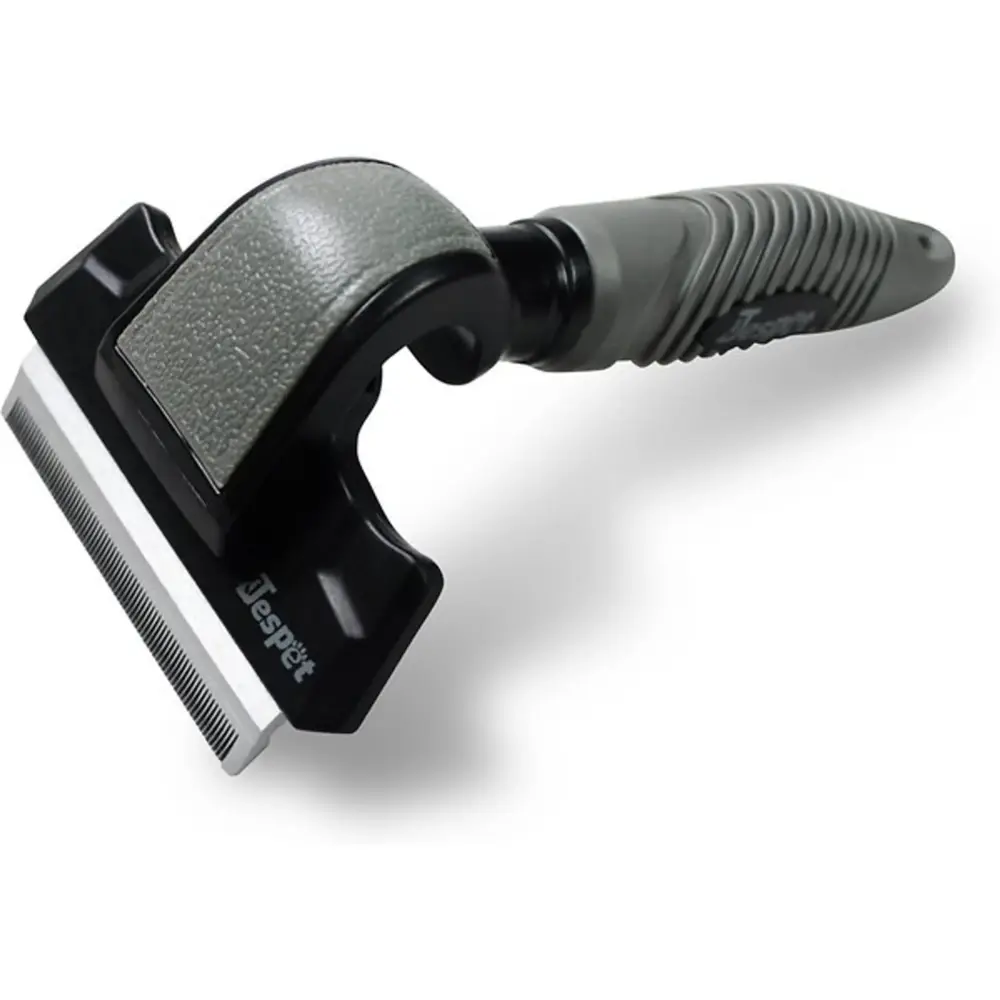
Why it fits: The alternative to a summer shave for double coats: a stainless-steel edge reaches through the topcoat to lift loose undercoat. Two sizes.
-
Sakabase
Curved Slicker Brush, View product
$39.95
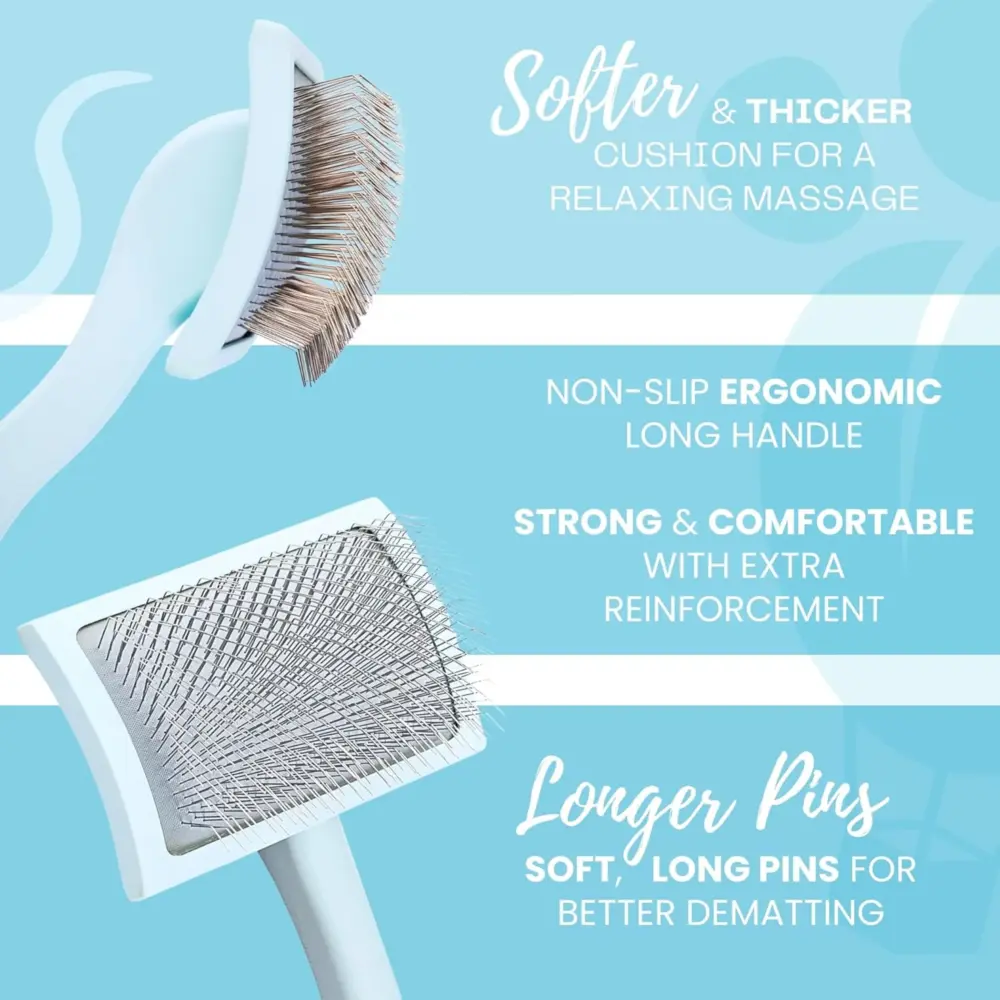
Why it fits: Handles summer detangling on medium and long coats before mats can form; its curved head puts more fine, firm pins on the coat per stroke.
-
3-in-1 Steam Grooming Brush for Cats & Dogs, View product
$36.95
Why it fits: A gentle choice for smooth coats and short regrowth after a shave; a fine mist settles loose hair and dander as soft silicone pins lift it.



If your dog is already shaved
If your dog has already been shaved, the coat will grow back; what matters is how it comes back and how you protect the skin in the meantime.
- Sun. With the topcoat gone, the skin is exposed. Walk early and late, offer shade outdoors and ask your veterinarian before using any sunscreen; the ASPCA says any sunscreen or insect repellent used on pets should be labeled specifically for animals.
- Bugs. The outer coat helps protect against insect bites, so stay on the parasite prevention your veterinarian recommends.
- Regrowth. The AKC explains that the undercoat grows back faster than the guard hairs and can crowd them out, so the coat may come back patchy, with a different texture or color. Not every coat comes back changed, but there is no telling in advance.
- Brushing while it grows. Keep a de-shedding edge off short regrowth, where it runs on the skin. A soft or mist brush is enough until the coat has length again.
- When to call your veterinarian. Bare patches that aren’t filling in after a few months, red, flaky or itchy skin, sores, or constant licking at one spot.
Next summer, ask the groomer for a bath, a thorough brush-out and a tidy of the feet instead of a shave.
Long-haired cats and lion cuts
Cats rarely need a summer haircut. VCA Animal Hospitals says in its coat care guide for cats that most cats, long-haired ones included, cope with hot weather without one, and the ASPCA’s heat advice for cats is simply to brush more often.
A lion cut clips the body short and leaves the head, feet and tail tip full. VCA says a periodic shave-down can help long-haired cats prone to large mats, or cats that don’t groom themselves well and object to brushing, so it is a mat-management choice rather than a cooling one. Few cats tolerate clipper noise or extensive mat removal while awake, VCA adds, so some need sedation, which only a veterinarian can give; ask your veterinarian or a groomer experienced with cats. If your cat goes outdoors, leave at least an inch of coat to protect the skin from sunburn.
Flat-faced cats such as Persians are among the pets the ASPCA puts at greater risk in heat, so for them a cool room matters more than any haircut; how to keep a cat cool in summer covers the rest of the setup. Of the brushes above, the slicker suits long-haired cats with a lighter touch, the de-shedding tool a thick undercoat and the mist brush short coats. Never cut a mat out of cat fur with scissors: VCA advises clippers only.
Verdict: what to do for your dog’s coat this summer
- Double coat, long or short: no shave. Brush out loose undercoat two or three times a week for a long coat, weekly for a short one, and trim the hair between the pads if it grows long.
- Curly or drop coat: a summer trim is fine, with at least an inch left, and brushing to the skin continues.
- Smooth single coat: nothing to cut. A weekly soft brush, and shade on sunny days.
- Wire coat: keep hand-stripping on schedule rather than clipping for the heat.
- Severely matted coat, or a veterinary reason: a shave-down can be the right call, done by a groomer or your veterinarian.
Whatever the coat, heat safety comes from shade, water and timing. A gel cooling mat such as The Green Pet Shop Chillz Cooling Gel Mat, which is pressure-activated and needs no plugging in, filling or freezing, gives your dog a cool place to stretch out. The brushes for each coat are in our dog and cat grooming tools.
Related guides
-
Guide
Can Dogs and Cats Share Water Bowls, Beds and Brushes?
A healthy dog and cat can share a water bowl, beds, cooling mats and grooming tools if you clean them between pets; food, the litter box and small toys stay separate. Here's the item-by-item guide, plus when to stop sharing and the dog flea products that can poison cats.
-
Buying guide
Types of Dog Brushes: Which Brush Suits Your Dog’s Coat
Slicker, de-shedding tool, pin, bristle, rubber curry, comb or rake: what each type of dog brush does, a coat-by-coat table of the ones your dog needs, the three tools we stock and the ones we don’t, and the signs a brush is wrong for the coat.
-
How-to
How to Use a De-Shedding Tool on a Dog or Cat Without Overdoing It
Use a de-shedding tool on a dry, detangled double coat, in light strokes with the grain, on the body only. Here’s how to pick a size, run a session step by step, which areas to skip, how often to de-shed, the signs you’re overdoing it and how to use one on a cat.