How to Get Dog Hair Off a Couch: Methods by Fabric, and How to Keep It Off
The quickest way to get dog hair off a couch is a rubber dishwashing glove, barely damp. Sweep it across the cushions in one direction, pick off the clumps that form, then vacuum the fine strands left behind. Velvet and leather need a gentler touch, and some fabrics should stay dry, so check the tag first. Then brush your pet, so less hair reaches the cushions at all.
Short answer: a rubber glove for most fabrics, then stop the hair at the source
- Microfiber: a dry rubber glove or a rubber window squeegee.
- Woven cotton or linen: a barely damp glove if the tag allows water, then the vacuum’s upholstery tool.
- Velvet: a lint roller, then the upholstery tool on low suction, both with the pile.
- Leather and faux leather: a soft microfiber cloth; the hair sits on top.
- Any couch: brush your pet away from the furniture, and give them a washable throw and a bed of their own.
How to get dog hair off a couch, fabric by fabric
Static keeps fine hair stuck to upholstery, and short, stiff hairs work their way between the threads every time your dog circles before lying down. Rubber grips the strands and rolls them together, and a little moisture takes out the static. The same methods answer how to get pet hair off furniture in general. For how these tricks compare on floors, see how to get dog hair out of carpet, rugs and car mats.
First, read the cleaning code on the tag
Most upholstered furniture has a care tag under a seat cushion or on the frame, with a letter that says whether water is safe:
- W: water-based cleaning is fine, so a damp glove is too.
- S: solvent cleaners only. Water can leave rings, so use the glove dry.
- W/S or SW: either is fine.
- X: vacuum or brush only, with no water or cleaners.
No tag? Treat the fabric as S, and test anything damp on a hidden spot first, such as low on the back of the couch.
Microfiber
Microfiber is the easiest fabric to clear: its tight, smooth weave gives hair little to hook into. Pull a rubber glove across each cushion in one direction, or draw a rubber window squeegee toward you in short strokes, and the hair gathers into lines you can lift off. Microfiber is often coded S, so keep the glove dry unless the tag says W, and finish with the vacuum’s upholstery tool.
Woven cotton or linen
Textured weaves are where dog hair digs in, and a vacuum alone tends to skim over it.
- Wet a rubber glove and shake it until it is barely damp, not dripping. If the tag says S, use it dry.
- Sweep your palm across the fabric in short strokes, always in the same direction.
- Pick off the clumps as they form, and rinse the glove when it is coated.
- Go over each cushion slowly with the upholstery tool so the suction can pull hair from the weave.
Linen and loose, nubby weaves can snag, so keep the pressure light and stop if you see pulled threads.
Velvet
Hair lifts off velvet fairly readily, but the pile marks easily: rubbing against it leaves crushed patches, and water can spot some velvets. Roll a lint roller over the cushions in the direction of the pile. Then vacuum with the upholstery tool or a soft brush attachment on low suction, again with the pile. Skip the squeegee and the wet glove unless the tag says W and a hidden-spot test looks fine.
Leather and faux leather
Hair cannot weave into leather, so it wipes away with a soft microfiber cloth, dry or barely damp. Use the soft brush attachment on the seams rather than a hard nozzle that could scratch, and don’t let water sit on the surface.
Hair in the seams and under the cushions
Hair also drifts behind the seat cushions, collects on the deck underneath and lines the front of the frame where your dog brushes past. Once a week:
- Take off the seat cushions, and any loose back cushions.
- Run the crevice tool slowly along the deck, the corners and the gap at the back.
- Sweep a glove along the front of the frame and the inside of the arms, damp or dry to suit the tag.
- Clean both sides of each cushion, and flip and rotate reversible ones as you put them back.
- Vacuum the floor under the couch, or the tufts there end up back on the cushions.
Cat hair on the couch
Cat hair tends to be fine and light, so instead of tufts it settles as a thin film that static holds in place. Cats also pick high, warm spots, so it builds up along the top of the back cushions, on the arms and by a sunny window. To get cat hair off a couch, use the method for your fabric, adjusted a little:
- Use lighter pressure and more passes.
- Where the tag allows water, a barely damp glove beats a dry one, because moisture cuts the static.
- Keep a lint roller handy for the backrest and arms between deeper cleans.
For litter, window sills and the rest of the house, see our daily, weekly and monthly checklist for keeping a house clean with cats. Hair coming out in clumps, nonstop grooming or thin and bare patches call for your veterinarian, not more cleaning.
Brush first, so less hair reaches the furniture
Hair caught in a brush is hair you never have to pick off a cushion. In a double coat, much of the shedding is soft undercoat beneath the guard hairs, which a de-shedding tool is built to reach.
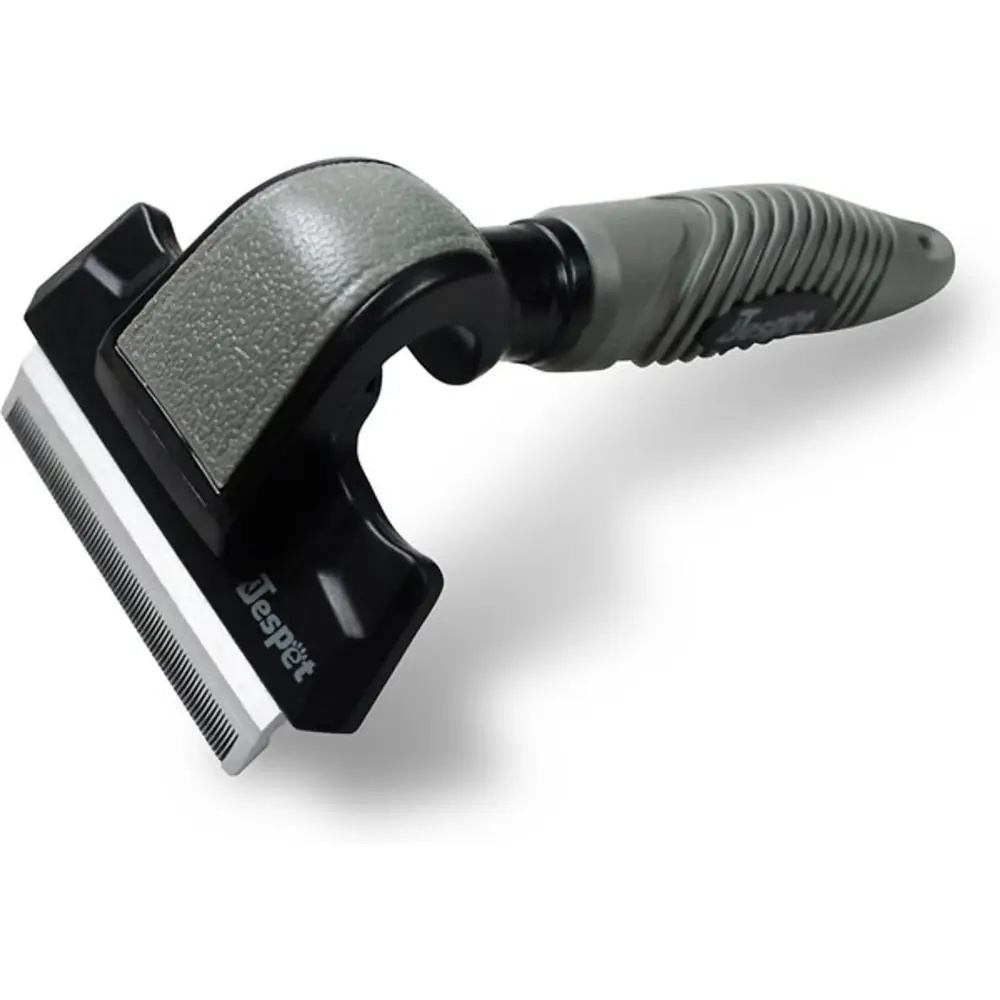
The JESPET De-Shedding Tool has a stainless-steel edge that slips through the topcoat and catches loose undercoat, plus an ergonomic handle, comes in Small or Large, and is meant for dogs and cats with a double coat. Work with the direction of hair growth in light, short strokes, wipe the collected hair off the edge as it builds up, and stop if the skin looks red. In shedding season, two or three short sessions a week are plenty. A smooth single coat has little undercoat to catch, so a soft brush suits it better.
Groom outdoors or on a hard floor you can sweep, never on the couch. For technique, see how a slicker brush compares with a deshedding tool; for frequency, our brushing schedule by coat type.
Bald patches, sores, red skin or constant scratching are not part of a normal shed; ask your veterinarian.
-
JESPET
De-Shedding Tool for Dogs & Cats
Price range: $27.95 through $29.95

Keeping hair off the couch: throws, a bed of their own and a routine
A washable throw on their spot
Most pets use the same one or two places. Cover that spot with a washable throw, tucked in so it stays put when your dog circles. A smooth, tightly woven throw lets go of hair more easily than a fluffy knit, and a color close to your pet’s coat hides hair between washes.
A bed of their own
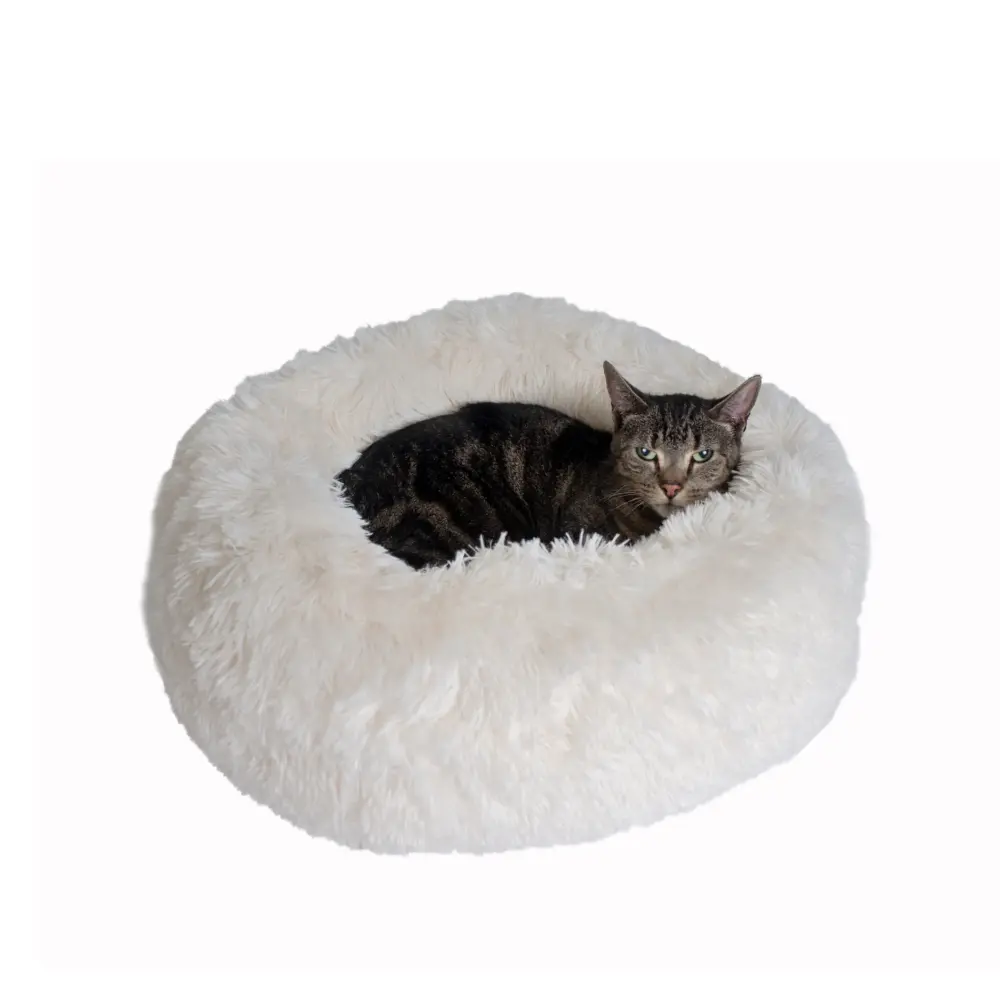
A comfortable spot beside the couch gives your pet a better offer than the cushions. For cats and small dogs, the Armarkat Ultra-Plush Cuddler Bed has a raised bolster all the way round to rest a head on and a water-resistant, skid-free base that keeps it in place. Its thick plush holds warmth, which helps with cats who otherwise claim the warmest cushion. It comes in Small (22 × 22 × 8 in) and Medium, and is machine washable on a gentle cycle, though hand washing keeps the plush at its best.
Put it where your pet can still see you, which is half the couch’s appeal. For more places to settle, see our beds and comfort range.
-
Armarkat
Ultra-Plush Cuddler Bed for Cats & Small Dogs
Price range: $55.95 through $72.95

A simple weekly routine
- Every day or two: shake out the throw, or lint-roll your pet’s spot.
- Once or twice a week: brush double-coated dogs and short-haired cats, away from the couch; long, silky or curly coats need it every few days or daily. In shedding season, step up to two or three short sessions rather than cleaning more often.
- Weekly: take the cushions off, glove and vacuum the couch, and wash the throw.
If the couch smells of dog as well, see how to get rid of dog smell in the house. More guides like this are in our Home and Cleaning collection.
Couch hair FAQ
What is the fastest way to get dog hair off a couch?
A barely damp rubber glove swept across the cushions in one direction, then a pass with the vacuum’s upholstery tool. On fabric coded S or X, use the glove dry.
Do lint rollers work on dog hair?
Yes, for loose hair on the surface, such as on velvet and cushion tops. They struggle with short, stiff hairs woven into fabric, and on a whole couch the sheets fill fast. Use rubber for the deep clean and a lint roller for touch-ups.
What couch fabric does dog hair not stick to?
No upholstery is hair-proof, but smooth, tight surfaces let go of hair most easily: leather and faux leather, microfiber, and tightly woven canvas or synthetic performance fabrics. Textured weaves such as linen, tweed, chenille and bouclé tend to trap it. Leather can scratch, so weigh your pet’s claws as well as their coat.
How do I keep my dog off the couch?
Put a comfortable bed right next to it, reward your dog for settling there, and teach an “off” cue with treats instead of pushing them down. The “go to bed” cue in our guide to getting a dog to sleep in their own bed works for the couch too. If your dog growls or snaps when asked to move, talk to your veterinarian or a qualified trainer.
What is a home remedy for dog hair on a couch?
A damp rubber glove or a damp sponge works on most fabric couches, once you have checked the tag. Skip the dryer-sheet and fabric-softener-spray tricks: the ASPCA warns that the cationic detergents in both can cause chemical burns and ulcers if a pet ingests them, and a swallowed sheet can cause a blockage. Pumice stones can pill or snag upholstery, so leave them out too.
Related guides
-
Guide
How to Get Rid of Dog Smell in the House: Find the Source, Then Clean It
Dog smell lives in what your dog lies on, rubs against and drips on. Work through the house room by room: beds and blankets, the couch and carpet, a damp coat, bowls, toys and collars, then fresh air and a weekly reset, plus the signs that the smell means a vet visit.
-
Guide
Can Dogs and Cats Share Water Bowls, Beds and Brushes?
A healthy dog and cat can share a water bowl, beds, cooling mats and grooming tools if you clean them between pets; food, the litter box and small toys stay separate. Here's the item-by-item guide, plus when to stop sharing and the dog flea products that can poison cats.
-
Guide
How to Wash a Dog Bed, and How Often, Including Beds That Don’t Unzip
De-hair it, read the care label, wash it gently with fragrance-free detergent and dry it all the way through. Here is how often to wash a dog bed, what to do with beds that don't unzip, foam and gel mats, and how to wash a cat bed without upsetting your cat.