Grooming & Shedding How-to
How to Clean a Dog’s Face: Eyes, Muzzle, Beard and Skin Folds
Short answer
Use a soft cloth dampened with lukewarm water, or a large pet wipe, and a fresh section for each area. Wipe eye gunk from the inner corner outward without touching the eye, soak a food-caked beard before wiping it, and clean inside skin folds, then dry everything. Redness, colored discharge, odor or squinting need your veterinarian.
What you need before you start
Cleaning a dog’s face takes two or three minutes once your dog is used to it. Do it in good light, with your dog somewhere they can’t slide or back away: a small dog on a towel on your lap, or on a table with a hand kept on them; a big dog sitting in a corner with you at their side.
- Large pet wipes, or a soft, lint-free washcloth and a bowl of lukewarm water
- A second, dry cloth or small towel, kept only for drying
- Cotton pads or squares, if your dog has deep facial folds
- A fine-toothed metal comb for a long beard (we don’t stock combs)
- Small, soft treats your dog can swallow in a second
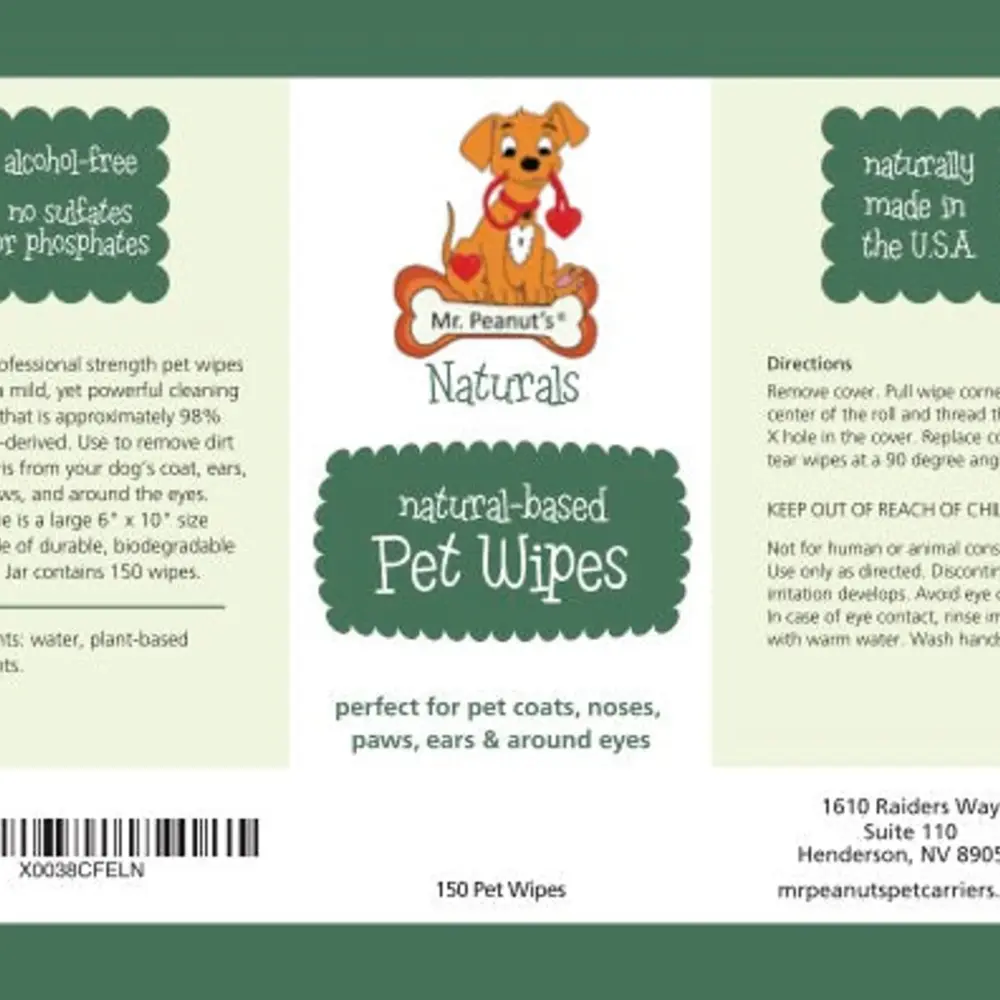
Whichever you use, give each eye, the muzzle and each fold its own clean section, so gunk from one spot isn’t wiped into the next. If you prefer wipes, our Mr. Peanut’s Naturals Pet Wipes measure 6 × 10 in, large enough to fold to a fresh corner for each eye. They are sold as 4-in-1 wipes for around the eyes, ears, paws and coat, and are made in the USA with natural ingredients. A soft cloth and plain lukewarm water do the job too.
Tip
Work from clean to dirty. If you’re cleaning the whole dog, do the face first with a fresh wipe and leave the paws and bottom for last; our guide to cleaning a dog without a bath takes the rest of the body zone by zone.
How to clean around a dog’s eyes
Look before you wipe. The ASPCA’s dog grooming tips describe healthy eyes as clear and bright, with white around the eyeball. A little dried matter in the inner corners after sleep is common, and wiping it away is usually all it needs. Matter that keeps coming back, or eyes that are red, cloudy, swollen or held half shut, are a reason to call your veterinarian, not to clean harder.
- Steady the head. Cup your dog’s chin in one hand from below or the side, rather than reaching over the top of the head.
- Soften any crust. Hold the damp cloth or a fresh wipe against dried matter for a few seconds until it loosens. Don’t pick at it with a fingernail.
- Wipe from the inner corner outward. Start by the nose and draw the cloth outward and down through the fur, away from the eye. Never wipe across the eye itself.
- Use a clean section for the other eye. Fold to a fresh corner or take a new wipe, so nothing travels from one eye to the other.
- Pat the fur dry. Press the dry cloth on the fur under each eye so it doesn’t stay damp.
- Treat, then check. Reward your dog, then look again: both eyes open, comfortable and not being pawed at.
On a flat-faced dog, tears often run into the wrinkle across the nose, so clean that fold next, as described below. On a long-coated toy breed, keeping hair out of the eyes is part of the daily routine; our guide to grooming a Yorkie at home covers keeping a long-haired face tidy.
Muzzle, beard and mouth after meals
Bearded dogs such as Schnauzers, many terriers, Shih Tzus and doodles dip their mustaches in the water bowl and catch food at every meal. A beard that stays damp and dirty soon smells, so a quick clean after messy meals saves a bigger job later.
- Pick out the big bits with your fingers.
- Soak dried food loose by squeezing a cloth dampened with lukewarm water through the beard a few times.
- Wipe downward, from the lips to the tips, the way the hair grows.
- Squeeze it dry. Wrap the beard in a dry towel and squeeze; rubbing tangles long hair.
- Comb it once it’s dry, to catch crumbs and small tangles before they knot.
Short-muzzled dogs usually need only a wipe of the lips and chin when a meal or a drink leaves them messy. Dogs with heavy, drooping lips often have a small fold in the lower lip near the corner of the mouth that collects saliva and food: lift it gently, wipe inside and dry it. The Merck Veterinary Manual names lip folds and facial folds among the warm, moist spots on the skin that carry more bacteria and a higher risk of infection.
A smell from the mouth itself, rather than the fur around it, is a question for your veterinarian; bad breath can be a sign of dental disease, which no wipe will reach.
Skin folds and wrinkles: clean, then dry
Pugs, Bulldogs, French Bulldogs and Shar-Peis have folds where skin rests on skin and stays warm and damp, especially the wrinkle over the nose. The ASPCA’s grooming advice says wrinkly dogs need special attention: clean the folds with damp cotton to keep dirt and bacteria from causing irritation and infection, and always dry between them thoroughly.
- Open the fold gently. Spread it with a thumb and finger just enough to see inside; don’t stretch it.
- Wipe along the inside with damp cotton, a soft cloth or a pet wipe, using a clean piece for each fold.
- Dry it completely. Press a dry cotton pad or cloth into the fold until it comes away dry. Moisture left in a fold is what invites irritation.
- Check the skin. The skin inside should look like the skin elsewhere: not red, raw, wet or smelly.
- Leave it bare. Don’t fill folds with powder, cream or ointment unless your veterinarian has suggested one.
Dry the folds again after anything that wets them: a bath, a rainy walk or a swim. Our guide to cleaning up a dog after swimming covers drying the ears, folds and a thick coat after a swim.
Ears: the flap, not the canal
Face cleaning stops at the ear opening. Wipe the inside of the ear flap and the folds you can see near the opening with a fresh wipe or a damp cloth, then dry them. Don’t push a wipe, cotton or anything else into the canal: the ASPCA says never to insert anything into your dog’s ear canal, and VCA’s ear-cleaning guide warns against cotton-tipped swabs and notes that over-cleaning can cause irritation.
Cleaning the canal with an ear cleaner is a separate job, and not every dog needs it. VCA suggests asking your veterinarian how often your dog’s ears need cleaning, and having red, inflamed or painful ears checked before any cleaning.
How often to clean a dog’s face
Most of the face needs cleaning when it’s dirty rather than on a fixed schedule; a daily glance tells you when. As a starting point:
| Area | How often | Watch for |
|---|---|---|
| Eyes | Look daily; wipe when there’s matter | Colored discharge, squinting |
| Beard | After messy meals | A damp, sour-smelling beard |
| Lips | When food or drool collects | Redness in a lip fold |
| Face folds | A few times a week; deep folds daily | Redness, odor or moisture |
| Ear flaps | When they look dirty | Discharge, odor, swelling |
On bath day, the ASPCA suggests skipping shampoo on the head and cleaning the face with a wet washcloth instead, which keeps soap out of the eyes. To see where face care fits among the other weekly jobs, see our dog grooming essentials checklist.
Mistakes that make face cleaning harder
- Wiping across the eye, or using the same corner of a wipe for both eyes.
- Reaching for people products. Baby wipes and makeup remover are made for human skin, alcohol stings, and whatever you leave on the muzzle gets licked off.
- Leaving it damp. Folds, a beard or the fur under the eyes left wet are the spots that start to smell and irritate.
- Scrubbing. Press and wipe; rubbing irritates thin facial skin and tangles long hair.
- Trimming near the eyes with sharp scissors. If hair pokes into the eyes, ask a groomer to trim it or show you how; our comparison of grooming at home and at a groomer explains which close work to book.
Troubleshooting
Crusts that won’t come off
Hold the warm, damp cloth against them for longer, up to a minute, and let the moisture do the work before you wipe outward. If the crusts are back within hours, or look yellow or green, call your veterinarian.
Reddish-brown staining under the eyes
That color comes from tears overflowing onto the face, and VCA’s page on epiphora in dogs notes that flat-faced breeds are prone to it because their tears don’t drain properly. VCA suggests keeping the area as clean and dry as possible and removing any build-up; wiping does that, but it won’t lift color already in the fur. VCA also advises against using any stain product without asking your veterinarian, and against products containing hydrogen peroxide near the eyes. Since overflowing tears are a symptom with a cause behind them, new or heavier tearing is worth a vet visit.
A beard that still smells
A beard that is damp all day smells however often you wipe it, so squeeze it dry after every meal and wash it with dog shampoo on bath day, keeping suds away from the eyes. If the smell comes from the mouth or the skin of the chin rather than the hair, ask your veterinarian.
Folds that keep getting red
A fold that is red, smelly or damp again soon after you clean and dry it needs your veterinarian. Irritated folds may need a cleanser or treatment your veterinarian prescribes, and more wiping at home won’t settle them.
A dog who pulls away
Many dogs dislike hands near their eyes. Come in from the side at your dog’s level, clean one area at a time with a treat after each, and on days you aren’t cleaning, touch the chin and cheeks for a second and reward. If handling is a struggle in general, how to brush a dog that hates being brushed sets out the same small-steps approach.
When to call your veterinarian
Safety note
An eye that is suddenly squinted shut, looks injured or seems to have something in it needs a veterinarian the same day. Don’t reach for leftover eye drops or ointment: VCA notes that medication that cleared up an earlier bout of conjunctivitis may not help this time, or may be harmful.
Book a visit if you notice any of these while you clean, and mention smaller changes at the next checkup:
- Eyes: cloudy, yellow or greenish discharge, squinting or a lot of blinking, or redness or swelling around the eye, which VCA lists as signs of conjunctivitis; or cloudiness, a change in eye color or a visible third eyelid, from the ASPCA’s list.
- Behavior: pawing at an eye, or rubbing the face along the floor or furniture.
- Folds and lips: redness, a smell, moisture or discharge that comes back after cleaning.
- Ears: brown, yellow or bloody discharge, odor, redness or swelling, or frequent head shaking.
- Mouth: bad breath, swollen gums or more drooling than usual.
Related guides
-
How-to
How to Bathe a Long-Haired Dog Without Making Mats Worse
Long coats are won or lost in the drying. This guide covers brushing out before water, getting shampoo down to the skin, rinsing until it squeaks, and the brush-and-dry technique that stops mats forming.
-
How-to
How to Groom a Yorkie at Home: Brushing, Baths, Nails and Trims
A Yorkie’s silky coat keeps growing and knots close to the skin. This routine covers a misted brush-out with a comb check, baths every week or two, eye, ear and teeth care, nails every two weeks, and which trims to do at home or leave to your groomer.
-
How-to
How to Groom a Labrador Retriever: Sheds, Swims, Ears and Paws
A Lab’s short double coat needs a weekly brush, daily combing through the two big sheds, and a fresh-water rinse after every swim. Here is the routine, plus drying a dense coat, checking dropped ears, nails every few weeks and trimming the hair between the pads.