Grooming & Shedding How-to
How to Groom a Labrador Retriever: Sheds, Swims, Ears and Paws
Short answer
Brush a Labrador weekly with a bristle, rubber or mist brush. In the two heavy sheds each year, use a wide-tooth comb daily and a de-shedding tool two or three times a week. The AKC suggests bathing an indoor Lab every four to six weeks and trimming nails every three to four weeks, or when they click.
A Labrador grooming schedule at a glance
Most of these intervals come from the AKC’s guide to grooming a Labrador Retriever. Adjust them to your dog’s life: a Lab who swims every weekend needs far more rinsing and ear drying than a backyard dog.
| Task | How often | Lab notes |
|---|---|---|
| Brushing | Weekly; daily in a heavy shed | You are removing loose undercoat, not tangles |
| De-shedding | 2–3 times a week during a shed | Neck, back, sides and hindquarters |
| Fresh-water rinse | After every swim | Pool, ocean or lake |
| Bath | Every 4–6 weeks; more in pool season | Comb out first; dry to the skin |
| Ears | Look weekly; dry after swims and baths | Hanging flaps hold in moisture |
| Nails | Every 3–4 weeks, or when they click | Grinder or clippers |
| Hair between the pads | When it covers the pads | Trim level with the pads |
| Teeth | Daily is ideal | Dog toothbrush and dog toothpaste |
What’s different about a Lab’s double coat
The breed standard describes a Lab’s coat as short, straight and very dense, fairly hard to the hand, over a soft undercoat that protects against water and cold. There is no feathering to tangle, which is the big difference from a Golden Retriever, so a Lab rarely mats. What a Lab does is shed: some loose undercoat works its way out all year, and the AKC notes that Labs shed in handfuls twice a year. Those heavy sheds usually come in spring and fall.
The same coat is why Labs take so readily to water, and why grooming one is as much about water as about hair. The outer coat sheds the worst of a swim, but the undercoat beneath can stay damp after the surface feels dry, and the ears hang close to the head, where water and wax collect.
The AKC is clear that a Lab’s coat should never be clipped or trimmed, so a Lab never needs a haircut. A groomer is optional, useful mainly for nails and feet on a wriggly dog, or a bath and thorough dry mid-shed. Shaving doesn’t stop a double coat shedding; should you shave your dog in summer explains why brushing out is the better plan. If your dog is a Lab mix with a wavier or longer coat, check what you are working with first using the part-and-look test for a double coat, and groom for the coat your dog actually has.
What you need to groom a Lab at home
- A bristle brush, rubber curry brush or mist brush for the weekly brush-down.
- A de-shedding tool for the spring and fall sheds.
- A wide-tooth metal comb, which the AKC lists for combing before baths and every day during a heavy shed.
- A nail grinder or clippers, with styptic powder or cornstarch nearby in case you nick the quick.
- Small, round-tipped scissors for the hair between the pads.
- Dog shampoo, two or three big towels and cotton balls for the ears; a dryer with a cool setting is optional.
- Pet wipes for paws and belly between baths.
Nilosi doesn’t sell combs, shampoo, scissors or towels, so the picks below, limited to our own catalog, cover brushing, shedding, nails and wipe-downs. Our slicker brush isn’t one of them: it is designed for medium to long coats, and a Lab’s short coat rarely tangles.
-
3-in-1 Steam Grooming Brush for Cats & Dogs, View product
$36.95
Why it fits: Soft silicone pins suit a Lab’s short coat for the weekly brush-down, and the fine mist weighs down loose hair so it collects on the brush instead of floating around the room.
-
JESPET
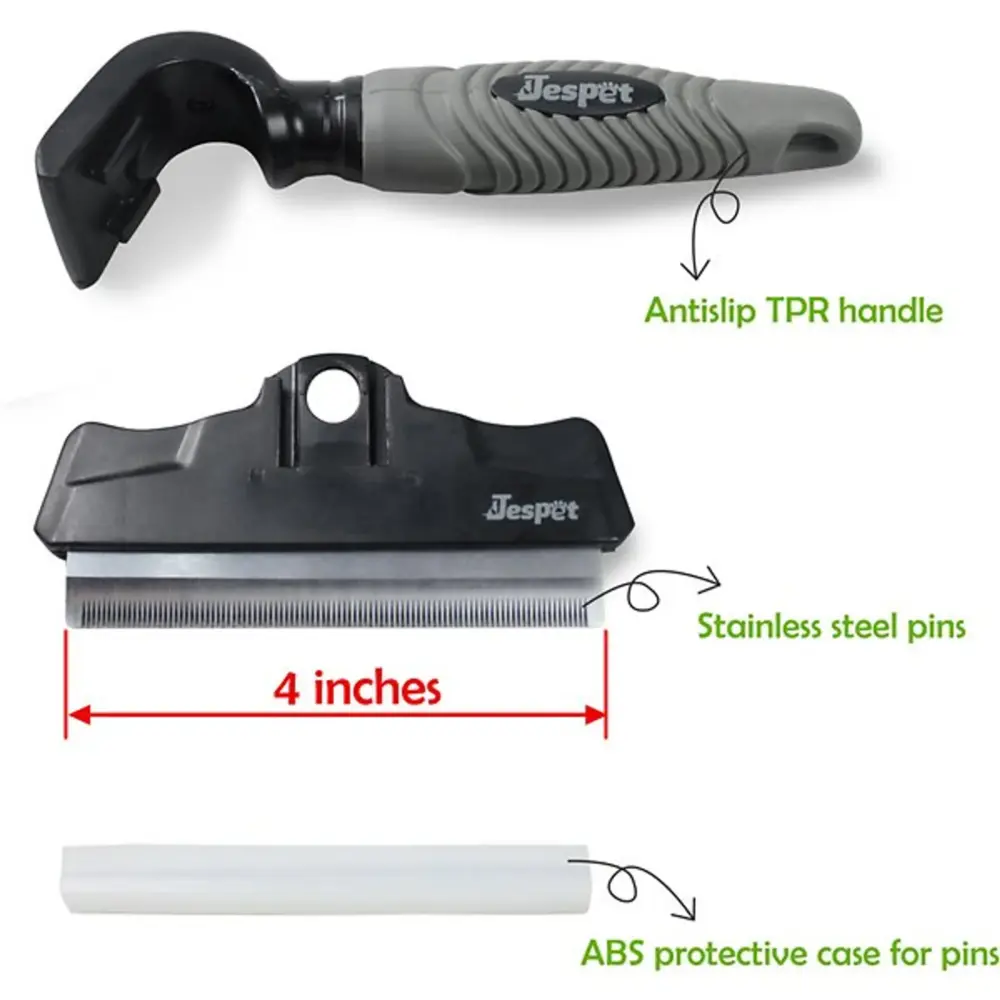
De-Shedding Tool for Dogs & Cats, Choose size
Price range: $27.95 through $29.95
Why it fits: The stainless-steel edge reaches through a Lab’s dense topcoat to lift out loose undercoat during the twice-a-year shed. Comes in Small and Large.
-
Quiet Rechargeable Pet Nail Grinder, View product
$50.95
Why it fits: Two speeds and a quiet motor for the trim every three to four weeks. Taking a black or dark nail down in thin layers is easier to control when you can’t see the quick.
-
Mr. Peanut’s
Naturals Pet Wipes
$26.95
Why it fits: Large, thick wipes for muddy paws and a dirty belly, so an indoor Lab can keep to a bath every four to six weeks instead of a wash after every walk.
Currently out of stock




Brushing and the twice-a-year sheds, in brief
Outside a shed, one session of about ten minutes a week keeps most Labs in good shape. Brush after a walk, when your dog is happy to lie down.
- Start with a hands-on check. Run your hands along the back, under the collar, around the base of the tail and between the toes, feeling for ticks, scrapes, lumps or sore spots. Mention any new lump to your veterinarian.
- Brush with the lie of the coat. Work in short strokes from the neck to the tail, then down the sides, chest and legs. With the mist brush, fill the tank with clean water and mist as you go.
- Don’t skip the tail. A Lab’s thick, rounded “otter” tail wears the same dense coat as the body, and loose undercoat collects at its base.
- Comb-check the back and hindquarters, then reward. If the wide-tooth comb brings up soft, pale tufts, a shed has started.
Once the tufts appear, switch to combing every day, as the AKC suggests, and add the de-shedding tool two or three times a week on the neck, back, sides and hindquarters, as often as the JESPET tool’s own instructions suggest. Use light strokes with the growth and keep it off the face, legs and belly. Bald patches, red or flaky skin or constant scratching aren’t part of a normal shed; ask your veterinarian. How to use a de-shedding tool covers pressure and the signs you are overdoing it, and our guide to dog shedding season explains how long a coat blow lasts and how to keep up with the hair on floors and furniture.
After pools, lakes and the beach: rinsing and drying a Lab
Many Labs would swim every day if you let them. Chlorine, salt and lake water all leave something behind in a coat this dense, so make a fresh-water rinse part of the swim, not an afterthought. The AKC’s advice on protecting a dog’s coat from pool chemicals is to rinse with cool water for longer than you think you need to.
- Rinse right away, down to the skin. Use a hose, a beach shower or a jug of tap water from home, and work it through the back, chest and belly with your fingers, because the water-resistant outer coat sheds a quick splash. Keep going after the water runs clear.
- Take the collar or harness off so the hair and skin under the straps can dry, and let the collar dry off the dog.
- Dry the ears. Lift each flap and dry the underside and the opening with a towel or cotton balls, as the AKC suggests. Never push anything down into the ear canal.
- Towel, then check the undercoat. Squeeze water out with your hands and press towels in rather than rubbing. Then part the hair on the chest, neck and tail base: if the undercoat still feels damp, towel again, use a dryer on a cool setting kept moving, or let your Lab finish drying in a warm room.
- Brush once the coat is dry to lift out sand, grit and the loose hair the swim shook free.
After a pool swim, the AKC’s Lab guide also suggests a bath to clear the chlorine, which can dry out the coat; for a Lab in the pool most days, the AKC’s pool-care advice is a weekly bath with a gentle, moisturizing dog shampoo through swim season. For the packing list, getting sand out of a thick coat and keeping the back seat dry, see how to clean up a dog after swimming.
Safety note
Keep your Lab out of water that looks scummy or discolored, a possible sign of a harmful algal bloom. If your dog does go in, the CDC’s advice is to rinse them off right away with tap water and not let them lick their fur first. Call your veterinarian right away if your dog seems sick after being in or near the water.
Checking and drying a Lab’s dropped ears
A Lab’s ears hang close to the head, and the AKC notes that they can block air from circulating underneath, which makes them a target for infections. Add regular swims and baths, and the ears are worth a look every week.
- Once a week, lift each flap and look in good light. A healthy ear is pale pink and clean inside, without a strong smell. A little light wax is normal.
- After every swim and bath, dry the underside of the flap and the opening you can see.
- Clean only for visible wax buildup, and only what you can see. The AKC suggests asking your breeder or veterinarian to show you how to clean a Lab’s ears safely. VCA Animal Hospitals’ guide to ear cleaning warns against cotton-tipped swabs, which can injure the canal, and notes that over-cleaning can irritate it, so let your veterinarian tell you how often your Lab’s ears need cleaning, if at all.
Safety note
See your veterinarian if your Lab keeps shaking its head or scratching at an ear, or if an ear looks red or swollen, smells bad or has discharge. Don’t clean a sore-looking ear or put drops in it until it has been checked.
Nails and the hair between the pads
Nails every three to four weeks
The AKC’s rule of thumb is a trim every three to four weeks, or as soon as you hear the nails clicking on the floor. Look on the inside of the front legs for dewclaws as well; they never touch the ground, so walks do nothing to shorten them. Holding the paw, the angle and a slow introduction for a Lab who dislikes the noise are covered in how to use a dog nail grinder.
Trimming the hair between the pads
Labs grow tufts of hair between their toes, and the AKC points out that if it isn’t trimmed, your dog will slip on slick surfaces. Check the feet at nail time:
- Have your Lab lie on their side, or stand with a helper, and hold the paw flat.
- With small, round-tipped scissors, snip the tufts that poke out past the pads until they sit flush with the pad surface.
- Don’t dig down between the pads or toes; the skin there is thin and easy to nick.
- If your Lab won’t keep a paw still, ask a groomer to do the feet when the nails are due.
Tip
A Lab slipping on hard floors isn’t always a grooming problem. Long nails and furred pads are the first things to check, and runners or rugs on slick stretches help. If an older Lab starts slipping, struggling on stairs or getting up slowly, mention it to your veterinarian.
Bathing an indoor Lab: how often
The AKC suggests a bath every four to six weeks for a Lab who spends most of the time indoors, with the extra pool-season baths above. In between, a fresh-water rinse is often enough after a lake or ocean swim, and a large wipe takes care of muddy paws and a dirty belly. If your Lab’s skin looks dry or flaky, or itches after baths, ask your veterinarian before bathing more often or switching shampoo.
On bath day, the water-resistant coat changes the routine a little:
- Comb out the coat first, as the AKC advises. During a shed, a session with the de-shedding tool beforehand means less hair in the drain.
- Soak to the skin. A Lab’s coat is built to keep water out, so a quick spray barely gets past the topcoat. Use warm water and keep massaging it in against the lie of the hair until you can feel the skin is wet.
- Shampoo with a product made for dogs, keeping it away from the eyes and ears.
- Rinse until the coat stops feeling slippery. Shampoo left in a dense undercoat can irritate the skin.
- Dry the ears and coat to the skin as you would after a swim, then brush once dry.
Mistakes to avoid
- Stopping when the topcoat feels dry. The undercoat, and the hair under a wet collar, can stay damp long after.
- De-shedding every day, all year, or going over one patch again and again.
- Bathing more often to fix a smell. An odor that returns soon after a bath, or comes from the ears or one patch of skin, is one for your veterinarian rather than more shampoo.
Troubleshooting Lab grooming
Your Lab smells like a wet dog for days after a swim
Check that the undercoat and the collar are drying all the way, and rinse sooner after the swim. If the smell comes from the ears or a patch of skin, or you see redness, have your veterinarian take a look.
The coat looks dull or feels dry in pool season
Chlorine dries the coat, and the AKC notes it can have a slight bleaching effect on dark coats, which shows first on black and chocolate Labs. Rinse for longer after each swim and keep to the weekly pool-season bath until swimming slows down. Red, flaky or itchy skin is one for your veterinarian.
You’ll find the mist brush, de-shedding tool, nail grinder and wipes in our dog and cat grooming tools.
Related guides
-
Checklist
Dog Grooming Checklist: The Essentials by Week, Month and Season
Every home grooming job sorted by how often it comes around: brushing by coat, a weekly nose-to-tail check, teeth, nails and paw fur, after-walk cleanups, baths and shedding season, plus what to skip and which jobs to hand to a groomer or veterinarian.
-
How-to
How to Groom a Senior Dog at Home: Brushing, Nails and Lump Checks
Many older dogs tire of standing, and shorter walks wear their nails down less. Here is how to set up a comfortable spot, brush gently by coat type, keep nails short, clean up between baths, check for lumps as you go and know when a groomer or veterinarian should take over.
-
How-to
How to Groom a Golden Retriever at Home: Brushing, Baths and Nails
A Golden’s double coat and feathering need at least a weekly brush, a daily one in a heavy shed, and a full brush-out before every bath. Here is the routine zone by zone, how to rinse and dry to the skin, nails, ears and paws, and which trims to leave to a groomer.