Grooming & Shedding How-to
How to Brush a Dog That Hates Being Brushed, One Stroke at a Time
Short answer
Stop the brush from hurting first: check for mats and sore spots, and switch to a gentler tool used with a light hand. Then rebuild the habit a few strokes at a time with treats or a lick mat, ending before your dog wants to leave. Add time or a new area only after two or three calm sessions.
Why does my dog hate being brushed?
A dog who bolts, squirms or grabs the brush has usually learned something from it:
- It pulls. A brush dragged through tangles, or into a mat near the skin, hurts every time it catches.
- It scratches. Slicker pins pressed too hard scrape the skin, especially on the thinly coated belly, armpits and inner legs.
- It’s the wrong tool. Firm wire pins have little hair to cushion them on a short, smooth coat, and a de-shedding edge is made for thick double coats.
- It means being held. Pinning, straddling or leaning over a dog turns brushing into a wrestling match.
- It goes on too long. Ask for twenty minutes from a dog who copes with two, and they learn to leave at the first stroke.
- It brings back a bad memory. The AKC’s article on why some dogs dislike being brushed notes that dogs remember scary or painful experiences, especially from puppyhood.
- Something already hurts. Sore joints, an infected ear or irritated skin make handling near those spots unpleasant.
Check for mats and sore spots first
Before any training, run your hands slowly over your dog from head to tail, with a treat every few seconds, and split the check over a few sessions if your dog is touchy. Look for:
- Mats and tight tangles behind the ears, under the collar or harness, in the armpits, on the backs of the thighs and around the tail.
- Touchy spots: anywhere your dog flinches, turns their head toward your hand, licks their lips or steps away.
- Skin changes: redness, flaking, scabs, hot spots, lumps or a sour smell.
Small, loose tangles can come out in separate short sessions; our guide to getting mats out of dog hair shows how. Mats tight against the skin are a job for a groomer. They aren’t a training problem, and brushing at them teaches exactly the lesson you’re trying to undo.
Safety note
See your veterinarian before you start if the dislike of brushing is new, if your dog yelps, growls or snaps when one area is touched, if an older dog suddenly resents handling around the hips or back, or if you find skin changes. Pain can look a lot like stubbornness, and no training plan fixes it.
Choose a gentler brush for your dog’s coat
Pick the tool that does the job in the fewest, lightest strokes, then use less pressure than you think you need. Our guide to types of dog brushes matches every brush to a coat; here is what matters for a dog who resists.
Short, smooth coats
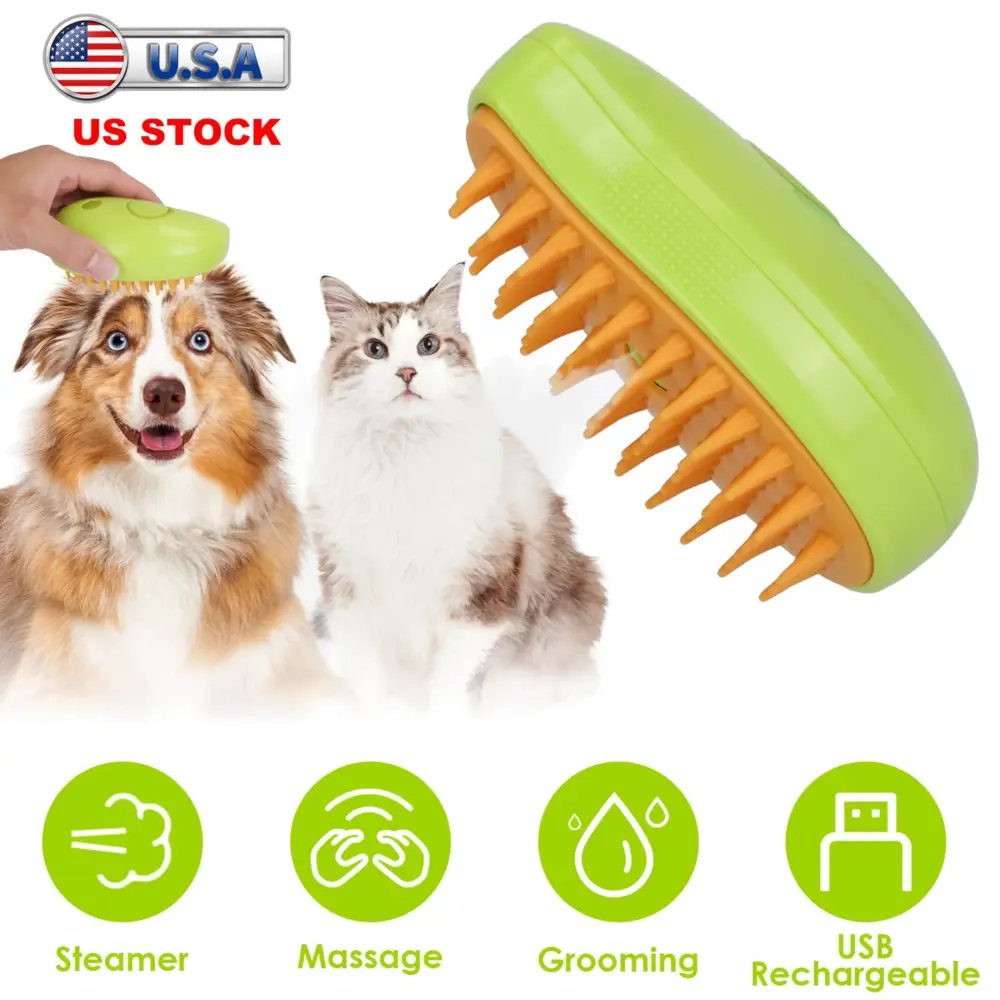
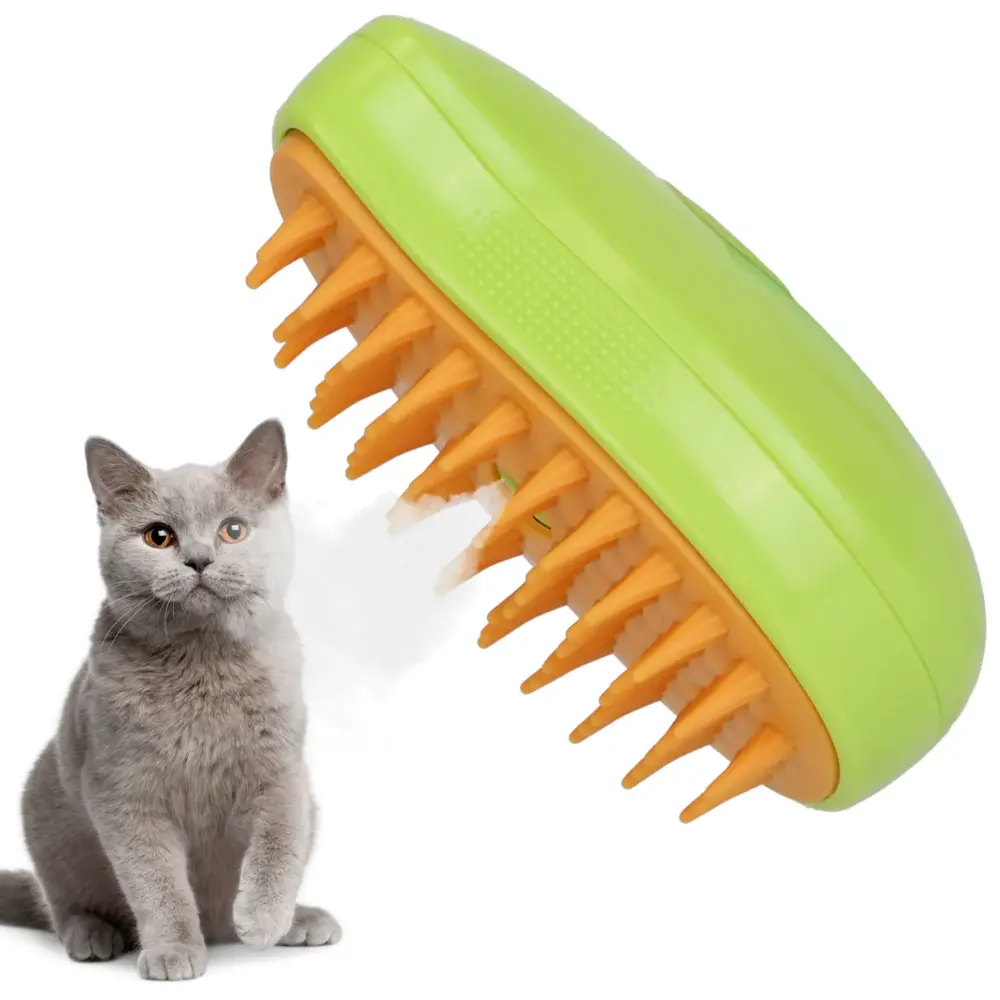
Boxers, Boston Terriers and other dogs with short, smooth coats rarely need wire pins. The 3-in-1 Steam Grooming Brush has soft silicone pins that lift dead hair and gently massage the skin, plus a fine mist that comes on only when you press for it, so you can brush dry while your dog learns. The AKC also suggests a grooming glove, so brushing feels like petting; we don’t stock gloves, but one is worth trying on a very touch-shy dog.
Medium, long and curly coats
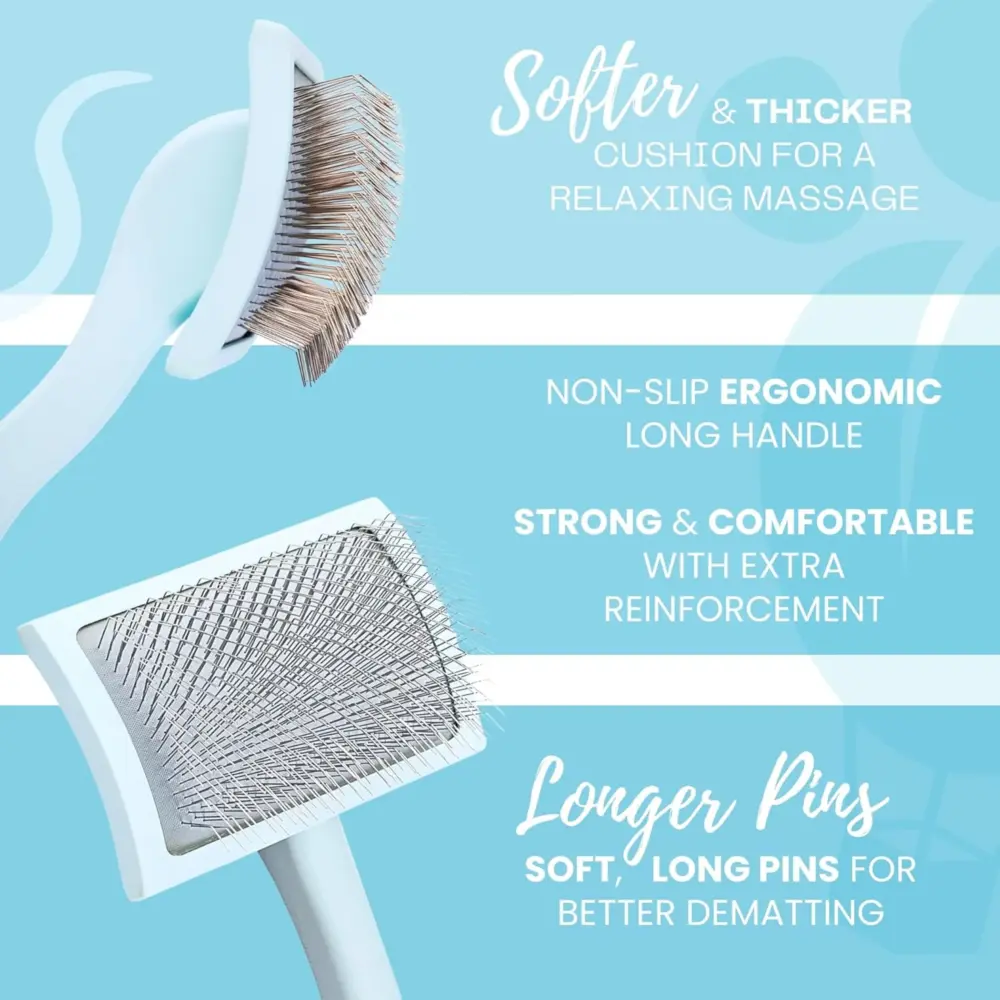
These coats tangle, so they need a slicker. The Sakabase Curved Slicker Brush, made for medium to long hair, has fine, firm pins on a curved head that follows the body, so each stroke covers more coat and the job takes fewer of them. Those pins call for a feather-light hand: glide over the top of the coat while your dog is learning, keep clear of the face, and leave knots for separate short sessions or a groomer.
Double coats in shedding season
A de-shedding tool lifts loose undercoat from Huskies, Shepherds and other double coats, but it is no detangler, and one snag on a knot can undo a week of practice. Add it only once your dog accepts the slicker and the coat is free of knots, and keep the strokes light and short.
Set up a spot your dog can settle in
A dog scrabbling on a slick floor, or cornered in a hallway, can’t relax. Gather these before the first stroke:
- Non-slip footing: a rug, a yoga mat or your dog’s own bed, at floor level so nobody leaps off a table mid-session.
- A quiet room: door shut, with space to step away from you but no house-wide chase.
- Small, high-value treats: cut pea-sized and kept for brushing only.
- A lick mat: spread thinly with xylitol-free peanut butter, plain yogurt or wet food, and frozen if your dog empties it fast. Stay close, and lift it away if your dog starts chewing it.
- A helper, if you can: someone to hold the mat or feed treats at nose level while you brush.
- A tired dog: after a walk or a game, when your dog is ready to settle.
Our picks are limited to what Nilosi stocks. A soft brush, a rug and treats you already have will work just as well for the steps below.
-
SodaPup
Jigsaw Enrichment Lick Mat for Dogs & Cats, Choose color
$25.95
Why it fits: Licking gives a nervous dog a steady job while you brush; press soft food thinly into the jigsaw grooves and stroke only while it lasts.
-
3-in-1 Steam Grooming Brush for Cats & Dogs, View product
$36.95
Why it fits: Soft silicone pins suit dogs with short coats who find wire brushes harsh; brush dry at first and add the fine mist later, away from the face.
-
Sakabase
Curved Slicker Brush, View product
$39.95
Why it fits: The curved head puts more pins on the coat per stroke, so a medium or long coat needs fewer strokes; keep the pressure feather-light.
-
JESPET
De-Shedding Tool for Dogs & Cats, Choose size
Price range: $27.95 through $29.95
Why it fits: A later step for double coats once knots are gone; light, short strokes with its steel edge lift loose undercoat. Small or Large.




How to get your dog used to brushing, step by step
Getting a dog used to brushing combines two training methods: desensitization (tiny steps toward what your dog dislikes) and counterconditioning (something good paired with every step). VCA’s introduction to desensitization and counterconditioning names grooming and brushing among the handling fears it can change, and suggests practicing at least twice a week, daily if you can. It also advises raising the difficulty only slightly, after two or three successful sessions, so move on only when your dog stays relaxed at the current step.
- Make the brush predict food. Show the brush, let your dog sniff it, give a treat, then put it out of sight. Repeat until your dog looks at you hopefully when it appears.
- Touch without brushing. Rest the back of the brush on your dog’s shoulder for a second, lift it away and treat. Build up to a slow glide of the back of the brush along the shoulder.
- One stroke, one treat. Turn the brush over and make one light stroke with the lie of the coat on the shoulder or side of the chest. Treat, and end the session there.
- A few strokes, treats every couple of seconds. That’s the AKC’s suggested pace at the start. Stroke, treat, stroke, treat, and stop while your dog is still happy to stay.
- Let the lick mat set the pace. For longer sets, brush only while your dog is licking. When the licking stops, the brushing stops; if your dog doesn’t go back to the mat, the session is over.
- Pause and ask. Every few strokes, lift the brush away for a few seconds. A dog who stays put or leans back in is saying carry on; one who moves away has had enough for today.
- Add one new area at a time. Lure your dog into a new position with a treat instead of pulling a leg into place, and give the new area a stroke or two at the end of a session.
- Build the full brush-out in pieces. Do one zone per session, such as the back and sides, then the chest, then the legs. Fade the treats slowly, but always end on a reward.
Tip
There’s no fixed timeline: VCA notes that this kind of training can take a few hours, a few weeks or a few months, depending on how strong the fear is. A short coat copes with little brushing in the meantime, but a long or curly coat can mat while you train, so ask a groomer who works gently with nervous dogs about keeping it shorter for now.
Where to start, and what to save for later
Start where your dog already enjoys a scratch, usually the shoulders, the side of the chest and along the back. You can reach them from beside your dog without leaning over, and they hold plenty of loose hair. Then add these, roughly in this order:
- Neck and back of the head, with a soft brush, well clear of the eyes.
- Hindquarters and the backs of the thighs, where long coats tangle. Let an older dog with stiff hips lie down for these.
- Belly and armpits: thin skin and hidden tangles. Many dogs relax best lying on their side.
- The tail: brush from the base outward with it resting on your hand, never held up by the tip.
- Ears and face. If your dog shakes their head or pulls away when an ear is touched, have it checked first.
- Feet, last. Paw handling is its own project, built with the same small, rewarded steps; see what to do when a dog doesn’t like their paws touched.
Signs your dog has had enough
Dogs usually signal discomfort well before they snap. The AKC’s list of signs that a dog is stressed includes lip licking, yawning, whale eye (the whites of the eyes showing as your dog watches you sideways), ears pinned back, a tucked tail, looking away and suddenly freezing or going stiff. While you brush, also watch for:
- A quick turn of the head toward the brush or your hand.
- Mouthing or grabbing the brush.
- Turning down a treat or the lick mat your dog would normally go for.
- Trying to leave, or pressing into the floor or a corner.
- A growl or a lifted lip, which means you’ve already passed several quieter warnings.
When you see any of these, lift the brush away, lower your hands and give your dog room. Next time, stop a little sooner or go back a step. Never punish a growl: the AKC’s article on why dogs growl explains that punishment can suppress the warning without changing how your dog feels, which makes future behavior harder to predict and potentially more dangerous.
Common mistakes, and what to try when you stall
Mistakes that set you back
- Brushing through a mat. One hard tug can undo days of work. Work small tangles from the ends, holding the hair at the base, or leave them for the groomer.
- Pressing harder to finish faster. Several light, short sessions beat one firm, long one.
- A brush full of hair. A clogged slicker drags instead of gliding. Pull the hair out every few strokes, and see how to clean a dog brush for a deeper clean.
- Holding your dog down, or following them with the brush. Both teach that the brush means being trapped.
- Brushing only when the coat is a mess. Then the brush always means pulling. Quick passes over a tidy coat keep it ordinary.
Troubleshooting
- Your dog mouths the brush. In young dogs it’s often play. Keep the brush low and away from the face, give their mouth a job with the lick mat and shorten sessions. Hard mouthing with a stiff body is a warning: stop.
- They bolt the moment it appears. Go back to step one, and take the brush to where your dog already rests instead of calling them over.
- They only accept it while there’s food. That’s normal early on. End before the mat is empty, and slowly add a stroke or two between treats.
- They’re fine everywhere but one spot. Leave it out and have your veterinarian check it, especially if the reaction is sharp or new. Once pain is ruled out, add one stroke there at the end of a session.
- Progress slides backward. After a tug on a knot or a stressful week, drop back a step or two and rebuild.
When to call a groomer, trainer or veterinarian
- A groomer for tight mats, coats that need clipping or hand-stripping, and coats that can’t wait for training to catch up. Ask whether they work with nervous dogs and can keep early visits short.
- A reward-based trainer if your dog growls, snaps or has bitten during grooming; the AKC suggests a trainer in that case, and a groomer trained to work with fearful dogs. A trainer can also help you teach a basket muzzle as a calm routine if safety is a worry.
- Your veterinarian for signs of pain or skin trouble, a sudden change in how your dog reacts to touch, or fear so strong that your dog trembles, panics or won’t take a treat. They can look for a medical cause and discuss options such as a referral to a veterinary behaviorist or medication for grooming days.
Once brushing is routine, the coat decides how often to brush your dog. If bath time is a battle too, brushing out tangles beforehand makes it easier, and our guide to bathing a dog that hates baths covers the rest.
Related guides
-
Buying guide
Best Brush for Cats: Choosing by Coat, Undercoat and Temperament
Which brush suits your cat: soft silicone pins, a slicker or a de-shedding tool? Match the tool to coat length, undercoat, skin, age and temperament, see which brush we stock for each coat, and spot the signs that a brush is the wrong one.
-
Guide
How Often Should You Brush Your Dog? A Schedule by Coat Type
Smooth coats need a weekly brush, double coats one to three sessions a week, and long, silky or curly coats daily. Get a coat-by-coat schedule, session lengths, a rule for mixed coats, the signs you need to brush more often and a weekly plan you can keep.
-
How-to
How to Groom a Senior Dog at Home: Brushing, Nails and Lump Checks
Many older dogs tire of standing, and shorter walks wear their nails down less. Here is how to set up a comfortable spot, brush gently by coat type, keep nails short, clean up between baths, check for lumps as you go and know when a groomer or veterinarian should take over.