Grooming & Shedding Guide
Do Steam Brushes Work for Cats? What They Do and How to Use One
Short answer
Yes, for the right coat. A cat “steam” brush actually sprays a fine water mist, not steam, which weighs down loose hair so it gathers on the soft pins instead of drifting around the room. It suits short-haired cats who already accept brushing, but it won’t detangle long fur, clear mats or reach a dense undercoat.
Steam or mist? What these brushes actually do
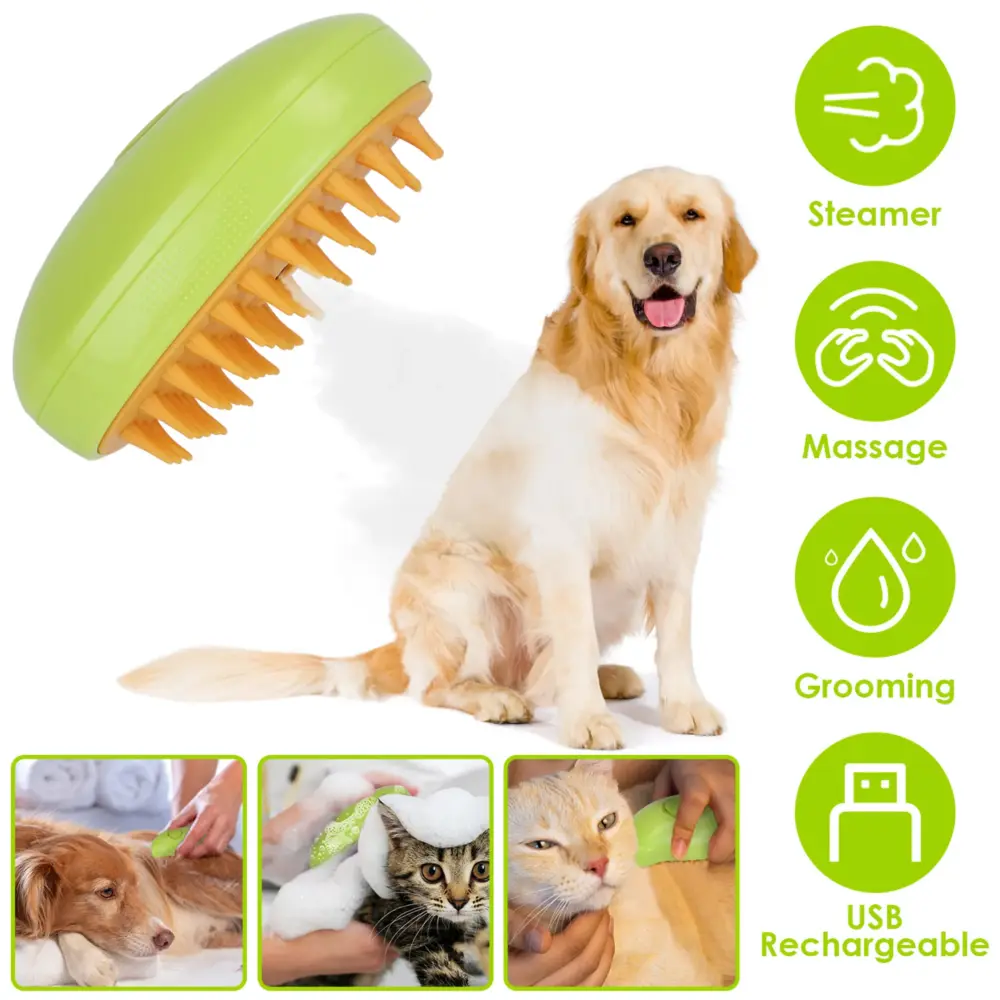
The name oversells it: nothing boils and nothing heats up. When you press the button, a small rechargeable unit sends water from a refillable tank out as a fine mist while you brush. The rest is an ordinary soft brush, with rows of silicone pins that pick up dead hair and give a gentle massage. Our 3-in-1 Steam Grooming Brush works this way: rechargeable, with a small refillable tank and soft silicone pins.
The mist helps in two modest ways. Slightly damp hair carries less static and is a touch heavier, so loose hair clings to the pins in a layer you can peel off, rather than lifting into the air with each stroke. The difference is clearest on fine, fluffy short coats, the kind that send up a haze of hair whenever you brush them dry.
The limits matter just as much. A mist brush doesn’t wash or condition the coat, and soft pins slide over knots rather than working through them. Nor can it make a healthy cat shed less: like any brush, it only collects hair that is already loose, so be wary of any claim that a brush will cut shedding by a set percentage.
Which coats a mist brush suits, and which it doesn’t
Coat length decides most of this, and your cat’s patience decides the rest.
Good matches
- Short, sleek coats. On most domestic shorthairs the soft pins reach down to the skin, and the mist keeps fine hair from flying off the brush.
- Cats who enjoy being petted. Soft silicone pins feel closer to a hand than wire pins do, which can win over a cat who walks away from a slicker.
- Older short-haired cats. Many groom less thoroughly with age, and soft pins are gentle enough for the extra sessions they may need.
- Short-haired dogs. The brush works the same way on a smooth dog coat; longer or double dog coats need a slicker or deshedding tool instead.
Use something else, or use it second
- Long and semi-long coats. On a Persian, Maine Coon or Ragdoll, soft pins skim the top while knots form close to the skin. A slicker is the main tool there, as our guide to grooming a long-haired cat at home explains; a mist brush can follow as a light last pass if your cat enjoys it.
- Matted fur. No brush loosens a tight mat. Leave it to a groomer or your veterinarian, and don’t reach for scissors, since thin cat skin is easily cut along with the mat.
- Plush coats in a heavy shed. On a dense coat such as a British Shorthair’s, the mist brush tidies the topcoat, but the loose undercoat beneath it may need a few light strokes of a deshedding tool.
- Sore, scabby or flaky skin. Brushing over it can hurt, so ask your veterinarian before you start.
- Hairless cats. A Sphynx has little coat to collect, and its skin care is a different routine altogether.
- Cats who panic at sounds or sprays. Brush dry for now. The mist is optional, and the section on introducing it, below, shows how to add it slowly.
How to use a steam brush on a cat, step by step
You need the brush, charged; clean water; a few small treats; and a time when your cat is already relaxed, such as after a meal. Choose a spot that’s easy to sweep, because some hair will still escape. If your cat has never met the spray, work through the introduction in the next section first.
- Charge it first. Charge the brush fully before the first session, following the instructions that came with it.
- Fill the tank. Use clean, plain water, stop a little short of full and close the cap firmly so it can’t drip onto your cat.
- Test it on yourself. Mist your own forearm, away from your cat, so you know how much each press releases and what it sounds like.
- Start dry. Sit beside your cat and give a few strokes along the back with no mist, so the pins are the only new thing.
- Mist the coat, not the cat’s face. Press to mist and brush with the lie of the fur in short strokes over the back, shoulders and sides, well away from the eyes, ears and nose.
- Mist every few strokes, not every one. The coat should feel barely damp. If the fur feels wet under your hand, brush dry for a while.
- Clear the pins as they fill. Peel the hair off, so the brush keeps collecting instead of pushing a mat of fur around.
- Stop while your cat is calm. A minute or two is plenty at first. Give a treat, then empty the tank.
Once your cat is used to it, a full brush-down of a short coat takes about five minutes. Bellies, armpits and the base of the tail can wait until the back and sides are easy.
Safety note
Fill the tank with plain water only. You may see tips to add conditioner or a scented oil, but cats lick off whatever lands on their fur, and VCA Animal Hospitals warns that essential oils can poison cats whether swallowed or absorbed through the skin, sometimes in very small amounts. Don’t add oils, perfume, shampoo or coat sprays unless your veterinarian approves a product made for cats and the brush maker says the tank can take it.
Introducing the mist to a wary cat
Getting used to the brush and getting used to the spray are separate lessons, and they go better one at a time. If your cat doesn’t yet accept brushing at all, start with our two-week plan for a cat that hates being brushed and brush dry throughout. Add the mist once dry brushing is routine.
Some cats react to the click of the button or the sound of the spray, others to the cool, damp touch. Work through these steps over several days, moving on only when your cat stays relaxed:
- Mist from across the room. While your cat eats or enjoys a treat, press the button once with the nozzle pointed away from them. Do nothing else.
- Come closer over a few sessions. Keep misting into the air, never toward your cat, until one press nearby barely earns a glance.
- Add one burst to a dry session. Mist a single stroke along the back, well away from the head, then give a treat and end there.
- Build up slowly. Go from one misted stroke to a few, then to the back and sides. Drop back a step after any startle.
Stop at the first flattened ears, tail swish, skin twitch or attempt to leave, and end a little sooner next time. If anyone at home has used a spray bottle to keep your cat off the counters, expect a stronger reaction and go more slowly, because a hiss of water may already mean trouble. For the same reason, never use the brush’s spray to correct behavior.
Tip
Some cats never accept the spray, and that’s fine. The soft pins still pick up loose hair when you brush dry; you’ll just see a little more of it float away.
Refilling, charging and cleaning the brush
Models differ in which parts can get wet, so read the manual that came with yours first. Three habits matter most when the brush lives in a home with a cat:
- Empty the tank after every session. Pour out what’s left and leave the cap open so it can air-dry, then refill with fresh water next time. Water left standing for days goes stale.
- Keep water away from the charging port. Don’t submerge the brush or hold it under the tap unless the manual says a part comes off for washing, and make sure the port is dry before you plug in.
- Charge it out of reach. Some cats chew cables, so charge the brush on a high shelf or in a room your cat can’t get into, and put the cable away afterward.
Peel the hair off the pins at the end of each session and wipe the pin head with a damp cloth now and then. For a weak or patchy mist, chalky residue on the nozzle and signs a brush needs replacing, see our guide to cleaning a mist brush, slicker and the rest of the grooming kit.
Mist brush, slicker or deshedding tool?
Each tool does a different job, and many short-haired cats only ever need the first one.
| Tool | Does well | Not for |
|---|---|---|
| Mist brush | Loose hair on short coats | Knots, mats or thick undercoat |
| Slicker brush | Tangles in medium and long fur | Sleek short coats or heavy pressure |
| Deshedding tool | Loose undercoat in dense coats | Single coats, mats or sore skin |
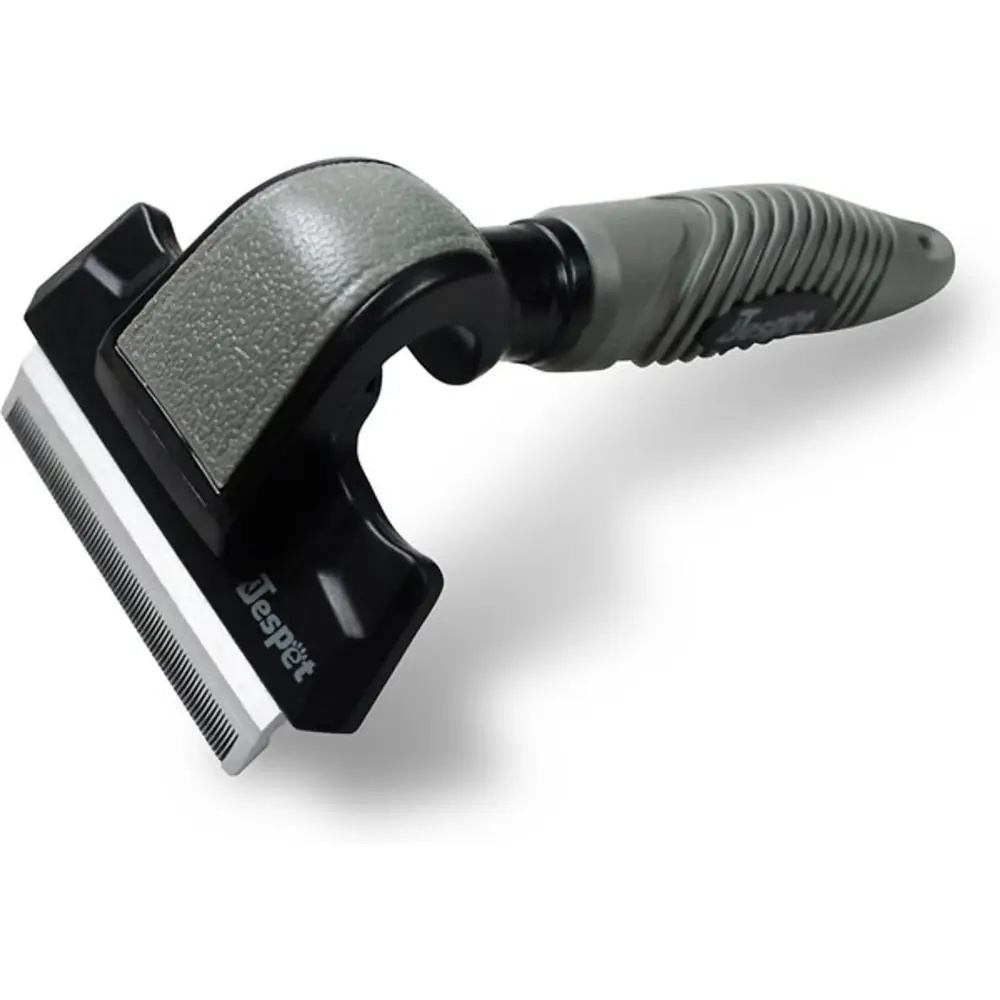
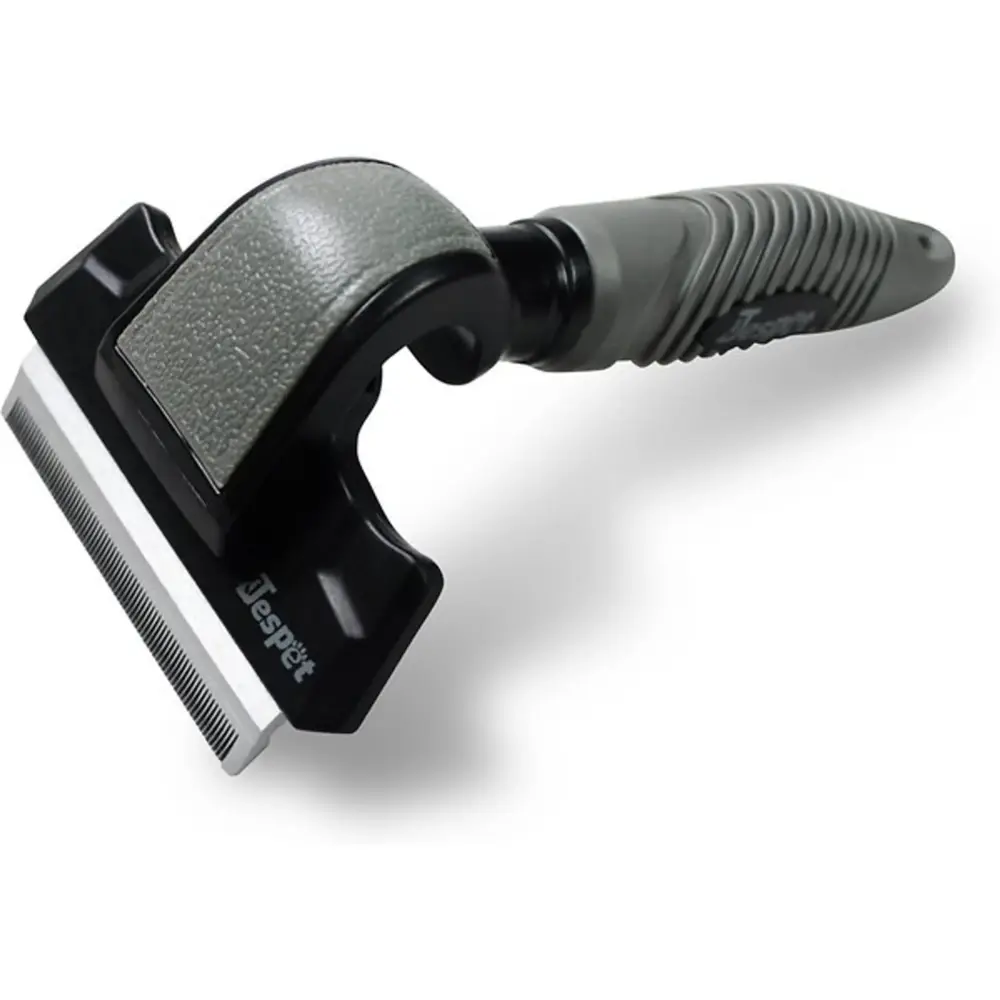
A long-haired cat needs a slicker first, and a plush double coat in a heavy shed can take a few light strokes of the JESPET De-Shedding Tool after the regular brush. Our guide to the best brush for cats, by coat and temperament compares the main types, and slicker brush vs deshedding tool explains how those two work together.
-
3-in-1 Steam Grooming Brush for Cats & Dogs, View product
$36.95
Why it fits: Suits short coats that shed fine hair; you press to mist, so a wary cat can be brushed dry until the spray feels familiar.
-
Sakabase
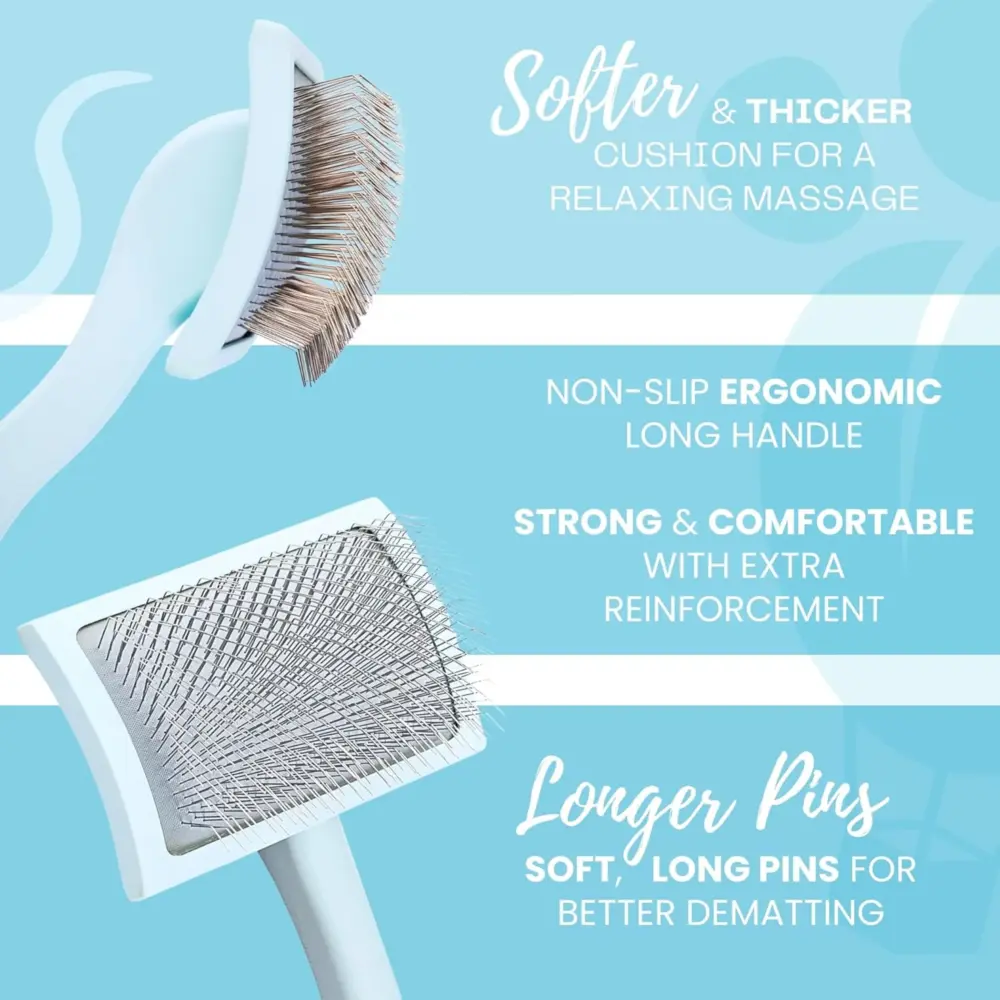
Curved Slicker Brush, View product
$39.95
Why it fits: The main tool for medium and long fur; its curved head and fine, firm pins reach the knots and undercoat that soft pins skim over.


The mist brush, the slicker and the deshedding tool are all in our grooming tools for cats and dogs.
Fixing drips, flinching and hair that won’t lift
- Water drips onto the coat. The tank is probably too full or the cap isn’t fully closed. Fill it a little short of the top and press the cap home.
- No mist, or only a weak puff. Charge the brush and refill the tank, then check the nozzle for trapped hair or chalky residue.
- Your cat flinches at the first press. Go back to misting from across the room, and brush dry in the meantime.
- The brush picks up very little. That can be good news: a cat brushed recently, or between heavy sheds, has less loose hair to give. On a long or dense coat, though, the soft pins may not be reaching it, and a slicker or deshedding tool will.
- The brush drags or catches. There’s a knot underneath. Stop, ease small tangles out with a slicker and leave tight mats to a groomer.
- Hair still drifts around the room. Once your cat accepts the spray, mist before the first stroke, clear the pins more often, and brush on a hard floor or over a towel you can shake outside.
- Pink skin, flakes or bald patches. Stop brushing that area and ask your veterinarian; these are skin questions, not brush ones.
Mist brush questions
Is a steam brush safe for cats?
Used as directed, it’s a soft brush and a little plain water, so the risks are ones you control: mist near the face, a soaked coat, anything added to the tank and a charging cable left within reach. Stop if your cat seems stressed, and if your cat has a skin condition, ask your veterinarian before you start.
Will a mist brush help with hairballs?
Any brush that removes loose hair leaves less for your cat to swallow while grooming, and the Cornell Feline Health Center encourages owners to brush and comb their cats daily to help prevent hairballs. The mist itself adds nothing special. Frequent hacking can have other causes, and Cornell advises seeing your veterinarian promptly if your cat retches repeatedly without bringing anything up, vomits, seems lethargic or stops eating for more than a day or two.
How often should I use it?
As often as the coat needs: once or twice a week for most short coats, and daily is fine if your cat enjoys it and you keep the pressure light. Our guide to how often to brush a cat, by coat length has the full schedule.
Related guides
-
Guide
Does My Dog Have a Double Coat? How to Tell and Why It Matters
A short coat can still be double, and a long one can be single. Learn the part-and-look test, the clues that mislead, examples from Labradors to Maltese, where doodles and mixes fit, and why the answer changes brushing, shedding and drying.
-
Buying guide
Types of Dog Brushes: Which Brush Suits Your Dog’s Coat
Slicker, de-shedding tool, pin, bristle, rubber curry, comb or rake: what each type of dog brush does, a coat-by-coat table of the ones your dog needs, the three tools we stock and the ones we don’t, and the signs a brush is wrong for the coat.
-
Comparison
Should You Shave Your Dog in Summer? What to Do by Coat Type
A shaved double coat doesn’t cool a dog and can grow back patchy. See which coats can take a summer trim, when a shave-down is the right call, a hot-weather brush-out routine, what to do if your dog is already shaved, and how lion cuts work for cats.