Cat Care Guide
Does Catnip Work on All Cats? What to Try When It Does Nothing
Short answer
No. The response is inherited through a single dominant gene and somewhere around a third of cats do not have it. Kittens generally do not respond until three to six months old, and very old cats often stop. If catnip does nothing for your cat, try silver vine, valerian or Tatarian honeysuckle, which reach cats that catnip misses.
The short answer
Catnip works on most cats and not on all of them. The usual figure quoted is that somewhere between a quarter and a third of cats show no reaction at all, and that is a normal variation rather than anything wrong with the individual.
Because the trait is inherited, it also tends to run in families. If you have two related cats and neither reacts, that is exactly what you would expect rather than a coincidence.
Why some cats do not respond
The active compound is nepetalactone, which the plant produces in its leaves and stems. It reaches receptors in the nasal tissue and from there triggers a response in the parts of the brain involved in emotion and reward, which is why the effect is behavioural rather than digestive.
Whether a cat has that pathway working is genetic. It is generally described as an autosomal dominant trait, which means a cat needs only one copy of the relevant gene to respond, and cats with no copies feel nothing at all. There is no way to develop it, and no product that creates a response in a cat who does not have the gene.
It is worth saying plainly because the usual assumption when catnip does nothing is that the catnip is old or weak. Sometimes it is, but a cat who ignores fresh, strong catnip on two or three separate occasions is almost certainly a non-responder.
Kittens and the age rule
Kittens do not respond. The sensitivity develops with maturity, usually appearing somewhere between three and six months, and a kitten who ignores a catnip toy at eight weeks may be enthusiastic about the same toy at six months.
That matters when buying toys for a new kitten: a catnip toy is not the way to get them playing. Movement, texture and a wand toy you operate yourself all work far better at that age.
At the other end, many elderly cats lose the response or show a much milder version. If your older cat has stopped reacting to a toy they used to love, that is ordinary rather than a cause for concern on its own.
What a response actually looks like
A full response lasts around ten minutes and runs through a recognisable sequence. People sometimes miss a mild response because they are expecting the dramatic version.
- Sniffing, intently, usually with the mouth slightly open
- Licking and chewing the source
- Head shaking and chin rubbing against it
- Cheek and body rubbing, then rolling over it
- Kicking with the back feet while holding it with the front
- A burst of activity: running, pouncing, sometimes vocalising
- A calm, drowsy phase afterwards in many cats
Some cats become more playful and some become mellow; both are normal. A small number become overstimulated and may swat or nip, which is worth knowing before you hand a catnip toy to a child. If your cat is one of those, use smaller amounts and keep sessions short.
How long it lasts and how often to offer it
The active phase is usually five to fifteen minutes, after which cats become temporarily insensitive for something in the region of an hour or two. Offering more during that window does nothing, which is why leaving a catnip toy out all day wastes it.
Used two or three times a week, catnip keeps its novelty. Available constantly, most cats stop paying attention to it, which is the single most common reason a catnip toy stops working in a household where it used to.
It is not addictive, it is not a sedative, and cats do not need a break for health reasons. The rationing is about keeping the response interesting rather than about safety. Eating a quantity of dried catnip occasionally causes mild stomach upset, which resolves on its own; if your cat is repeatedly vomiting, that is not the catnip and is worth a veterinary opinion.
Alternatives for non-responders
This is the useful part, because the three main alternatives work through different compounds and reach many of the cats catnip misses. Studies of cats offered all four have found that nearly every cat responds to at least one.
| Plant | Form | Notes |
|---|---|---|
| Silver vine | Dried fruit galls, powder, sticks | The highest response rate; reaches most catnip non-responders |
| Valerian root | Dried root | Strong smell to humans; stimulating for many cats |
| Tatarian honeysuckle | Wood shavings or blocks | Works on a good proportion of non-responders; long lasting |
| Catnip | Dried leaf, spray, fresh plant | The best known; around a third of cats do not respond |
Silver vine is the one to try first if catnip does nothing. It is widely sold as sticks or as powder, and the response looks much the same as a catnip response.
Dried, sprays and fresh
Dried leaf is the most potent common form, because the nepetalactone concentrates as the plant dries. Look for a product that is mostly leaf and flower rather than stem, since the stems carry far less.
Sprays are convenient for refreshing a scratcher or a bed and are usually much weaker, because the compound is diluted and evaporates quickly. They are good for marking a surface you want the cat to use and poor as a toy filling.
Fresh plants work and are the least predictable, since potency varies with the growing conditions and cats often damage the plant beyond recovery in one session. A pot of it on a windowsill is a pleasant thing and not a reliable supply.
Tip
Catnip toys where the herb is worked through the filling rather than sprinkled on the surface keep working for far longer, because the scent carries out through a breathable cover instead of sitting on the outside and rubbing off in the first session.
Storing it so it stays potent
Nepetalactone is volatile, which is the whole reason the cat can smell it, and that means it escapes over time. Most disappointing catnip is simply old.
- Keep dried catnip in an airtight container, not the bag it came in
- Store it in the freezer, which slows the loss considerably
- Keep toys in a sealed tub between uses rather than in the toy basket
- Crush or roll dried leaf between your fingers before offering it, to release the oils
- Buy small quantities more often rather than a large bag once
- Replace it yearly; colour fading from green to brown is a reasonable guide
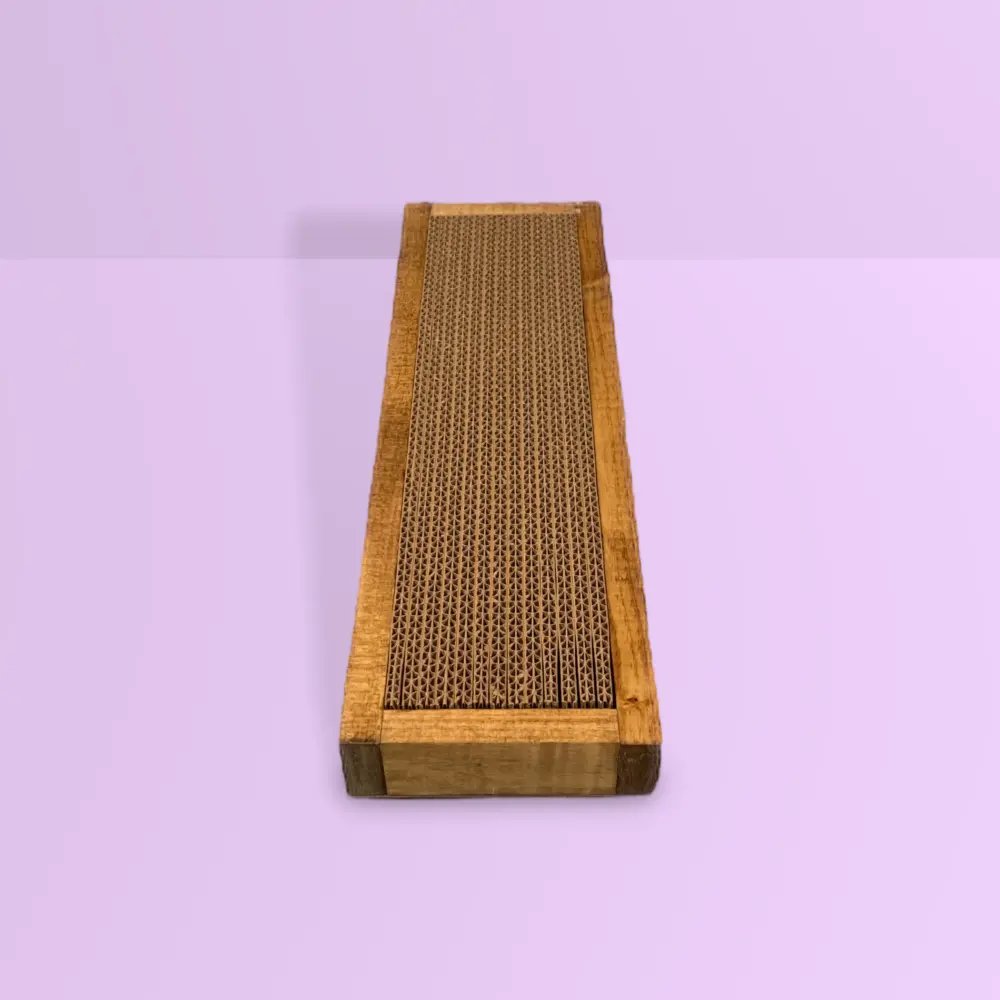
Using it to make a scratcher or bed work
The most practical use of catnip is not entertainment, it is persuasion. A new scratcher, a new bed or a carrier that your cat is ignoring becomes considerably more interesting with catnip on it.
Rub dried leaf into the surface rather than sprinkling it on top, so it stays put, and reapply for the first week while the cat forms a habit. Once they are using the item, you can stop; the habit holds without it.
Do not use it to lure a cat into something they are frightened of, such as a carrier they already associate with the vet. That needs a slower approach: getting a cat used to a carrier covers it. For scratchers, getting a cat to use a scratcher covers placement, which matters more than catnip does. In a small flat, cat furniture for small apartments covers where any of it can actually go.
-
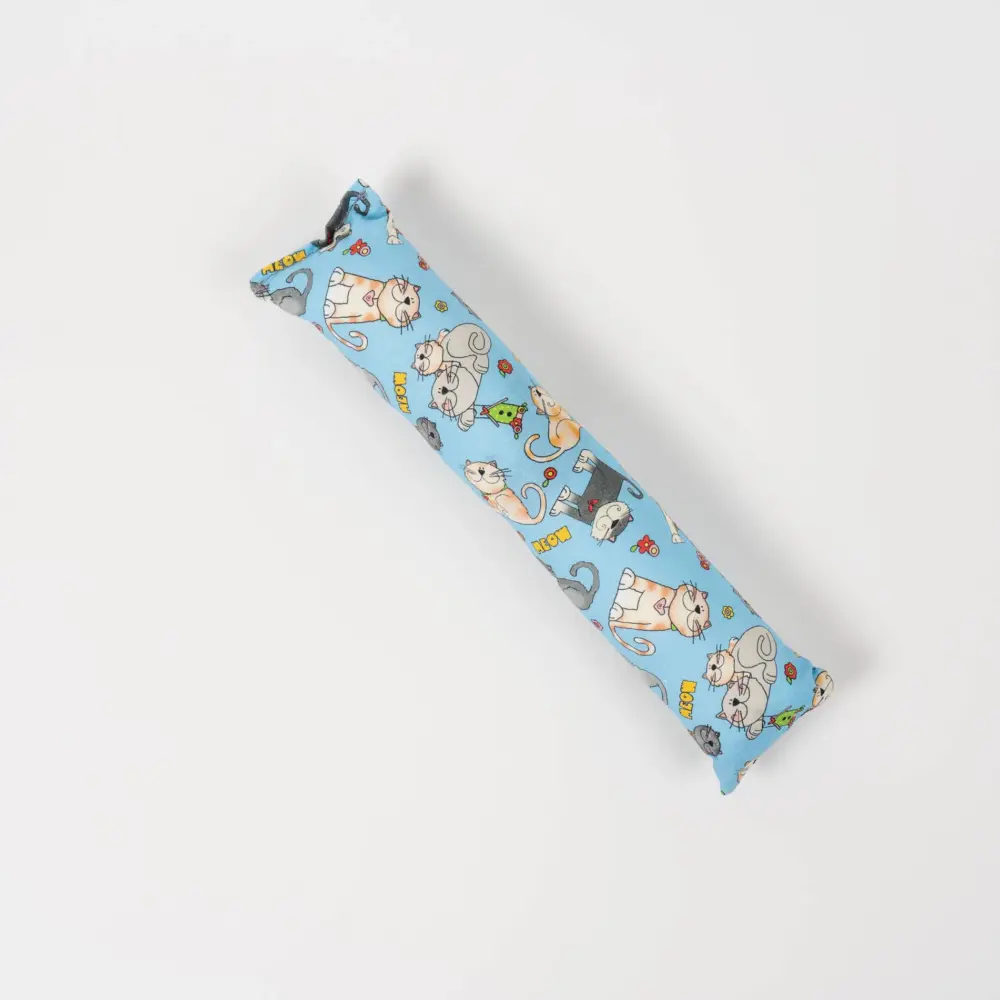
Catnip Stickz
Organic Catnip Cat Toy, Choose size
Price range: $33.95 through $39.95
Why it fits: A soft stick toy with organic catnip worked through the filling rather than sprinkled on the outside, in a breathable cover so the scent keeps carrying. Two lengths.
-
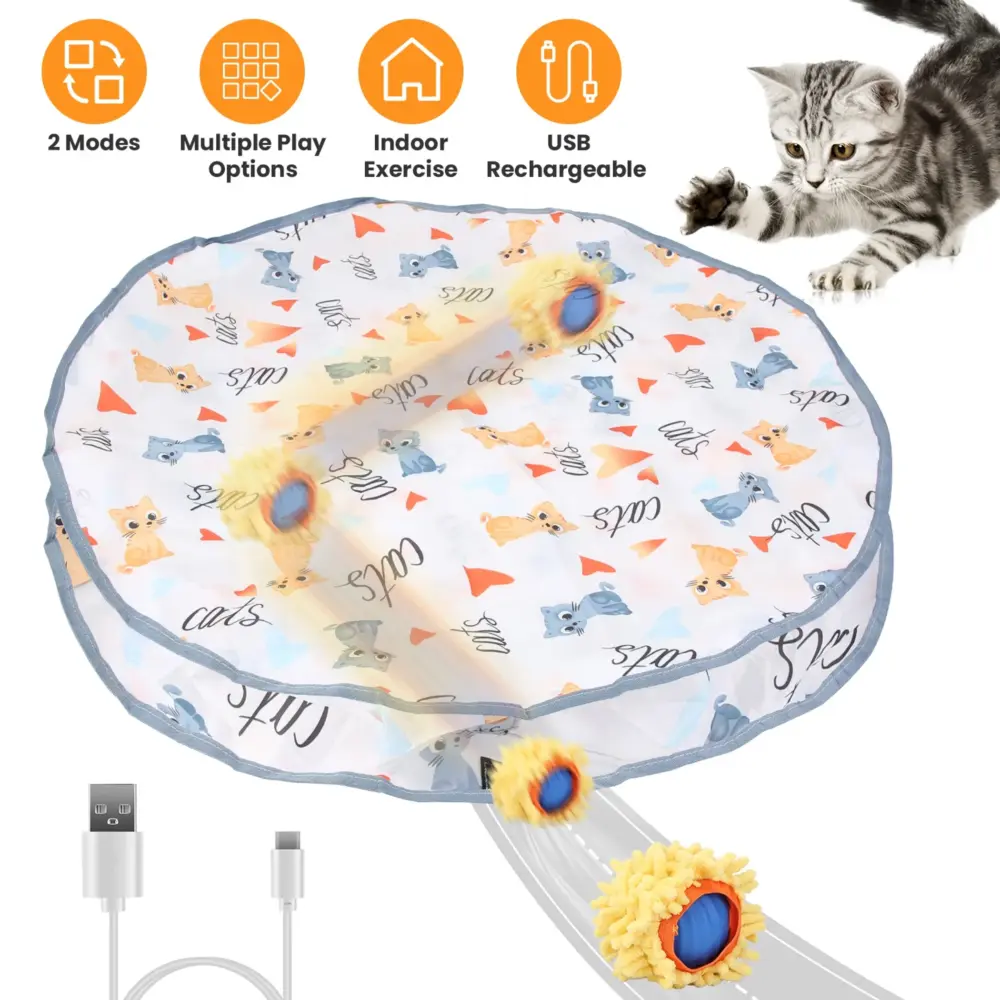
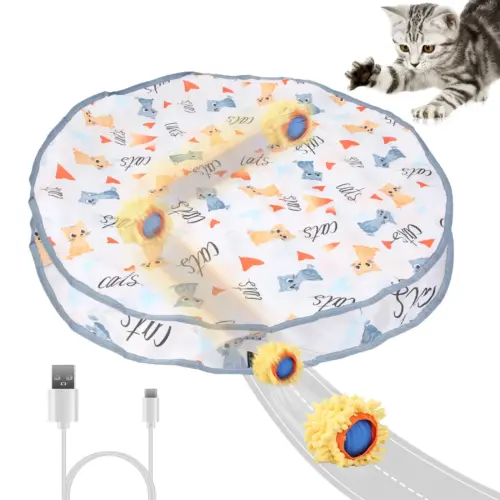
Motion-Activated Rolling Cat Toy Ball, View product
$42.95
Why it fits: For cats who do not respond to catnip at all: a motion-activated ball that darts and changes direction like prey, and wakes when touched.
Common questions
Can catnip harm my cat?
It is not known to be harmful in normal use. Eating a large quantity of dried leaf can cause mild vomiting or loose stools, which passes. If your cat becomes aggressive when overstimulated, reduce the amount and keep sessions short.
Does it work on dogs?
Not in the same way. The response is specific to cats, including wild species such as lions and bobcats. Valerian has some effect on dogs, which is a separate subject.
Why did my cat love it and then stop?
Usually one of three things: the catnip has lost potency with age, it has been available constantly so the novelty has gone, or you are offering it again inside the hour or two when cats are temporarily insensitive. Put it away for a week and try fresh leaf.
Related guides
-
How-to
How to Check Your Cat Is a Healthy Weight at Home
Cat weight is hard to judge by eye, especially under a thick coat. This guide covers the hands-on check vets use, the primordial pouch that is often mistaken for fat, and what actually works when a cat needs to lose weight.
-
Guide
Should You Get a Second Cat? How to Tell if Yours Would Welcome One
A second cat can be good company or a daily source of stress. Learn what lonely behavior often means, what makes a cat likelier to accept a newcomer, which pairings tend to work, what one more cat takes in space, money and time, and what to try first.
-
Guide
Cats and Kids: Teaching Gentle Hands and Giving Your Cat an Escape
House rules for a family with a cat: how children should approach, stroke and pick up a cat, toys instead of hands, the child-free room and high escape routes your cat needs, the signs it wants to be left alone, supervision by age and first aid after a scratch or bite.