How to Harness Train a Cat: From First Sniff to First Steps Outside
To harness train a cat, take it in short, treat-filled steps: let your cat sniff the harness, buckle it on for a minute or two at mealtimes, let a light leash trail around the house, and only then carry your cat outside for a few quiet minutes. Expect several weeks, more for shy or older cats, and accept that some cats never enjoy it.
Short answer: go slowly, start indoors and let your cat set the pace
- Short sessions. A few minutes, several times a day, ending while your cat is still calm.
- Indoors first. The harness, its buckle clicks and a trailing leash should be old news at home before you add the outdoors.
- Your cat leads. Never pull, drag or lift your cat by the leash. If a step goes badly, go back one.
Two safety rules apply from day one: take the harness off after every session, and never leave a harnessed cat unattended or tied up, indoors or out.
Is your cat a good candidate for harness walks?
Good candidates tend to show:
- Confidence: your cat investigates new things and recovers quickly from a surprise.
- Interest in the outdoors, such as long spells watching birds from the window.
- Enthusiasm for treats or play, so you can reward each small step.
- Good health. Before any outdoor time, ask your veterinarian about vaccinations and parasite prevention, and make sure your cat is microchipped with your current phone number registered.
Think twice with a cat that hides from visitors, startles at household noises or lives near busy roads and loose dogs; the outdoors may stress a nervous cat more than it helps. A few indoor cat enrichment ideas can keep a homebody busy instead.
Choosing a harness and getting the size right
Use a harness made for cats, never a collar, which presses on the throat and slips off easily. Vest styles cover more of the body, and some shelters consider them more secure; an H-style is two narrow straps. Either is only as secure as its fit.
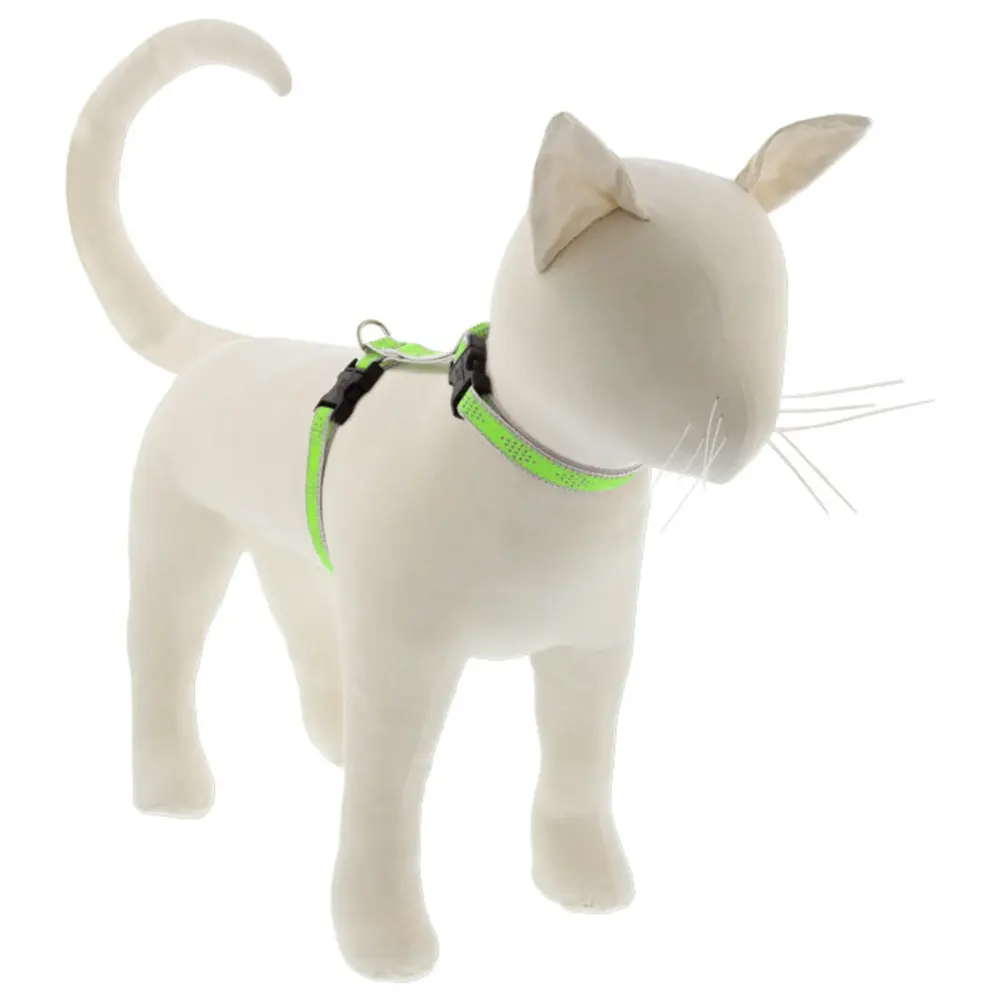
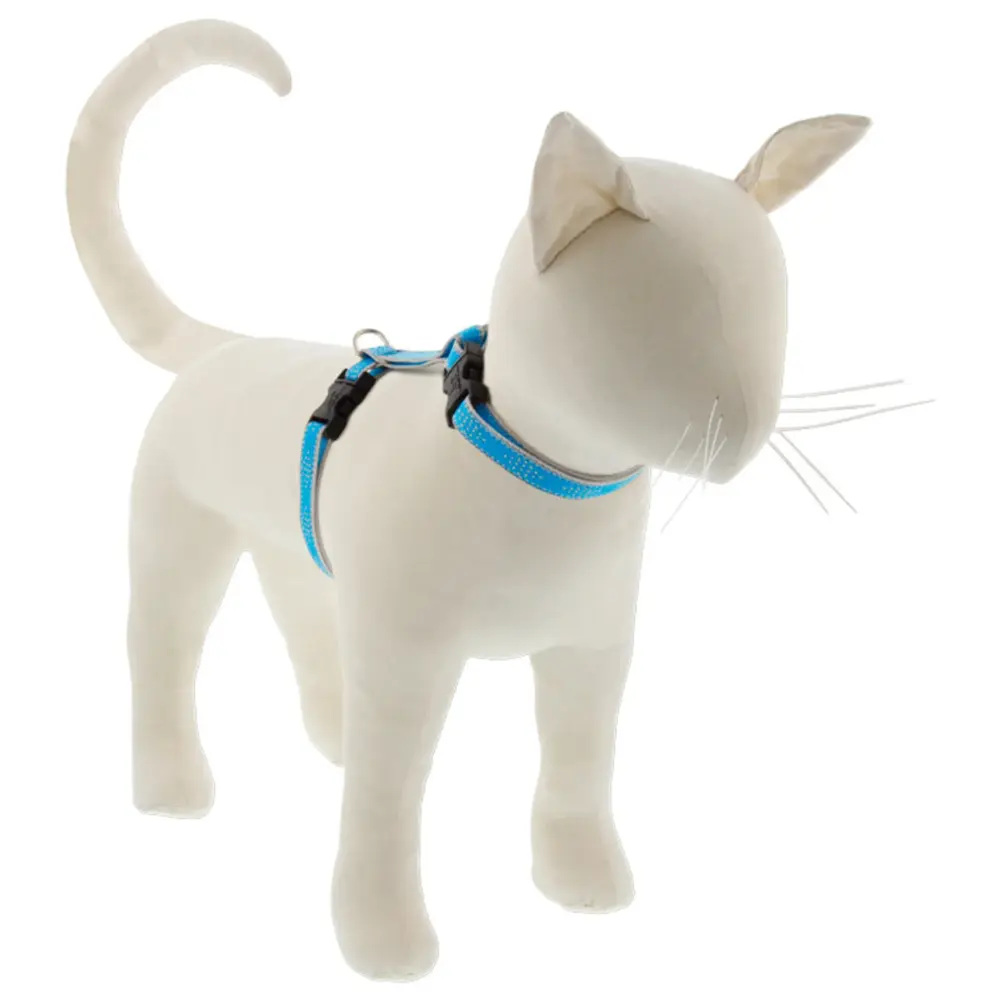
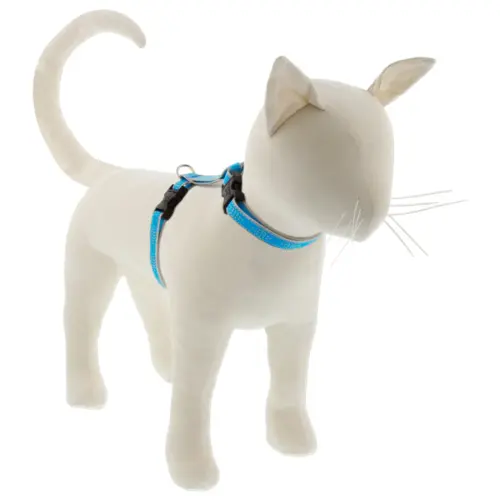
Measure the girth around the chest just behind the front legs, and the neck around its base. The Lupine Pet H-style harness has adjustable neck and girth straps and comes in two girth ranges, 9–14 in and 12–20 in. A cat measuring 12 to 14 inches fits both; the cat section of our guide to measuring for a harness explains which to choose.
Measure before you order, since a size you picked that doesn’t fit is a change-of-mind return under our returns policy. When the harness arrives, preset both loops roughly so the first fitting is quick, and recheck a growing kitten’s fit weekly.
How to put on an H-style harness, buckle by buckle
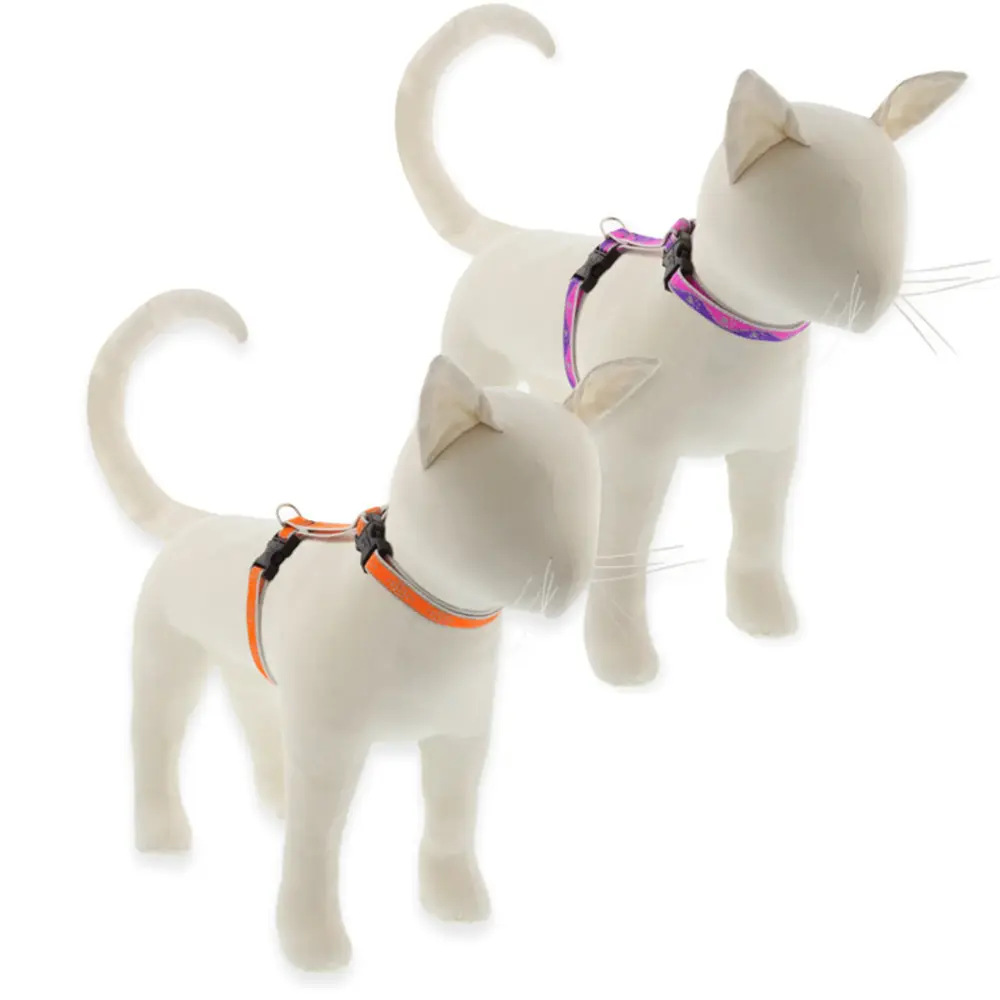
An H-style harness is two loops, one around the neck and one around the chest, joined by a strip along the back. The Lupine harness, made in the USA by Lupine Pet, is a cat-specific design that doesn’t restrict the shoulders and closes with quick-release buckles. To put on a cat harness of this kind:
- Practice the click. If the snap of a buckle startles your cat, click it a few times nearby, each followed by a treat.
- Start with food. Unclip both buckles. While your cat eats a treat or a little wet food, rest the joining strip along the back, between the shoulder blades.
- Neck buckle. Bring the neck loop around the base of the neck, low near the shoulders rather than up by the throat, and fasten it.
- Girth buckle. Bring the girth loop around the chest just behind the front legs and fasten it.
- Check the fit. One or two fingers should slide flat under each loop, and the neck loop should not slide toward the ears when you ease it forward. Tighten any loop that fails.
- Reward and release. To remove it, unclip both buckles, lift it away and reward again.
If your cat squirms, stop after the first buckle and try again later.
-
Lupine Pet
Reflective H-Style Cat Harness
$28.95
How to harness train a cat: a week-by-week plan
Treat the weeks as a rough guide: several short sessions a day, moving on only when your cat is relaxed at the current step.
Week 1: the harness becomes furniture
Leave the harness beside the food bowl or a favorite sleeping spot, and reward any sniff with a treat. Late in the week, drape it over your cat’s back for a few seconds during a meal, then lift it off.
Week 2: buckled on, a few minutes at a time
Buckle it on just before a meal or play session, so good things arrive with the harness, and take it off after a minute or two. Build toward 10 to 15 minutes of supervised wear, removing it while your cat is calm. Once your cat moves normally, toss a treat a few feet away to invite some steps.
Week 3: a light leash, trailing behind
Clip on a lightweight leash and let it trail while you watch, so it can’t snag on a chair leg. After a few sessions, pick up the end and follow your cat around with the leash slack, using a treat to invite a few steps toward you.
Week 4 and beyond: short trips outside
Once your cat strolls around the house on a slack leash without fuss, you’re ready to go outside. Many cats take longer than four weeks, which is normal.
Why cats flop over or freeze in a harness, and how to help
Many cats fall over, freeze or creep belly-low the first few times in a harness. Why does a cat fall over in a harness? No one knows for certain; these are the usual explanations:
- It feels like being carried. Pressure at the neck and back may resemble a mother cat’s scruff grip, which tends to make kittens go limp.
- A freeze response. Something new pressing on the body can make a cat hold still until it decides it is safe.
- Poor fit. A loop that pinches or sits in the wrong place makes moving uncomfortable.
Whatever the cause, recheck the fit, and keep sessions short enough that the harness comes off, with a treat, before the flop sets in. A wand toy drawn slowly across the floor, or a treat tossed a short way, often gets the legs moving. Never haul your cat upright or lift it by the harness; if flopping continues, go back a step for a few days.
Flopping is common in a new harness; limping or flinching when touched is not. If you see either, take the harness off and call your veterinarian.
Adding the leash and taking the first steps outside
Knowing how to walk a cat on a leash mostly means knowing how to follow one. For the first outings:
- Pick a calm spot and time, such as a fenced yard or quiet patio early in the day, and skip hot afternoons.
- Carry your cat out, in your arms or a carrier, so the door doesn’t become an exit your cat tries alone.
- Use a lightweight leash about 4 to 6 feet long. VCA’s article on leash walking your cat advises against retractable or long leashes, which let a cat reach trees and fences.
- Let your cat sniff and look around; walking can come later. Keep it off treated lawns, and check unfamiliar plants against the ASPCA’s list of plants toxic to cats.
- Head in after five to ten minutes, sooner if your cat seems worried, and carry your cat back for a treat.
Add time and distance gradually. To change direction, step ahead and wait, or pick your cat up; never tow. If a loose dog approaches, scoop your cat up right away and move off.
On road trips, a trained cat can be leashed before the carrier opens at a stop (see traveling with a cat in the car). More gear and training help is in our walking and training guides.
Signs to stop for the day, and when a backpack makes more sense
End the session calmly, take the harness off and go back a step next time if you see:
- Flattened ears, wide pupils or a low crouch that doesn’t loosen.
- A lashing tail, growling, hissing or swatting.
- Repeated attempts to bolt, hide or back out of the harness.
- Panting or open-mouth breathing. Cats rarely pant, so bring your cat in to rest somewhere cool and quiet. Call your veterinarian if it doesn’t stop within a few minutes, or right away if your cat seems weak or wobbly.
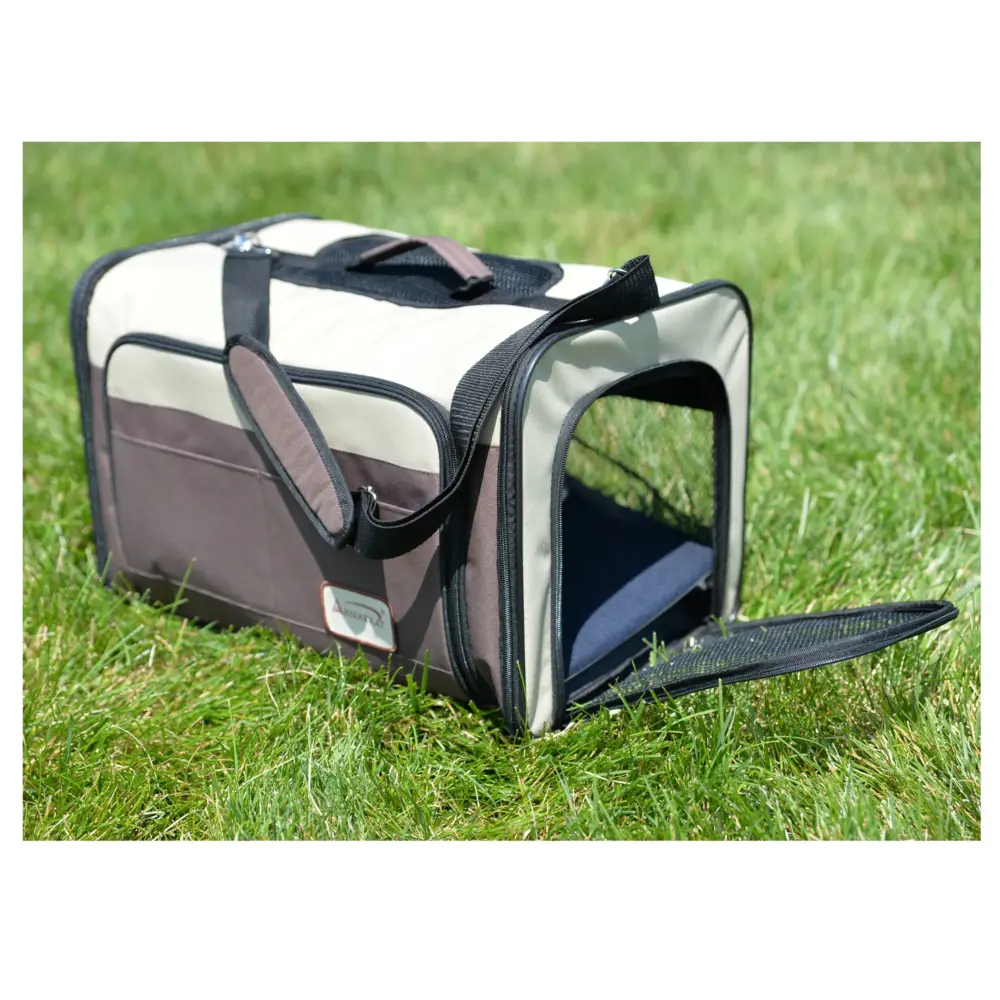
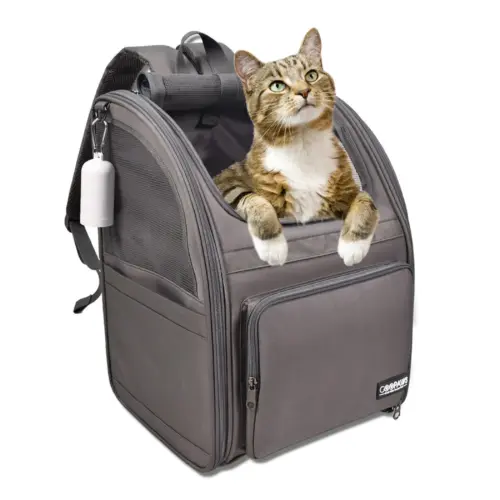
Some cats love fresh air but would rather ride than walk. The GOOPAWS carrier backpack takes pets up to 25 lb, with large top and side openings for airflow and checking on your cat, and an inside safety strap to clip to the harness. Read whether cat backpacks are safe first, and introduce it with the same small steps as getting a cat used to a carrier.
-
GOOPAWS
Cat and Small-Dog Carrier Backpack
$51.95
Cat harness FAQ
How long does it take to harness train a cat?
Usually several weeks from first sniff to first outing, though it varies widely. Kittens and confident young cats often move faster, while shy or older cats can need a few months.
How tight should a cat harness be?
Snug enough that one or two fingers slide flat under each loop, and no looser. If the neck loop can be eased forward toward the ears, tighten it. No harness is impossible to back out of, so stay close.
Can a cat wear a harness all the time?
No. Take it off after every session, and never leave your cat in a harness unsupervised, even indoors: a strap can snag on furniture or catch a leg or jaw.
Is it cruel to walk a cat on a leash?
Not for a confident cat introduced slowly and allowed to set the pace; for that cat, walks add exercise and new smells. Forcing a frightened cat is unkind, so if yours still crouches, hides or tries to bolt after weeks of practice, stick to indoor play.
Can you harness train an older cat?
Often, yes. Adult and senior cats can learn with the same steps, usually more slowly. If your cat is older or has stiff joints or a health condition, ask your veterinarian before outdoor walks.
Related guides
-
Comparison
H-Style vs Vest Cat Harness: Which Is Harder to Slip and Easier to Fit
An H-style harness is two light, adjustable loops; a vest wraps more of the body in fabric. See which is harder to slip out of and why fit matters more than style, how each goes on, which suits kittens, nervous cats and warm days, and how to check the fit of either.
-
Guide
Camping With a Cat: Is Yours Ready, and How to Keep Them Safe at Camp
Camping suits a confident, harness-trained cat, and only with someone always beside them. How to tell if yours is ready, rehearse at home, make the tent or car a safe base, handle litter and food at camp, explore on a leash and find a cat who slips away.
-
Guide
How to Travel With a Cat in the Car, From Vet Trips to Long Road Trips
From a ten-minute vet run to a two-day move: where the carrier goes, how to practice, what to pack, and how to handle rest stops, hotels and moving day without giving your cat a chance to bolt.