Car Travel How-to
How to Stop a Dog Jumping Out of the Car When the Door Opens
Short answer
First make the leap impossible: a short tether from the back seat to your dog’s harness keeps them inside when a door opens, and the leash goes on before the tether comes off. Then teach a wait in a parked car: open the door gradually, reward staying put and release only on a cue word.
Why dogs leap out of the car the moment the door opens
A dog who launches out of the car isn’t being defiant. The open door has usually come right before the best part of the trip, and every leap that got them to the grass a second sooner taught them to go faster next time. What’s behind it tells you where to start:
- A favorite destination. The leap is biggest at the park, the beach or a friend’s house, often after whining or bouncing for the last block.
- Habit. If your dog is used to hopping out in your own driveway and trotting to the front door off leash, the door itself has become the signal to go.
- Something outside. Another dog, a squirrel or a person to greet, spotted through the glass as you park.
- Wanting out of the car. A dog who pants, drools or trembles on every ride may be anxious, queasy or too warm rather than excited. Slow the training down and talk to your veterinarian.
The trouble is where the leap lands. Parking lots and curbsides are full of moving and reversing cars whose drivers can’t see a dog low behind them, and a dog who bolts somewhere unfamiliar may not know the way back. The drop itself is hard on puppies, small dogs and older dogs too, so the routine below ends with a lift or a controlled step down, not a jump.
Management today: leash on before the tether comes off
Training takes weeks; management stops the leap from today. The rule is simple: your dog is never unattached beside an open door. Our road trip with a dog checklist folds this into its rest-stop routine; here is each piece and what it prevents.
- Set the tether for an open door. Clip the tether to the back of a harness and buckle it into the seat your dog rides in. Open that door wide and, from outside, hold a treat just past the door-side edge of the seat: your dog should be able to sit, stand, turn and lie down, but not get their front feet over it. A strap long enough to step out on is long enough to leave a dog hanging outside the car by their harness.
- Leash on, then tether off. Open the door partway, fill the gap with your body, clip the leash to the harness and only then unclip the tether. Getting back in, reverse it: tether clipped first, leash off second.
- Keep the leash in a door pocket, not the trunk, so you never open your dog’s door just for a second to fetch it.
- Open the door away from traffic. On a street, that’s the curb side, so in the US seat your dog behind the front passenger seat. In a parking lot, use the side away from the driving aisle.
- Lock the rear doors and windows. With the child locks on, the rear doors open only from outside, so a passenger can’t fling your dog’s door open as the car stops. Child locks usually don’t cover the windows, so turn on the window lock too, and a paw on the switch can’t lower the glass. Tell passengers, children especially, that your dog’s door is yours to open.
An open window is the other way out: a dog riding with their head out can jump or fall from a moving car. Our guide to whether your dog should ride with their head out the window covers how far to open one.
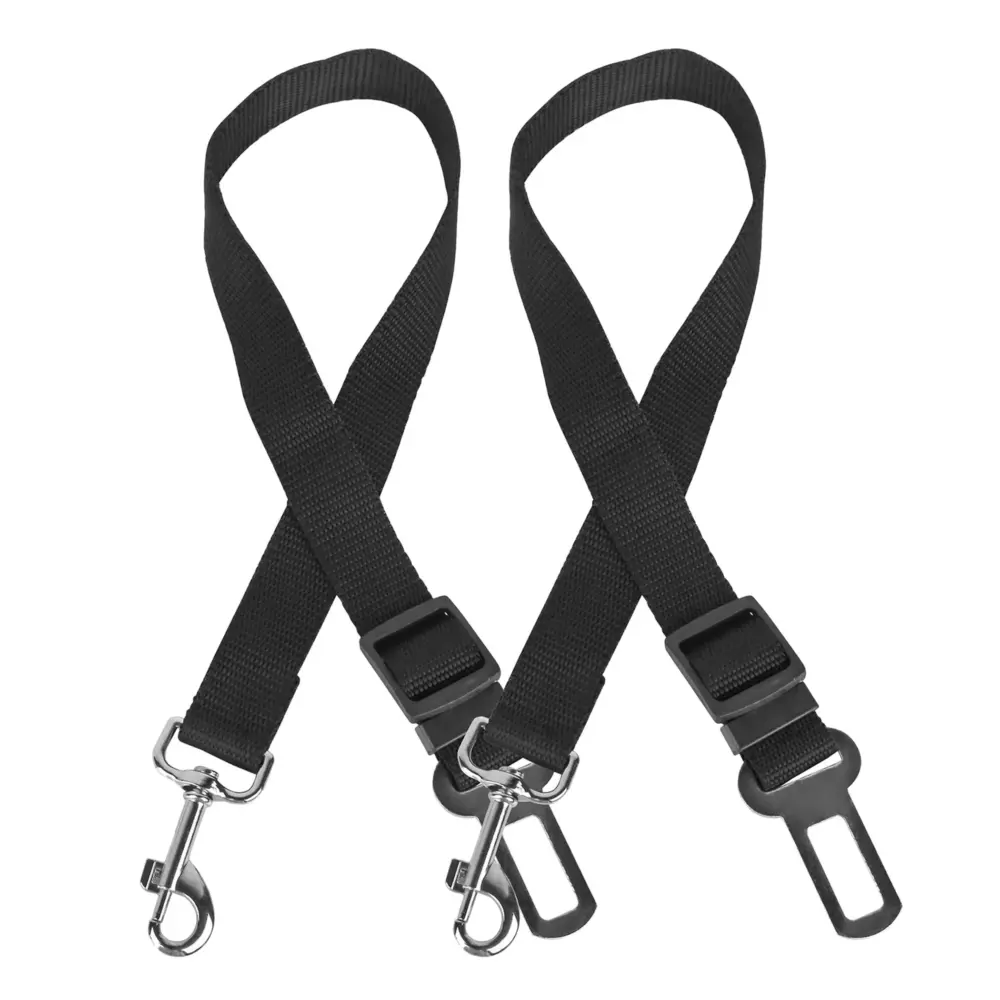
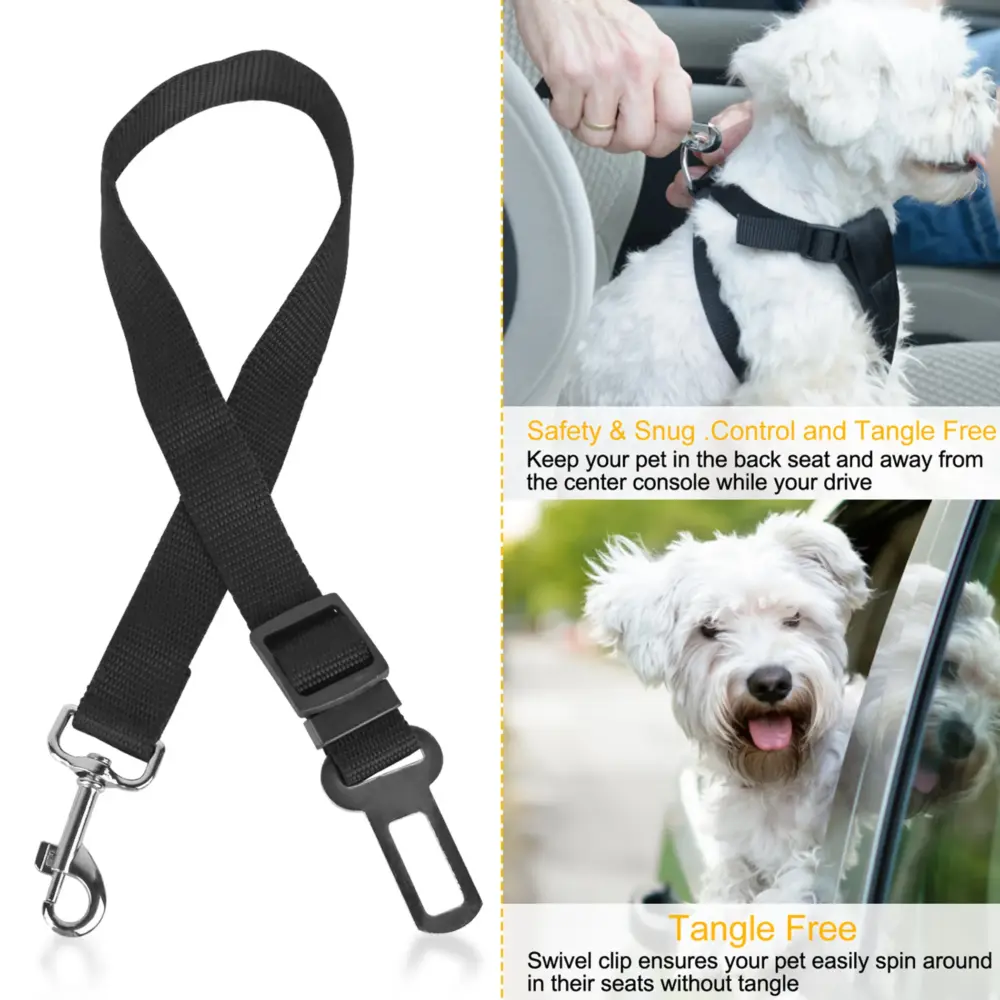
Our Adjustable Dog Car Seat Belt Tether has an adjustable strap you can set by the open-door check and a metal carabiner for the harness ring. Its buckle tab fits most vehicle seat belts, not all, so check that it clicks in, holds under a firm tug and releases normally.
Safety note
Here the tether’s job is to keep your dog inside when a door opens and on the back seat while you drive. It is not crash protection. Always clip it to a harness, never a collar: a dog who leaps against a tether on a collar takes the jolt on the neck.
What you need to teach a car-door wait
- A harness that fits, with a ring on the back, and the tether set by the open-door check.
- A fixed-length leash. A retractable one lets a leaping dog cover several feet before it locks.
- Small, soft treats your dog really wants, since they’re competing with everything outside.
- Two cue words: one for wait and one for the release, such as okay or free. Use the same ones every time, and save the release word for releasing.
- A quiet place to start, such as your driveway with the engine off. Stay with your dog the whole time, and keep sessions short in hot or cold weather.
Teaching a car-door wait, step by step, in a parked car
The AKC’s car safety training advice lays out the exit: leash and treats ready, calm behavior rewarded as the door opens, a pause whenever your dog gets frantic so the excitement isn’t rewarded, and a release cue to jump out, if that’s safe for your dog, or as you lift them out. Practice it in stages, a few minutes at a time, with the tether clipped until step 4 so a mistake costs only a do-over. It’s the same idea as teaching a wait at the front door, moved to the car.
- Start with the door closed. Your dog is tethered in their usual seat; you’re outside that door with the leash and treats. Wait until they’re calm on the seat.
- Crack the door. Say your wait cue once and open the door an inch or two. If your dog stays put, hand a treat in. If they surge forward, close it gently and try again a few seconds later. The door closing is the only consequence.
- Open it wider, a few inches at a time. Over several sessions, build up until the door swings fully open, with you standing in the gap, while your dog stays put. Reward often at first, then less often.
- Clip the leash, then unclip the tether. Reward stillness while your hands are at the harness. If your dog moves toward the opening, stand square in it and reward the moment they settle back.
- Add a pause. With the leash on and the door open, count to two before you release, then build up to ten.
- Release. Say your release word and let your dog step down, or lift them out as you say it. Reward them for standing beside you, so the good part happens next to you, not at the end of the leash.
- Sometimes go nowhere. Now and then, reward the wait, close the door and head inside. If an open door always means out, the excitement keeps building.
- Take it on the road. Once the wait holds at home, practice at a quiet stop, then at your dog’s favorite places, starting again with a narrow gap.
Tip
Ask for the wait at every stop from now on, not only in practice sessions. Each leap that pays off is practice for leaping.
When the wait falls apart
- Your dog lunges the instant the handle moves. The handle has become the start signal. Touch it without opening the door until your dog stops reacting, then go back to an inch.
- They wait at home but not at the park. That’s normal. Park farther from the entrance, open a crack, reward generously and build up again.
- Barking or whining as the door opens. Wait for a moment of quiet before you open any wider, or you teach that noise opens doors.
- Your dog heads for the other door or the front seat. The tether is too long. Shorten it until the open-door check passes on both sides.
Mistakes that rebuild the habit
- Unclipping the tether before the leash is on, or letting your dog hop out off leash because it’s only the driveway.
- Releasing a dog who’s still bouncing, which rewards the bounce.
- Scolding a dog who breaks the wait. Calmly closing the door teaches more.
Hatchbacks, SUV cargo doors and two dogs
A rising hatch opens the whole back of the vehicle at once, with a cargo-area dog right at the opening. A dog should ride back there only in a strapped-down crate or behind a cargo barrier made for your vehicle, neither of which we sell; our guide to whether your dog should ride in an SUV’s back seat or cargo area explains why. At the hatch, the rule is the same as at a side door:
- In a crate: raise the hatch, stand in front of the crate and open its door only as wide as your hand. Clip the leash on and ask for the wait before you open it fully.
- Behind a barrier: the hatch is your dog’s only door, so until the wait is solid, have them ride tethered on the back seat, where the leash-first routine works. Once it holds, raise the hatch slowly while standing square in the opening, and clip the leash on before you step aside.
- Check where the hatch faces. In a nose-in parking space, the hatch opens onto the driving aisle, the busiest part of the lot. Back into the space if there’s room behind to open the hatch, or unload through a side door.
With two dogs, one can slip past while you’re clipping the other. Let them out one at a time, with the second still tethered until the first is on leash and away from the door; our guide to traveling with two dogs in the car covers seating and which dog comes out first.
Small dogs in a booster seat
A booster lifts a small dog to window height, which also puts them right at the door with a long drop to hard pavement below.
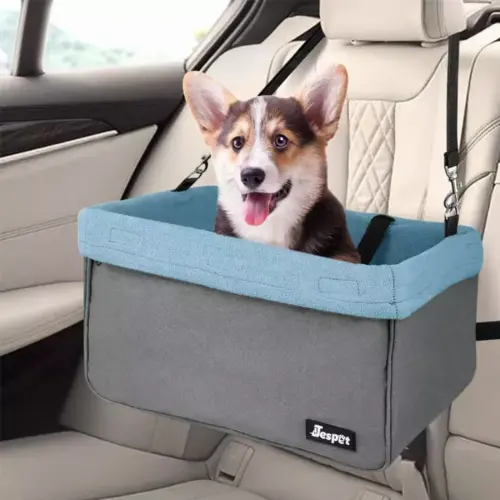
Our GOOPAWS Dog Booster Car Seat holds pets up to 24 lb (11 kg) and has a built-in tether that clips to a harness, never a collar. With the door wide open, check that the tether stops your dog getting over the booster’s front edge; if it doesn’t, keep your body in the gap. Either way, leave it clipped until the leash is on. The front zippered pocket holds treats and a spare leash, so both are within reach the moment the door opens.
Then lift your dog down rather than letting them jump: ask for the wait, pick them up with one hand under the chest and the other supporting the hindquarters, and say your release word as you set them on the ground. A dog over 24 lb belongs on a tether on the seat itself, with the same leash-first routine.
Getting out calmly: step down or be lifted
Whether your dog should jump down depends on age, size, health and how high your car sits. In its advice on puppies and jumping, the AKC notes that growth plates aren’t closed until at least 12 months of age and suggests limiting everyday jumping for young dogs, out of the car included. Lift out puppies and small dogs, help older dogs and any dog with joint or back trouble down, and treat a tall SUV or truck as a big drop even for a fit adult. A dog who used to hop out happily and now hesitates may be sore; mention it to your veterinarian.
For a dog too big to lift, help them step down onto level ground rather than a curb edge, ice or loose gravel, with the leash short. A vehicle ramp or pet steps take out the drop; we don’t sell either, so check the maker’s weight rating and how it attaches, and practice in a parked car first.
Once your dog is out, walk a few steps away from the car before the sniffing and greeting start, so the fun comes after a calm exit.
If your dog gets loose in a parking lot
If your dog is out before the leash is on, the next few seconds matter most:
- Don’t chase. Many dogs read a running person as a game, and a dog dodging you in a parking lot is also dodging cars.
- Call once in your happiest voice, then crouch, or turn and take a few quick steps away; moving away invites your dog to follow. Never call them toward you across a driving aisle or a road.
- Open a car door. For a dog who loves the car, an open back door and an invitation to go for a ride can be the quickest way back.
- Use food. Drop treats at your feet, so your dog has to come close to get them, and ask people nearby to stand still rather than grab or chase.
- Take hold calmly. Slide a hand under the harness or collar rather than lunging, clip the leash on and praise. Coming back always earns a reward, never a scolding.
If your dog runs out of sight, start searching right away and follow our plan for what to do if your dog is lost. Before the next trip, check that the ID tag on your dog’s collar shows your cell number and that the microchip registration is current.
Gear for a calmer car door, from our catalog
These picks are limited to Nilosi’s own catalog: the pieces of the routine above that we carry.
-
Adjustable Dog Car Seat Belt Tether, View product
$23.95
Why it fits: Set the strap so your dog can stand with the door wide open but cannot step out, and leave it clipped until the leash is on. Clips to a harness; fits most, not all, seat belts.
-
Mr. Peanut’s
PetTrek Padded Harness and Leash Set, Choose size & color
Price range: $24.95 through $26.95
Why it fits: A padded harness to clip the tether to, plus a matching leash; reflective trim on both helps in a parking lot after dark. XS to L by chest girth; check the photos for the back ring.
-
GOOPAWS
Dog Booster Car Seat with Safety Tether, Choose color
$53.95
Why it fits: For small dogs up to 24 lb: the built-in tether holds them on the seat as the door opens, and the front pocket keeps a spare leash in reach for the lift down.


For seat covers and the rest of the back-seat setup, browse our car and travel accessories.
Related guides
-
How-to
How to Make Vet Visits Less Stressful for Your Dog
For a dog who shakes, pulls for the door or won't get out of the car at the vet: happy visits, handling practice at home, what to tell the clinic, waiting in the car, a lick mat for the exam and when to ask about medication.
-
Guide
How to Travel With a Dog in a Pickup Truck: In the Cab, Not the Bed
Your dog rides in the cab, never the open bed. See where a dog sits in a crew, extended or regular cab, how to tether and cover truck seats, how to get in and out of a tall cab, and why a parked truck is no place to wait.
-
Guide
Should Your Dog Ride With Their Head Out the Car Window?
Riding with their head out the window exposes your dog's eyes to flying debris and makes a fall or jump possible. Why dogs love it, how far to open the window, how to set a tether so your dog can't reach the gap, and how to give a window-lover a proper sniff instead.