Car Travel Comparison
Back Seat or Cargo Area: Where Should Your Dog Ride in an SUV?
Short answer
In most SUVs, the back seat is simpler: an outer second-row seat, a well-fitted harness clipped to a seat belt tether, and a hammock for clean seats. The cargo area works only with a crate strapped to its anchor points or a barrier made for your model. No tether, barrier or seat cover is crash protection.
Back seat vs cargo area at a glance
An SUV gives you more choices than a sedan: the second-row seats, often a third row, the cargo area (what many people call the trunk), and seats that fold flat to join the two. Each needs something different before your dog rides there, and the gear we sell works only on upright seats.
| Spot | What holds your dog | Air and sun | Getting in and out | Gear we stock |
|---|---|---|---|---|
| Second-row outer seat | Tether to a harness, or a booster up to 24 lb | Closest to the vents | Side door, from the curb | Tether, hammock, booster |
| Third-row seat | Tether, if the seat has its own buckle | Check that air reaches it | Past a tipped seat | Tether |
| Cargo area | Strapped-down crate or fitted barrier | Farthest from the vents; sun through the glass | Liftgate, onto the lane behind | None |
| Folded-flat seats | Same as the cargo area | Depends where your dog lies | Liftgate or side door | None |
Riding in the back seat
The second row is where an SUV is most like any other car, and it’s where the ASPCA’s travel safety tips put a dog: in the back seat, in a harness attached to a secured seat belt. Choose an outer seat, clip a seat belt tether to the ring on the back of a well-fitted harness, never a collar, and shorten it until your dog can sit, stand, turn and lie down but can’t reach the front seats.
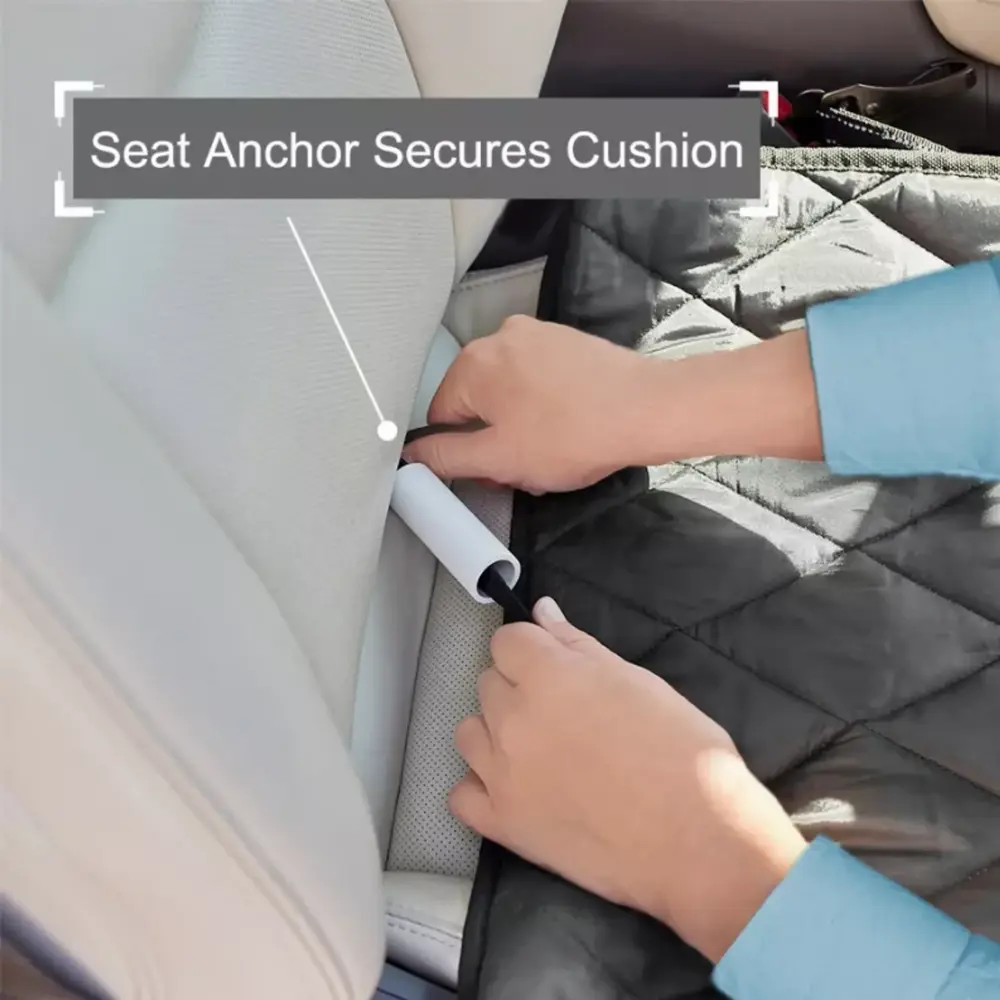
Our Adjustable Dog Car Seat Belt Tether has an adjustable length, a metal carabiner and a buckle tab that fits most vehicle seat belts, not all, so test it in your SUV: click, tug, then press the release. The full fit and reach checks are in our guide to choosing and setting up a dog seat belt or booster seat.
Captain’s chairs
Many SUVs have two second-row captain’s chairs with an aisle between them, and that aisle leads straight to the front seats and the third row. Set the tether short enough that your dog can’t step down into it, and run your reach check toward the aisle as well as the front. A bench hammock won’t sit properly across two chairs, so cover your dog’s chair alone: our GOOPAWS front seat cover is made for a single front seat and measures 40 by 20.5 inches, so measure the chair against it first.
A hammock for the bench
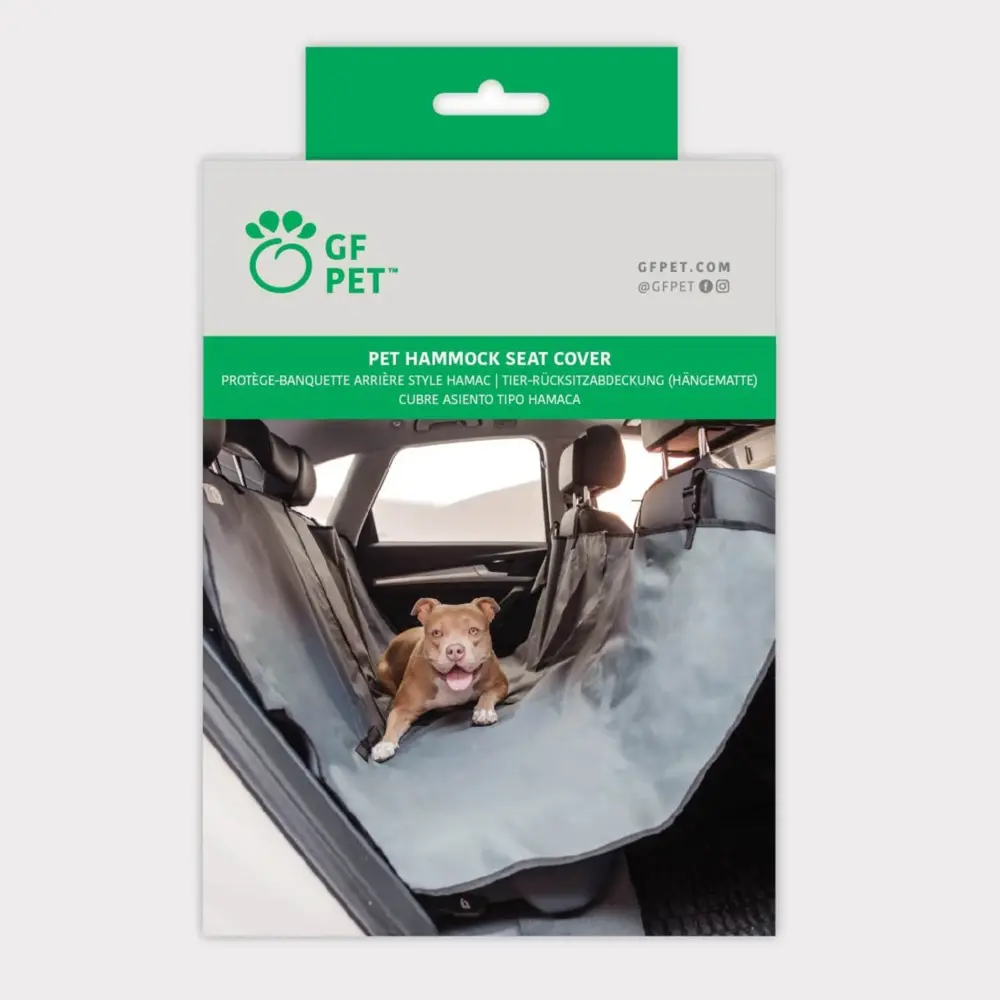
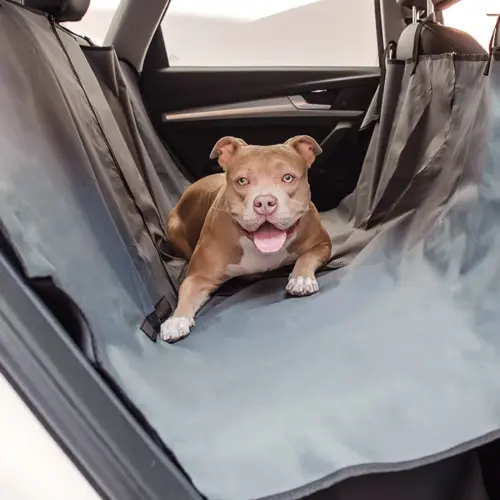
The GF PET Waterproof Dog Car Hammock clips around the headrests and covers the bench, its backrests and the backs of the front seats, with seat-belt openings that keep the tether’s buckle reachable. The fabric between the front seats slows a dog who wants to climb forward, but a determined dog can push past it; the tether does the holding. Measure first, as described below.
Small dogs: the booster
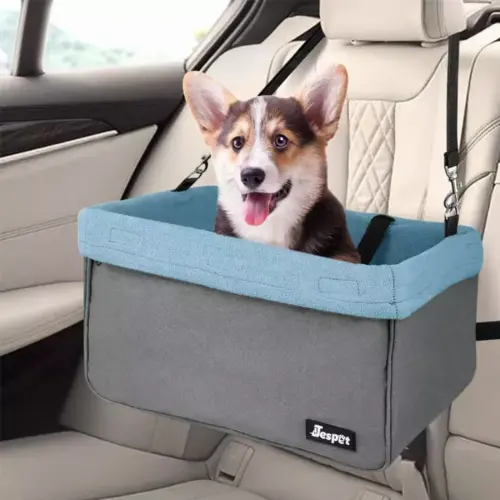
A dog up to 24 lb who settles better with a view can ride in the GOOPAWS booster, strapped around an outer seat’s backrest and headrest, with its built-in tether clipped to a harness. Check the footprint as well as the scale: the seat is 16 by 13 inches, and that’s all the room your dog gets.
Two dogs
Give each dog an outer seat and a tether in that seat’s own buckle, short enough that the two can’t reach each other. Spacing, the order you load them in and rest stops for a pair are in our guide to traveling with two dogs in the car.
Riding in the cargo area: what it needs first
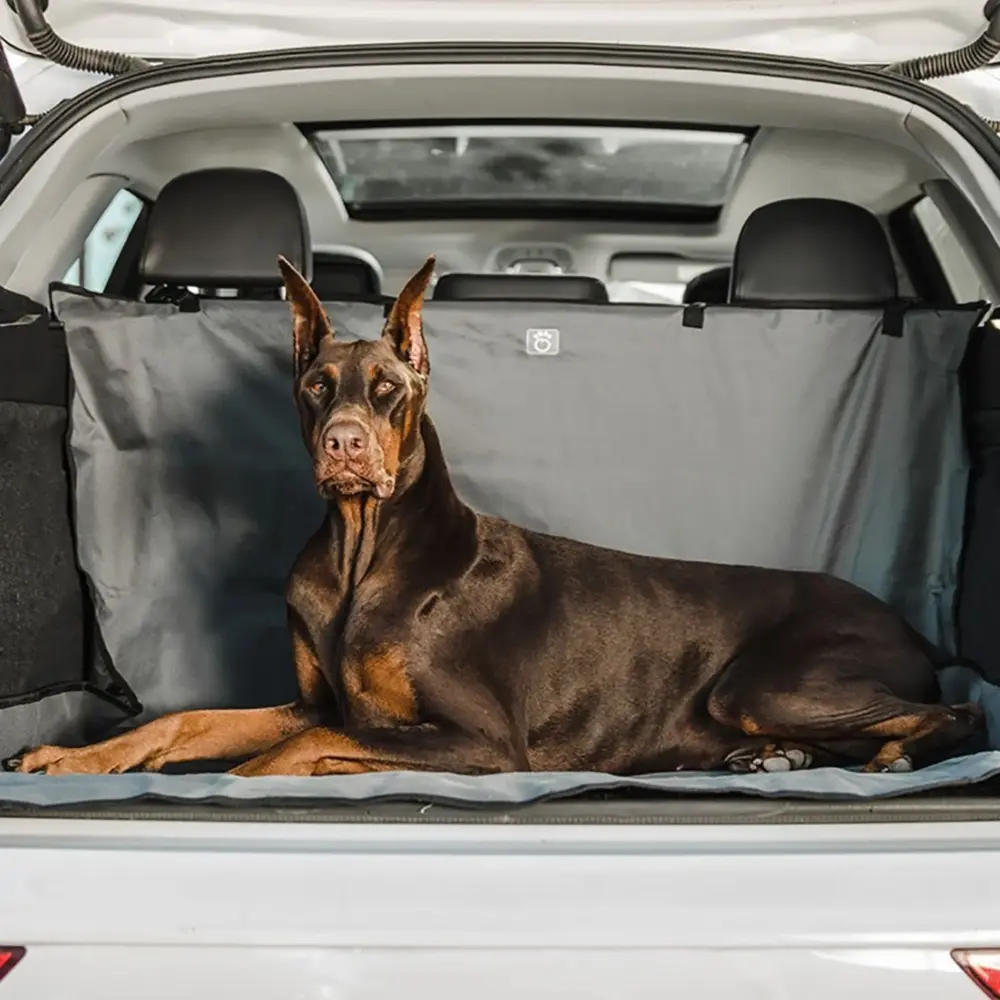
The cargo area looks made for a big dog: a flat floor, plenty of room, and wet paws kept off the seats. What it doesn’t have is anything to hold a dog in place. There’s no seat-belt buckle for a tether, the bags that share the floor can slide into your dog when you brake, and a loose dog can scramble over the rear seatbacks into the passenger area. Before a dog rides back there, one of two things has to be in place.
A crate, strapped down
The ASPCA’s travel advice sets the bar: a crate roomy enough for your dog to stand, sit, lie down and turn around, held down so it can’t move when you brake hard. In an SUV, that means straps from the crate to the cargo area’s tie-down anchors; your owner’s manual shows where they are. The nonprofit Center for Pet Safety adds two points in its cargo area connection advisory: cargo anchors aren’t always weight-rated for the forces of a crash, so ask your vehicle’s manufacturer what yours can take, and the crate should be secured with strength-rated anchor straps.
Measure the cargo opening, the floor and the height under the cargo cover, with the rear seats up, before you buy a crate; one that fits only with the seats folded changes the plan. For crate versus tether in general, see our comparison of riding in a crate or on a seat belt tether.
A cargo barrier made for your SUV
A cargo barrier, sometimes sold as a dog guard, fills the space between the rear seatbacks and the roof so your dog stays in the cargo area. Choose one made for your make and model and install it as its maker directs. A barrier keeps your dog out of the passenger area but doesn’t keep them still, so keep cargo low and secured, and lay down a non-slip liner.
What doesn’t count
- A loose dog on the cargo floor, however calm they are on short trips.
- A leash or tether tied to a cargo hook, or a zipline across the cargo area. In the same advisory, the Center for Pet Safety says it doesn’t recommend extension tethers or zipline-style products, because they increase the risk of injury in sudden stops and crashes.
- Under a retractable cargo cover or packed in among the luggage, with less air, out of your sight and under bags that can fall.
Tip
We don’t sell crates, cargo barriers or cargo liners. If the cargo area is your plan, buy them from a maker whose fitting instructions cover your vehicle, and treat the gear on this page as back-seat gear.
Third-row seats and folded seats
A third-row seat
A third-row seat with its own buckle is a seat like any other, and a tether works there as it does in the second row. The trade-offs are practical: third rows are often short on legroom, getting there means a climb past a tipped second-row seat or over the seatback, and the seat sits close to the liftgate glass, where sun and heat collect. If air doesn’t reach the seat, or you can’t reach your dog at a stop, use the second row.
Folded-flat seats
Folding a row flat makes a long, level floor that many big dogs love. It also turns those seats into cargo area: the buckles are usually out of reach under the folded seatbacks, and the hammock needs upright seats with headrests to hang from. A dog on a folded floor needs the same crate or barrier as one in the cargo area.
A split-folding bench is the middle path. Fold one section for luggage and leave the other upright for your dog, tethered to that seat’s buckle; the hammock’s detachable zipper lets you set it up to cover one seat. Keep heavy bags on the folded side low and wedged so they can’t tip onto your dog.
Air, heat and sun at the back of an SUV
The farther back your dog rides, the farther they are from the dashboard vents. If your SUV has rear vents, check where they point: air aimed at the seats may not reach the cargo floor, where the liftgate glass and rear side windows let sun fall straight in. A dog in a crate can’t move out of a sunny patch.
- Test the spot. After ten minutes of driving with the air on, put your hand where your dog’s head will be. If it feels warmer than the front, aim the vents back, use the rear climate controls if you have them, or move your dog forward.
- Keep a crate’s vents clear of stacked bags.
- Keep the liftgate shut while you drive. The CDC’s carbon monoxide guidance warns that if only the tailgate is open, carbon monoxide from the exhaust is pulled into the car or SUV, and an open hatch is a way out for your dog.
- Plan for hot days. Pre-cool the car and bring water on longer drives; our guide to keeping a dog cool in the car covers summer trips in detail.
Safety note
Never leave your dog waiting in a parked SUV, in the cargo area or on a seat. Humane World for Animals says 10 minutes on an 85-degree day is enough to bring a car’s interior to 102 degrees, cracked windows or not.
Getting in and out of a tall SUV
SUVs sit higher than most cars, so both spots involve a climb, and the jump down is the bigger ask for a small, young or older dog.
- Lift small dogs, puppies and seniors rather than asking for the jump. For a big dog who struggles with the height, look at a vehicle ramp; we don’t sell them, so check the maker’s weight rating and how it attaches to your SUV.
- Load from the curb side. A rear side door lets your dog step out onto the sidewalk; the liftgate puts you both in the lane behind the car, where other drivers are backing out.
- Leash on before anything opens. Clip the leash on before you open a crate door or unclip the tether. Our guide to stopping a dog jumping out of the car teaches a car-door wait, including at an SUV’s liftgate.
- Watch for reluctance. A dog who starts hesitating at the door or seems stiff after a ride may be uncomfortable; mention it to your veterinarian.
Measuring an SUV back seat for the hammock
The GF PET hammock measures 58 by 57 inches (147 by 145 cm) and hangs from headrests in both rows. Our guide to choosing a dog hammock or seat cover has the full measuring method; in an SUV, check these first:
- A bench. With two captain’s chairs, cover your dog’s chair alone, as above.
- Width. Measure across the cushion from door to door. A wide second row can be broader than 58 inches, which leaves a bare strip at each door.
- Slide and recline. Measure with the seat where it usually stays, and leave it there once the hammock is on.
- Headrests. Both rows need headrests that will hold a strap; keep any fold-down ones up.
- Third-row access. A hammock clipped across the second row stops a seat tipping forward, so unclip it before anyone climbs into the third row or you fold a seat.
Close, or unsure? Send us your measurements before you order.
What neither spot does: crash protection
Moving your dog to the cargo area doesn’t add crash protection by itself; what holds them does. Humane World for Animals’ guide to traveling safely with a pet says dog restraints and seat belts haven’t been reliably shown to protect dogs in a crash, and names a crate anchored to the vehicle as the safest way for a dog to travel.
In an SUV, how well that crate is anchored comes down to the cargo anchors and straps covered above. The Center for Pet Safety also warns, in a separate advisory, that extension tethers give a pet too much movement in a sudden stop or crash, one more reason to keep any tether, ours included, no longer than your dog needs to sit and lie down. If crash protection decides it for you, choose a crate or harness from the Center for Pet Safety’s certification program, confirm the listing on its website, and follow the maker’s instructions for your vehicle.
Verdict: when each spot wins
The back seat wins for most dogs and most trips: any dog who can lie down comfortably on the seat, two dogs with an outer seat each, and a small dog in a booster. It needs a well-fitted harness, a tether and, for clean seats, a hammock measured to your second row.
The cargo area wins when your dog is crate-trained and too big to lie down on the seat, when the second row is needed for passengers, or when you’d rather keep a wet, muddy dog off the seats altogether. It works only with a strapped-down crate or a fitted barrier; without one, it isn’t an option.
We stock back-seat gear only, with no crates, barriers or cargo liners, so these picks are limited to our own catalog and to the second row:
-
Adjustable Dog Car Seat Belt Tether, View product
$23.95
Why it fits: For an outer second-row seat: clips to the back of a harness and plugs into most, not all, seat-belt buckles. Two in the pack, for two dogs or two cars.
-
GF PET
Waterproof Dog Car Hammock Seat Cover, View product
$60.95
Why it fits: For a second-row bench with headrests in both rows: covers the seat, backrests and front seat backs, with seat-belt openings. Measure your SUV bench against 58 × 57 in first.
-
GOOPAWS
Dog Booster Car Seat with Safety Tether, Choose color
$53.95
Why it fits: For a small dog up to 24 lb on an outer rear seat: straps to the backrest and headrest, with a tether that clips to a harness. Check your dog fits the 16 × 13 in seat curled up.

Related guides
-
Comparison
Cargo Liner vs Back Seat Cover: Where Should Your Dog Ride?
Where your dog rides decides which cover you need, and the two are not interchangeable. This comparison covers coverage, fitting, belt slits and cleaning, and is clear about what a cover does not do.
-
Guide
How to Travel With a Dog in a Pickup Truck: In the Cab, Not the Bed
Your dog rides in the cab, never the open bed. See where a dog sits in a crew, extended or regular cab, how to tether and cover truck seats, how to get in and out of a tall cab, and why a parked truck is no place to wait.
-
How-to
How to Protect Leather Car Seats From Your Dog
Claws, grit and wet coats are what mark leather seats. Fit a waterproof cover that stays put, keep nails short and smooth, clean paws at the car door, tether your dog so they lie down on turns, and wipe the leather the right way after muddy rides.