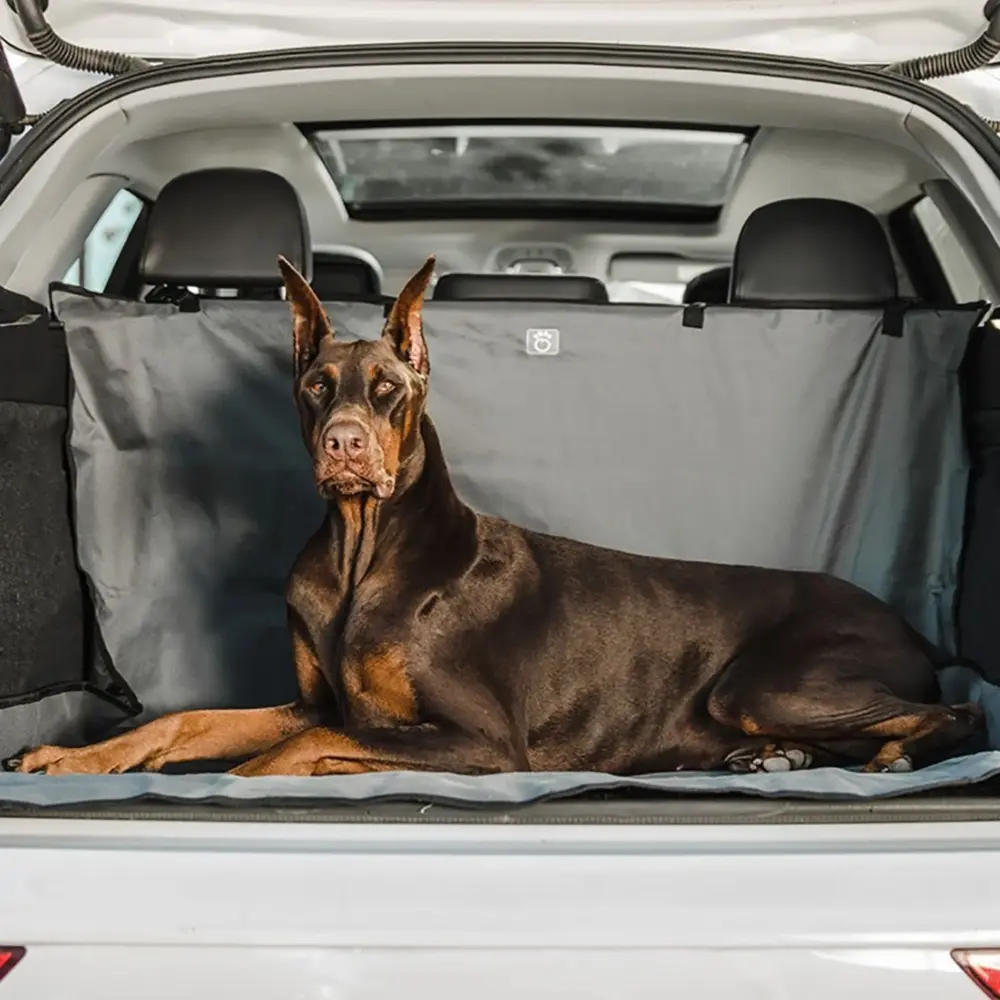
Car Travel Comparison
Crate or Seat Belt Tether: How Should Your Dog Ride in the Car?
Short answer
If your dog rests calmly in a crate and your car has room to strap one down, choose the crate: the ASPCA calls a secured crate the safest option. Otherwise, a well-fitted harness on a short seat belt tether in the back seat is the simpler everyday setup. Neither one guarantees crash protection.
Crate vs seat belt tether at a glance
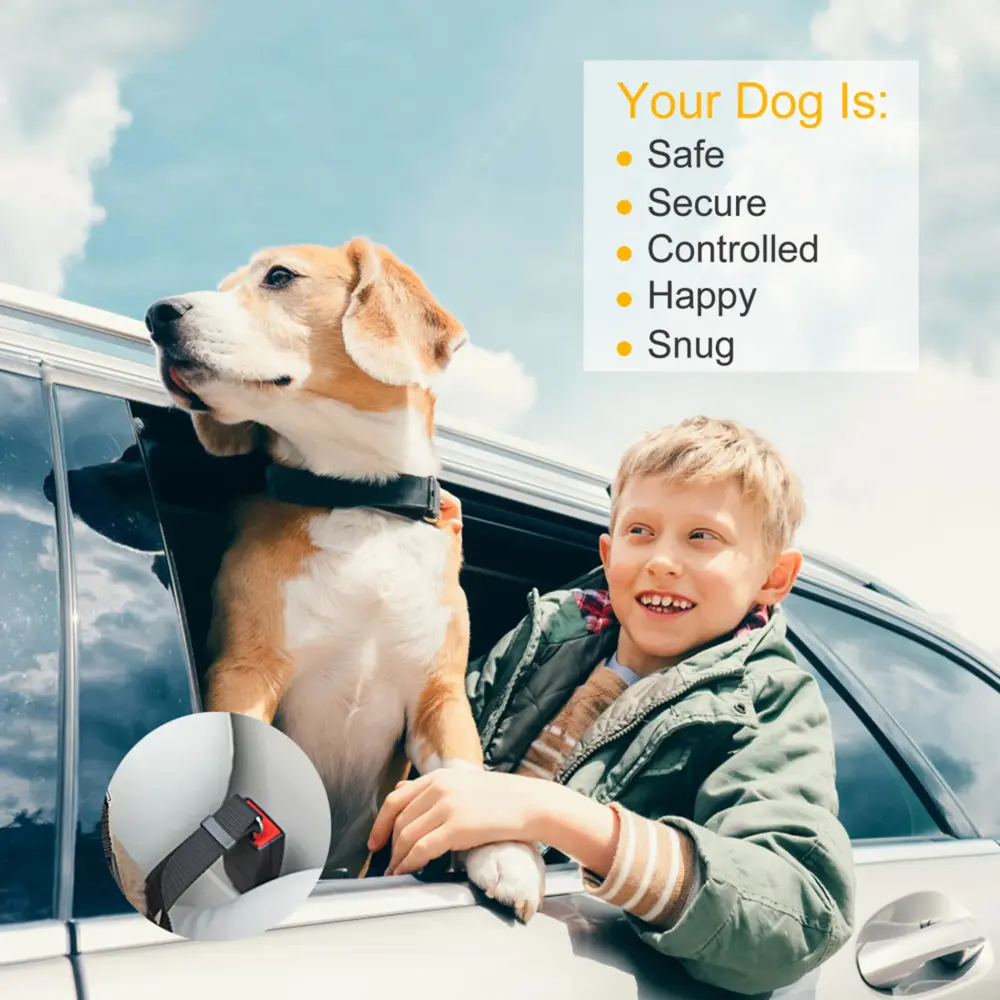
Both setups do the same everyday job: they keep your dog in one place, off your lap and out of the footwell, so braking doesn’t send a loose dog sliding across the car. They differ in what does the holding, how much of the car they take up and what your dog has to get used to. The small-dog booster is in the table too, since it’s a tether setup with a raised seat.
| Setup | Holds your dog | Kept in place by | Air and sun | Best for |
|---|---|---|---|---|
| Crate | Walls on all sides, room to lie down | A seat belt or rated straps | Vents or wire only; can’t escape sun | Dogs already happy in a crate |
| Tether | A strap to the harness back ring | A rear seat-belt buckle | Open cabin air; sun at the window | Most dogs on everyday drives |
| Booster seat | A raised rim plus a tether | Straps to seat back and headrest | Open cabin air at window height | Small dogs up to 24 lb (ours) |
Tip
We sell seat belt tethers, a small-dog booster and a back-seat hammock, but no crates. The crate advice here is general, so follow your crate maker’s instructions for securing it in your vehicle.
Riding in a crate
A crate holds your dog by enclosing them. There’s no strap to tangle or chew and no window within reach, and if your dog is carsick or has an accident, the mess stays inside. For a dog who already naps in a crate at home, it’s a familiar den on the road, and the AKC’s guide to carsickness in dogs notes that some owners prefer a solid-sided crate to limit what their dog can see.
Size it to your dog, then to your car
The ASPCA’s travel safety tips ask for a crate large enough for your pet to stand, sit, lie down and turn around in; going bigger only takes up more of the car. The crate also has to pass through the door or liftgate opening and sit flat, not overhanging the front edge of a sloped seat cushion. A crate that suits a large dog often fits only in the cargo area of an SUV, wagon or minivan, so measure the car before you buy.
Strap it down so it can’t slide
A loose crate is a box that slides and tips. The ASPCA says to secure it so it won’t slide or shift in an abrupt stop. How you do that depends on where it rides:
- On the back seat: run the seat belt through or around the crate as its maker directs, then pull the belt tight. Some crates have belt loops or straps for this.
- In the cargo area: strap it to the vehicle’s tie-down anchors with strength-rated straps, not bungee cords. The nonprofit Center for Pet Safety cautions that not every cargo anchor is weight-rated for crash forces; your vehicle’s manufacturer can tell you what yours will hold. Our guide to choosing an SUV’s back seat or cargo area covers the rest of that setup.
- Push-test it: shove the crate from each side and from the front. If it slides, rocks or tips, tighten the straps or move it.
- Never the front seat: Humane World for Animals’ guide to traveling safely with a pet warns that an airbag could injure a pet in the passenger seat, even in a crate.
Wire, plastic or soft-sided
Wire crates give the most airflow and the widest view. Plastic crates are more enclosed, with vents, and soft-sided crates fold away between trips, though a dog who chews or digs can work at the fabric. Whichever you choose, check how its maker says to secure it in a car, with belt loops, tie-down points or supplied straps. Crate type alone doesn’t settle crash performance, as the safety section below explains.
Only if your dog likes the crate
A crate only helps a dog who’s comfortable in one, so crate-train at home first. The AKC’s crate-training guide suggests tossing treats in with the door open, building up time inside slowly and never forcing a dog in. Then practice in the parked car before you drive anywhere. A dog who pants, whines or claws at the door every time the crate closes may ride more calmly on a tether.
Riding on a seat belt tether
A tether holds your dog with a short strap that runs from the car’s seat-belt buckle to the back of a harness. It takes up no more room than your dog, works with most rear buckles and moves between cars in seconds. Your dog rides on the open seat, with a view and the cabin air. It’s also the setup the ASPCA describes for car rides: in the back seat, in a harness attached to a secured seat belt.
Always a harness, never a collar
Clip the tether to the ring on the back of a well-fitted harness, between the shoulder blades. On a collar, a hard stop pulls on the neck. Skip a chest ring, and any harness that connects to the collar, as some no-pull designs do; use a different harness in the car.
Short enough to stop the reach
Set the length so your dog can sit, stand, turn and lie down, but can’t get a nose past the front seat backs, paws into the footwell or a head out of a window. Shorter is the point, not a compromise: extra slack only lets your dog travel farther in a hard stop. Our guide to choosing and fitting a dog seat belt or booster seat walks through the fit and reach check step by step.
Check your buckle, and your dog
Our Adjustable Dog Car Seat Belt Tether comes two to a pack, with an adjustable length, a metal carabiner and a buckle tab that fits most vehicle seat belts, not all. Click it in, tug it, then press the release before the first drive. A tether also needs a dog who leaves it alone: if yours chews straps or wriggles out of harnesses, a crate is the better fit.
Which one suits your dog
Nervous or carsick riders
Start with whichever setup your dog already finds normal. A crate-trained dog may settle sooner in a crate, where the view is smaller and any mess is contained. A dog who has never been crated may be calmer on a tether. The same AKC carsickness guide suggests the middle of the back seat, where a dog is more likely to look forward; that seat is closest to the gap between the front seats, so keep the tether short. Either way, build up from the parked car with our plan for getting a dog used to car rides, and ask your veterinarian about drooling, vomiting or panting that doesn’t ease.
Big dogs
For larger dogs, VCA’s road trip advice describes a dog seat belt in the back seat, or a crate secured on the back seat or in the rear of a van or SUV. In practice, the car often decides. If a crate your dog can stand and turn around in won’t fit through the rear door or sit flat on the seat, a harness and tether is the workable choice; with a cargo area and rated anchors, a strapped-down crate is an option.
Small dogs and puppies
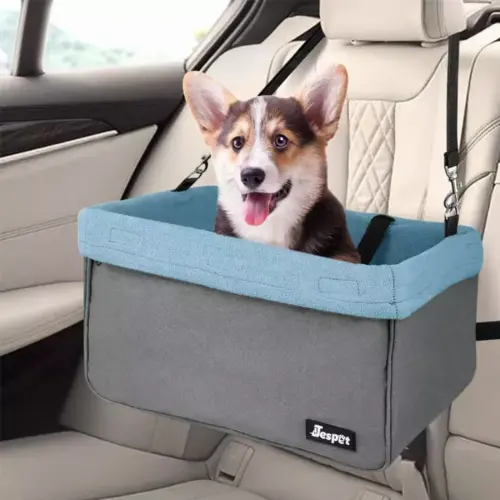
Small dogs have the most choice: a small crate or carrier, a tether or a booster seat. A booster works like a tether setup with a raised, padded seat: our GOOPAWS Dog Booster Car Seat takes dogs up to 24 lb (11 kg), fastens with two straps around the seat back and headrest, and has its own tether for a harness. Its seat is 16 by 13 inches, so check your dog fits it curled up. For a puppy who isn’t used to a harness yet, a secured crate or carrier is usually the simpler start. Our guide to choosing a booster seat or a carrier compares the two for small dogs.
Two dogs
Two crates side by side need a cargo area or a wide back seat, and each dog gets its own crate rather than sharing one. Two tethers fit most back seats: one dog on each outer seat with the middle empty, each tether short enough that the dogs can’t reach each other. Our guide to traveling with two dogs in the car covers spacing, loading order and stops.
Heat, airflow and long drives
A crate gets only the air that reaches it through its vents or wire, and a crated dog can’t move out of a patch of sun. A tethered dog sits in the open cabin air, though a sunny side window can still warm their spot. On longer trips:
- Keep the crate’s vents clear of bags and coats, and don’t drape a cover over the whole crate in warm weather.
- Feel the air at your dog’s level after the first few miles, inside the crate door or on the seat. If it’s warmer than up front, aim the vents back or move the setup.
- Plan regular stops for a short walk, water and a potty break. Clip the leash on before the crate door opens or the tether comes off.
- Recheck at each stop: crate straps still tight, tether not wrapped around a leg, harness still centered.
Safety note
Never leave your dog in a parked car, crated or tethered. The ASPCA warns that on a hot day, even with the windows open, a parked car heats up very quickly and heatstroke can develop.
Is a crate safer than a seat belt?
The animal-welfare groups cited here lean toward the crate. The ASPCA calls a crate the safest option in case of an accident, as long as it’s secured, and Humane World for Animals names a crate anchored to the vehicle as the safest way for a dog to ride, adding that restraints and seat belts haven’t been reliably shown to protect dogs in a crash.
That doesn’t make every crate protective. In its 2015 crate study, the Center for Pet Safety concluded that wire crates, even with strength-rated straps, should be treated as tools to prevent distraction rather than protection in an accident, and in the same tests the straps and connection points on some crates gave way. The group also advises against extension tethers and zipline-style products, warning that they give a pet too much movement and increase the risk of injury in sudden stops and crashes. A buckle-in strap like ours is that kind of tether, so treat it as everyday control, keep it short and don’t count on it in a crash.
If crash performance is your priority, choose a product from the Center for Pet Safety’s certification program, which lists specific crates and carriers: look for the CPS Certified logo, confirm the listing on its website and install the product exactly as its maker directs. Nothing we sell is CPS Certified, and none of our car gear is crash protection.
Verdict: when each one wins
A crate wins when your dog is already happy in one, especially a crate-trained dog who is nervous, carsick or inclined to chew straps, and when your car has room to strap the crate down flat on the back seat or to rated anchors in a cargo area.
A harness and tether is the practical choice for most dogs on everyday drives: when a crate won’t fit your car or your dog won’t settle in one, when you switch cars often, when two dogs share the back seat, and when your dog rides calmly on the seat anyway. It needs a well-fitted harness, a rear buckle and a short length.
The same dog can use both: a crate for long drives in a roomy SUV, a tether for errands in a smaller car. Either way, it rides in the back seat or a secured cargo area, never up front.
We don’t sell crates, so these picks are limited to our own catalog and to the tether side of the choice:
-
Adjustable Dog Car Seat Belt Tether, View product
$23.95
Why it fits: Two adjustable tethers for riding without a crate; clip each to the back of a harness, never a collar. The tab fits most, not all, buckles.
-
GOOPAWS
Dog Booster Car Seat with Safety Tether, Choose color
$53.95
Why it fits: A raised booster for small dogs up to 24 lb, strapped to the seat back and headrest, with a built-in tether that clips to a harness.
-
GF PET
Waterproof Dog Car Hammock Seat Cover, View product
$60.95
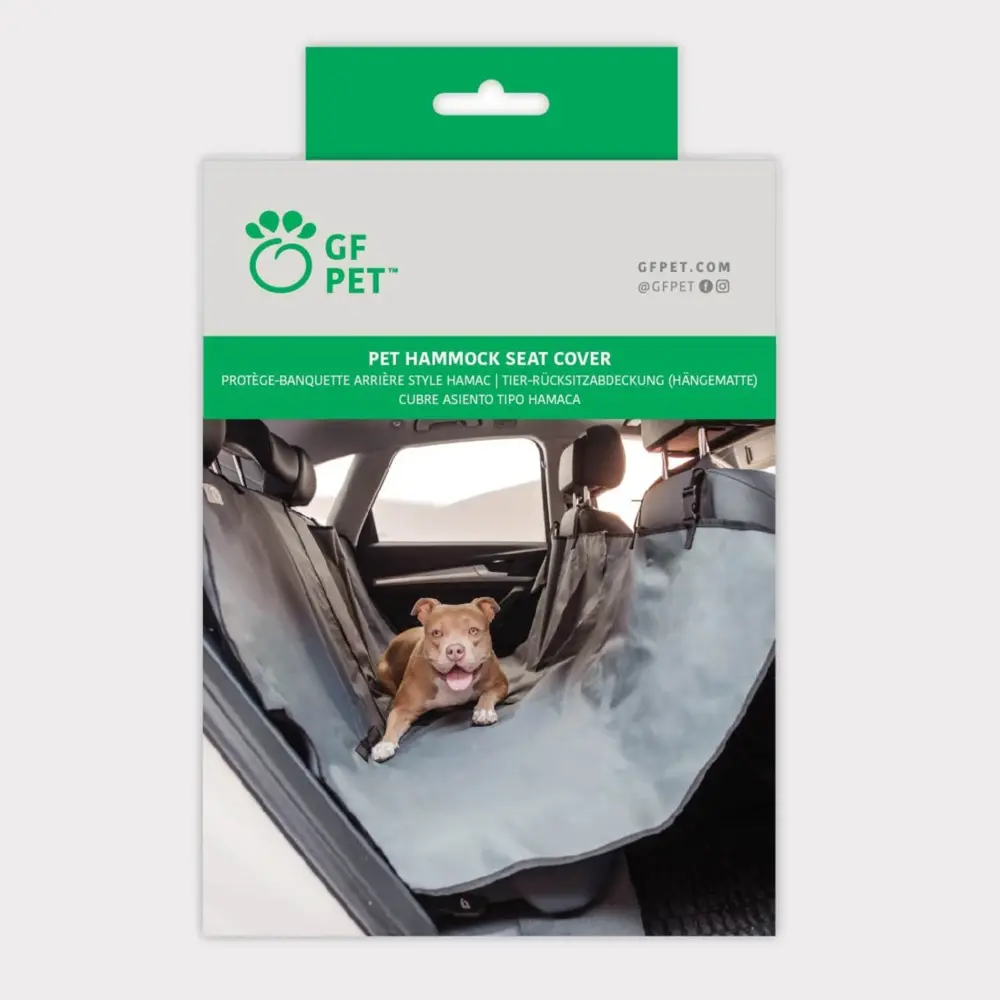
Why it fits: A waterproof hammock for the seat a tethered dog rides on, 58 × 57 in, with seat-belt openings; it covers the seat but isn't a restraint.

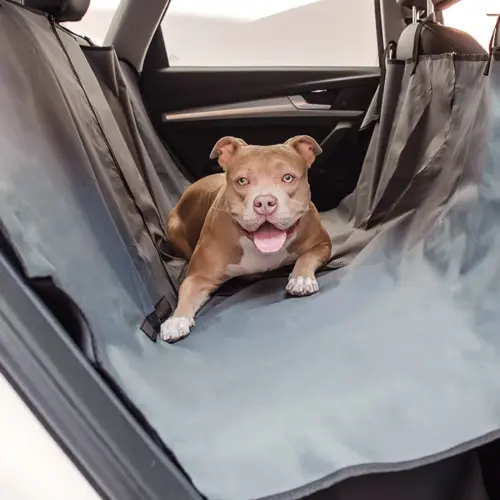
If you add the hammock, measure your back seat first with our guide to choosing a dog hammock or seat cover.
Related guides
-
Comparison
Cargo Liner vs Back Seat Cover: Where Should Your Dog Ride?
Where your dog rides decides which cover you need, and the two are not interchangeable. This comparison covers coverage, fitting, belt slits and cleaning, and is clear about what a cover does not do.
-
Comparison
Driving vs Flying With a Dog or Cat: How to Decide for a Long Trip
Moving across the country or visiting family far away? Compare the car, the airplane cabin and the cargo hold on size limits, stress, heat and breed rules, paperwork and cost, then see which route suits your dog or cat.
-
Comparison
Back Seat or Cargo Area: Where Should Your Dog Ride in an SUV?
The back seat is the simpler setup for a dog in an SUV; the cargo area needs a strapped-down crate or a fitted barrier first. Compare the two spots, plus third rows, folded seats and captain's chairs, heat at the back, getting in and out, and measuring for a hammock.