Front-Clip vs Back-Clip Dog Harness: How Each One Works and Which Suits Your Dog
Choosing a front clip vs back clip harness comes down to where the leash attaches, because that decides what happens when your dog pulls. A front-clip harness has its ring on the chest, so a pull turns your dog sideways and back toward you. A back-clip harness has its ring between the shoulder blades, which is comfortable and quick to clip on but does nothing to discourage pulling. Pick a front clip for a dog that pulls and a back clip for one that already walks on a loose leash.
Quick answer: a front clip redirects pulling, a back clip suits calm walkers
Where to clip a leash on a dog harness depends on how your dog walks today:
- Pulls or lunges: front clip, used alongside loose-leash training.
- Already walks on a loose leash: back clip.
- Small dog with a light pull: usually a back clip, which keeps the leash away from short legs.
- Jogs beside you: back clip, once your dog can stay at your side at a walk.
- Still learning: a dual-clip harness, front ring for now and back ring later.
How a front-clip harness works
A front-clip harness puts the leash ring at the center of the chest. When your dog surges ahead and the leash goes tight, the pull swings the shoulders around toward you instead of letting your dog lean into it, so pulling stops gaining much ground.
Front clip harness pros and cons, in brief:
- Pros: less leverage for pulling, pressure on the chest rather than the throat, and easier steering past distractions such as a cat across the street.
- Cons: a long, slack leash hanging from the chest can loop around a front leg, the chest piece can slide sideways when your dog pulls at an angle, and a chest strap that sits low or runs straight across the shoulders can shorten your dog’s stride.
How a back-clip harness works
A back-clip harness has its ring on top, close to the middle of the shoulder blades. The leash runs up and away from the legs, so it rarely tangles, and you can clip on and go in seconds.
The trade-off is control. A dog pulling against a back clip leans into the harness the way a sled dog does, and if your dog lunges you are holding them back rather than turning them.
The back ring is also the one to use in the car: clip a seat-belt tether to the back of a well-fitted harness, never to a collar or a chest ring. A tether limits roaming; it is not crash protection, and our guide to choosing a dog seat belt or booster seat covers the setup.
Front clip vs back clip harness: side by side
- Ring position. Front: center of the chest. Back: between the shoulder blades.
- What a pull does. Front: turns your dog toward you. Back: lets your dog lean into the harness.
- Best for. Front: pullers, lungers and training walks. Back: calm walkers, small dogs with a light pull, jogging partners and car tethers.
- Tangling. Front: more likely with a long, slack leash. Back: rare.
- Clipping on. Front: a little fiddlier, under the chest. Back: clip on and go.
Do no-pull harnesses work? What they can and can’t do
Yes, if you know what they are for. Most harnesses sold as no-pull are front-attachment designs that take away leverage: a dog that hits the end of the leash gets turned around instead of gaining ground. What they don’t do is teach. Take the harness off and the habit is still there, and some dogs learn to pull at an angle.
In VCA’s overview of collar and harness options for training, veterinary behaviorists note that body harnesses with the leash at the center of the chest are designed to stop pulling, and that motivation and positive reinforcement are the most effective and humane way to train. The lasting fix is teaching your dog that a loose leash is what moves the walk forward; our step-by-step plan is in how to stop a dog pulling on the leash.
- A no-pull harness can: make pulling less effective, keep pressure off the throat and make walks calmer while you train.
- It can’t: teach loose-leash walking on its own, fix lunging or reactivity toward dogs or people (work with a certified trainer for that), or make up for a loose, sliding fit.
Which attachment suits your dog: pullers, small dogs, runners and dogs in training
Pullers
A front clip gives you steering while you teach loose-leash walking. Pair it with a standard 4- to 6-foot leash rather than a retractable one, so slack doesn’t pile up around the front legs.
Small dogs
Small dogs rarely pull with much force, and on short legs a chest ring brings the leash close to the paws, so a back clip is the usual choice; a small dog that pulls hard or lunges can still use a well-fitted front clip alongside training. If your small dog coughs on walks or has breathing concerns, ask your veterinarian which setup suits them.
Runners and hikers
For jogging, use a back attachment, and only once your dog can stay beside you at a walk: a ring that turns your dog toward you mid-stride is unhelpful at speed, and a swinging leash can catch a front leg. Ask your veterinarian before starting a running routine with a puppy, an older dog or a dog with joint or breathing concerns. On long hikes, check for rubbing behind the front legs at every rest; our hiking with a dog checklist covers the rest of the trail kit.
Dogs still in training
A dual-clip harness has both rings, and the AKC’s guide to choosing the right harness for your dog suggests starting on the front clip for control and switching to the rear clip as your dog improves. A double-ended leash can clip to both rings at once during the changeover.
Fit matters more than the clip
A front clip only steers if the harness stays centered, and any loose harness rubs, twists or slips off. Check the fit before the first walk and after a few more:
- Measure chest girth at the widest point just behind the front legs and compare it with the maker’s size range or chart; our guide on how to measure a dog for a harness shows where to place the tape.
- Fasten the harness and slide two fingers flat under each strap: snug, but not squeezing.
- Check that a front ring sits centered on the chest, not drooping low or riding up toward the throat.
- Watch your dog walk: the straps should sit clear of the armpits and the point of the shoulder, and the stride should look normal. If a chest strap shortens it, adjust the fit or try a Y-shaped front that runs down between the front legs.
- After the walk, look for red or bare patches behind the front legs and under the straps.
Ask your veterinarian about skin that stays sore, or a dog that suddenly resists the harness, limps or walks stiffly.
Where our two harnesses fit
We carry two dog harnesses in walking and training, and they do different jobs.
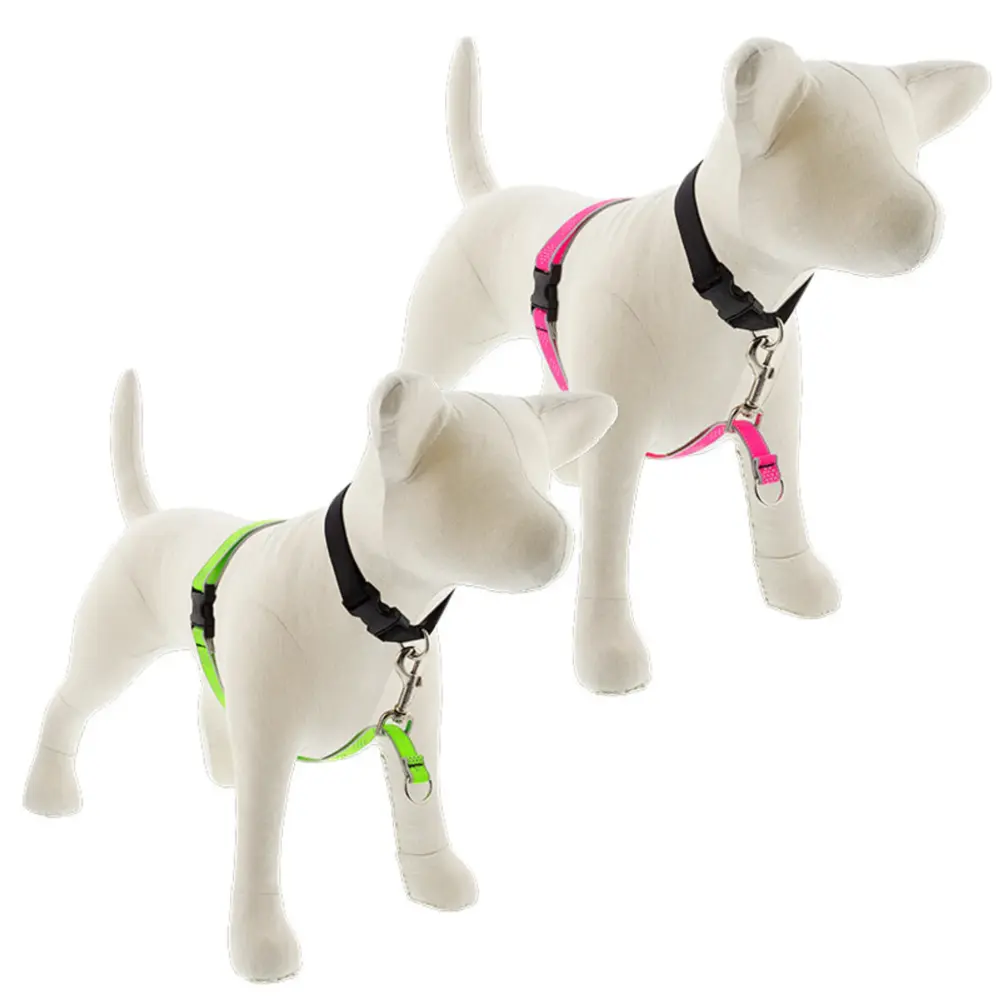
The Lupine Pet Reflective No-Pull Dog Harness is the one for dogs that pull. It is a front-ring design that works with your existing gear, attaching to the everyday collar and leash you already use, and its front attachment redirects forward momentum back toward you without pressure on the throat. It is sized for medium and large dogs in two girth ranges, 16–26 in (3/4-inch width) and 26–38 in (1-inch width), with a reflective weave in six designs. It is machine washable (air dry) and made in the USA by Lupine Pet. Because it connects to the collar, use a different harness with a car tether.
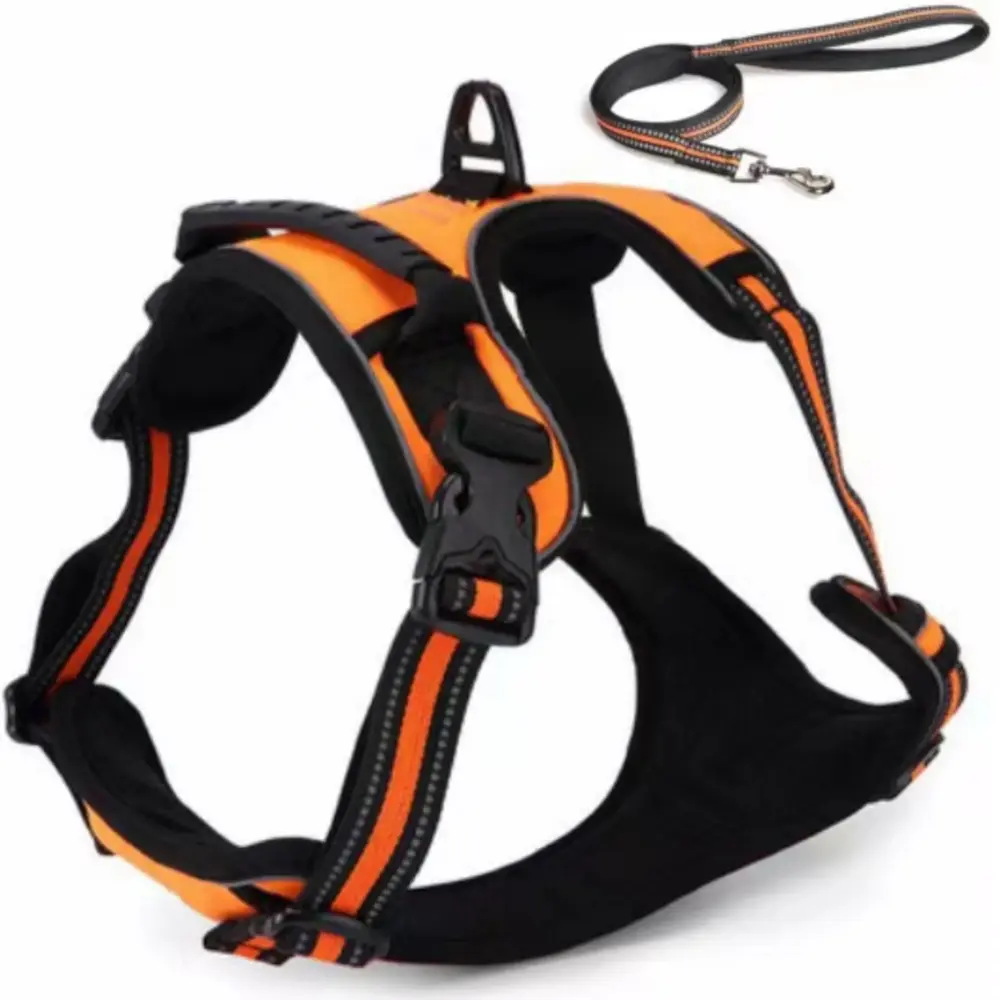
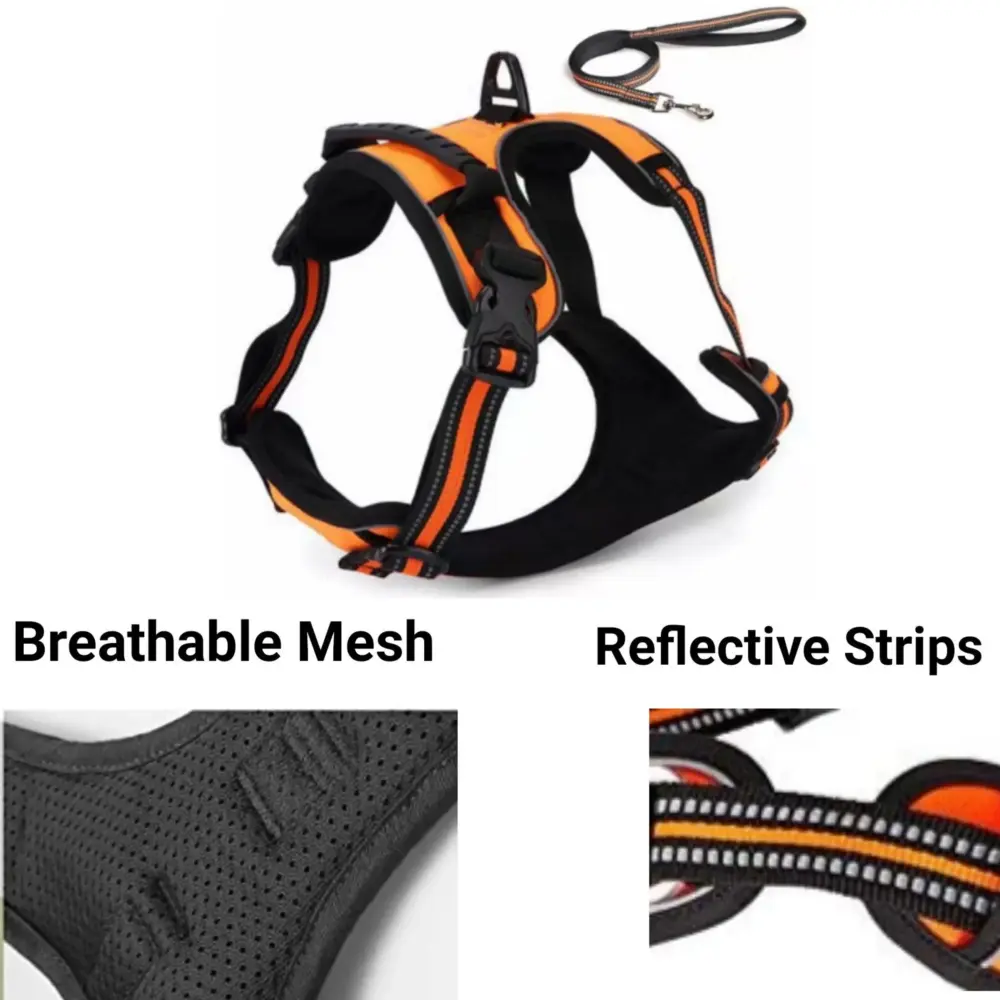
The Mr. Peanut’s PetTrek Padded Reflective Dog Harness & Leash Set is a padded everyday harness with a matching leash. Its oxford nylon and cushioned padding spread pressure across the chest rather than the neck, reflective stitching runs on both harness and leash, and quick-release buckles and adjustable straps give a snug fit. It comes in XS to Large, with a size chart in the product images; if your dog’s chest is under 16 inches, below the Lupine’s smallest range, start there. The listing doesn’t name the leash attachment point, so if clip position matters for your dog, check the product photos or ask us first.
-
Mr. Peanut’s
PetTrek Padded Harness and Leash Set
Price range: $24.95 through $26.95
-
Lupine Pet
Reflective No-Pull Dog Harness
Price range: $41.95 through $45.95


For everything else that goes on a walk, see what to bring on every dog walk, or browse more of our walking and training guides.
Harness clip FAQ
Are front-clip harnesses bad for dogs?
Not inherently, but fit and design matter. Some veterinarians and canine physical therapists are concerned that a strap running straight across the front of the shoulders, especially one that sits low or loose, can restrict a dog’s stride. Choose a harness that leaves the shoulders free, watch how your dog moves in it, and ask your veterinarian about limping or stiffness.
Why does my dog’s front-clip harness twist to one side?
Some shift is how a front clip works: when your dog pulls at an angle, the ring follows the leash. Constant twisting usually means loose or uneven straps, so tighten both sides equally until two fingers fit snugly and the ring sits centered. Keeping less slack in the leash helps too.
Should I switch to a back clip once my dog stops pulling?
You can, gradually. Use the back clip on quiet, familiar routes first and keep the front clip for busy streets for a while. If pulling creeps back, return to the front clip and practice loose-leash walking again.
Can I clip a leash to the collar and the harness at once?
Yes, with a double-ended leash: one clip on the harness and one on the collar, as a backup for a dog that has slipped out of its gear before. Keep the collar end slack so any pull lands on the harness. The Lupine no-pull is a different setup: it is designed to attach to your dog’s everyday collar.
Related guides
-
Checklist
What to Tell Your Dog Walker: A Handover Checklist
Everything a new dog walker needs on one page: where the gear lives and how it goes on, how your dog walks, leash and route rules, medications and treats, emergency contacts, the door routine, weather rules and a first walk together.
-
How-to
What to Do When an Off-Leash Dog Approaches You and Your Dog on a Walk
A loose dog is heading for you and your leashed dog. How to read its body language in seconds, walk away without running, block it with your body and a firm voice, buy time with treats or an umbrella, and what to check and report if the dogs make contact.
-
How-to
Teaching Kids to Walk the Dog: When They’re Ready and How to Start
Your child wants to take the leash. Here’s how to tell whether your child and your dog are both ready, how to run practice walks with a backup leash, and what your child should do when the dog pulls, lunges or meets another dog.