Car Travel Checklist
Pet Emergency Kit Checklist: What Your Dog or Cat Needs to Evacuate
Short answer
Pack what each pet needs to leave in minutes and spend two weeks away: record copies, photos and ID; food, water and medication; a carrier or harness and leash; litter or poop bags; first aid and a blanket from home. Keep it by an exit, and plan where pets will stay, since many public shelters admit only service animals.

The pet emergency kit at a glance
Build one kit for the household, but count everything per animal: two cats need two carriers and twice the food and litter. The quantities here follow the CDC’s pet disaster preparedness kit, which calls for a two-week supply of food, water and medication for each pet. The ASPCA suggests 7 to 10 days of food and at least a week of water, so treat a week as the minimum and two weeks as the goal.
- ID: a tag with your current cell number and a registered microchip
- Paperwork: record copies, photos and a contact list in a waterproof bag
- Food and water: two weeks of each, plus bowls
- Medication: two weeks of daily medicines, a month of parasite preventatives
- Containment: a carrier per cat or small dog, a crate for a bigger dog who uses one, and a spare collar, harness and leash per dog
- Sanitation: litter and a tray, poop bags, paper towels, gloves, garbage bags
- Comfort and first aid: a blanket from home, a toy, a first-aid kit, a flashlight
- A plan: at least two places your pets can stay, written down
The last-minute grab list
Some things can’t live in the kit. Tape this list inside the lid:
- Every pet: cats zipped into carriers, dogs harnessed and leashed before the front door opens
- Refrigerated medicines, in a small cooler with an ice pack, and the doses you use day to day
- Your phone and charger
- A marker to write EVACUATED across your rescue alert sticker, if you have one
Documents and ID
If you and your pet are separated during an evacuation, ID is how a shelter or a stranger gets your pet back to you, and paperwork is how you prove the pet is yours. Keep the originals at home and pack copies.
- A collar your pet wears every day, with a tag showing your cell number, plus a second number for a friend or relative outside your area
- A microchip registered in your name, with your current phone number on file at the registry
- Copies of the rabies certificate, vaccination history, a recent medical summary and any prescriptions, plus proof of ownership such as adoption or registration papers
- Recent photos of each pet showing the face, markings and whole body, plus one of you with your pet
- A description card: name, species, breed or mix, sex, age, color, weight, markings and microchip number
- A contact list: your veterinarian, an emergency clinic outside your area, family, and the places you might stay
- Written feeding and medication instructions, in case someone else ends up caring for your pet
The CDC’s pet emergency guidance calls microchipping one of the best ways to be reunited with a pet, but only if the registry has your current number, so check it online, especially if you’ve moved or changed phones. A chip matters most for an indoor cat who never wears a collar and has no visible ID if it slips out of a carrier in a strange place; a cat who does wear one needs a breakaway collar, which releases if it snags.
Photos also become the poster if your pet goes missing; our guide on what to do if your dog or cat is lost covers that search. Keep a second set of everything on your phone and in cloud storage, but pack the paper: it still works when the battery doesn’t.
Food, water and medications for two weeks
- Two weeks of the food your pet eats now, in airtight, waterproof containers
- Pop-top cans or a manual can opener, plus a spoon and the measuring scoop
- Two weeks of water for each pet, in sealed bottles or jugs, with extra for rinsing bowls
- Two bowls per pet, collapsible or non-spill
- Two weeks of every daily medicine, in its labeled container inside a waterproof bag, with the dose written down
- A month of flea, tick and heartworm preventatives
- A few of your pet’s usual treats
Pack the food your pet already eats. A sudden change of diet can upset a stomach at the worst possible moment, and stores near an evacuation zone may be closed or out of your brand.
Tip
How much water is two weeks? It depends on your pet’s size, diet and the weather, so measure instead of guessing. Pour a measured amount into the bowl in the morning, top it up with measured amounts through the day, and note what’s gone by evening. Multiply by 14, add extra for hot weather and rinsing, and store the water in sealed containers out of the sun.
For medicines, ask your veterinarian for enough extra to keep a two-week reserve in the kit, and for a copy of each prescription. If a medicine needs refrigeration, ask how long it can safely go without it and how best to carry it.
Stored jugs are awkward to pour from in a parking lot, so add a travel bottle for drinks on the way. The Flipo Fold-A-Bowl water bottle holds 26 oz, its cover folds out into a bowl so you don’t need a loose one in the car or a hotel lot, and its push-button closure does not leak in a bag.
Carriers, leashes and harnesses: one per pet
Expect to confine every animal at once: in the car, in a friend’s spare room, in a hotel or at a kennel. Ready.gov recommends a travel bag, crate or sturdy carrier, ideally one for each pet; separate carriers also mean nobody shares a cramped space through a long wait.
- One carrier or crate per cat or small dog, roomy enough to stand, turn around and lie down
- Your name, your phone number and the pet’s name on each carrier
- An absorbent pad or towel and a piece of bedding inside each one
- For each dog: a spare collar with an ID tag, a spare leash and a harness that fits now
- A standard 4- to 6-foot leash rather than a retractable one, for crowded, unfamiliar places
- For cats: a thick towel to wrap a frightened cat, and a harness only if your cat already wears one calmly
Cats: the carrier is the hard part
Getting a cat into the carrier is often the slowest step. A cat who sees it only on vet day will hide, so keep the carrier out at home as a bed, as our guide on how to get a cat used to a carrier explains, instead of folded in the kit. When a storm or fire warning is issued, shut your cats in one room with their carriers so you aren’t searching under beds at the last minute, and lower a reluctant cat in through a top opening.
In the car
Belt each carrier onto the back seat or wedge it on the floor behind a front seat, never on the front passenger seat; our guide to traveling with a cat in the car explains why. Dogs ride in back, in a secured crate or a harness with a seat-belt tether, as our road trip with a dog checklist sets out; a tether keeps a dog out of the front seats but is not crash protection.
These picks are limited to what Nilosi carries. The carrier and backpack suit cats and small dogs. The harness set runs XS to L, so check its size chart against your dog’s chest; if your dog is bigger than the Large, pack a spare harness that already fits.
-
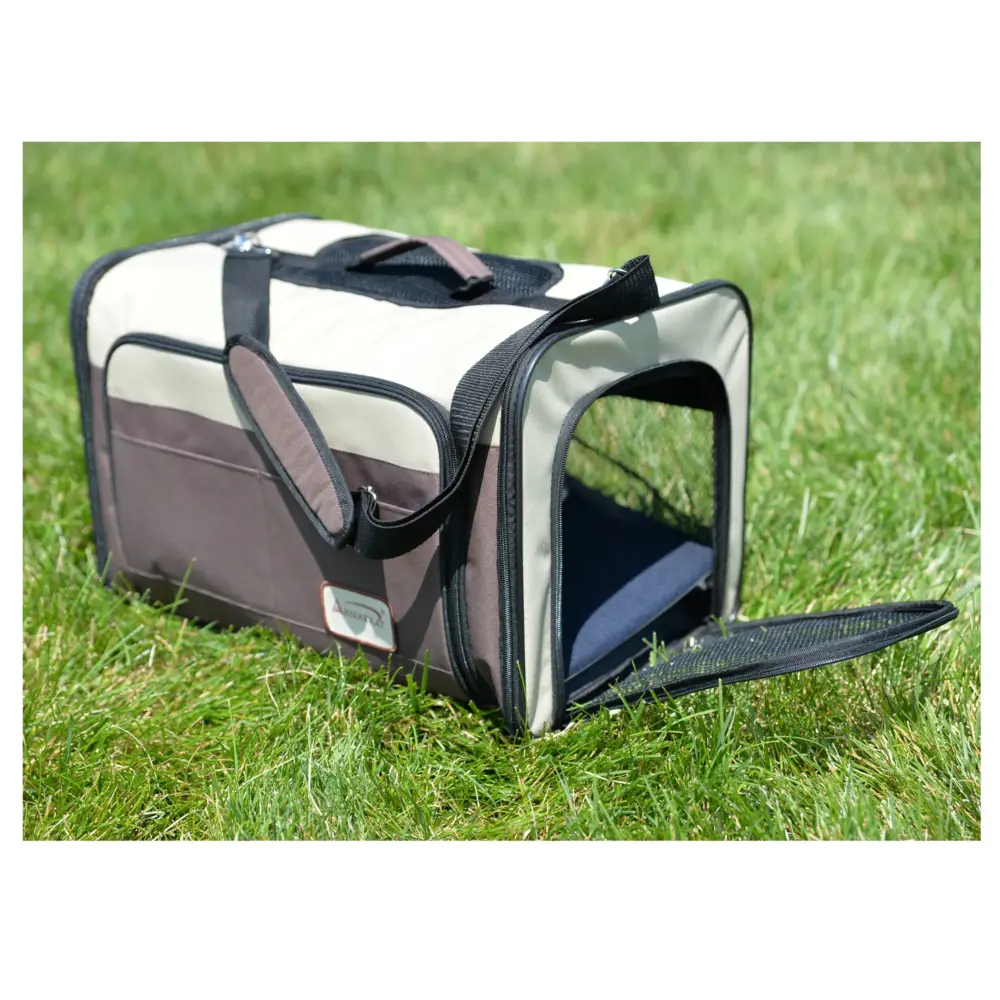
Armarkat
Soft-Sided Pet Carrier, View product
$65.95
Why it fits: Three zip openings let you lower a cat in from the top, and an expandable canopy gives a cat or small dog room to stretch during a long wait. Check its size against your pet.
-
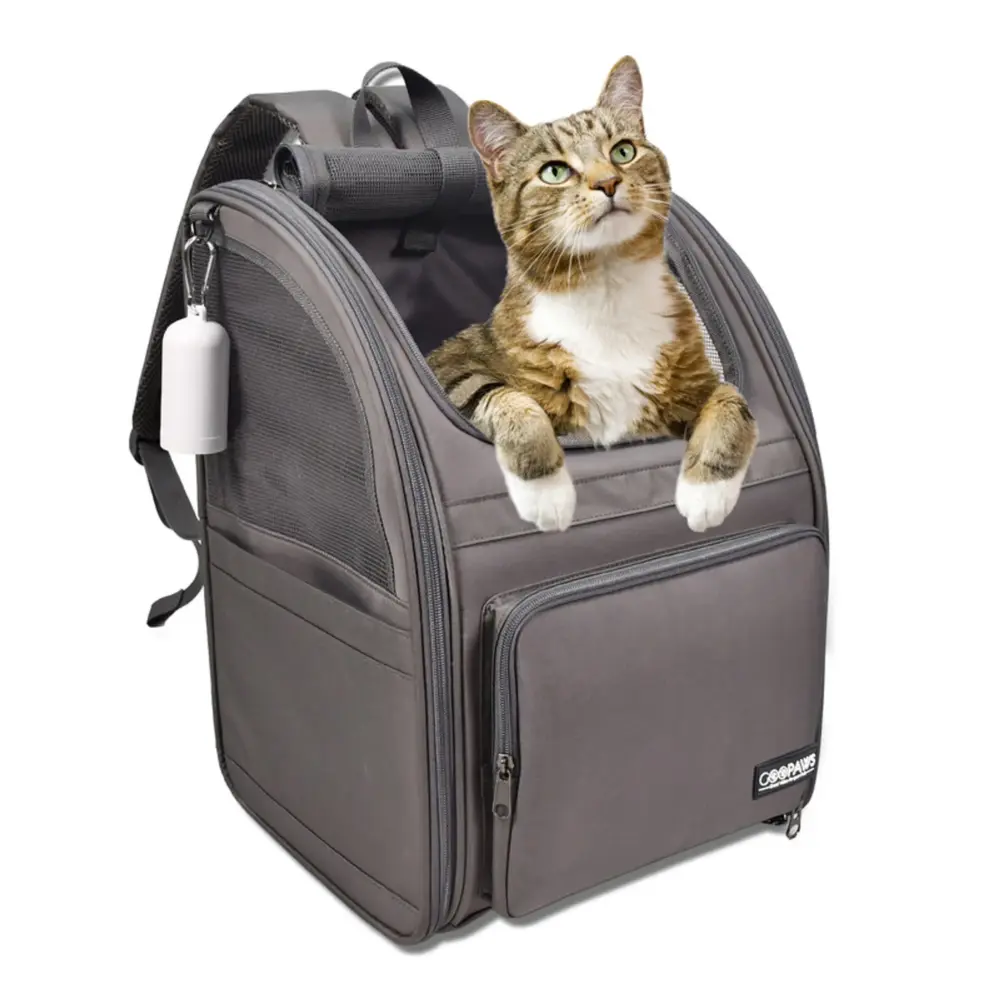
GOOPAWS
Cat and Small-Dog Carrier Backpack
$51.95
Why it fits: Carries a cat or small dog up to 25 lb on your back, so both hands stay free for the kit or a second carrier. Top and side openings, plus a safety strap inside.
Currently out of stock
-
Mr. Peanut’s
PetTrek Padded Harness and Leash Set, Choose size & color
Price range: $24.95 through $26.95
Why it fits: A padded harness with a matching leash makes a ready spare for the kit, with reflective trim for leaving after dark. Sizes XS to L, so measure the chest first.
-
Lupine Pet
Reflective Dog Collar, Choose size & design
Price range: $22.95 through $28.95
Why it fits: A spare flat collar to keep tagged in the kit, with a D-ring for ID tags and reflective threads woven in. Sizes run from tiny dogs to XXL, so match the neck measurement.



Litter, waste bags and clean-up supplies
Hotels may charge for messes, and at a pet-friendly shelter you may be expected to care for and clean up after your own animals. A pet who is frightened or confined for hours may have accidents it would never have at home, so pack more than seems necessary.
- For each cat: a disposable litter tray or small lidded pan, a scoop and two weeks of the litter it uses now
- For each dog: at least two weeks of poop bags, and somewhere to carry the full ones
- Paper towels, liquid dish soap and a disinfectant
- Garbage bags, zip-top bags and disposable gloves
- Newspaper or absorbent pads to line carrier and crate floors
- Large pet wipes for paws and coats when there’s no water to spare
Somewhere to carry the full bags can be a zip-top bag, or Yucky Puppy’s XL poop bag holders: waterproof, zippered pouches that clip to the leash and hold full bags until you find a bin at a rest area or hotel lot. They’re machine washable and come two to a set.
Stick with your cat’s usual litter: an unfamiliar texture or smell is one more reason to go somewhere else. Mr. Peanut’s Naturals Pet Wipes come 150 to a container at 6 × 10 in, large enough to clean paws without wasting stored water. Wipes are for everyday grime, though, not floodwater or chemicals. The CDC advises keeping pets out of stagnant or contaminated water; if your pet has been in it, wash it off with clean water and call your veterinarian.
Comfort items and first aid
A familiar smell can help a pet settle in a strange room, and a partly covered carrier gives a cat somewhere to hide.
- A blanket, towel or worn T-shirt that smells of home
- One or two favorite toys, and a long-lasting chew for a dog
- A light sheet or towel to drape over part of a carrier, leaving the mesh clear for air
A small first-aid kit lets you clean and cover a minor wound or wrap a cut paw until you can reach a veterinarian:
- Gauze pads, a rolled bandage and bandage tape
- Blunt-tip scissors and tweezers
- Sterile saline for flushing eyes and wounds
- Disposable gloves and a clean towel
- A pet first-aid booklet, or written instructions from your veterinarian
- A flashlight with spare batteries
Safety note
First aid buys time; it doesn’t replace a veterinarian. Don’t pack human pain relievers or other medicines to give your pet unless your veterinarian has told you to, because several common ones are dangerous to dogs and cats. A frightened or injured pet may bite or scratch even someone it knows, so move slowly and keep your face away. Ask your veterinarian whether a muzzle belongs in your dog’s kit and what to add for your pet’s own conditions.
Where pets can stay if you evacuate
Settle this before you need it. Ready.gov warns that many public shelters and hotels don’t allow pets inside, and the CDC notes that local shelters may admit only service animals. Some communities do open pet-friendly shelters during an evacuation; your county or city emergency management office can tell you whether yours does, and where.
- Friends or relatives outside your area who have agreed to take your pets and know their routines
- Two or three pet-friendly hotels in different directions, with their fees, size limits and number of pets
- A boarding kennel, or a veterinary clinic that boards, and the vaccinations it requires
- Your local animal shelter: ask whether it offers emergency boarding or foster care
- A neighbor with a key who is often home and can collect your pets if you’re out when an order comes
- A rescue alert sticker on or near the front door, listing your pets and your veterinarian’s number
Keep the list on paper in the kit, since phone and internet service can be patchy in a storm or fire, and when you call a hotel, ask the property itself whether it relaxes its pet rules during an evacuation. The ASPCA’s disaster preparedness advice suggests writing EVACUATED across the rescue alert sticker on your way out, if time allows, so rescuers know your animals are with you.
Leave early, and take your pets with you. The ASPCA puts it plainly: “if it isn’t safe for you, it isn’t safe for your pets.” Pets left behind can be lost, hurt or trapped, and you may not be allowed back in for some time. Pet-friendly rooms may fill fast once an evacuation is ordered, and a cat is far easier to catch before the wind picks up or the smoke arrives.
If a kennel is your safe haven, our checklist of what to pack for dog boarding covers the drop-off. And if officials tell you to stay put instead of leaving, the plan changes; see how to keep pets warm during a power outage.
Where to store the kit and when to refresh it
The ASPCA suggests storing the kit as close to an exit as possible, clearly labeled and easy to carry, with everyone in the household knowing where it is. A lidded plastic tote or a duffel bag works; hang the leashes by the same door.
- Every two months: swap the stored food and water for fresh, as the ASPCA suggests, and use the old food at home
- Each time you refresh: check medicine expiry dates and that the reserve matches the current dose
- After a vet visit: add new vaccination records and any changed prescriptions
- Once a year: retake the photos, check the tags are readable and confirm the microchip registry has your number
- Before your area’s storm or fire season: try the spare harness and collar on each dog, since puppies grow and adult dogs gain or lose weight
- When a pet joins the household: add a carrier, food, water and a set of records
Run a drill
Once a year, time a practice run: every pet in a carrier or on a leash, the kit in hand, everyone at the car. If it takes longer than you’d have, the slow step is usually catching the cat, so go back to carrier practice. If you’re ordering spare gear, allow time for delivery before your storm or fire season; our shipping page has the timings.
What to leave out
- A full-size dog bed. A blanket or towel from home carries the same smell in a fraction of the space.
- Anything untried. New food, a new harness or a carrier your pet has never used belongs in a test run at home first.
- An open bag of kibble. Portion it into waterproof containers that close properly.
- Heavy ceramic or glass bowls. They add weight and can break; collapsible bowls pack flat.
Related guides
-
How-to
Taking a Dog on Public Transit: Rules, Carriers and Practice Rides
How to get a small dog onto the bus or subway calmly: what to look for in your transit agency’s pet policy, choosing a carrier by your dog’s size and your own back, carrier training at home, short off-peak practice rides, stairs, crowds and heat, and how service animal rules differ.
-
How-to
How to Fly With a Small Dog in the Cabin: From Booking to Landing
From booking the pet spot to the first relief stop on landing: whether your dog suits the cabin, carrier and settle practice at home, what to pack, airport relief areas and water, the TSA checkpoint on a harness and leash, and a dog who barks under the seat.
-
Checklist
Winter Hiking With a Dog: Checklist for Cold, Ice and Short Days
A winter trail-day checklist: plan a shorter, sheltered route around daylight, keep your dog leashed and off frozen water, pack water that won't freeze and a coat for dogs who feel the cold, check paws for ice balls and salt, and know when to turn back.