Outdoors & Adventure Checklist
Winter Hiking With a Dog: Checklist for Cold, Ice and Short Days
Short answer
Plan a shorter, sheltered route than in summer, timed to finish well before dusk, and keep your dog leashed and off frozen ponds and creeks. Pack water kept from freezing, extra snacks, reflective gear, a towel and a coat for a small, short-haired or thin dog. Check paws at every rest, and turn back at the first shiver.

Winter hiking checklist at a glance
Go through these lists the night before and again at the trailhead. They add winter items to our year-round hiking with a dog checklist, which covers park leash rules, packing out waste and trail manners. Product picks further down are limited to what Nilosi carries; we don’t sell boots, paw balm, headlamps or first-aid kits.
Before you leave home
- The forecast for the trail itself: temperature, wind chill, fresh snow and freezing rain
- Sunset time, and a turnaround time that gets you back to the car well before it
- Current trail conditions and closures from the land manager or ranger station
- The dog rules for winter trails, since groomed ski and snowshoe routes often set their own
- Hunting season dates where you’ll hike; if hunting is open, blaze orange for both of you (our hunting season hiking checklist covers the rest)
- A word with your veterinarian first for a puppy, a senior or a dog with a health condition
What your dog wears
- A coat, if your dog is small, short-haired, lean, short-legged or freshly clipped
- A snug harness and a fixed-length leash, clipped on for the whole hike
- A collar with ID tags that carry the phone number you’ll have with you
- Reflective trim or a small clip-on light, if you could finish near dusk
- Boots, but only if your dog already walks comfortably in them
In your pack
- Your dog’s water, carried inside the pack so it doesn’t freeze, and a bowl
- More treats or kibble than a summer hike would need
- A small towel and a few pet wipes
- A headlamp, even for a hike you plan to finish by mid-afternoon
- A carrier your dog already knows, if you’re able to carry them
- A basic pet first-aid kit, your veterinarian’s number and the nearest emergency clinic
Waiting in the car
- A dry towel and a blanket for the ride home
- An insulated bottle of warm, not hot, water for rinsing paws
- A waterproof seat cover
- A spare dry coat, if your dog wears one
What you can skip
- A retractable leash. It lets a dog drift onto a frozen pond or an icy edge before you can reel them in.
- A coat for a thick-coated, unclipped dog. The AKC notes that breeds such as Siberian Huskies were bred with fur that insulates against snow.
- Off-leash time in fresh snow. The ASPCA warns that dogs can lose their scent in snow and get lost.
Planning the route around snow and daylight
Snow changes the effort. Breaking trail through deep snow tires a dog much faster than a packed path, and short legs make it harder still. Choose a route shorter than your summer usual, plan it by time rather than miles, and favor loops or out-and-backs with an early exit.
Shelter matters as much as distance: a forest trail blocks the wind that sweeps across an exposed ridge or an open lakeshore. In the mountains, check the local avalanche forecast too, and stay off steep, open snow slopes unless you’re trained to judge them. Then work back from sunset, leaving time for the return leg at a tired dog’s pace; deep valleys and dense forest get dark before the posted sunset time.
Finally, be realistic about your dog. The AKC’s winter safety tips note that very young and senior dogs have a harder time regulating their body temperature, and that slipping on ice can cause muscle strains. For a puppy, a senior or a dog with a health condition, ask your veterinarian how long a winter outing should be. Our guide to how cold is too cold to walk a dog sets limits for neighborhood walks; on a trail, where warmth is an hour away rather than a block, stay well inside them.
Coats for small, short-haired and thin dogs
A coat is for dogs who lose heat quickly. The AKC’s guide to which dogs need a winter coat names small and toy breeds, hairless and clipped dogs, lean dogs such as Greyhounds and Whippets, and low-to-the-ground dogs like Dachshunds and Corgis, whose bellies get wet in snow.
On a trail, manage the coat the way you’d manage your own layers:
- At the trailhead: put it on a small or thin dog before the chill sets in.
- On long climbs: check underneath at rests; if your dog is panting hard and feels warm, loosen it or carry it for a stretch.
- At rests and on the way down: put it back on, because a dog standing still cools quickly.
- In wet snow or sleet: a coat that soaks through stops insulating, so treat soaked fabric as a reason to head back.
Over hours of walking, the legs need to move freely and nothing should rub under the front legs. The AKC’s guide to walking a dog in rain and snow recommends a properly fitted, water-resistant coat to keep a dog warm and dry. Our dog coat vs sweater comparison explains when a coat beats a sweater on wet, windy days.
Our only coat is the DCNY Ranch Dog Coat, in small-dog sizes XXS to Medium. Wide hook-and-loop closures at the chest and belly make dressing easier at a cold trailhead; XXS and XS have a built-in leash clip, and Small and Medium have a harness opening. The Sherpa Lined Denim style has a sherpa lining. It isn’t sold as waterproof, so on wet-snow days watch for soaked fabric. We don’t carry coats in sizes above Medium.
Keep off frozen ponds and creeks
The AKC’s winter tips advise staying off frozen ponds: ice can crack easily, and you and your dog could both fall in.
On a trail, the danger is often hidden. Snow can cover the edge of a creek or the spot where a marsh begins, and ice over moving water is especially unreliable. A few habits keep your dog on solid ground:
- Shorten the leash wherever the trail runs beside water, and don’t throw balls or sticks near a pond.
- Don’t let your dog chase ducks or geese out onto the ice.
- Cross frozen streams on bridges, not on the ice.
- On icy rock, frozen boardwalks and steep descents, slow down and give your dog a short, loose leash to pick their footing. Traction devices on your own boots keep you upright if your dog lurches.
Safety note
If your dog falls through the ice, don’t go out after them: ice that gave way under a dog won’t hold you. Call 911, stay on solid ground and keep calling your dog toward you. Once your dog is out, dry and warm them and call your veterinarian, even if they seem fine, because a soaked dog is especially prone to hypothermia.
Water and snacks in the cold
Many dogs drink less on a cold day, but a dog breaking trail and panting on climbs still needs water, and the ASPCA’s cold weather safety tips call for plenty of it in winter. Offer a drink at every rest, at the turnaround and back at the car.
Snow is no substitute: it takes a lot of it to make one drink, and snow near roads and trailhead lots can carry de-icer.
Tip
Keep the water liquid: fill the bottle with lukewarm water at home, carry it inside your pack wrapped in a spare layer rather than in an outside pocket, and shake the bowl dry before you close it. The Flipo Fold-A-Bowl holds 26 oz, its cover folds out into a bowl, and its push-button closure is designed not to leak in a bag.
Bring more food, too. The ASPCA notes that pets burn extra energy keeping warm in winter. Pack treats or measured kibble for each rest, and before a long day out, ask your veterinarian how much extra food your dog needs.
Paw checks for ice balls, cuts and salt
Check feet at every rest. Three things go wrong on a winter trail:
- Ice balls. Snow packs into the fur between the toes and on feathered legs, then freezes into hard lumps that make a dog limp or stop to chew at a foot. Soften a lump in your bare hand, then work it loose without pulling the fur; our guide to getting snowballs out of dog fur covers removal at home and prevention.
- Cuts from crust and ice. A frozen crust can be sharp. Look for red spots in your dog’s tracks, and check the pads for cuts and cracks.
- Salt at the trailhead. Parking lots and access roads are often treated with de-icer, which the AKC warns can damage paw pads. Plan to rinse at the car; our comparison of pet-safe ice melt vs rock salt explains what different products do to paws.
Boots and paw balm help some dogs: the ASPCA suggests a paw protectant against salt and chemicals, with booties for more coverage, and the AKC’s rain-and-snow guide notes that well-fitted boots can protect paws from ice cuts and de-icer. We don’t sell either; introduce boots at home and test them on short walks first.
Watch the parking lot as well. Antifreeze leaks pool in lots, and the AKC warns that as little as a teaspoon can cause kidney failure. Keep your dog from licking slush or puddles near cars, and call your veterinarian or an animal poison control line right away if you think they did.
Light and visibility on short days
A start time that works in July can put the last mile in dusk in December, with the walk across the trailhead lot or along a road shoulder in near darkness.
Reflective gear shines back when a headlamp or headlight hits it, so drivers can see your dog in the lot and you can keep track of a dark dog at the end of the leash. Two winter checks:
- A coat can hide it. Dress your dog at home and look: harness trim under a coat doesn’t reflect, so make sure the collar or a harness strap still shows.
- White dogs blend into snow. A collar and harness in orange or red give your eye something to find at a distance.
-
Lupine Pet
Reflective Dog Collar, Choose size & design
Price range: $22.95 through $28.95
Why it fits: Reflective threads woven into the pattern help a headlamp pick out your dog at dusk; a strong D-ring holds ID tags, sizes tiny to XXL.
-
Mr. Peanut’s
PetTrek Padded Harness and Leash Set, Choose size & color
Price range: $24.95 through $26.95
Why it fits: Reflective stitching on harness and leash helps on the walk back after sunset; padded oxford nylon, XS to Large, with Orange and Red options.


When to turn back, and carrying a tired dog
Turn back at the first signs of cold or fatigue, not at your planned turnaround. The return leg is when a tired dog has the least left to give, and it’s often colder by then.
Signs it’s time to head back
- Shivering, or curling up tight at every rest
- Lifting paws, or holding one off the snow
- Lagging behind, stopping or refusing to go on
- Ice building up on the legs, belly or feet
- Plunging belly-deep with every step in soft snow
- Pressing against your legs or looking for shelter
Safety note
The AKC calls shivering and curling up for warmth early signs of hypothermia, so head for the car. Call your veterinarian right away if your dog seems sluggish, slow to respond or is breathing slowly, or keeps shivering once warm and dry. Skin on the ears, tail or paws that looks pale, gray or bluish, or is cold and painful to touch, can mean frostbite: don’t rub it or warm it with direct heat, and call your veterinarian.
Carrying your dog out
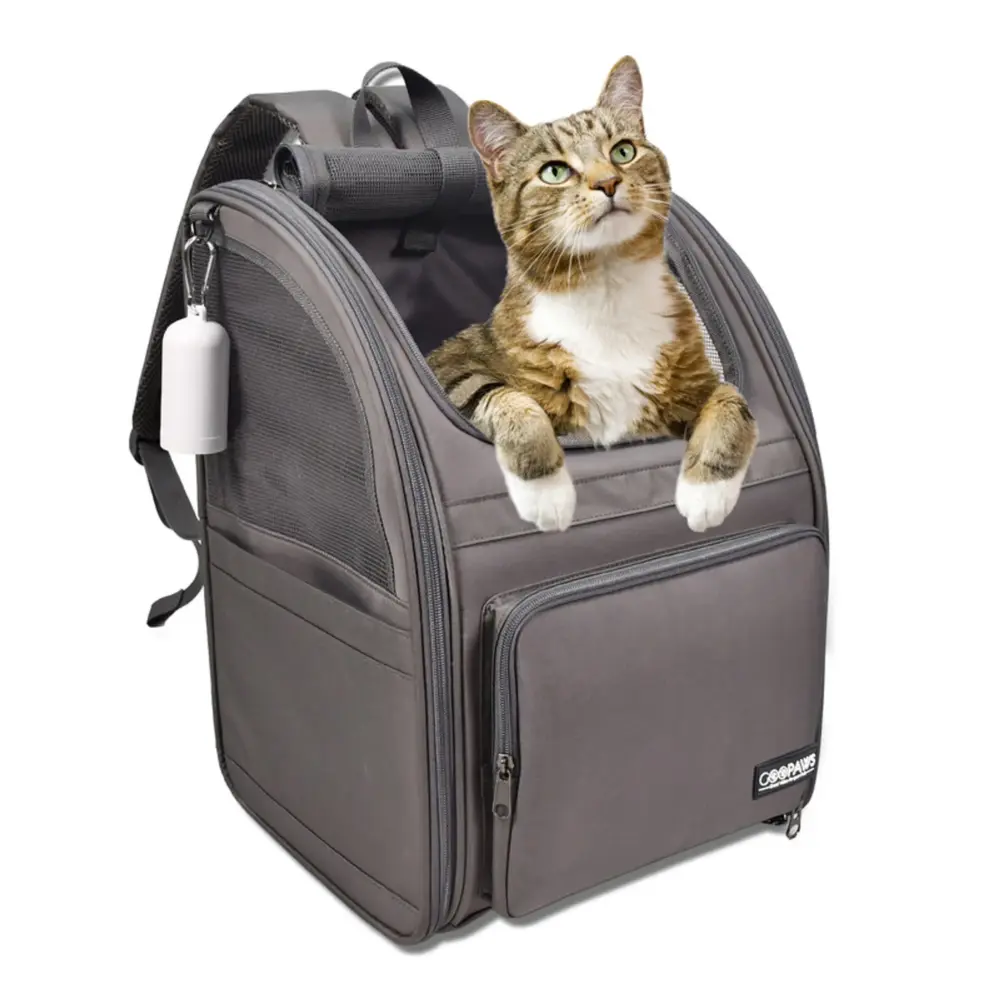
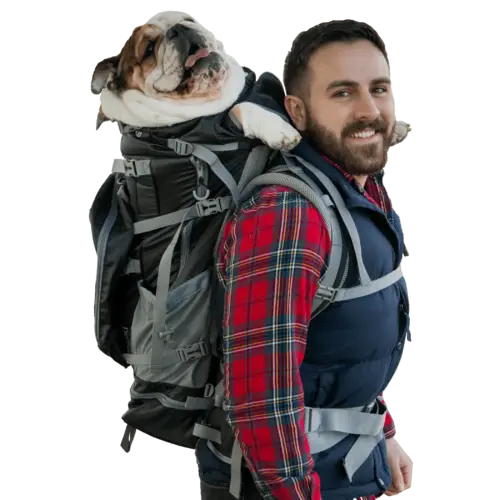
A carrier is the backup for a dog who is cold, sore or worn out far from the car, or for a short icy stretch. A dog riding in a pack isn’t moving to make heat, so keep the coat on and check ears and paws often. Practice at home first; carrying on snow and ice is harder than on a dry trail.
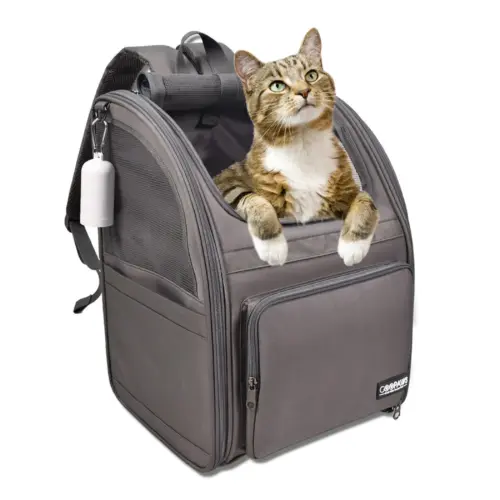
Neither pack below is a car restraint; use them on foot, with your dog supervised. Choose a load you can carry safely on slick ground; if your dog is too heavy, stick to short loops with easy exits. Our year-round hiking checklist explains how to measure for a carrier backpack.
-
GOOPAWS
Cat and Small-Dog Carrier Backpack
$51.95
Why it fits: Carries a small dog up to 25 lb who tires in deep snow; top and side openings let you check on them, with a soft fleece pad inside.
Currently out of stock
-
K9 Sport Sack
Kolossus Dog Carrier Backpack, Choose size & color
$264.95
Why it fits: Carries a medium or large dog who gives out far from the car; sized Large to XXL by collar-to-tail length, manufacturer maximum 80 lb.
The drive home: dry off and warm up
Do the drying before the drive. The ASPCA recommends washing and drying your dog’s feet and belly after winter outings to remove ice, salt and chemicals. At the car:
- If someone can, warm up the car while you deal with paws.
- Test the water from the car bottle on your wrist, then rinse each paw in lukewarm water, working between the toes.
- Dry between the toes, then the legs and belly, and rub the coat with a towel.
- Swap a wet coat for a dry one or a blanket.
- Settle your dog on a dry towel or seat cover, using your usual car restraint.
The GF PET Waterproof Dog Car Hammock covers the back seat in waterproof polyester and goes in the washing machine afterward. It keeps snowmelt off the upholstery; it is not a restraint.
-
Bark Fifth Avenue
Fabulous Paws Dog Paw Cleaner Cup, Choose size & color
$31.95
Why it fits: Rinses trailhead salt and grit from between the pads; fill it with lukewarm water from the car, twist each paw, then pat dry.
-
Mr. Peanut’s
Naturals Pet Wipes
$26.95
Why it fits: Thick 6 × 10 in wipes for legs and belly at the trailhead; wipe off grit and slush before your dog climbs in, then towel dry.
Currently out of stock


At home, check the pads again in good light, and let the coat dry fully before the next hike; the DCNY coat goes through a gentle machine cycle and dries flat. Call your veterinarian about cracked or bleeding pads, a limp, or stiffness that hasn’t eased by the following day, and plan a shorter route for the next outing.
Related guides
-
Checklist
What to Tell Your Dog Walker: A Handover Checklist
Everything a new dog walker needs on one page: where the gear lives and how it goes on, how your dog walks, leash and route rules, medications and treats, emergency contacts, the door routine, weather rules and a first walk together.
-
Guide
Hiking With a Small Dog: How Far, What to Bring and When to Carry Them
Small dogs can hike, on the right trail. Plan by time and climb rather than miles, clip the leash to a snug small harness with ID on the collar, offer water and tiny snacks often, watch heat and cold closely, give big dogs and coyotes room, and bring a backpack your dog already knows for the way back.
-
Checklist
What to Bring to the Dog Park (and What to Leave at Home)
A dog park checklist for the first visit and every one after: what goes on your dog and in your bag, what to leave at home, how to scout a park and use the double gate, the signs it's time to go, and a quick cleanup for paws and car seats before the drive home.