Seasons & Gifts Comparison
Dog Coat vs Sweater: Which One Your Dog Needs Outdoors and Indoors
Short answer
Choose a coat for outdoor time in wind, wet snow or real cold, since its woven or shell fabric blocks more wind; for rain, pick one labeled waterproof or water-resistant. Choose a sweater for cool, dry days and a chilly house: the lighter knit lets wind through and soaks up rain. Many healthy double-coated dogs need neither.
Dog coat vs sweater: side by side
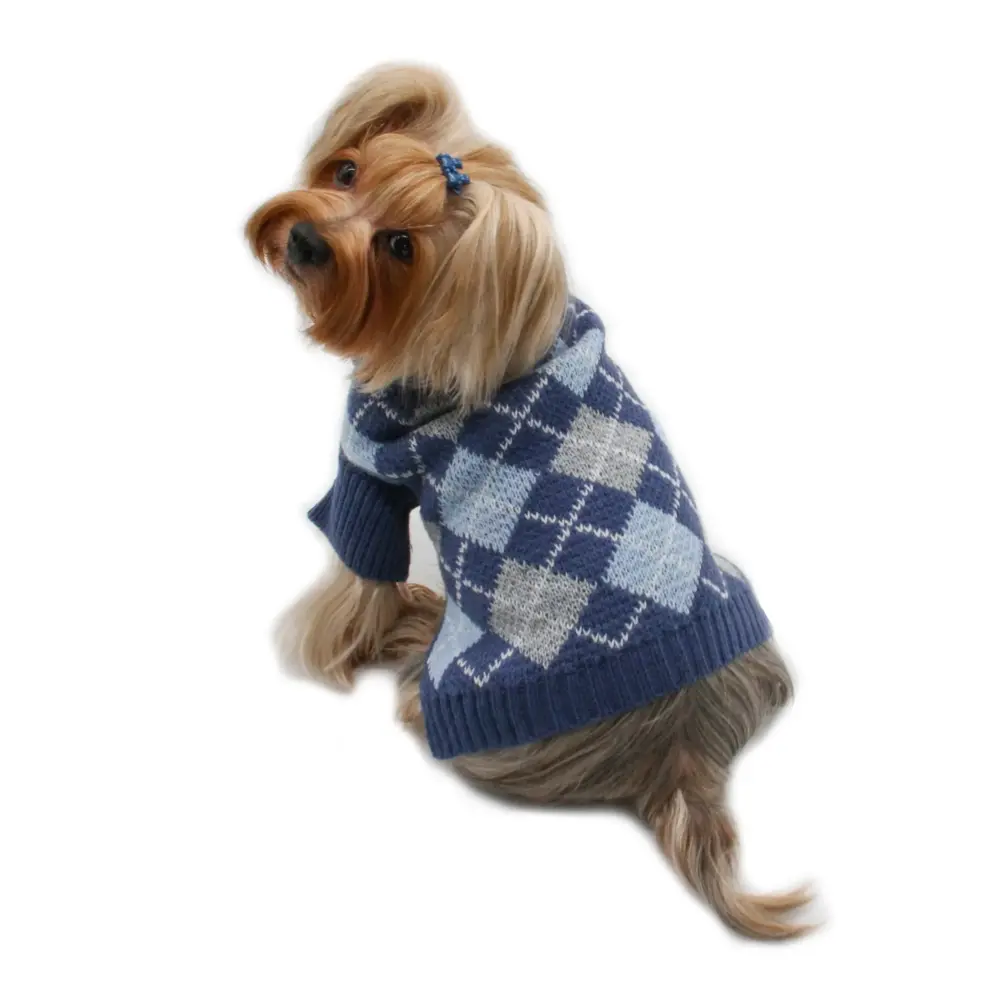
The difference comes down to construction: a coat is woven or shell fabric, sometimes lined, that closes with straps, snaps or hook-and-loop, while a sweater is a knit that stretches on and sits close like an extra layer of fur. Here is how that plays out:
| Option | Warmth | Wind and rain | Dressing and leash | Indoors and care |
|---|---|---|---|---|
| Coat | Back, chest, often belly; a lining adds warmth | Blocks more wind; sheds rain only if labeled for it | Wraps and fastens; may have a leash clip or harness slot | Off once you’re inside; wash per label |
| Sweater | Lighter; thicker knits for colder days | Wind gets through; soaks up rain | Pulls on over the head; harness goes on top | Fine indoors while you’re home; wash often |
| Sweater under a coat | Most warmth, for short outings on the coldest dry days | Set by the coat on top | The coat must still close without squeezing | Both off at the door; watch for overheating |
Tip
“Coat” covers everything from a light denim jacket to an insulated, waterproof parka, so read the listing. If it doesn’t say waterproof or water-resistant, expect it to get wet in steady rain, and if it mentions no lining or insulation, don’t count on it for bitter cold.
When a coat wins
A coat is the outdoor garment. Reach for one when:
- It’s windy. Wind slips through the open stitches of a knit. A coat’s tighter outer fabric stops more of it, and a lining or insulation adds warmth underneath.
- There’s wet snow, slush or rain. The American Kennel Club’s guide to choosing a winter coat for your dog notes that low-to-the-ground breeds can struggle in the cold because their bellies get wet on snow and ice, so pick a coat that covers the belly. For rain, look for one labeled waterproof or water-resistant. The same guide says even dogs who don’t get cold easily can benefit from a rain jacket in a wet climate, to keep mud and dirty water off their fur.
- You’ll be out a while, with stops. Long pauses are where the cold catches up: a slow, sniffy loop, a wait outside the vet’s door or a rest on a snowy trail. Our winter hiking checklist covers longer days out.
- You want to dress your dog fast at the door. A coat that wraps around and fastens at the chest and belly means no tugging a neck opening over the ears or threading front legs through sleeves, which helps with a wriggly puppy or a stiff older dog.
For coverage, use the ASPCA’s cold weather safety tips as a guide: for short-haired dogs they suggest a coat or sweater with a high collar or turtleneck and coverage from the base of the tail to the belly. A coat doesn’t make bitter cold safe, though. For how long winter walks should be and the signs it’s time to turn back, see how cold is too cold to walk a dog.
When a sweater wins
A sweater is the lighter, softer choice. The AKC’s guide to whether your dog needs a sweater says sweaters are usually less warm than dog jackets, which can make them more comfortable in the house, and it suggests a lighter sweater for cool weather and a thicker one for extra cold. A sweater makes sense:
- On cool, dry days. A brisk fall morning or a short loop when it’s chilly but not freezing, with little wind.
- Indoors, for dogs who feel the cold. A hairless or freshly clipped dog, a lean sighthound or a thin senior in a drafty house may be more comfortable in a light knit while you’re home.
- Under a roomy coat on the coldest dry days. A thin sweater adds warmth for a small or thin-coated dog on a short outing, if the coat still closes without squeezing. Check for overheating once you’re home (signs below).
- For a dog who dislikes closures. Some dogs startle at the rip of hook-and-loop or fidget while straps are adjusted; a sweater has nothing to fasten.
Where a sweater falls short is weather. A knit soaks through in steady rain or wet snow and then sits cold and heavy against the body, so on wet days switch to a coat, or skip the sweater and towel off at home; our guide to walking a dog in the rain has the drying routine. Loose, chunky knits can also snag on nails or a harness buckle.
Whichever you choose, it’s for time you’re around. The AKC’s sweater guide warns that an unsupervised dog can get tangled in a sweater, and the AKC’s dog clothing safety tips say not to leave clothes on a dog who is crated or left alone. Take it off at bedtime, too: a bed off the floor and out of drafts does more for a cold night, as our guide to keeping a dog warm at night explains.
Which dogs benefit most
The AKC’s coat and sweater guides name largely the same dogs. What differs is which garment suits each one best:
- Small and toy dogs. The AKC says small dogs, especially toy breeds, are among the dogs that most often struggle in colder temperatures. A coat for winter walks, a sweater for chilly mornings at home.
- Short-legged dogs such as Dachshunds, Corgis and Basset Hounds. Their bellies ride close to snow and slush, so a coat with belly coverage beats a sweater outdoors.
- Lean, short-coated dogs such as Whippets and Greyhounds. Thin fur and little body fat often mean both garments; their deep chests and narrow waists make careful measuring worth it.
- Hairless and freshly clipped dogs. With little natural insulation, these dogs may need a sweater indoors as well as a coat outside.
- Puppies. The AKC’s coat guide says young puppies feel the cold more. Expect to size up as they grow.
- Senior dogs. Older dogs are on the same list. For stiff shoulders or elbows, a coat that wraps and fastens is often easier to put on than a sweater with sleeves. If your senior has a health condition, ask your veterinarian how warm to keep them.
Which dogs usually need neither? Healthy dogs with thick double coats, such as Huskies, Malamutes and Bernese Mountain Dogs. The AKC’s sweater guide says large, healthy dogs with a thick coat of fur generally don’t need sweaters and could even overheat in them. A rain jacket can still keep a long coat cleaner on muddy walks.
Fit, leash and harness access
Coats and sweaters are sized from the same measurements: back length from the base of the neck to the base of the tail, chest girth at the widest point just behind the front legs, and the neck at its base. Our guide on how to measure a dog for a harness, collar or coat walks through each one; then use each brand’s own size chart, since sizes vary.
Fit checks for either one
- The front legs move freely, with nothing rubbing in the armpits.
- The neck stays loose when your dog lowers their head to sniff.
- Two fingers slide under the closures, or under the knit, at the chest.
- It ends at the base of the tail, and the belly panel sits clear of where a male dog pees; the AKC’s coat guide points to jackets with sanitary cut-outs for this.
- Your dog can walk, sit and lie down without it pulling, twisting or riding up.
The leash and harness: how each one handles it
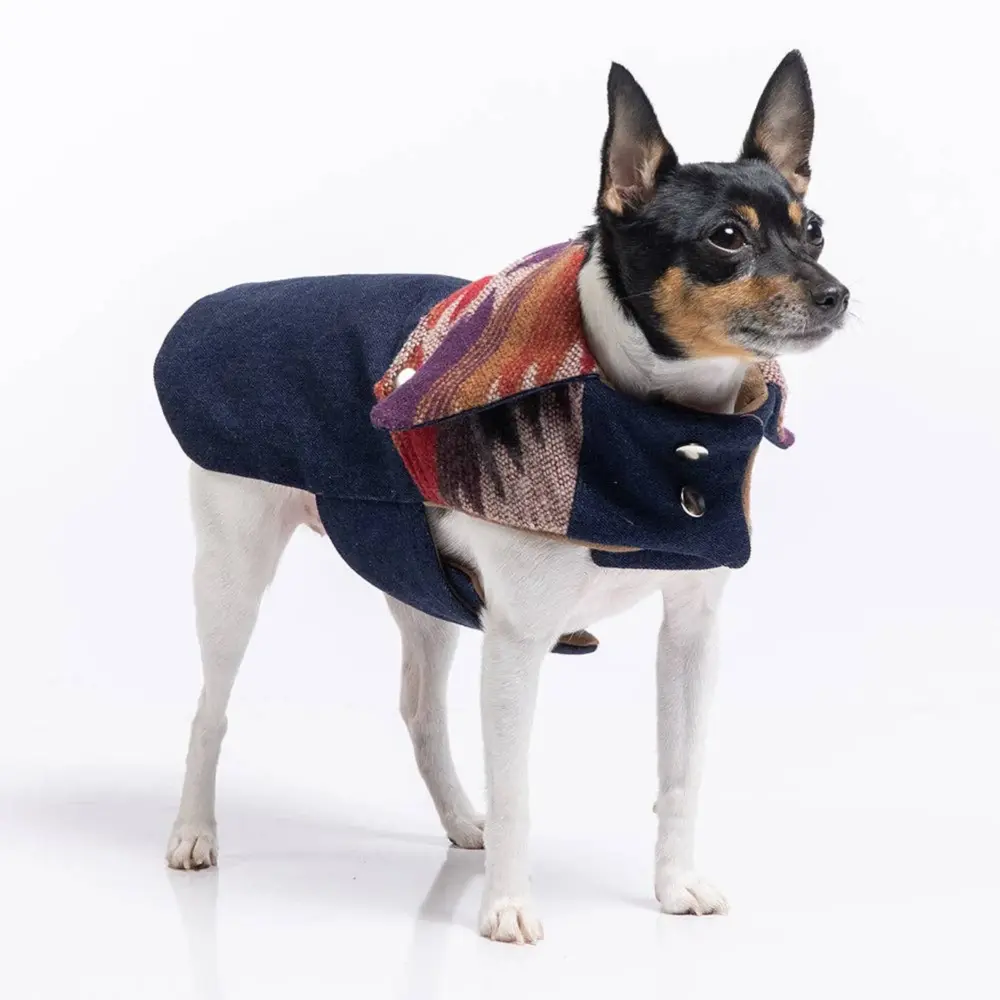
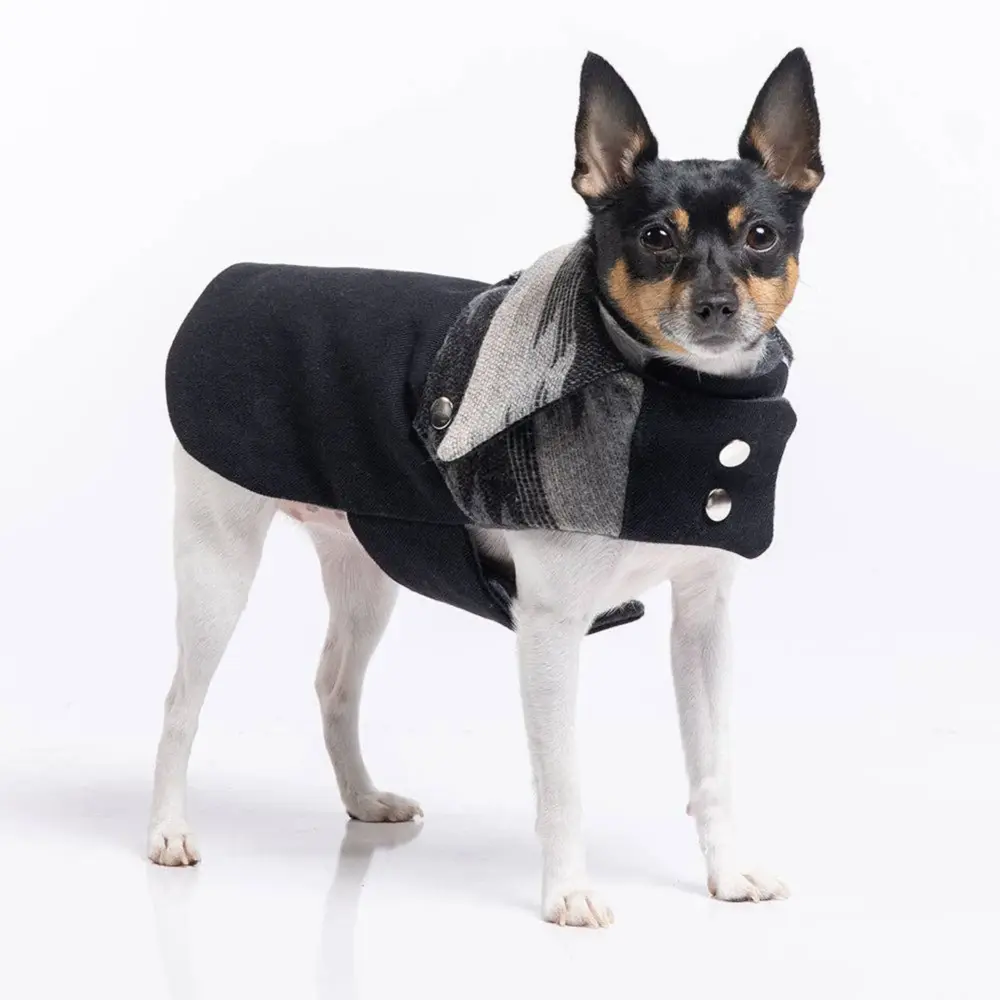
With a sweater, the harness goes on top. Refit the straps over the knit with the same two-finger check, and smooth the sweater so it doesn’t bunch under the front legs. With a coat, check how the leash reaches your dog: some coats have a built-in leash clip, and others have an opening for a harness’s leash ring to pass through, a feature the AKC’s coat guide suggests looking for. On the DCNY Ranch Dog Coat we carry, XXS and XS have a built-in leash clip, while Small and Medium have a harness opening; check the chest fit with the harness on.
Either way, a layer on top can hide ID tags and reflective trim on a collar or harness, so check what still shows after dark. If your dog has never worn clothes, getting a dog used to wearing a coat goes step by step, harness included, and the same approach works for a sweater.
Signs your dog is too warm
Dogs can overheat in clothes, especially indoors or once they warm up on a walk. Take the coat or sweater off if your dog:
- Pants while resting in a warm room.
- Gets restless, pacing or moving from spot to spot.
- Heads for the coolest floor and stretches out flat.
- Feels hot or damp when you slide a hand under the garment.
- Paws, rolls or chews at it, trying to get it off.
Most of this is avoided by dressing for the outing, not the whole day: on at the door, off when you’re back inside, except for a dog who needs a light sweater at home. The opposite signs, such as shivering, lifting paws or slowing down, mean your dog needs more warmth or a shorter trip.
Safety note
Frantic or excessive panting, heavy drooling or thick saliva, bright-red gums or tongue, labored breathing and weakness are among the warning signs in the AKC’s guide to overheating in dogs. Take the garment off, move your dog somewhere cooler and call your veterinarian, even if your dog seems to recover.
Drying and washing: sweaters need it more often
A sweater worn around the house sits against the skin for hours, and the AKC’s sweater guide suggests washing sweaters regularly to prevent odors and skin irritation. Coats need laundering too, because they collect hair and dander, the AKC’s coat guide notes. Follow each care label, let either garment dry completely before the next wear, and keep a spare if your dog goes out several times a day in wet weather.
For the indoor layer on its own, the choice narrows to two. Dog hoodie vs sweater compares fleece against knit for warmth, fit and washing.
Verdict, and the coat we carry
- Choose a coat for walks in wind, wet snow or real cold, for short-legged dogs who need belly coverage, and for dogs easier to dress with closures. For rain, choose one labeled waterproof.
- Choose a sweater for cool, dry days, for a hairless, clipped, lean or senior dog who is chilly indoors, or as a thin layer under a roomy coat.
- Get both for a small or thin-coated dog facing a long, cold winter: the coat for outings, the sweater for the house.
- Skip both for a healthy dog with a thick double coat, and watch for signs of cold instead.
Nilosi sells one dog garment, so our pick is limited to our own catalog: the DCNY Ranch Dog Coat, made in the USA in small-dog sizes XXS, XS, Small and Medium only. It comes in Home by Sunset, Smoked Charcoal and Sherpa Lined Denim; the last is the one described as sherpa-lined, and materials and lining vary by style. Wide hook-and-loop closures at the chest and belly make dressing easier, and it’s machine washable on a gentle cycle; lay it flat to dry. It isn’t described as waterproof or windproof, and we don’t sell raincoats or sweaters. Measure your dog before ordering, or browse our dog clothes.
Related guides
-
Buying guide
Which Dogs Actually Need a Coat, and Which Do Not
Coat type matters more than temperature, and some dogs are worse off wearing one. This guide sorts dogs into those who need insulation, those who need a shell, and those who need nothing at all.
-
Checklist
How to Keep Pets Warm During a Power Outage: A Winter Storm Plan
A winter storm plan for dogs and cats when the heat goes off: what to have ready, how to set up one warm room, bedding and coats that work without power, carbon monoxide and candle safety, short potty trips, and the signs it’s time to take your pets somewhere with heat.
-
How-to
How to Get a Dog Used to Wearing a Coat, With or Without a Harness
A step-by-step plan for a dog who freezes, scoots or rolls in a new coat: start at home with treats, fasten one closure at a time and build up wearing time. Plus how a coat goes on with a harness, drying and washing after wet walks, and when to take it off.