Seasons & Gifts Comparison
Dog Hoodie vs Sweater: Warmth, Fit and Which One Stays On
Short answer
A fleece hoodie is warmer, holds its shape, washes well and suits an active dog. A knit sweater stretches to fit awkward shapes, breathes better in a heated room and looks less bulky under a harness. The hood itself adds almost no warmth and most dogs dislike having it up, so treat it as a styling feature rather than a reason to choose.
The quick answer
If your dog is short-coated, lives somewhere genuinely cold, and will wear the layer outdoors as well as in, the fleece hoodie is the better buy. If your dog is between sizes, has an unusual shape, or mainly needs a light layer in a heated house, the knit sweater is the better buy.
Most households with a thin-coated dog end up owning both, because they do different jobs on different days.
How each one keeps a dog warm
Fleece is a brushed synthetic that traps air in a raised pile. That trapped air is the insulation, which is why fleece feels warm immediately and keeps working even if it gets slightly damp. It also blocks a little wind, which knitwear does not.
Knitwear insulates through the loops in the yarn. It is warm in still air and loses most of that warmth in a breeze, because air moves straight through the structure. Acrylic knit is the common choice for dog sweaters: it stretches, holds colour, and does not shrink the way wool does.
In practice, fleece wins on raw warmth and knit wins on comfort in a heated room, where fleece can be too much. A dog panting gently on the sofa in a jumper is wearing the wrong one.
The hood question
Hoods on dog clothing are almost entirely decorative. Up, a hood covers the back of the head and does nothing for the ears, which is where a dog actually loses heat from the head. Most dogs also dislike the feeling of fabric behind the ears and over the peripheral vision, and will shake it off within a minute.
Down, a hood is a soft collar around the neck, which is genuinely useful: that area is where a flat collar leaves a gap and where short-coated dogs feel the cold. A turtleneck does the same job without the fabric hanging behind.
If you like the look, buy the hood. Just do not expect to use it up, and avoid any hood held by a drawstring, which has no place on a dog.
Fit and the shapes that struggle
This is where the two differ most. Knitwear stretches, so it forgives a dog whose chest is two sizes bigger than their back length suggests. Fleece has far less give, so it needs to match the shape rather than adapt to it.
| Dog shape | Hoodie (fleece) | Sweater (knit) |
|---|---|---|
| Standard proportions | Very good | Very good |
| Deep chest, narrow waist | Needs an adjustable cut | Good, stretches over the chest |
| Barrel chest, short legs | Often too tight across the chest | Good |
| Long back, small chest | Good if sized on back length | Can sag and twist |
| Very small or toy breeds | Can be bulky and restrict movement | Better; less volume |
| Between two sizes | Size up | Either; knit absorbs the difference |
Measure the chest at its widest point and the back from the base of the neck to the base of the tail, then read the chart for that specific garment rather than assuming a size carries across brands. How to measure a dog for clothes has the full method.
Side by side
| Fleece hoodie | Knit sweater | |
|---|---|---|
| Warmth | Higher | Moderate |
| Wind resistance | Some | Almost none |
| Breathability indoors | Can be too warm | Better |
| Fit flexibility | Low; needs the right shape | High; stretches |
| Bulk under a harness | Noticeable | Minimal |
| Washing | Machine washable, fast drying | Gentle cycle; can pill and stretch |
| Snagging on claws | Rare | Common |
| Catches shed hair | Yes | Yes, and holds it in the knit |
Washing, pilling and shedding
Fleece is the easier garment to live with. It machine washes, dries quickly and does not change shape. Over time it pills on the surface where it rubs, which is cosmetic.
Knitwear needs more care. Wash it on a gentle cycle in cool water and lay it flat to dry, because the weight of water in a hanging jumper stretches it permanently. Heat is the other enemy: a tumble dryer will shrink and felt an acrylic or wool knit, sometimes in a single cycle.
Both collect loose hair, which is sometimes the point. Knit holds it more stubbornly; a rubber glove or a lint brush before washing gets most of it out. How to wash dog clothes covers the full routine, including the smells that survive a wash.
Pockets, leash slots and other features
- Pockets on dog clothing are for you, not the dog. A kangaroo pocket is handy for a poo bag or a key on a short walk.
- D-rings sewn at the neck are tag holders. Treat anything on a fabric garment as an indoor hold rather than a walking attachment.
- Leash openings on the back let a harness underneath take the lead, which is the right way to walk a dressed dog.
- Elastic belly openings stop a garment riding up the body, which is the most common complaint about plush hoodies.
- Extendable sleeves suit leggy dogs and fold back for shorter ones.
- Reflective detail matters only if the garment is worn outdoors after dark.
If you are going to walk your dog in either garment, work out the harness arrangement before you buy. Harness under or over a dog coat covers the layering and the rubbing problems.
Our picks
-
GF PET
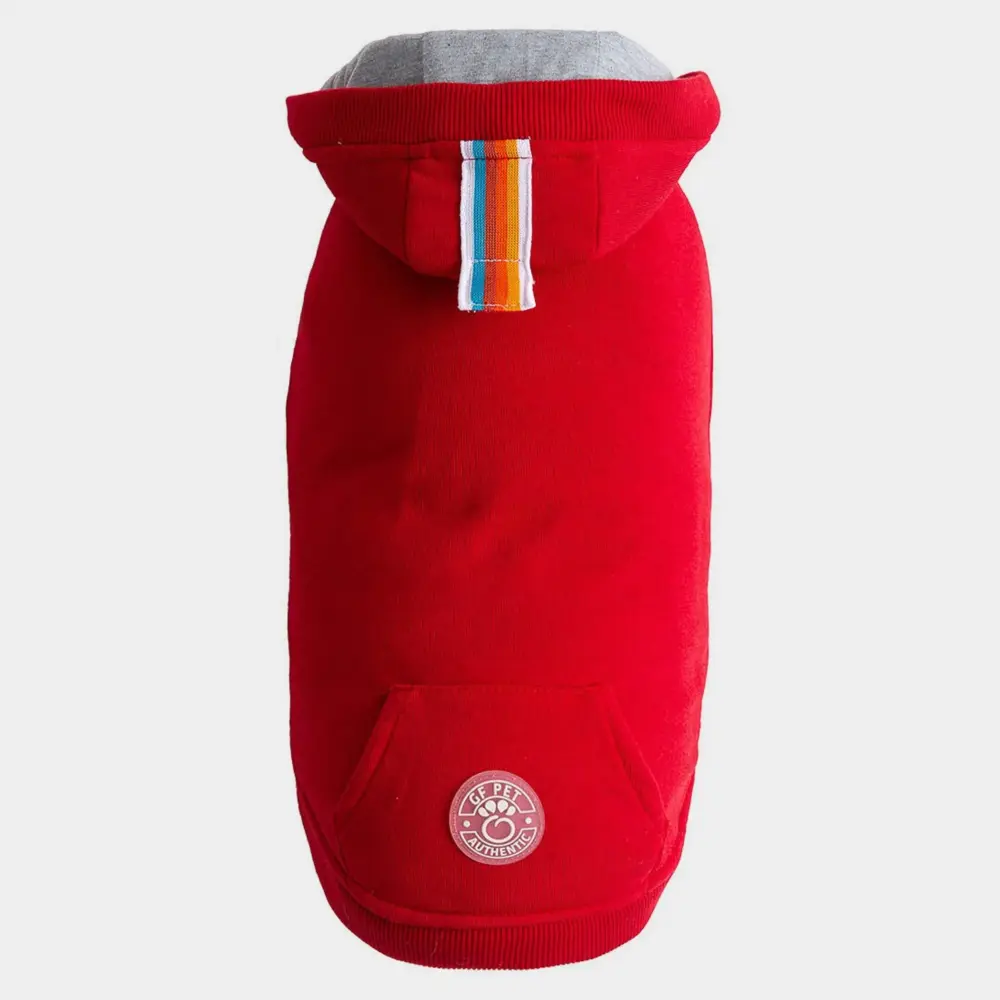
Urban Dog Hoodie, Choose size
Price range: $40.95 through $55.95
Why it fits: A polyester fleece hoodie with a jersey lining, a full kangaroo pocket and a velcro tab at the hood so it sits back when it is not wanted.
-
Klippo
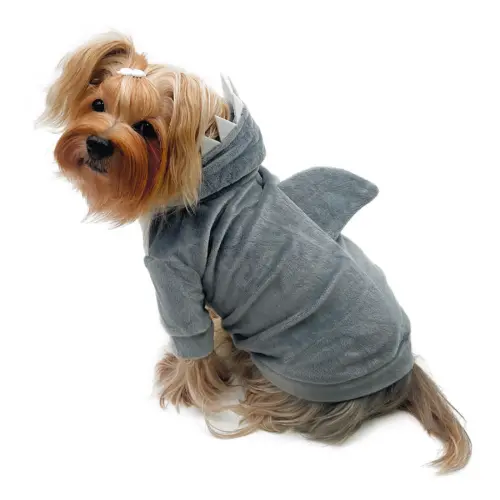
Ultra-Plush Shark Dog Hoodie, Choose size
$40.95
Why it fits: A plush hoodie with an elastic belly opening that holds the fit, so it does not ride up the back on an active small dog.
-
Klippo
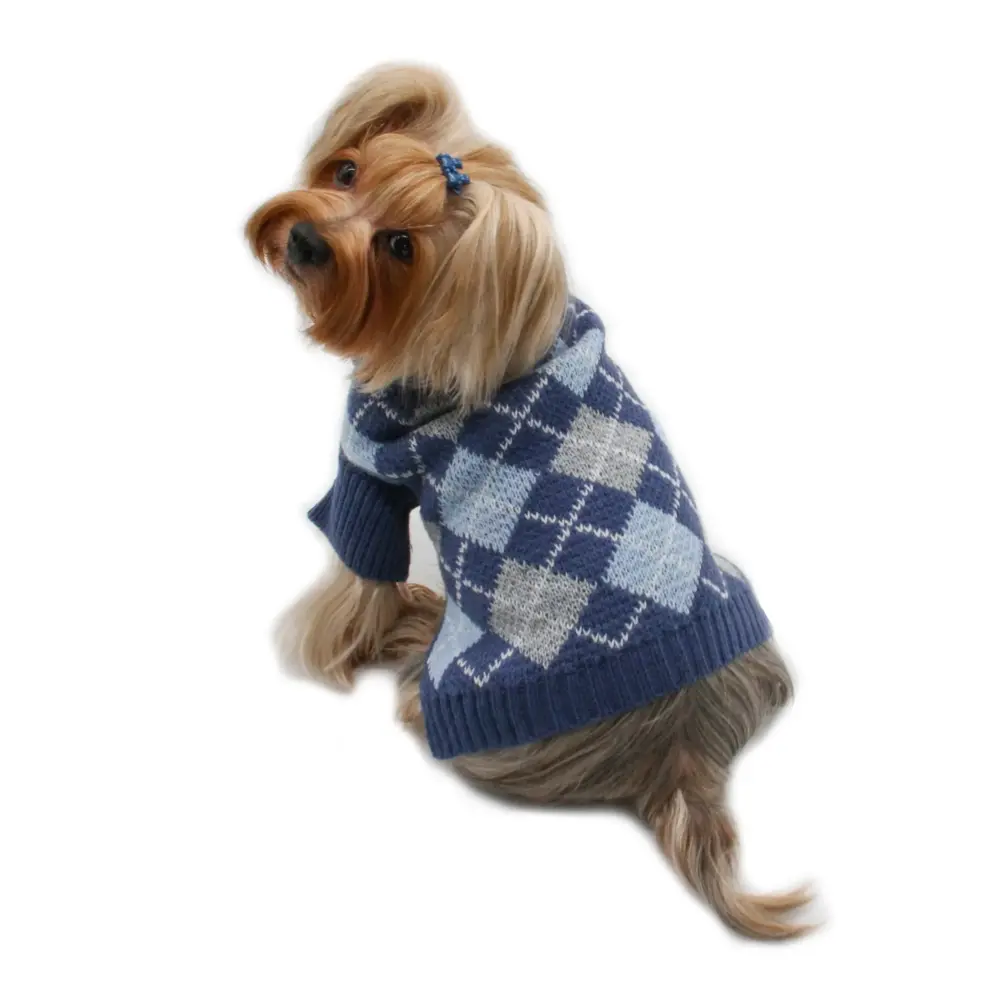
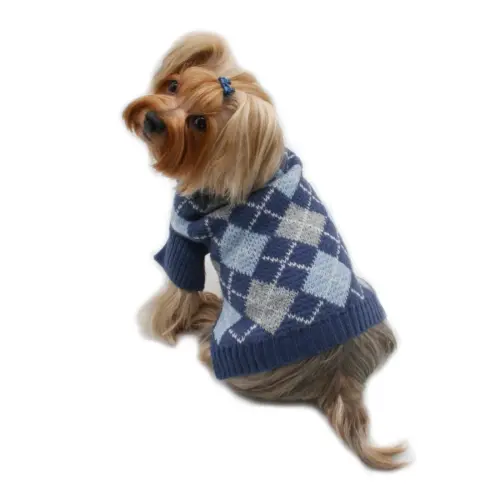
Argyle Turtleneck Dog Sweater, Choose size
$40.95
Why it fits: A soft acrylic turtleneck that stretches to fit a chest between sizes and covers the neck where a collar leaves a gap.
-
Klippo
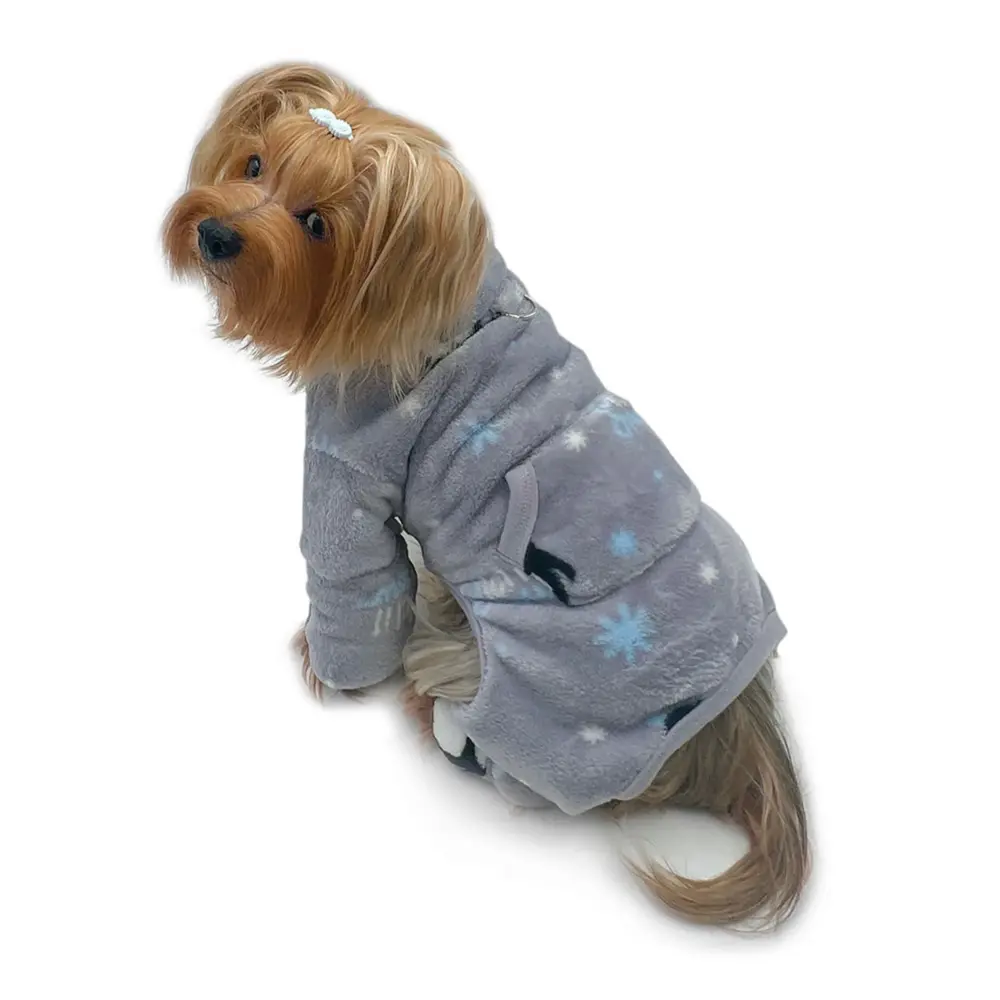
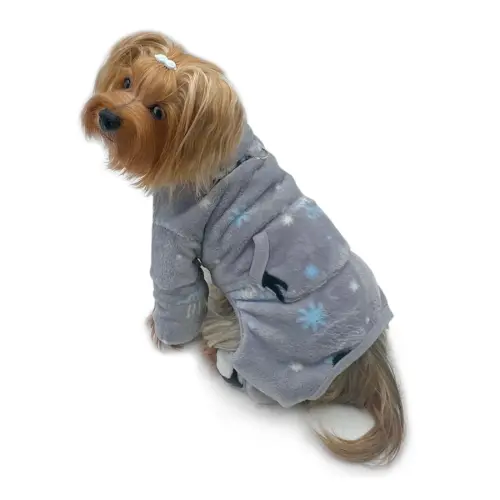
Plush Penguin Dog Pajamas, Choose size
$40.95
Why it fits: Thick plush with a fold-down collar and extended sleeves, for the coldest evenings indoors with a thin-coated or older dog.
Which one to buy first
Buy for the job you actually have.
- Cold house, short-coated dog: fleece hoodie.
- Heated flat, small dog who gets chilly in the evening: knit sweater.
- Dog with an unusual shape or between sizes: knit sweater.
- Layer that will also go outside on a dry, cold day: fleece hoodie.
- Something to wear under a waterproof coat: knit sweater, for bulk reasons.
- Senior dog who sleeps in it: whichever fits loosely, checked daily.
For the outdoor layer that sits over either of these, see dog jacket linings explained, and for whether your dog needs any of it, which dogs need a coat.
What each one is made of
Fleece is a knitted polyester that is then brushed to raise a pile on one or both faces. That pile is the insulation, and the quality of a fleece garment comes down to the density of the pile and whether it is backed with a smooth lining that helps it slide over the coat.
Most dog sweaters are acrylic rather than wool. Acrylic stretches further, holds dye better, does not felt in a warm wash and costs less, which is why it dominates. Wool is warmer for its weight and far less forgiving: it shrinks, felts and needs hand washing, which makes it a poor material for a garment that gets muddy.
Cotton knit appears at the cheaper end and is worth avoiding for warmth. It absorbs moisture, loses all insulation when damp, and stretches out of shape permanently after a few wears.
Getting one on a dog who objects
The garment that goes over the head is the obstacle for most dogs, and it is almost always the hands near the face rather than the fabric that causes the objection. A knit sweater has a wider, softer opening and goes on with less fuss than a fleece hoodie with a structured neck.
Work in stages rather than wrestling it on in one go. Hold the garment open and reward the dog for putting their own head through, with no attempt to pull it down, for several sessions. Then the head and one leg, then the whole thing. A dog who will put their own head into a garment never has to be dressed again.
If your dog freezes once the garment is on, that is not acceptance. Take it off, shorten the next session and pair it with something they like. Getting a dog used to wearing a coat covers the full process.
Common questions
Is a hoodie warm enough for winter walks?
On a dry, still, mildly cold day, for a short walk, often yes. In wind or wet it is not, because fleece absorbs water and loses most of its insulation. For those conditions you want a water-resistant shell over the top.
My dog chews the sleeves. What should I do?
Take the garment off and only use it supervised. Chewed knit unravels into long strands, which are genuinely dangerous if swallowed. A sleeveless design suits a dog who targets the legs.
Will a sweater mat my dog’s coat?
It can, on long or double coats worn under a garment for hours. Brush before and after wearing, and avoid leaving knitwear on a long-coated dog all day.
Related guides
-
Guide
Do Dogs Need Pajamas? When Sleepwear Is Useful and When It Is Not
Indoor sleepwear is either a sensible layer or a costume, depending on the dog. This covers which dogs lose heat indoors, the safety rules that apply to anything worn unsupervised overnight, and the cases where pajamas solve a real problem such as itchy skin.
-
Buying guide
Which Dogs Actually Need a Coat, and Which Do Not
Coat type matters more than temperature, and some dogs are worse off wearing one. This guide sorts dogs into those who need insulation, those who need a shell, and those who need nothing at all.
-
How-to
How to Wash Dog Coats, Sweaters and Pajamas
Dog clothing has washing problems of its own: knitwear shrinks, fleece mats, velcro destroys everything it touches and heat ruins water-resistant coatings. This guide covers each material and how often washing is actually needed.