Seasons & Gifts How-to
How to Measure a Dog for Clothes: Neck, Chest and Back Length
Short answer
Measure three things: back length from the base of the neck to the base of the tail, chest girth at the widest point behind the front legs, and neck circumference where a collar sits. Back length decides the size on most charts; chest girth decides whether it will fasten.
Three measurements, in this order
Dog clothing has no industry standard. A medium from one brand can be two inches longer than a medium from another, which is why the only reliable method is to measure your own dog and read the chart for the specific garment.
Do it with your dog standing square on a flat floor, not sitting and not lying down. Use a soft tailor’s tape if you have one; a piece of string marked with a pen and then held against a ruler works just as well. Take each measurement twice.
Back length
This is the measurement most size charts lead with, and the one people most often get wrong. Measure along the spine from the base of the neck, where a collar sits, to the base of the tail, where the tail meets the body. Do not continue down the tail.
A coat should end at the base of the tail or just before it. Too long and it catches when the dog toilets, which is an immediate problem with male dogs and a mess with everyone. Too short and the lower back is exposed, which defeats the purpose on a cold day.
Chest girth
Measure all the way around the deepest part of the chest, usually an inch or two behind the front legs. This is the measurement that decides whether the garment fastens at all, and on barrel-chested and deep-chested breeds it frequently overrides the back length.
Tip
Measure snugly but not tight, and add room for the coat your dog will be wearing underneath in winter. Two fingers should fit comfortably under the tape.
Neck
Measure where a collar naturally sits, not at the narrowest point. This matters most for turtlenecks, hooded coats and anything that goes over the head, and it is the measurement that decides whether a jumper can be put on without a struggle.
For dogs with a neck close to the same width as their head, such as many sighthounds, check that the opening stretches or that the garment fastens rather than pulling over.
Reading a brand size chart
- Find the chart for the specific garment, not a general one for the brand.
- Match your back length first and note the size it suggests.
- Check the chest girth for that size; if your dog exceeds it, go up.
- Check the neck if the garment goes over the head.
- Read any note about fit: some ranges are cut close, others are generous.
- If the chart lists breeds, treat that as a hint rather than an answer.
Where a chart lists a weight range, treat it as the least reliable column. Two dogs of the same weight can be completely different shapes, and weight tells you nothing about back length.
Between two sizes
Go up, almost always. A garment that is slightly long can be managed; one that is too tight across the chest will not be worn twice. The exception is a stretchy knit sweater, where sizing down gives a closer fit and up produces something that slides backwards.
If your dog is between sizes on two different measurements, size for the chest and accept a longer back, unless the difference is large enough to interfere with toileting.
Shapes that break the chart
| Shape | What to watch |
|---|---|
| Dachshund type | Long back, small chest; size for length |
| Deep-chested | Chest girth beats back length |
| Barrel-chested | Size up for the chest, expect a long back |
| Sighthound | Deep chest, narrow waist, narrow neck |
| Thick double coat | Measure over the coat, not through it |
| Growing puppy | Buy for now, not for next winter |
Brands that cut specifically for small dogs often use their own sizing entirely, with XXS and XS sizes that have no equivalent elsewhere. That is helpful rather than confusing, provided you measure rather than assume.
-
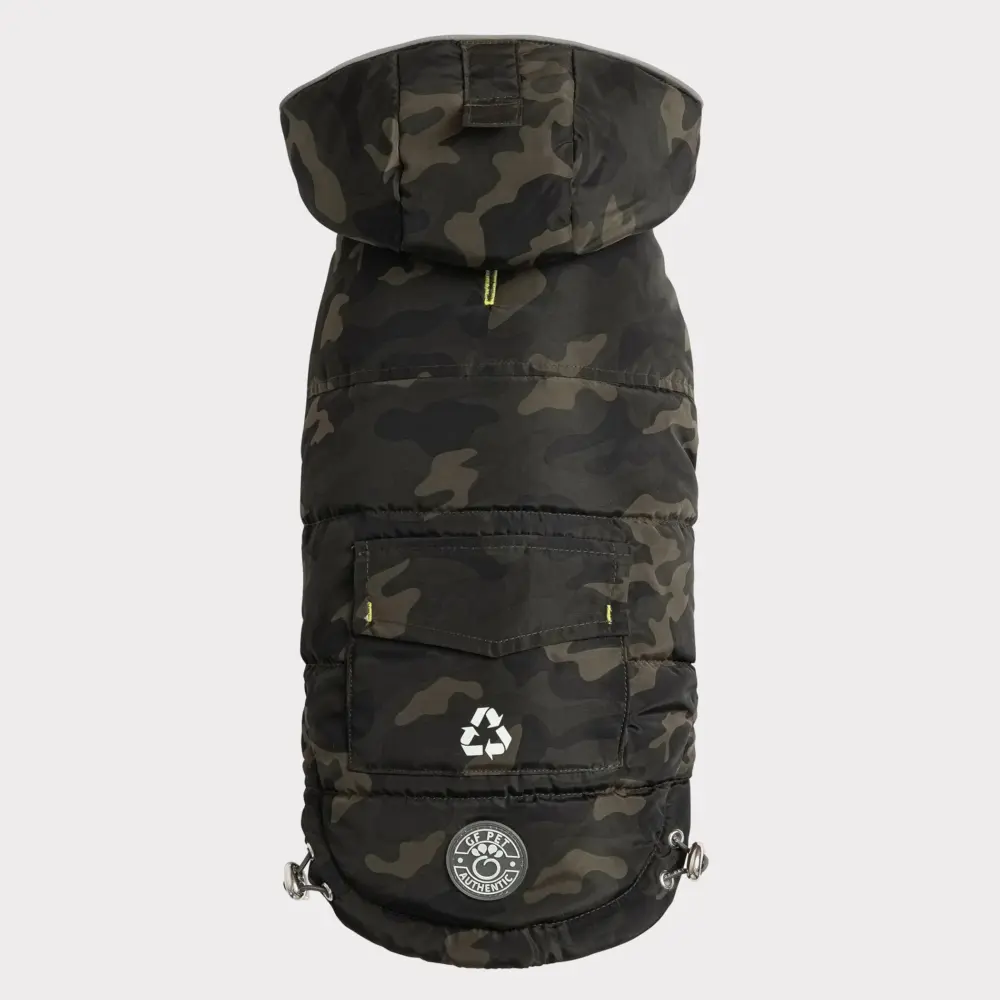
GF PET
Recycled Dog Parka, Choose size
Price range: $44.95 through $78.95
Why it fits: Sizes from 2XS to 4XL in one range, which makes it easier to find a fit for an unusual shape.
-
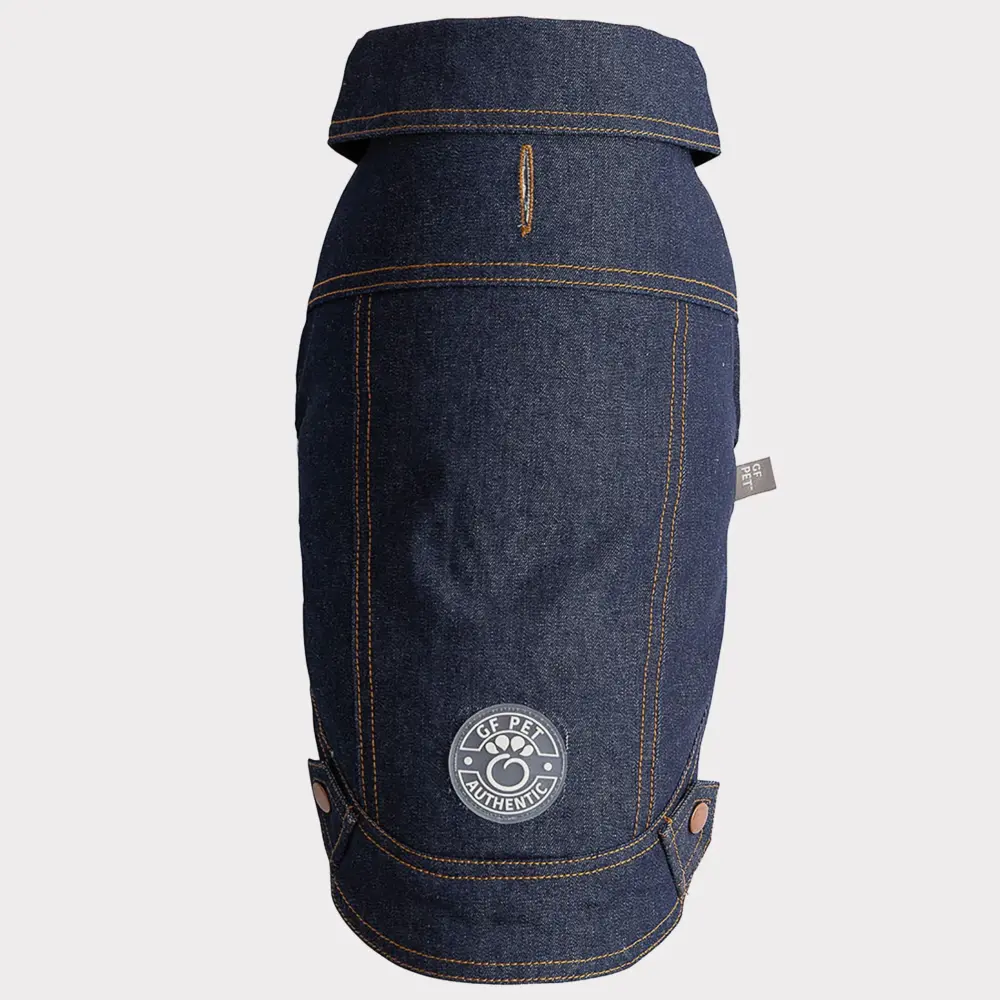
GF PET
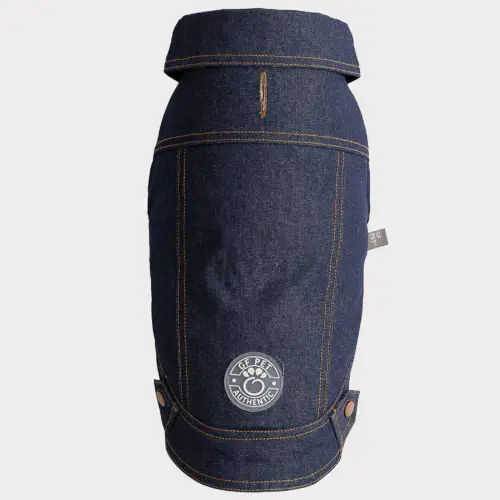
Elasto-Fit Denim Dog Jacket, Choose size
Price range: $39.95 through $58.95
Why it fits: An adjustable Elasto-Fit cut that accommodates different body shapes within the same size.
-
Doggie Couture NY
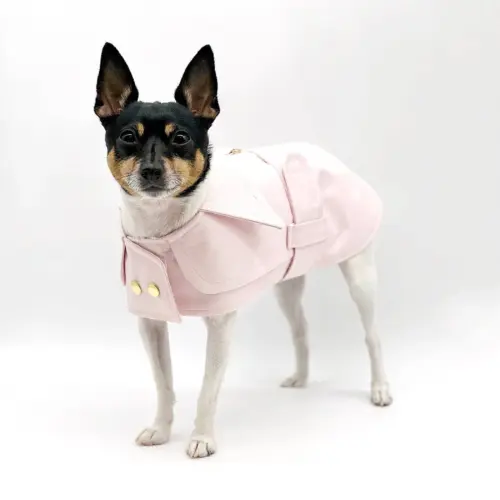
Belted Trench Coat, Choose size & color
$71.95
Why it fits: Cut specifically for small dogs, with adjustable chest and belly straps for fine-tuning.
-
Klippo
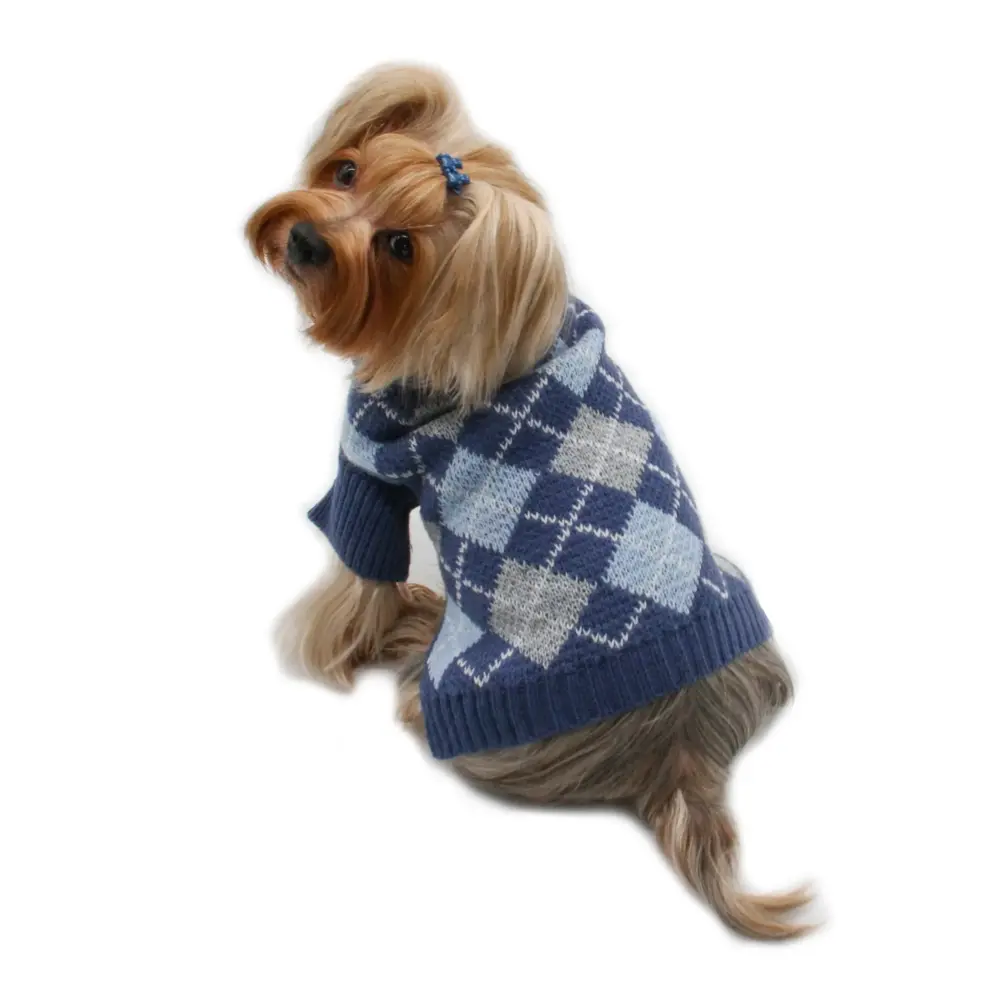
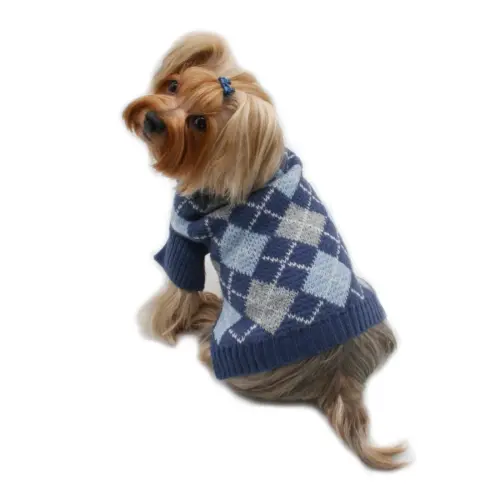
Argyle Turtleneck Dog Sweater, Choose size
$40.95
Why it fits: A stretchy knit that suits dogs between sizes; knitwear is the one case for sizing down.
Checking the fit once it arrives
- Two fingers fit comfortably under every strap
- The back ends at or just before the base of the tail
- Nothing rubs under the front legs when the dog walks
- The dog can squat and toilet without catching the garment
- The neck opening does not restrict swallowing or panting
- The dog moves normally rather than freezing or walking oddly
- No pulling, bunching or twisting after a five-minute walk
Watch a short walk before deciding the fit is right. A garment that looks correct standing still can ride forward and bunch at the shoulders in motion, which is usually a sign it is too short rather than too tight.
Common sizing mistakes
| Mistake | What happens |
|---|---|
| Measuring down the tail | Garment is far too long |
| Using weight alone | Wrong shape entirely |
| Measuring a sitting dog | Back length reads short |
| Tape pulled tight | Chest too small to fasten |
| Buying to grow into | Rubs and twists now |
| Trusting breed charts | Ignores the individual |
Measuring a sitting dog is the most common of these and the easiest to avoid. A sitting dog’s spine curves, which shortens the reading by an inch or more, and on a small dog that is a whole size.
Returns, and how to avoid them
Dog clothing has a high return rate, almost entirely because of sizing. Measuring takes two minutes and removes most of it. Beyond that, a few habits help: check the chart on the specific product page rather than a general brand chart, read the fit notes, and keep the packaging until you have tried the garment on indoors.
Try it on inside, on a clean floor, before any walk. A garment worn outdoors cannot usually be returned, and five minutes indoors tells you whether the fit is right. Watch your dog walk and sit in it rather than only looking at them standing still.
Our returns policy sets out the window and the conditions, and the sizing information on each product page lists the sizes actually available in that garment, which is not always the brand’s full range.
Common questions
Can I use my dog harness size instead?
Only partly. A harness is sized by chest girth, which is one of the three numbers, but clothing also depends on back length and neck. Measuring a dog for a harness covers the girth measurement in more detail.
Should I measure over or under the coat?
Over, for thick-coated dogs, since that is how the garment will be worn. For a dog with a very heavy coat, check whether a coat is needed at all: which dogs need a coat covers it.
My dog refuses to stand still. Any tricks?
Measure against a wall with someone holding a treat at nose height, or take a photograph from the side next to a ruler and measure from that. Two rough measurements that agree beat one careful one your dog ruined.
Do puppies need a different approach?
Buy for the current size. A coat bought large enough to grow into does not sit correctly now, and an ill-fitting first coat teaches a puppy to dislike wearing one.
What if the garment fits but my dog will not move in it?
That is usually a familiarity problem rather than a fit problem. Getting a dog used to wearing a coat covers the short build-up that fixes it.
Once it fits, how to wash dog clothes covers keeping it that way, and raincoat versus winter coat helps if you are not sure which garment you actually need.
Related guides
-
How-to
How to Wash Dog Coats, Sweaters and Pajamas
Dog clothing has washing problems of its own: knitwear shrinks, fleece mats, velcro destroys everything it touches and heat ruins water-resistant coatings. This guide covers each material and how often washing is actually needed.
-
Buying guide
Dog Jacket Linings Explained: Fleece, Sherpa, Quilted and Reversible
The shell gets the attention and the lining does the work. This explains what fleece, sherpa and quilted fills each contribute, why bulk matters as much as warmth, when a reversible jacket earns its price, and how to match a lining to your climate.
-
Buying guide
Which Dogs Actually Need a Coat, and Which Do Not
Coat type matters more than temperature, and some dogs are worse off wearing one. This guide sorts dogs into those who need insulation, those who need a shell, and those who need nothing at all.