Seasons & Gifts Buying guide
Dog Jacket Linings Explained: Fleece, Sherpa, Quilted and Reversible
Short answer
The lining decides the warmth; the shell decides the weather. Jersey linings add almost nothing and exist to help a coat slide on. Fleece adds real warmth with little bulk. Sherpa is warmer still and heavier. Quilted fill is the warmest and the bulkiest, and is the one most likely to restrict movement. A reversible jacket gives you two of these in one garment and is worth it if your winter swings between wet and dry cold.
Our picks at a glance
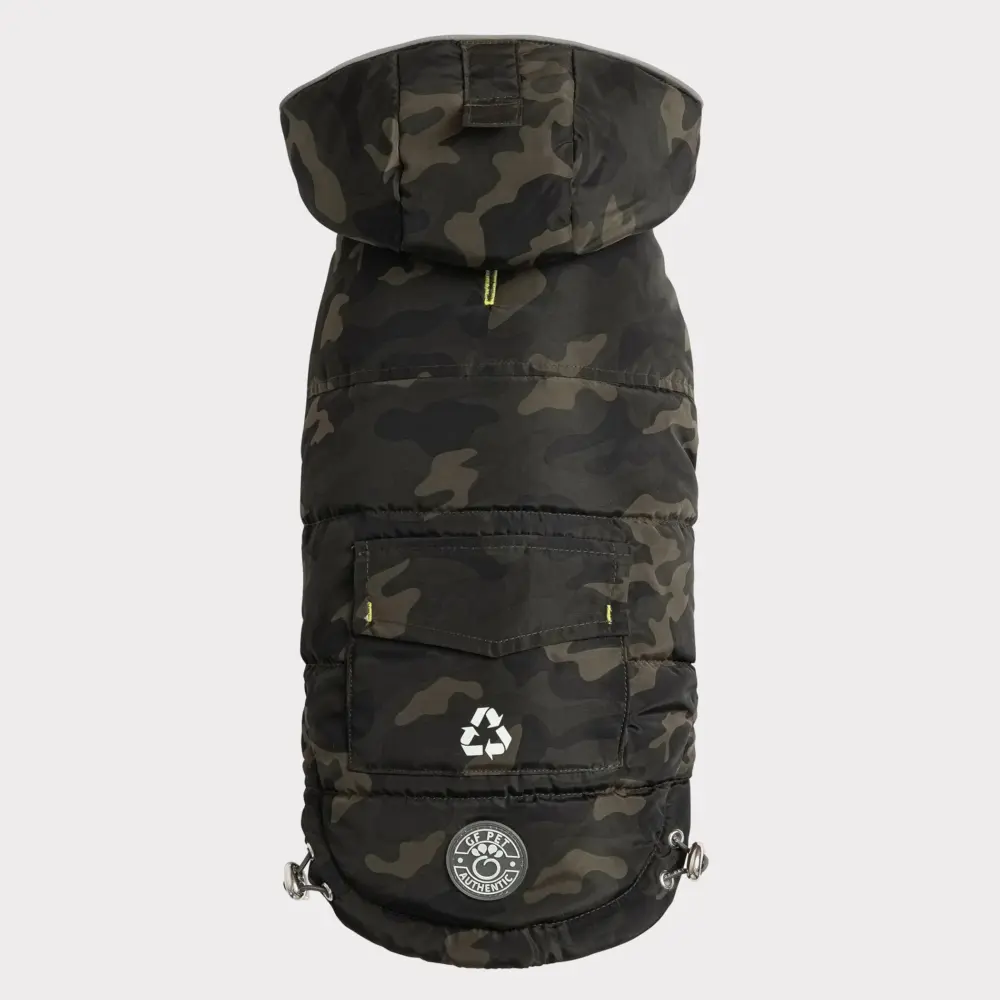
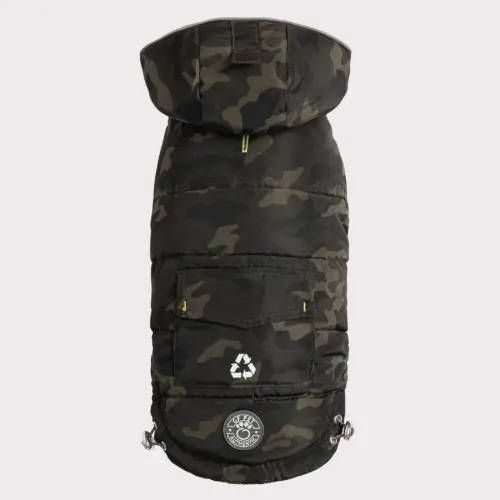
- Recycled Dog ParkaA hooded parka in recycled
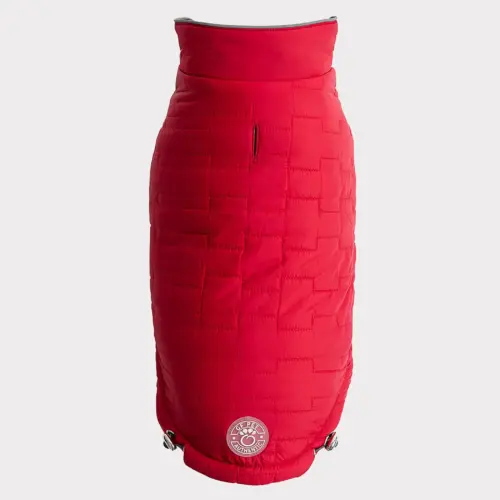
- Reversible Chalet Dog JacketReversible: quilted water-resistant nylon on one side
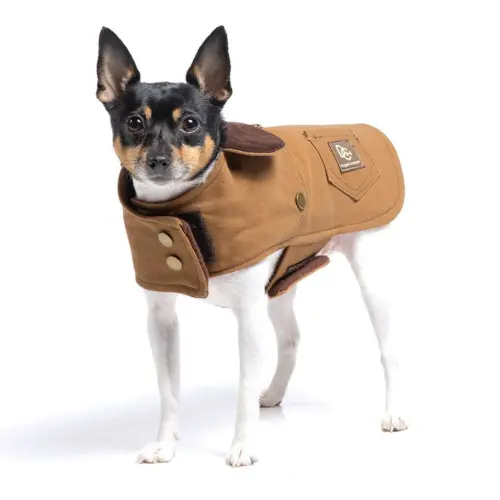
- Canyon Working CoatCotton duck canvas with a fleece lining and adjustable velcro straps
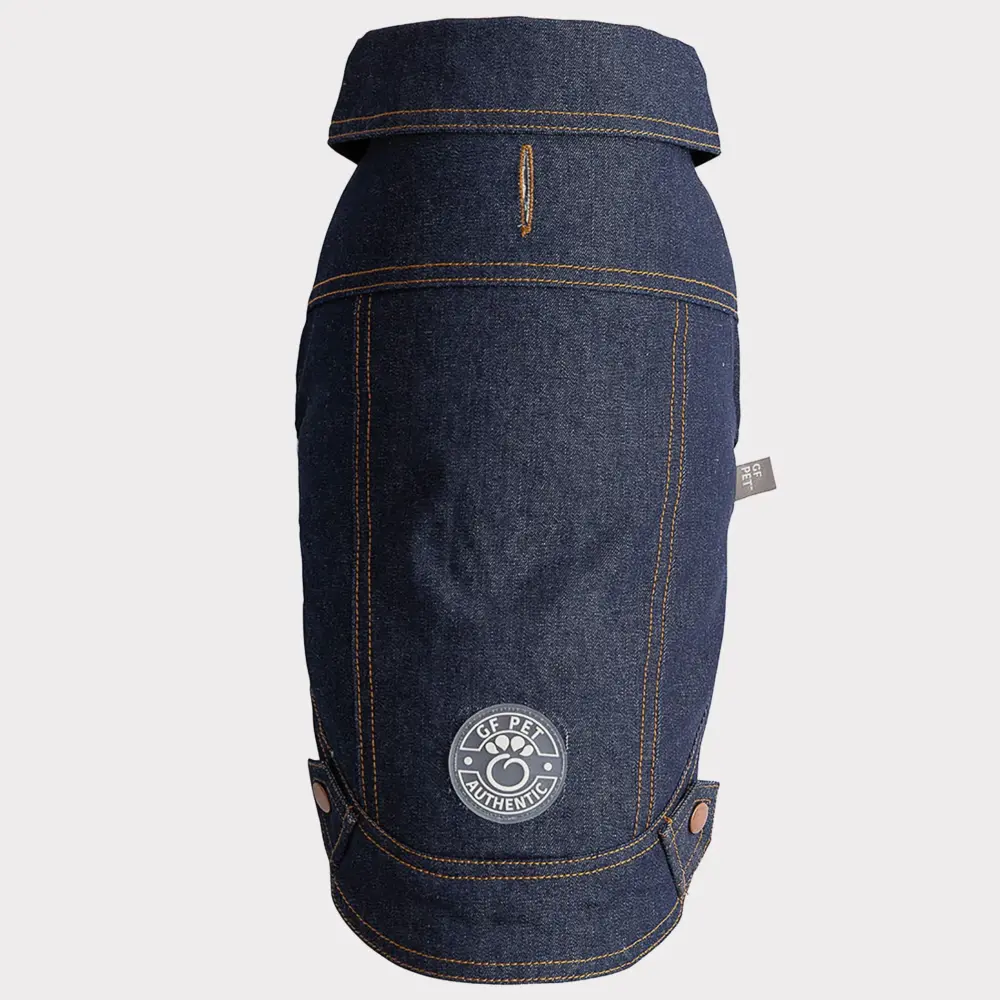
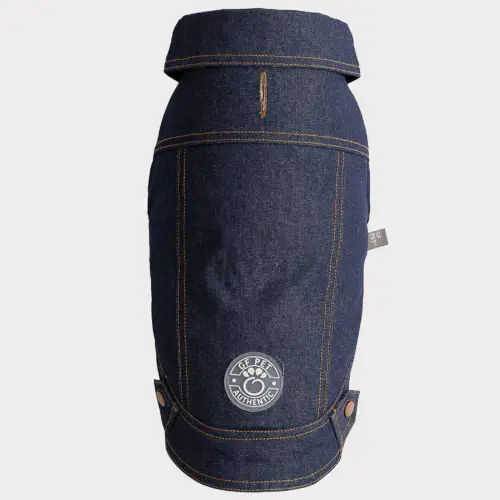
- Elasto-Fit Denim Dog JacketDenim outside, popcorn sherpa inside
Why the lining is the part that matters
People choose dog coats by the outside: the colour, the pattern, whether it says waterproof. The outside determines whether wind and water get in. It contributes almost nothing to warmth.
Warmth comes from trapped air, and trapped air comes from the layer against the dog. A waterproof shell with a thin jersey lining will keep a dog dry and leave them cold. The same shell with sherpa behind it is a winter coat. That is the whole principle.
The second thing the lining decides is how the coat feels to wear. A thick lining on a small dog is the difference between a coat they move normally in and one they stand still in, and standing still is the most common reason a coat ends up unused in a drawer.
Fleece
Brushed synthetic with a raised pile. It traps air well for its thickness, which makes it the best warmth-to-bulk option for most dogs, and it keeps insulating when slightly damp, which matters more than people expect in a wet climate.
Fleece is also the most comfortable lining against a short coat, and it dries fast. The limitation is wind: on its own it lets air straight through, so a fleece-lined coat needs a shell that blocks wind to be worth anything in an exposed place.
Best for: everyday winter use, active dogs, dogs who dislike bulk, and the awkward months either side of deep winter.
Sherpa
A thicker, curlier pile designed to imitate fleece wool. It has more loft than standard fleece, which means more trapped air and more warmth, at the cost of noticeably more bulk and weight.
The popcorn or nubbed versions hold their loft better over time than flat sherpa, which crushes where the dog lies on it. Sherpa is also slower to dry than fleece, so it is a dry-cold lining rather than a wet-weather one.
Best for: genuinely cold mornings, standing around rather than running, medium and large dogs who can carry the bulk. Less good for: toy breeds, who disappear inside it, and any dog who will be moving fast.
Quilted and padded
A layer of polyester fill stitched into channels between two fabrics. It is the warmest of the common options because the fill is pure trapped air, and the quilting stops the fill migrating to the bottom of the garment.
The trade-off is movement. Quilted sections do not flex, so a padded coat has to be cut well around the shoulders or it will restrict the stride. Watch a dog in a new padded coat walk away from you: a shortened front stride means the coat is wrong, not that the dog needs time to adjust.
Fill also compresses permanently where it is squashed, so a padded coat that is machine washed repeatedly or stuffed into a bag loses warmth over a couple of seasons.
Best for: cold, dry conditions and dogs who are outside standing still. Worst for: wet climates, where wet fill is both cold and heavy.
Reversible jackets
A reversible coat puts a water-resistant quilted side and a fleece side on the same garment, so you turn out whichever the day needs. It genuinely does replace two coats for most owners, and it costs less than buying both.
The compromises are real but minor. A reversible coat cannot have a fully taped waterproof construction, because the seams have to look acceptable from both sides, so it sheds drizzle and wet snow rather than standing up to sustained rain. It is also slightly bulkier than either single-purpose version.
Worth it if your winter swings between wet mild days and dry cold ones. Not worth it if you live somewhere consistently wet, where a proper waterproof shell with a separate layer underneath is the better system.
Shell fabrics and how they pair with a lining
| Shell | Pairs well with | Weather it suits |
|---|---|---|
| Water-resistant nylon | Quilted or fleece | Drizzle, wet snow, wind |
| Recycled polyester, coated | Quilted or fleece | General winter, cold wind |
| Cotton canvas or duck cloth | Fleece | Dry cold; hard wearing, not waterproof |
| Denim | Sherpa | Dry, mild cold; a style choice |
| Soft shell or knit | Jersey only | Indoor and very mild days |
Tip
Water-resistant and waterproof are different claims. Water-resistant sheds light rain for a while and wets out in sustained rain. Nothing with an open seam at the back is waterproof, whatever the fabric says.
Bulk, movement and the harness problem
Every lining adds thickness, and thickness has two consequences people discover after buying. The first is stride: a coat that bunches at the shoulders shortens the front leg movement, and dogs tolerate that badly.
The second is the harness. A harness fitted over a thick coat sits further out from the body than it should, which means it can slide and loosen, and a harness fitted underneath gets compressed by the coat. Either can work; the choice needs to be deliberate rather than discovered on the first wet morning. Harness under or over a dog coat covers the layering order and the coats with a built-in leash opening.
If your dog wears a harness on every walk, a thinner fleece lining with a good shell is usually the more practical system than maximum warmth.
Our picks by climate
-
GF PET
Recycled Dog Parka, Choose size
Price range: $44.95 through $78.95
Why it fits: A hooded parka in recycled, water-resistant fabric with reflective piping and an adjustable cut that holds position on deep-chested and short-legged dogs alike.
-
GF PET
Reversible Chalet Dog Jacket, Choose size
Price range: $44.95 through $68.95
Why it fits: Reversible: quilted water-resistant nylon on one side, polar fleece on the other, with reflective piping and a bungee cinch for the fit.
-
Doggie Couture NY
Canyon Working Coat, Choose size
$71.95
Why it fits: Cotton duck canvas with a fleece lining and adjustable velcro straps, for dry cold and dogs who are hard on their clothing.
-
GF PET
Elasto-Fit Denim Dog Jacket, Choose size
Price range: $39.95 through $58.95
Why it fits: Denim outside, popcorn sherpa inside, with an adjustable shape so the jacket does not twist. A dry-weather layer for the mild months.
Matching the lining to your winter
| Your winter | Lining | Shell |
|---|---|---|
| Wet and mild | Fleece | Water-resistant, must cover the back fully |
| Dry and cold | Sherpa or quilted | Any; canvas or nylon both work |
| Wet and cold | Fleece under a separate shell | Water-resistant, the priority |
| Swings between both | Reversible | Built in |
| Mild, short walks only | Jersey or none | Knit or soft shell |
| Cold but your dog runs | Fleece | Wind-blocking rather than heavily insulated |
Whichever you choose, the coat is only useful if it fits and your dog will wear it. Measuring for clothes comes first, which dogs need a coat answers whether to buy one at all, and do dogs need pajamas covers the indoor layer that is often the real answer.
How to judge a lining before you buy
Photographs make every lining look the same. The description usually tells you more, and there are a few specific things worth looking for.
- Fill weight, if given, which indicates how much insulation is actually in a quilted coat.
- Whether the lining extends to the belly panel or stops at the sides, which changes the warmth considerably.
- Where the quilting channels run. Channels across the body flex better than channels along it.
- Whether the lining is stitched through or floating, since stitched-through quilting creates cold lines at every seam.
- The coverage at the chest, which is where a dog loses most heat and where many coats stop short.
- Washability, because a lining you cannot clean is one you will stop using.
Coverage is the thing people underestimate. A heavily insulated coat that leaves the chest and belly bare is warmer than nothing and much less warm than a thinner coat that wraps underneath, because the belly is where a short-coated dog has the least protection and the ground is where the cold is.
Layering instead of one thick coat
Two thin layers almost always beat one thick one, for dogs as for people. A knit or fleece layer underneath and a water-resistant shell over the top gives you three options from two garments, and lets you adjust for the day rather than owning a coat that is right twice a year.
It also solves the washing problem. The inner layer takes the hair, the skin oils and the smell and goes in the machine weekly; the shell gets the mud and needs washing far less often, which matters because every wash degrades a water-resistant finish.
The constraint is bulk at the shoulders, so keep the inner layer thin and check the stride with both on. Dog hoodie vs sweater covers choosing the inner layer.
Common questions
Which lining is warmest?
Quilted fill, then sherpa, then fleece, then jersey. But warmest is not best: the warmest coat your dog refuses to move in is worth less than a fleece-lined one they walk normally in.
Can I wash a quilted coat?
Usually yes, on a cool gentle cycle, but every wash compresses the fill a little. Wash it when it needs it rather than routinely, air dry it flat, and never tumble dry a coat with a water-resistant finish.
Does a lining matter for a double-coated dog?
Rarely. A husky or a thick-coated shepherd carries better insulation than any jacket, and a lined coat on one of those is more likely to cause overheating than to help. A light waterproof shell with no lining is the sensible option if you want one at all.
Related guides
-
Comparison
Dog Raincoat vs Winter Coat: Which One Your Dog Needs
A raincoat keeps water out and a winter coat keeps heat in, and the two are not interchangeable. This comparison covers what each does, why wet cold is the worst case, and which dogs need both.
-
How-to
Harness Under or Over a Dog Coat? How to Layer Them Properly
Two pieces of gear on one dog is a mechanical problem nobody explains when you buy either of them. This covers when the harness goes underneath, when it goes on top, what a leash opening is for, and how to stop a coat twisting halfway down the street.
-
How-to
How to Wash Dog Coats, Sweaters and Pajamas
Dog clothing has washing problems of its own: knitwear shrinks, fleece mats, velcro destroys everything it touches and heat ruins water-resistant coatings. This guide covers each material and how often washing is actually needed.