Seasons & Gifts Guide
Do Dogs Need Pajamas? When Sleepwear Is Useful and When It Is Not
Short answer
Most dogs do not need them. Thin-coated, small, old, ill or recently clipped dogs genuinely lose heat indoors and benefit from a light layer in the evening, and pajamas also stop scratching at an itchy patch. Any garment worn overnight must fit without pressure, have nothing that can catch, and be checked rather than left on a dog nobody is watching.
What pajamas are actually for
Pajamas are an indoor layer. That distinction matters because almost all advice about dog clothing is about outdoor coats, where the questions are wind, rain and cold air. Indoors the problem is different: a thin-coated dog lying on a tiled or wooden floor loses heat by conduction long before the room feels cold to you.
The second purpose is coverage. A sweater covers the back and chest; pajamas usually cover the legs and belly as well, which is where a short-coated dog has almost no insulation at all. That extra coverage is also what makes them useful over a healing wound or an itchy patch.
The third purpose is honest enough to state plainly: people like them. There is nothing wrong with that, as long as the dog is comfortable and the garment is not left on a dog who would rather not wear it.
Dogs who genuinely benefit
- Thin or single-coated breeds. Whippets, greyhounds, terriers with wiry but sparse coats, and most of the toy breeds.
- Small dogs generally. A small body loses heat faster relative to its mass than a large one.
- Senior dogs. Older dogs regulate temperature less well and often have less muscle and fat.
- Recently clipped dogs. A dog who has just lost their coat at the groomer feels it for weeks.
- Dogs recovering from illness or anaesthetic. Shivering costs energy they need elsewhere.
- Dogs in cold houses. If the heating goes off overnight and your dog sleeps on a hard floor, a layer is reasonable.
The tell is behavioural rather than theoretical. A dog who seeks out the warmest spot in the house, curls very tightly, sleeps pressed against a radiator or shivers while lying still is telling you they are cold. Keeping a dog warm at night covers the bedding side of the same problem, which is usually the better first move.
Dogs who do not need them
Double-coated and northern breeds are insulated for conditions far colder than any living room, and putting a layer on one is at best pointless and at worst uncomfortable. Huskies, malamutes, most spitz types, and thick-coated herding breeds fall into this group, as do heavy-coated dogs of any size who already seek out the coolest floor in the house.
Young, fit, medium-to-large dogs with ordinary coats do not need an indoor layer either. If your dog sprawls on their side on a cold floor by choice, they are not cold.
Safety note
Overheating is the risk that gets ignored. A dog cannot take a garment off, cools mainly by panting, and loses some of that ability when the chest and belly are covered. Never leave clothing on a dog in a warm room, in a car, in a crate on a mild night, or during exercise. Remove it if your dog is panting, restless, or seeking a cold surface while dressed.
Shedding, sofas and the laundry argument
A common reason for pajamas has nothing to do with warmth: they catch loose hair. For a heavy shedder, a layer worn in the evening does keep a measurable amount of coat off the sofa, and it is easier to wash a garment than a cushion cover.
It is a real benefit and a poor primary reason. A dog who is shedding enough to need this is usually a dog who would do better with more frequent brushing, which removes the hair before it lands anywhere. Brushing a dog without hair everywhere covers the technique, and clothing on a shedding dog can mat the coat underneath if it is left on for long periods.
The overnight safety rules
Anything worn while nobody is watching needs to meet a higher standard than a coat worn for a twenty-minute walk. These are not optional.
- Two fingers must slide easily under every opening: neck, chest and leg holes
- No drawstrings, long ties, loose cords or dangling decorations
- No buttons, charms or plastic parts a dog could chew off
- Nothing that can slip and twist around the chest or a leg
- Check underneath daily for rubbing, matting or damp patches
- Remove it immediately if the dog is scratching at it or trying to get it off
- Never on a dog in a crate with anything the garment could hook on
If a garment comes with a D-ring on the back, treat it as a tag holder and an indoor hold at most. A fabric loop sewn to a pajama top is not a harness and should not take the load of a dog pulling on a lead.
Fit matters more for sleepwear
A coat is worn for half an hour and taken off. Sleepwear is worn for eight hours against the skin, so a fit that is merely acceptable becomes a problem. Pressure points that you would never notice on a walk produce rubbed patches overnight.
Measure rather than guess: the neck where a collar sits, the chest at its widest point just behind the front legs, and the back from the base of the neck to the base of the tail. Size up if your dog falls between two sizes, because a garment that is slightly loose is far safer overnight than one that is slightly tight. How to measure a dog for clothes shows exactly where the tape goes.
Deep-chested dogs, barrel-chested dogs and dogs with very short legs rarely fit a standard chart, and for them the back length usually decides the size while the chest decides whether it is wearable at all.
Fabric choices
| Fabric | Good for | Watch for |
|---|---|---|
| Plush fleece | Warmth indoors, thin-coated dogs | Can be too warm in a heated room |
| Cotton jersey | Mild evenings, covering a healing patch | Little insulation; stretches out of shape |
| Knit acrylic | Indoor layering with some stretch | Snags on claws; can mat the coat beneath |
| Light mesh or thin cotton | Shedding control, itch cover | Almost no warmth |
| Anything waterproof | Nothing indoors | Traps heat and moisture; keep it for outside |
Pajamas after surgery or for itchy skin
This is the use with the clearest benefit. A soft garment covering a healing area stops licking and scratching without the stress of a plastic cone, and many dogs tolerate it far better. Veterinary recovery suits exist for exactly this reason.
Two conditions apply. Ask your veterinary practice first, because some wounds need air and some need a specific type of cover, and check the site underneath at least twice a day for heat, swelling, discharge or smell. Ordinary pajamas are not sterile and are not a substitute for whatever your practice has advised.
For itchy skin, clothing reduces the damage but not the cause. Persistent scratching, chewing at the feet or recurring hot spots need a veterinary diagnosis rather than a layer of fabric over the top.
How to introduce them
- Leave the garment on the floor where your dog can investigate it, with a treat on top.
- Hold it open and let your dog put their head through for a treat, without fastening anything.
- Fasten it for ten seconds, then take it off and reward. Keep the first sessions very short.
- Build to a few minutes while something good is happening: dinner, a chew, a game.
- Watch for freezing, low ears or refusing to walk, which all mean go back a step.
- Only once your dog moves normally in it should it be worn for a whole evening, and only then overnight.
Tip
A dog who stands completely still when dressed is not calm; they are shut down. Many people read that stillness as acceptance. If your dog stops moving, take the garment off and build up more slowly.
Our picks
-
Klippo
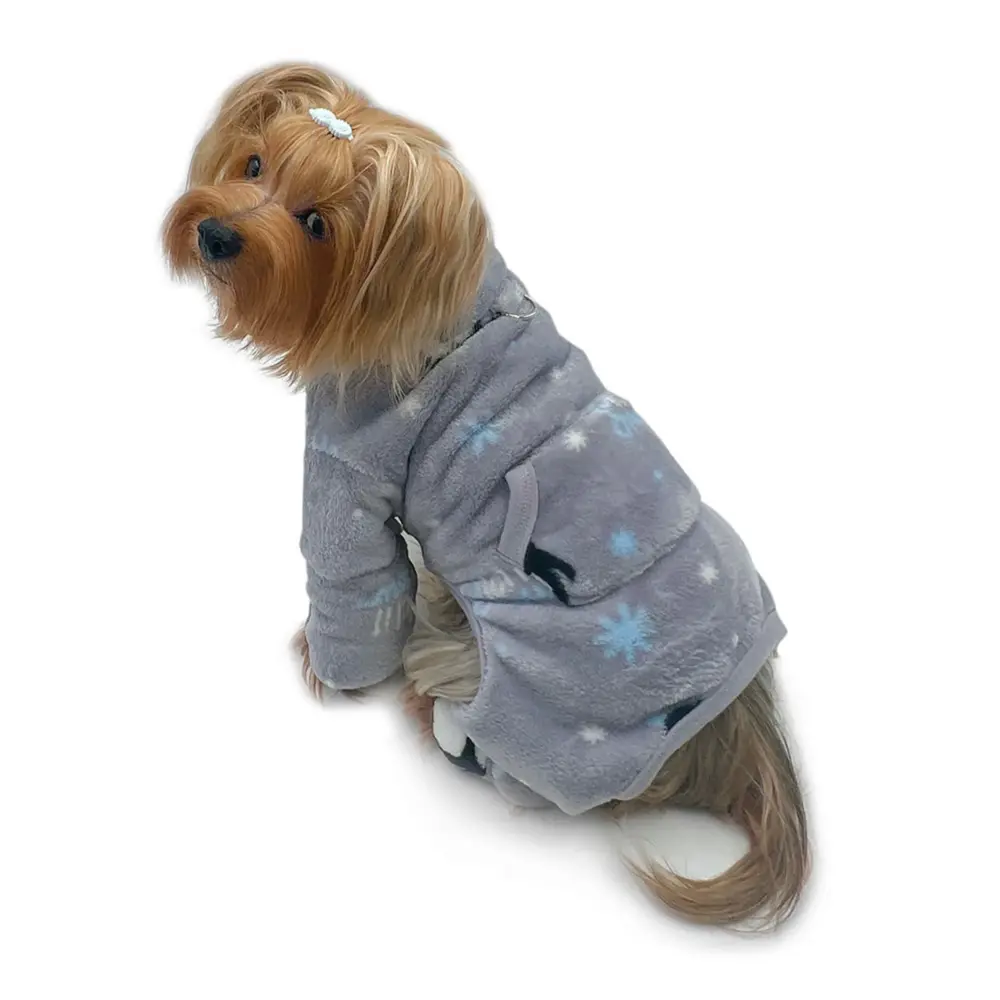
Plush Penguin Dog Pajamas, Choose size
$40.95
Why it fits: Thick plush pajamas with a fold-down turtleneck, extendable sleeves and a back pocket, for thin-coated and older dogs on cold evenings indoors.
-
Klippo
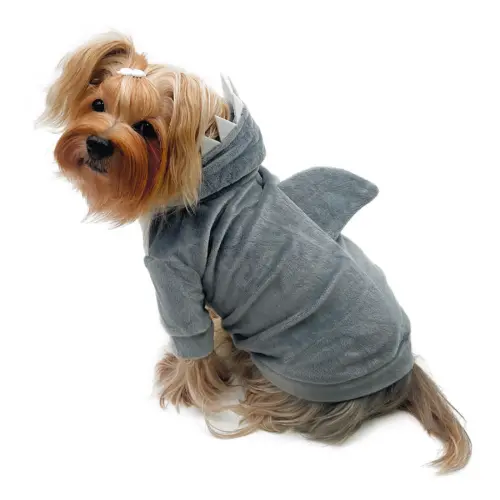
Ultra-Plush Shark Dog Hoodie, Choose size
$40.95
Why it fits: A plush hoodie cut like a normal garment rather than a one-night costume, with an elastic belly opening so it does not ride up.
-
Klippo
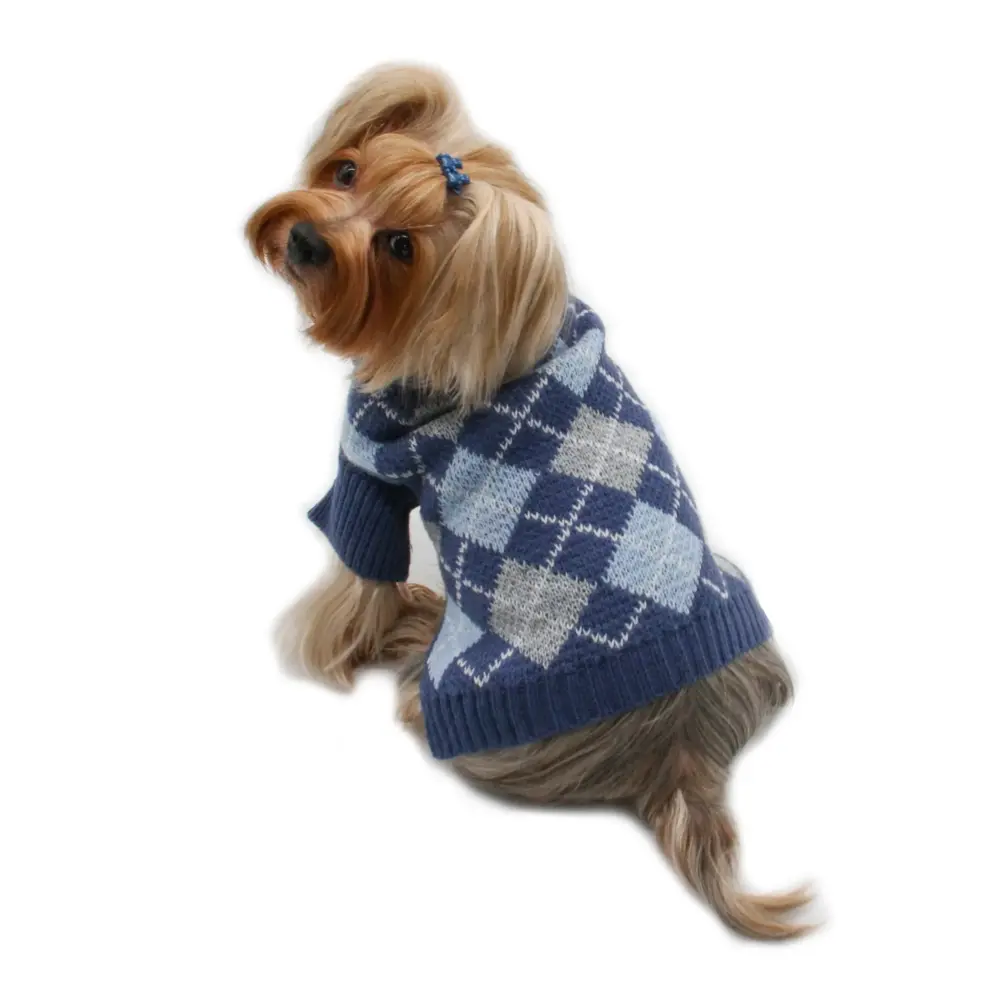
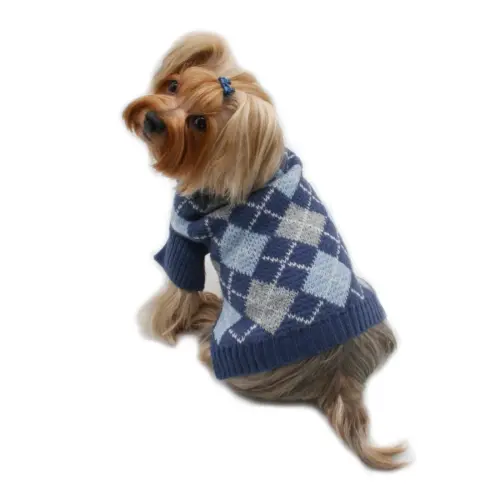
Argyle Turtleneck Dog Sweater, Choose size
$40.95
Why it fits: A knit turtleneck that covers the neck and chest, where short-coated small dogs lose heat fastest, without the bulk of a padded coat.
Common questions
Can my dog sleep in clothes every night?
If the garment fits properly, the room is not warm, and you check the coat and skin underneath regularly, many dogs are fine with it. Give the coat a brush and a few hours uncovered each day to prevent matting.
Will pajamas stop my dog shivering?
If the shivering is cold, often. If a dog shivers in a warm room, that is not temperature: fear, pain, excitement and some illnesses all cause trembling, and that is worth a veterinary opinion rather than a jumper.
What about puppies?
Puppies get cold easily, but they also chew everything and grow weekly. Keep clothing on a puppy supervised and short, and use bedding and room temperature as the main answer instead.
Related guides
-
Comparison
Dog Hoodie vs Sweater: Warmth, Fit and Which One Stays On
Both are indoor layers and they behave differently in every way that matters. This compares fleece against knit for warmth, how each one fits awkward shapes, whether the hood is worth anything, and which survives being washed every week.
-
Buying guide
Which Dogs Actually Need a Coat, and Which Do Not
Coat type matters more than temperature, and some dogs are worse off wearing one. This guide sorts dogs into those who need insulation, those who need a shell, and those who need nothing at all.
-
How-to
How to Wash Dog Coats, Sweaters and Pajamas
Dog clothing has washing problems of its own: knitwear shrinks, fleece mats, velcro destroys everything it touches and heat ruins water-resistant coatings. This guide covers each material and how often washing is actually needed.