Seasons & Gifts How-to
Harness Under or Over a Dog Coat? How to Layer Them Properly
Short answer
Put the harness over the coat when the coat is thin, smooth and fitted, which keeps the harness against a firm surface and makes it easy to check. Put it underneath when the coat is thick, has a leash opening, or the harness would sit too far from the body to stay snug. Whichever you choose, fit the harness to the layer it is actually on, not to the bare dog.
The short answer
There is no universal rule, and anyone who gives you one has only ever used one combination of coat and harness. What decides it is the thickness of the coat, whether the coat has an opening designed for a lead, and how your harness fastens.
The practical test is simple. Fit the harness over the coat and check you can slide two fingers under every strap with the coat on. Then walk the dog ten paces and look: if the harness has slid backwards, the coat has twisted, or either has visibly loosened, the combination needs to be the other way round.
When the harness goes underneath
- The coat has a leash opening. That slot exists for exactly this, and using it is always the intended arrangement.
- The coat is thick or padded. A harness over a quilted coat sits out from the body and will loosen as the fill compresses.
- The coat is loose or has a bungee cinch. A harness on top will drag it out of position.
- You are walking in heavy rain. A harness under a waterproof stays dry; webbing holds water for hours.
- Your dog wears the harness all day anyway. Putting the coat over it means the harness does not come off and on.
- The harness is a step-in design. These are awkward to fit over a garment.
The disadvantage of underneath is that you cannot see the harness, so you cannot spot a strap that has twisted or a buckle that has worked loose. Check it by feel through the coat before every walk, and take the coat off to check properly once a week.
When it goes on top
- The coat is thin. A fleece sweater or a light shell gives the harness something firm to sit against.
- The coat has no leash opening. Threading a lead under a coat hem is worse than wearing the harness outside.
- Your dog pulls. A harness on the outside is visible, adjustable mid-walk and takes load against a smooth surface rather than compressing padding.
- You need the grab handle. A handle buried under a coat is useless in the moment you want it.
- The harness has a front clip. Front-clip training harnesses need to sit in a precise position across the chest, which is easier to see and correct on the outside.
- Visibility matters. A reflective harness does nothing under a coat.
The disadvantage on top is friction. A harness sliding across fabric rubs the coat thin at the contact points over a season, and on a knit garment the webbing will snag and pull threads.
Coats with a leash opening
A rectangular slot or a reinforced hole in the back panel lets a lead reach a harness D-ring underneath. It is the cleanest solution and worth looking for specifically when buying a coat for a dog who always wears a harness.
Two things to check. The opening has to line up with where your harness ring actually sits, which varies between harnesses more than you would expect, and the edge should be reinforced or bound rather than a raw cut that will fray.
Safety note
Do not use a D-ring sewn onto a fabric coat or pajama top as a walking attachment. Those are tag holders and short indoor holds. A lead attached to a garment loop puts the full force of a pulling dog through a few stitches, and the coat is not built to carry it.
Fitting a harness over a thick lining
The specific failure here is compression. Padding and sherpa squash under a strap, so a harness that felt correct in the hallway is loose two minutes later, and a loose harness is how a dog backs out of one.
- Put the coat on first and settle it in position, with the back seam running straight along the spine.
- Fit the harness over it and tighten until two fingers slide under each strap with moderate resistance.
- Press down firmly on each strap to compress the padding underneath, then re-check the two-finger gap.
- Tighten again if the straps have gone slack, which they usually will on a padded coat.
- Walk ten paces and check the position of both the coat and the harness.
- Re-check after five minutes of walking, when the fill has fully compressed and the dog has warmed up.
Tip
If a harness needs retightening twice on every walk, the coat is too thick for that combination. Move the harness underneath, or use a thinner coat for walks and keep the padded one for standing around.
Rubbing, matting and pressure points
Two layers create friction that one does not. The places it shows up are predictable: the armpits, where the girth strap passes behind the front legs, the point of the shoulder, and the chest strap on a front-clip harness.
On a long or double coat, the friction mats the hair underneath rather than rubbing the skin. The mats form in exactly the spots that are hardest to brush, and they get worse quickly once started. Brush those areas after every walk in the season when your dog is wearing both, and check the skin underneath weekly.
On a short-coated dog the risk is the skin itself. Look for pink patches, thinning hair or a dog who starts licking at the armpit. Choosing the right dog harness covers padding and strap width, which is usually the real fix.
The order that makes dressing fast
Most of the misery here is faff at the front door with a dog spinning in circles. A fixed sequence turns it into ten seconds.
- Collar with tags stays on permanently; it is not part of this routine.
- Coat on and straightened first, every time, with the back seam along the spine.
- Harness on, over or under as decided, with the dog standing rather than sitting.
- Tighten and do the two-finger check at the girth.
- Lead on last, so the dog is not pulling you around while you fasten buckles.
- Final look from behind: is the coat square, is the harness level, is anything twisted?
Do the whole sequence somewhere that is not the front door. A dog who is already at the threshold is too excited to stand still, and the harness gets fitted badly as a result. Stopping a dog darting out the door covers the rest of that problem.
Checking the fit before you leave
- Two fingers slide under the girth strap, with the coat compressed
- Two fingers slide under the neck opening
- The chest strap sits across the breastbone, not against the throat
- The back seam of the coat runs straight along the spine
- Nothing is caught in an armpit or folded under a strap
- The leash opening lines up with the harness ring, if the coat has one
- Your dog walks with a normal front stride, not a shortened one
A note on collars and tags
The collar with identification stays on under everything. A coat covering a collar makes the tags unreadable, which matters precisely in the situation where it counts, so a dog who wears a coat regularly is a good candidate for a tag attached where it stays visible, or for making sure the microchip details are current.
Do not attach the lead to the collar and the harness at the same time with a single lead unless you are using a double-ended lead designed for it. Two attachment points on a single clip put the load somewhere unpredictable. For walks after dark, reflective gear for night dog walks covers what a driver actually sees, and a harness with a grab handle is worth considering if you need close control at kerbs.
-
GF PET
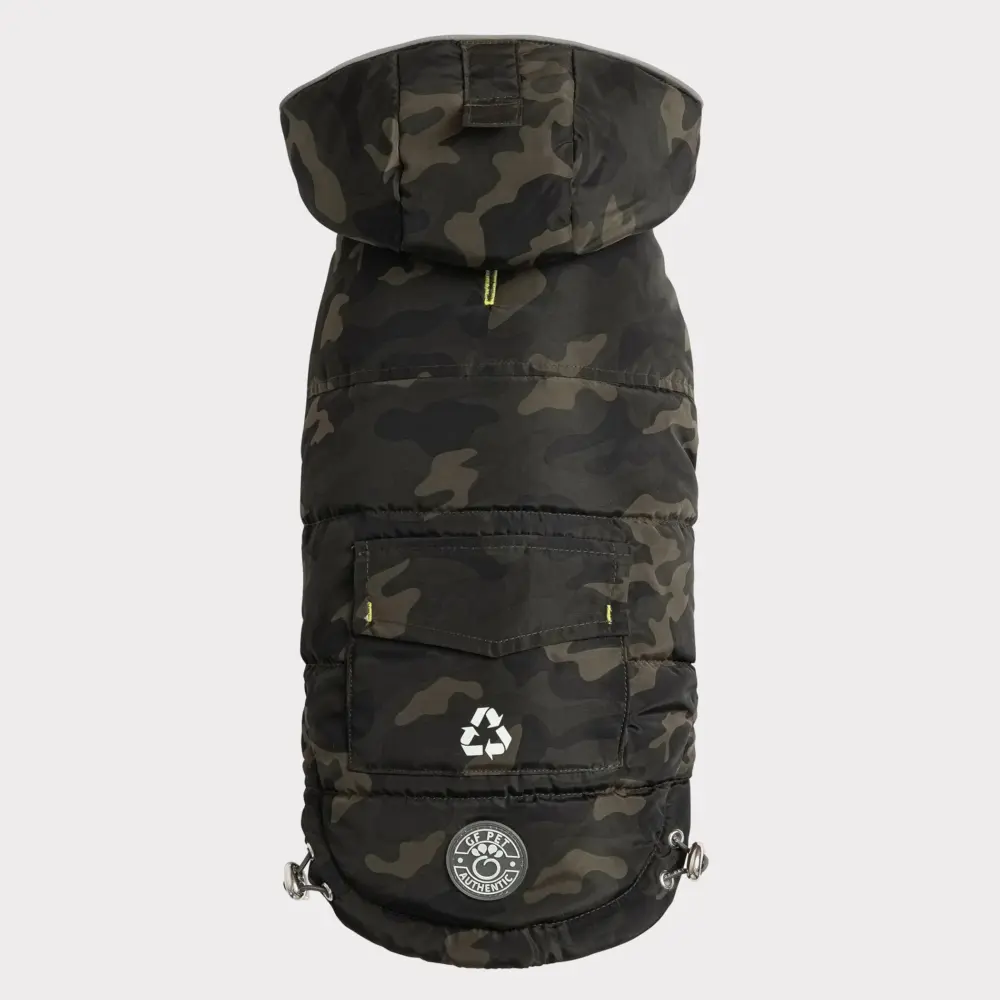
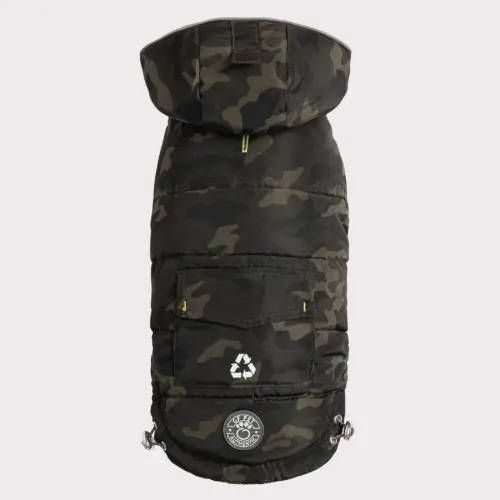
Recycled Dog Parka, Choose size
Price range: $44.95 through $78.95
Why it fits: A hooded parka with an adjustable cut that holds its position on deep-chested and short-legged dogs, so it does not twist under or over a harness.
-
GF PET
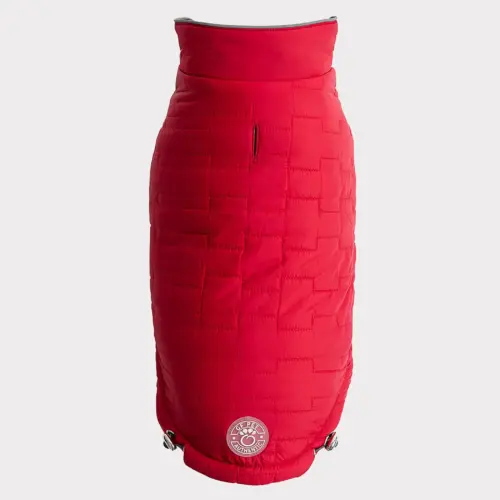
Reversible Chalet Dog Jacket, Choose size
Price range: $44.95 through $68.95
Why it fits: A reversible jacket with a bungee cinch, which lets you tighten the coat itself rather than relying on the harness to hold it in place.
-
Lupine Pet
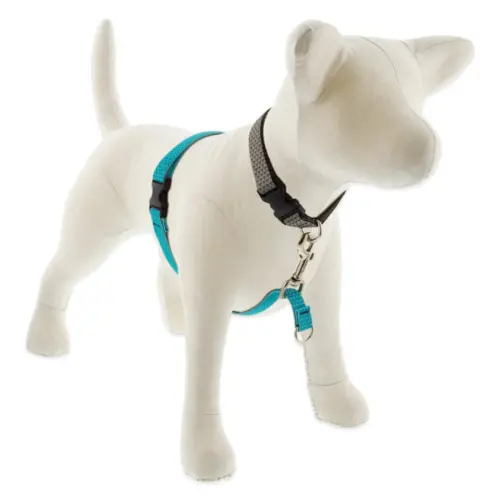
Reflective No-Pull Dog Harness, Choose size & design
Price range: $41.95 through $45.95
Why it fits: A front-clip training harness that attaches to the collar and lead you already own, so there is one new piece of kit to layer rather than three.
-
Lupine Pet
Lupine Eco No-Pull Training Harness, Choose size & design
Price range: $38.95 through $40.95
Why it fits: A no-pull harness with welded steel hardware and simple webbing, which sits flatter over a coat than a heavily padded design.

Common questions
Can I leave the harness on under the coat all day?
Not all day. A harness worn continuously rubs and mats, and under a coat you cannot see it happening. Take both off indoors, and check the skin and coat underneath at least once a week.
My coat has no leash opening. Can I cut one?
You can, but bind or stitch the edge immediately or it will fray and tear. On a water-resistant coat you will also break the weatherproofing at that point, so it is usually better to wear the harness outside.
What about a jumper with a built-in ring?
Use it for an ID tag and nothing more. For walking, a harness carries the load across the chest where a dog can take it; a sewn loop on knitwear cannot.
Related guides
-
How-to
How to Wash Dog Coats, Sweaters and Pajamas
Dog clothing has washing problems of its own: knitwear shrinks, fleece mats, velcro destroys everything it touches and heat ruins water-resistant coatings. This guide covers each material and how often washing is actually needed.
-
Buying guide
Dog Jacket Linings Explained: Fleece, Sherpa, Quilted and Reversible
The shell gets the attention and the lining does the work. This explains what fleece, sherpa and quilted fills each contribute, why bulk matters as much as warmth, when a reversible jacket earns its price, and how to match a lining to your climate.
-
Comparison
Dog Raincoat vs Winter Coat: Which One Your Dog Needs
A raincoat keeps water out and a winter coat keeps heat in, and the two are not interchangeable. This comparison covers what each does, why wet cold is the worst case, and which dogs need both.