Walking & Training Buying guide
How to Choose the Right Dog Harness: Style, Strap Shape and Build
Short answer
The right harness is the style your dog accepts calmly: a step-in for a head-shy dog, an overhead for one who won’t stand for paw lifting, or a vest for a small or thin-coated dog. Then check the build: a chest piece that leaves the shoulders free, padding where the straps press, and metal hardware scaled to your dog.
Our picks at a glance
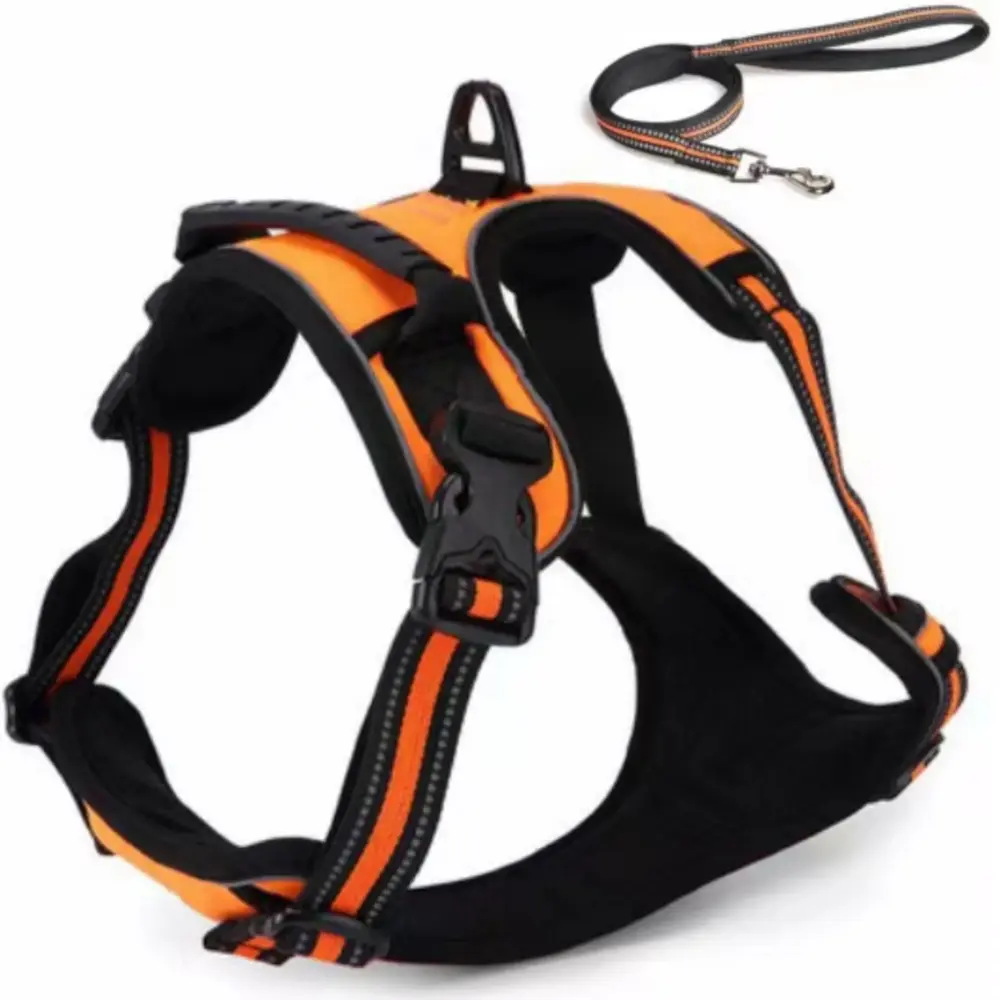
- PetTrek Padded Harness and Leash SetThe padded, standalone choice
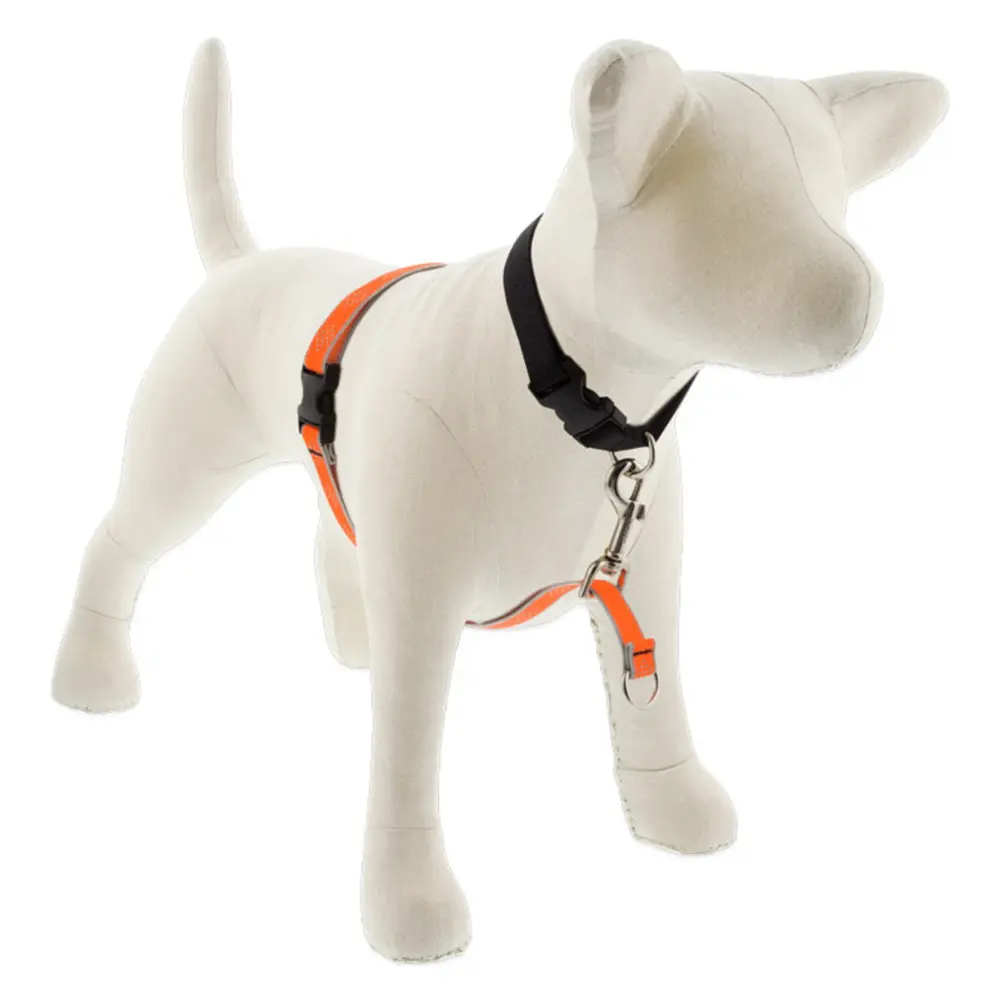
- Reflective No-Pull Dog HarnessFront-clip woven nylon webbing that attaches to your dog's everyday collar and leash
This guide is about how a harness is built and how it goes on. Three related choices have their own pages:
- Where the leash clips: a chest ring for a dog that pulls, a back ring for a calm walker. See front-clip vs back-clip harness.
- Harness or collar at all: see dog harness vs collar.
- Size and fit: chest girth decides the size; how to measure a dog for a harness shows where the tape goes.
Harness styles: overhead, step-in and vest
Style decides how the harness goes on, and a harness your dog dreads makes every walk start with a struggle.
| Style | How it goes on | Often suits | Watch for |
|---|---|---|---|
| Overhead | Neck loop over the head, then a chest buckle | Dogs who dislike paw handling | Head-shy dogs; a neck loop tight over the ears |
| Step-in | Front feet into two loops, clipped on the back | Head-shy dogs who lift their paws easily | Fewer adjusters on many designs; ring usually on the back |
| Vest | A fabric or mesh panel, in overhead or step-in form | Small and thin-coated dogs | Heat in summer, slow drying, worn hook-and-loop |
Overhead harnesses
An overhead harness has a neck loop that slides over your dog’s head, then fastens around the chest with one or two buckles. Many adjust at the neck as well as the girth, which helps on a deep-chested or thick-necked dog; the AKC’s article on why a well-fitting harness matters favors an adjustable neck opening that rests near the top of the breastbone rather than around the throat.
The catch is the head. A dog who ducks away from anything near the ears can turn it into a daily wrestling match, and the AKC points out that an over-the-head style can be a problem for a dog with ear or neck pain. Some designs add a buckle at the neck, so the loop opens and closes around the neck instead of sliding over the ears, which can help a mildly head-shy dog.
Step-in harnesses
A step-in harness lies flat on the floor; your dog places each front foot in a loop, and you lift the harness up and clip it together over the back. Nothing goes near the head, which makes it the natural choice for a head-shy dog, and the AKC’s guide to choosing the right dog harness notes that a step-in is harder to get out of when it fits properly.
The tradeoffs: your dog has to stand while you lift each paw, which is hard for a wriggly puppy or a dog with sore joints, and many step-in designs adjust only where they buckle, so the size chart has to be right. The leash ring usually sits on the back where the loops meet, which suits a calm walker more than a puller.
Vest harnesses
A vest replaces some of the straps with a panel across the chest and often the back, usually padded nylon or breathable mesh. Vests come in both overhead and step-in forms and are common in small-dog sizes. The wider panel spreads pressure over more of the body and covers a thin coat; the AKC’s fitting article suggests fleece-lined harnesses for thin-coated breeds such as Greyhounds.
Heat and water are the costs. A padded vest is warm on a summer afternoon and slow to dry after rain or a wash. If a vest closes with hook-and-loop, look for a buckle as well, because hook-and-loop loses its grip as it fills with hair and lint.
Y-front vs a strap across the shoulders
Look at any harness from the front before you buy: the shape of the chest piece is the part most likely to affect how your dog moves.
- Y-front: a strap runs from the neck loop down the breastbone, between the front legs, to the girth strap. Seen from the front it forms a Y, and the point of each shoulder stays uncovered.
- Straight front: a strap runs horizontally across the chest, often at about the height of the shoulder joints. Many of these slip over the head and close with a single buckle, so they’re quick to put on, and some no-pull designs use this layout. The strap crosses the joint the front leg swings from, and one that rides low or loose can shorten the stride.
Some veterinarians and canine rehab therapists prefer a Y-front for that reason. The research is thin and hasn’t settled it: in the few small gait studies so far, harnesses generally reduced how far the shoulder extended compared with no harness, and the Y-fronts didn’t come out ahead of straight-front designs. So treat the chest shape as a starting point rather than proof, and judge the harness on your dog. The AKC’s fitting advice is to watch that the front legs can reach forward and swing out to the side without the harness getting in the way.
Safety note
A harness shouldn’t change how your dog walks. If your dog starts to limp, moves stiffly or begins resisting the harness, take it off and check with your veterinarian before trying a different design.
Padding, webbing and hardware
Padding and lining
Padding earns its place on the chest piece and on the girth strap just behind the front legs, the two spots where rubbing usually shows up first. Smooth-coated and thin-coated dogs gain the most from it; a dog with a dense coat often does fine in well-fitted plain webbing.
The AKC’s harness guide weighs the main materials: nylon is inexpensive, light and durable but doesn’t breathe, so it can trap heat and water; mesh breathes but is less durable and less padded, so it can chafe; neoprene is padded and suits dogs who swim, though it traps heat too; and leather lasts but costs more and needs regular care. Whatever the material, thicker padding adds bulk and holds water, so it takes longer to dry after a wet walk or a wash.
Webbing width and edges
On a strap harness the webbing does the work. Wider webbing spreads a pull over more of the body, and makers usually step up the width for bigger dogs: the Lupine no-pull harness we carry comes in 3/4-inch webbing for a 16–26 inch girth and 1-inch webbing for 26–38 inches. Narrow webbing keeps a small dog’s harness light. Run a finger along the edges, too: they should feel smooth and flexible, with no stiff or scratchy edge where they meet the skin.
Buckles, sliders and rings
- Buckles: side-release (quick-release) buckles open with a squeeze, which makes taking the harness off quick. Each one should click fully shut; test them before the first walk.
- Sliders: every adjuster is another way to fine-tune the fit, but sliders can creep as your dog moves. Recheck the straps after the first few walks, and tuck long strap ends into their keepers so they don’t flap or snag.
- Leash rings: metal, and large enough for your leash clip to move freely. A welded ring is a closed loop; on a ring bent from wire, the join should be closed tight with no gap.
- Stitching: where webbing wraps around a ring or buckle, the stitching should be dense and even, with no loose or broken threads. Look again every time you wash the harness.
- Weight: on a toy or small dog, heavy hardware adds up, so look for buckles and rings scaled to the dog.
Reflective details
Reflective material comes as threads woven into the webbing, reflective stitching, or strips and prints added to the surface. Woven threads are part of the strap itself; sewn trim and surface prints are worth checking after a few washes. Placement matters as much as type: reflective material on the sides and front of the harness, and on the leash, shows up from more angles than a single strip on the back.
None of it glows. Lupine’s product page points out that its reflective designs reflect light rather than light up, and the same goes for any reflective trim: it shows only when headlights or a flashlight hit it. For walks after dark, add a clip-on light for your dog and one for you; our dog walking essentials guide covers the rest of the night-walk kit.
A quick check before you order
Use the listing, the photos and the size chart to confirm:
- A style your dog will tolerate going on.
- A chest piece that won’t ride low or loose across the shoulders, whether it’s a Y-front or a straight strap.
- An adjustable neck opening that rests near the top of the breastbone, not at the throat.
- A girth strap that sits behind the front legs without pressing into the elbows.
- Padding or smooth webbing where the straps press, especially for a thin coat.
- Metal rings and buckles that click fully shut, scaled to your dog.
- A size chart by chest girth, with your dog’s measurement near the middle of a range.
- A leash ring where you need it, reflective material on more than one side, and care instructions you can live with.
Don’t size up just to get a fixed neck loop over the ears: a harness loose enough to slide over the head is often loose enough to back out of. Once you have it, how to put on a dog harness walks through the overhead, step-in and collar-attached routines.
One feature is worth deciding on separately: when you need a harness with a handle, including the honest answer about lifting.
How our two dog harnesses are built
We carry two dog harnesses in walking and training, so these picks are limited to Nilosi’s catalog rather than the whole market. They’re built very differently, which makes the choice between them fairly clear.
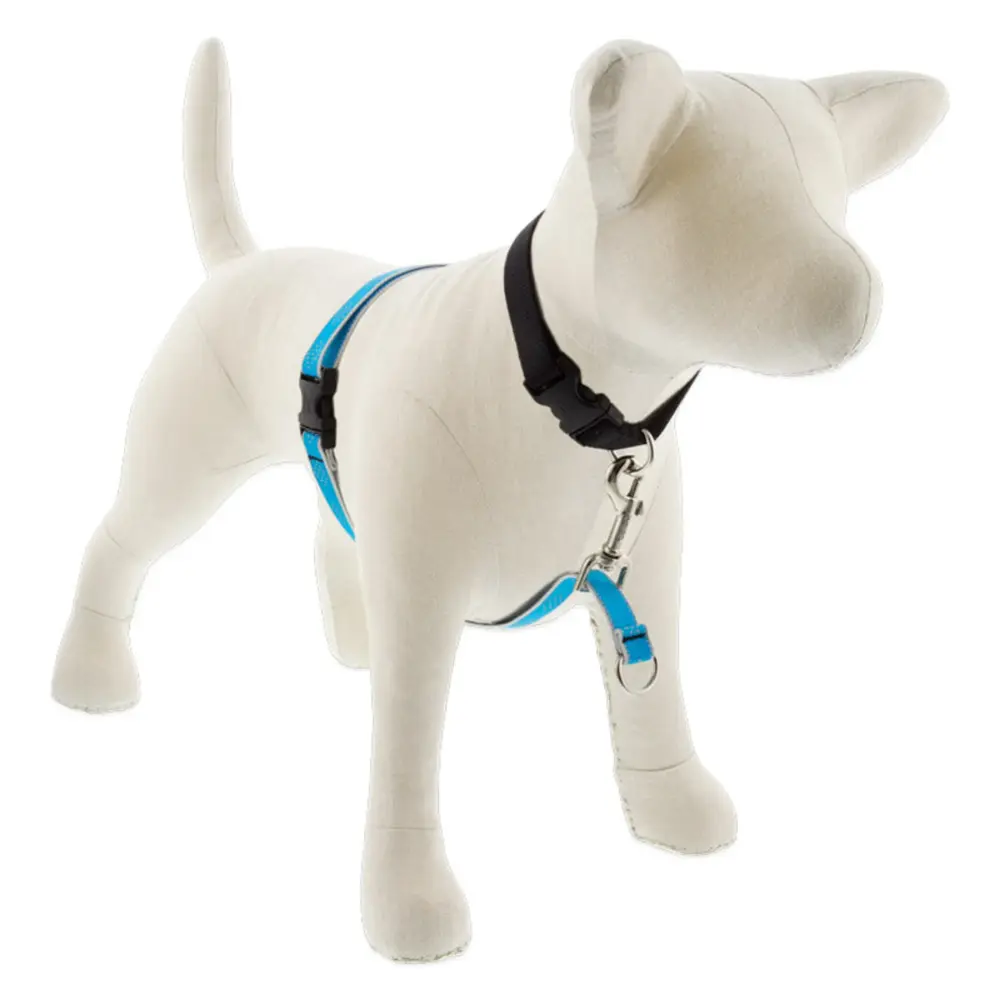
Lupine Pet Reflective No-Pull Dog Harness: webbing that works with your collar
This is a strap harness in soft, strong woven nylon with sturdy hardware; Lupine’s product page specifies welded steel. It isn’t a standalone harness: it attaches to your dog’s everyday collar and the leash you already use, so you’re choosing a collar-and-harness setup rather than one of the styles above. Lupine’s page adds that it isn’t meant for a martingale training collar.
The leash attaches at the front to discourage pulling, which works best alongside the short sessions in how to stop a dog pulling on the leash. It’s sized for medium and large dogs only, in the two girth ranges above (16–26 and 26–38 inches), with adjustable straps and a reflective weave in six designs. It is machine washable (air dry) and made in the USA. The listing doesn’t mention padding, so on a thin-coated dog, check behind the front legs after the first few walks. If your dog’s current collar is a martingale or worn, the Lupine reflective collar is an everyday flat collar in the same six designs.
Mr. Peanut’s PetTrek Padded Reflective Dog Harness & Leash Set: padding and a matching leash
The PetTrek is the padded option: oxford nylon with cushioned padding on the side that rests against your dog, designed to spread pressure across the chest rather than the neck. It has quick-release buckles and adjustable straps, and reflective stitching on both the harness and the matching leash that comes with it. It runs from XS to Large in four colors, with the size chart in the product images, so it’s the one to check first for a dog below the Lupine’s 16-inch minimum girth.
The listing doesn’t say whether it goes on over the head or as a step-in, or exactly where the leash ring sits. If either matters for your dog, look closely at the product photos or ask us before you order.
The tradeoff in short: choose the PetTrek for padding, a standalone harness, sizes from XS and a leash in the same order; choose the Lupine for a medium or large dog who pulls and already wears a well-fitting everyday collar.
-
Mr. Peanut’s
PetTrek Padded Harness and Leash Set, Choose size & color
Price range: $24.95 through $26.95
Why it fits: The padded, standalone choice: cushioned oxford nylon, quick-release buckles, adjustable straps and reflective stitching, plus a matching leash. XS to Large; check the size chart.
-
Lupine Pet
Reflective No-Pull Dog Harness, Choose size & design
Price range: $41.95 through $45.95
Why it fits: Front-clip woven nylon webbing that attaches to your dog's everyday collar and leash, for a dog who pulls. Medium and large dogs only: 16–26 in or 26–38 in girth.


Measure your dog’s chest before you order: a size you picked that doesn’t fit counts as a change-of-mind return, and our returns page explains how those work.
Related guides
-
Buying guide
Made in USA Dog Products: Collars, Harnesses, Coats, Bowls and Wipes
Six dog items we stock carry a Made in USA claim from their maker or listing: two Lupine Pet walking pieces, a DCNY coat for small dogs, a SodaPup slow feeder and lick mat, and Mr. Peanut’s wipes. Learn what the label should mean, what it leaves out and how to check a claim yourself.
-
Checklist
What to Tell Your Dog Walker: A Handover Checklist
Everything a new dog walker needs on one page: where the gear lives and how it goes on, how your dog walks, leash and route rules, medications and treats, emergency contacts, the door routine, weather rules and a first walk together.
-
How-to
What to Do When an Off-Leash Dog Approaches You and Your Dog on a Walk
A loose dog is heading for you and your leashed dog. How to read its body language in seconds, walk away without running, block it with your body and a firm voice, buy time with treats or an umbrella, and what to check and report if the dogs make contact.