Walking & Training Comparison
Dog Harness vs Collar: Where to Clip the Leash, and When to Use Both
Short answer
For most dogs, clip the leash to a well-fitted harness and keep a flat collar on for ID tags. A harness takes a pull on the chest instead of the throat, which matters most for pullers, puppies, toy breeds and flat-faced dogs. A collar alone is fine for a healthy adult who already walks on a loose leash.
Harness vs collar at a glance
Either one can carry a leash. What differs is where a pull lands, how quickly the gear goes on and whether it can carry ID.
| Option | A pull lands on | Putting it on | ID tags | Watch for |
|---|---|---|---|---|
| Flat collar | Neck and throat | Seconds | The natural place for tags | Narrow heads can back out |
| Harness | Chest and shoulders | Slower; more straps to fit | Come off with the harness | Rubs or slips if the fit is off |
| Both together | Chest (leash on harness) | Two steps | Stay on the collar | Two fits to check |
The last row is where many dogs end up, but not every dog needs it. The sections below show when a collar alone is enough and when it isn’t.
Where the pressure goes when your dog pulls
A flat collar circles the neck, right over the windpipe. On a slack leash that hardly matters. The moment the leash goes tight, though, the whole pull is held by a narrow band across the front of the throat, and a dog who lunges at a squirrel meets the end of the leash with their neck.
A harness moves that same pull to the chest and shoulders, a much larger area that doesn’t include the airway. The AKC’s comparison of dog harnesses and collars notes that a harness can prevent potential throat damage in a dog who pulls, and can help keep the leash from getting caught under the legs.
On a harness, where the leash clips decides how much control you get. A ring at the center of the chest turns a pulling dog sideways and back toward you. A ring on the back spares the throat just as well, but a strong dog can lean into it and keep towing. Our comparison of front-clip and back-clip harnesses covers that choice, including what a no-pull harness can and can’t do.
Neither piece of gear teaches manners. A harness makes a pull easier on your dog’s body; loose-leash training is what makes the pulling stop.
When a collar works well
A collar isn’t the lesser option for every dog. It goes on in seconds, stays out of the way and is the natural home for ID tags. The AKC also notes that a collar may give you better control and take less physical strength to walk with than a harness.
Clipping the leash to the collar is reasonable when all of these are true:
- Your dog is a healthy adult with no cough, breathing trouble or neck problem.
- They already walk on a loose leash, so the collar rarely takes any weight.
- They don’t lunge at bikes, squirrels or other dogs.
- The collar fits: two fingers slide flat underneath, and it can’t be pulled forward over the ears.
A flat collar is the wrong leash point for a dog whose head is no wider than the neck. The AKC names Greyhounds and Whippets, whose heads are often narrower than their necks, as dogs who can wriggle out of a loose collar. Walk a dog like that in a harness, or in a martingale collar, which tightens a limited amount when the leash pulls. Our guide to choosing a dog collar explains how martingales work and why choke and prong collars are best skipped.
When a harness is the better choice
A harness is the better choice if any of these describe your dog:
- Pulls or lunges. A front-clip harness gives you steering while you train and keeps every lunge off the throat.
- Is still learning leash manners. Puppies, newly adopted dogs and excitable adolescents hit the end of the leash often, and a harness takes those jolts on the chest.
- Has slipped a collar before. A well-fitted harness is the usual alternative for a dog who backs out of a collar, and pairing it with a collar adds a backup (see below).
- Rides in the car on a tether. A seat-belt tether clips to the back of a walking harness, never to a collar or to a harness that connects to the collar. It limits roaming on the back seat; it isn’t crash protection.
- Has a cough, noisy breathing or a neck problem. Keep pressure off the neck and ask your veterinarian which setup suits your dog.
A harness has costs too, and the AKC lists them plainly: harnesses are harder to put on and take off, one that’s too big can be wriggled out of, and one that’s too tight can be painful or uncomfortable, especially in hot weather. Straps that rub can also leave sore spots behind the front legs, or mats in a long coat.
Fit also affects how your dog moves. In the AKC’s article on why a well-fitting harness matters, a canine sports medicine veterinarian cautions that a poorly fitting harness can lead to soft tissue injuries from abnormal pressure or an unnatural gait. Watch your dog walk: the front legs should reach forward and out to the side freely.
Most of these problems come down to fit. Measure the chest at its widest point behind the front legs before you buy, using our guide to measuring a dog for a harness, and see how to choose the right dog harness for strap shapes that leave the shoulders free.
Small, flat-faced and puppy-age dogs
For these three groups the comparison tilts firmly toward a harness for the leash, with the collar kept for ID.
Toy and small breeds
A small dog rarely pulls with much force, but a small neck has little to spare. VCA Animal Hospitals lists Chihuahuas, Pomeranians, Shih Tzus, Lhasa Apsos, toy poodles and Yorkshire terriers among the breeds predisposed to tracheal collapse, a windpipe problem whose typical sign is a dry, harsh cough sometimes described as a goose honk. VCA notes the cough can worsen with pressure on the trachea, such as from a collar, and advises a harness rather than a collar for affected dogs. The AKC makes a similar point for small dogs generally: a harness can help avoid throat damage.
Flat-faced breeds
Many short-nosed breeds, such as Pugs, French and English Bulldogs and Boston terriers, are prone to breathing trouble. VCA’s guide to brachycephalic airway syndrome says affected dogs should wear a harness that doesn’t tug at the neck, and advises against a regular neck collar because it can put undue pressure there. Whatever harness you choose, check that no strap rides up across the throat when the leash goes tight. If your veterinarian advises against any collar, ask how best to keep ID on your dog.
Puppies
A puppy can wear either, but the AKC’s puppy leash-training guide calls a harness generally the better option, so there’s no pressure on the neck if the puppy pulls, and suggests a front-clip harness for large puppies. The collar still matters from the first day, because that’s where the ID tag goes. Recheck both every week while your puppy grows: a collar that fit last month can be tight today.
Safety note
A change of gear doesn’t treat a cough. If your dog honks, gags or coughs on walks, breathes noisily, or flinches when you touch the neck, move the leash to a harness and see your veterinarian rather than waiting to see whether it settles.
Using both: ID on the collar, leash on the harness
With both on, each piece does one job. Here’s how to set it up:
- Fit a flat collar with ID tags so two fingers slide flat underneath and it can’t be pulled forward over the ears.
- Put the harness on for walks and check its fit, leaving the collar in place higher on the neck.
- Clip the leash to the harness ring, not the collar, so every pull lands on the chest.
- Keep the tags on the collar, so they stay with your dog when the harness comes off.
- Take the harness off after the walk and hang it ready for next time.
If your dog has slipped out of their gear before, a double-ended leash clipped to both pieces, with the collar end left slack, adds a backup. Our guide to a dog who keeps backing out of the harness shows that setup and what to do in the moment.
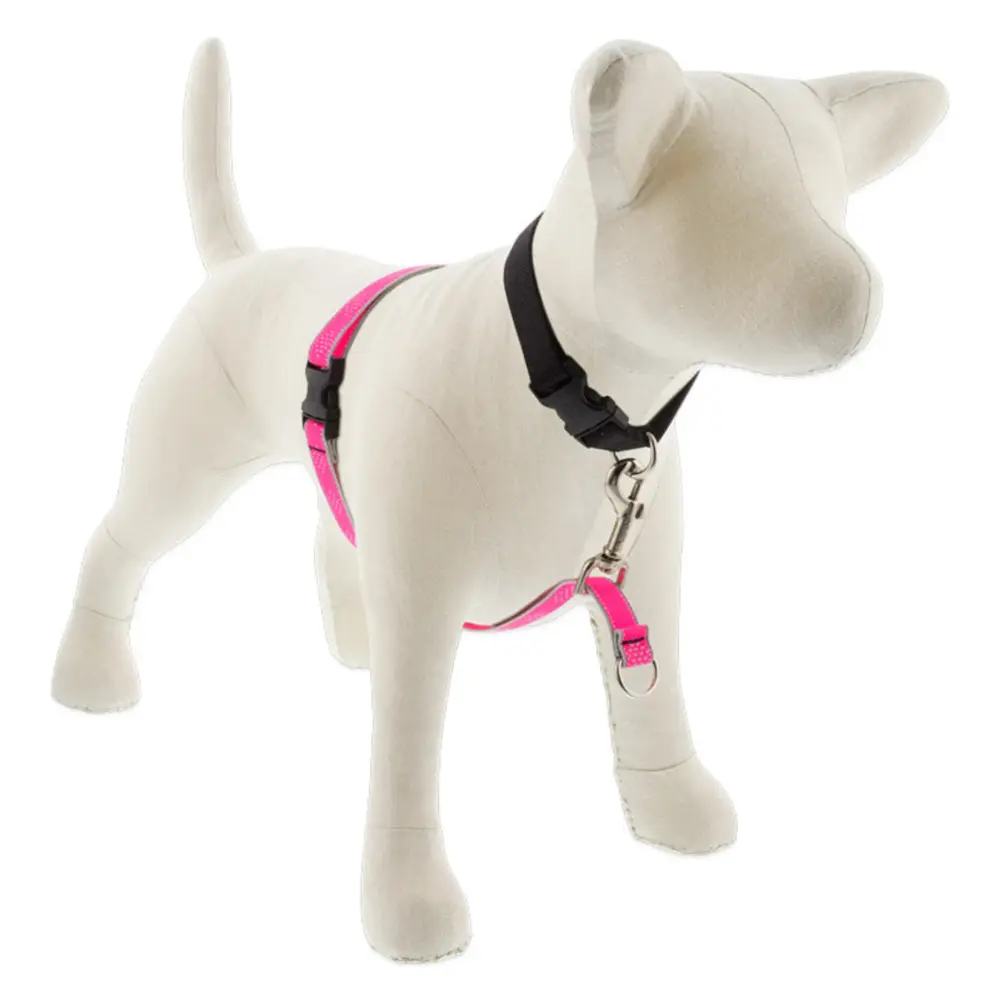
One harness we carry builds the pairing into its design. The Lupine Pet Reflective No-Pull Dog Harness attaches to your dog’s everyday collar and the leash you already use, so the collar is part of the setup rather than an extra. Lupine’s product page notes that it isn’t intended for martingale training collars, so pair it with a flat one.
Between walks the harness usually comes off. Whether the collar stays on at home, in the crate and overnight is a separate question, answered in our guide to whether a dog can wear a harness all the time.
The verdict, dog by dog
- Most dogs: a harness for the leash and a flat collar for ID.
- Calm, healthy adults on a loose leash: the collar can carry the leash, as long as it fits.
- Pullers and lungers: a front-clip harness, plus loose-leash training.
- Toy breeds, flat-faced dogs and puppies: a harness for the leash, every walk.
- Dogs with a cough or a neck problem: a harness, and your veterinarian’s advice on the rest.
So the dog harness vs collar question usually isn’t either-or: the collar identifies your dog, and the harness takes the pull.
Our collar and harnesses, side by side
We stock one collar and two dog harnesses in walking and training. The picks below are limited to that range, and each one fills a different part of the collar-plus-harness setup.
-
Lupine Pet
Reflective Dog Collar, Choose size & design
Price range: $22.95 through $28.95
Why it fits: A flat everyday collar for ID tags, with a D-ring that also takes the leash on calm walks. Neck sizes 6–9 in up to 25–31 in.
-
Lupine Pet
Reflective No-Pull Dog Harness, Choose size & design
Price range: $41.95 through $45.95
Why it fits: Turns a pulling dog back toward you from the front, and attaches to the collar your dog wears. Medium and large dogs only, 16–38 in girth.
-
Mr. Peanut’s
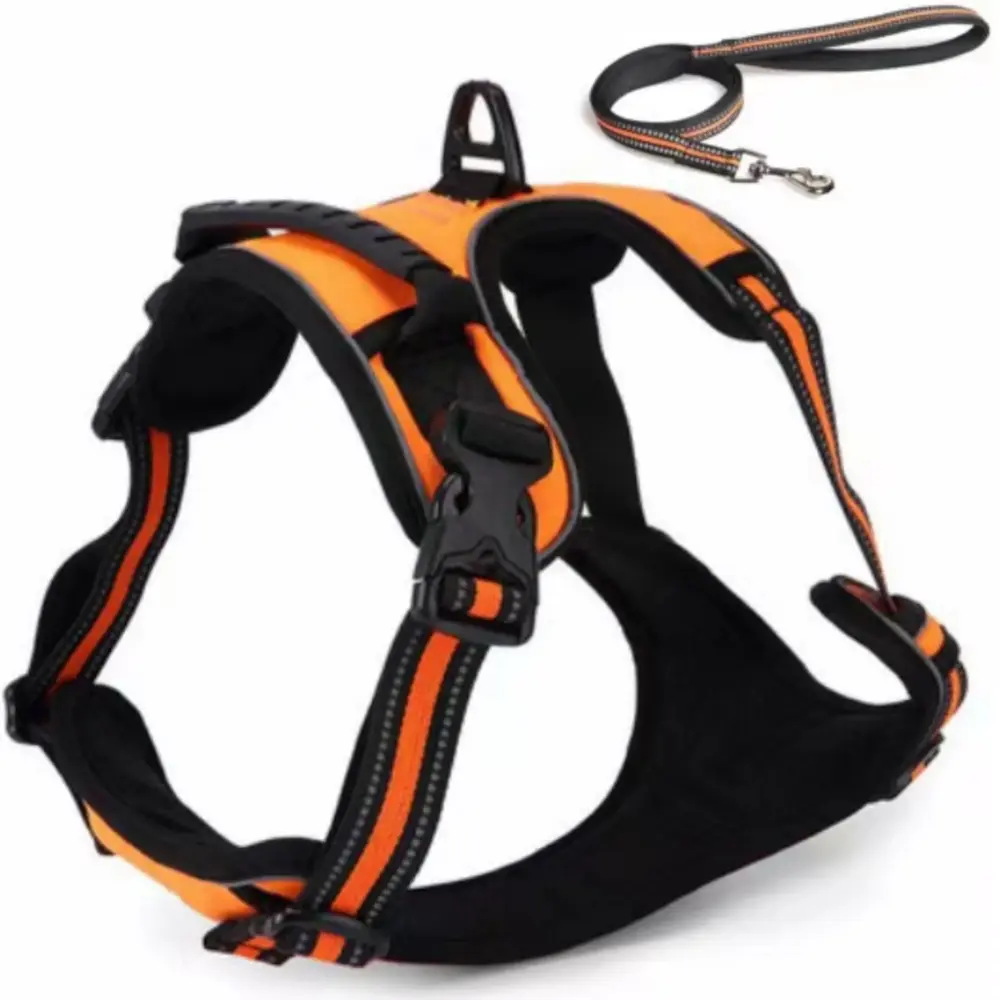
PetTrek Padded Harness and Leash Set, Choose size & color
Price range: $24.95 through $26.95
Why it fits: Keeps the pull off the neck of small dogs and steady walkers, with soft padding and a matching leash. XS to Large; check the size chart first.



Measure before you order: the neck where the collar sits, and the chest at its widest point just behind the front legs. The Lupine harness starts at 16 inches of girth, so for a smaller chest look at the PetTrek, which comes in XS to Large, and compare your number with the size chart in its product images.
Related guides
-
Comparison
The Best Time to Walk a Dog: Morning, Midday or Evening?
A morning walk suits most dogs: a full bladder, fresh energy and the coolest air of a summer day. Compare morning, midday and evening walks, shift the schedule for summer heat and winter cold, and fit walks around office hours, shifts and working from home.
-
Checklist
What to Tell Your Dog Walker: A Handover Checklist
Everything a new dog walker needs on one page: where the gear lives and how it goes on, how your dog walks, leash and route rules, medications and treats, emergency contacts, the door routine, weather rules and a first walk together.
-
How-to
What to Do When an Off-Leash Dog Approaches You and Your Dog on a Walk
A loose dog is heading for you and your leashed dog. How to read its body language in seconds, walk away without running, block it with your body and a firm voice, buy time with treats or an umbrella, and what to check and report if the dogs make contact.