Walking & Training Guide
Can a Dog Wear a Harness All the Time? When to Take It Off
Short answer
For most dogs, no. Put the harness on for walks, training and car rides, then take it off at home and leave it off overnight, because straps left on for hours can rub, mat the coat and snag on crates and furniture. Between walks, a flat collar with an ID tag stays on instead, except in the crate.
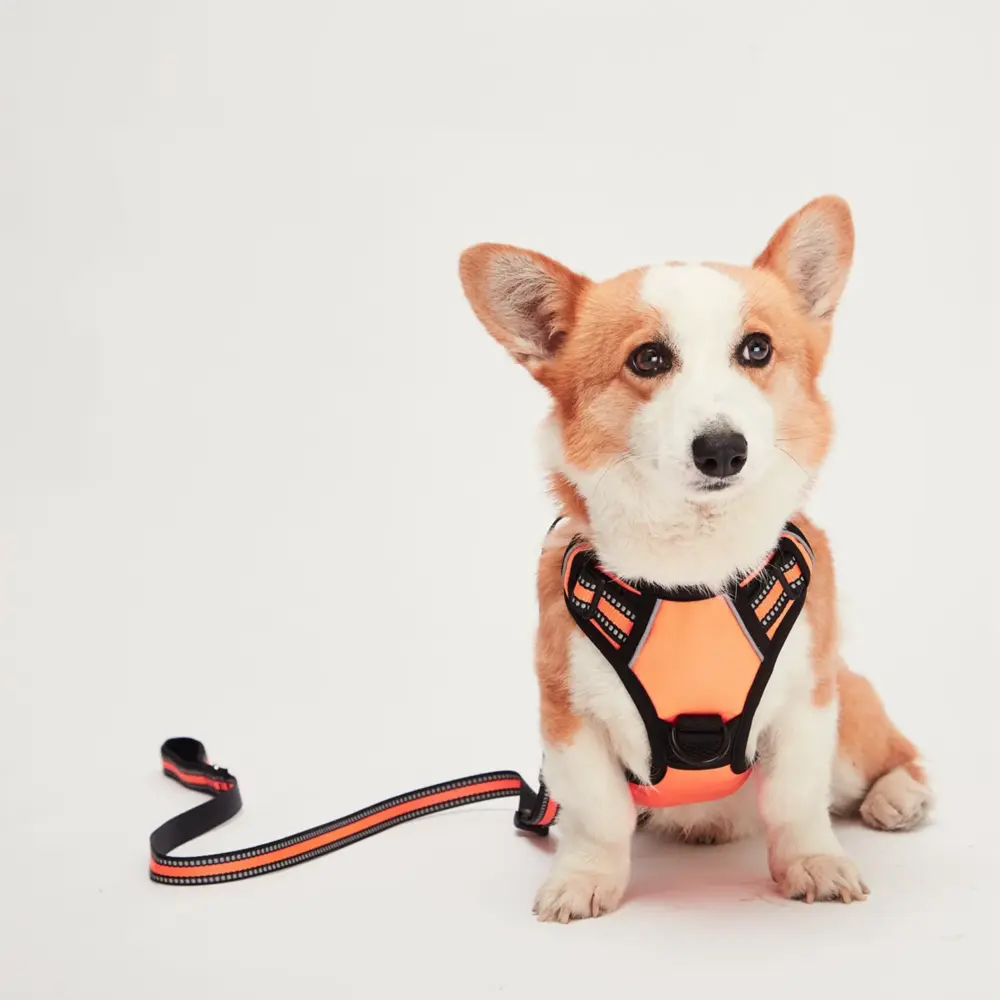
Harness on or off: a day at a glance
Think of a harness as part of the leash rather than part of the dog. It’s built to take the pull of a walk and spread it across the chest, and once the leash is hung by the door it has no job left. Which of the two the leash should clip to is a separate question, covered in our dog harness vs collar comparison; this guide is about the hours between walks.
| Moment | Harness | ID collar |
|---|---|---|
| Walks, hikes | On | On |
| Car rides | On if tethered | On |
| Training | On for the session | On |
| Home, awake | Off | On |
| Overnight | Off | Your call; off if crated |
| Crate or pen | Off | Off |
| Dog play | Off | Off if they wrestle |
| Alone, loose | Off | On, if nothing can snag it |
How long can a dog wear a harness, then? As long as the walk, drive or class lasts. There’s no daily number of hours to aim for: the harness goes on at the door on the way out and comes off at the door on the way back in. A full-day hike or a travel day is fine too, as long as you check under the straps at breaks.
Why the harness comes off at home and overnight
Most of the reasons come down to straps sitting in the same place for hours on a dog who isn’t walking:
- It gets in the way of rest. Buckles, rings and a padded chest piece end up underneath your dog when they curl up or lie on their side, and the straps behind the front legs pull at the armpits when they stretch out.
- It holds heat and moisture. Webbing and padding cover a band of coat that can’t air out. After a rainy walk or a swim, the straps stay damp against the skin long after the rest of the coat dries, so take a wet harness off as soon as you’re inside.
- It hides the skin. Redness, mats and sores under a strap go unnoticed until the harness comes off, which is one more reason to take it off every day.
- It gives a bored dog something to chew. A dog left alone, or a housemate, can chew through webbing or crack a buckle. If your dog may have swallowed a piece, call your veterinarian.
- It can catch on things. That’s the most serious risk, covered below.
Rubbing, mats and skin under the straps
A harness presses on the same spots every time: behind the front legs, across the breastbone, around the base of the neck and under each buckle. Worn all day, those spots also take pressure each time your dog lies down, scratches or rolls over.
In long, curly and thick double coats, that friction shows up as mats: hair pressed flat and rubbed under a strap twists into knots, and the armpits are a common place for them to start. If you find one, our guide to getting mats out of dog hair covers what you can work loose at home; tight mats close to the skin are a job for a groomer.
Short coats show the friction on the skin instead: pink patches, thinning or broken hair along a strap line, or a dog who keeps licking behind a front leg. A harness that rubs even on short walks has a fit problem rather than a wear-time problem, and our guide on how to measure a dog for a harness covers sizing and the two-finger check.
Crates, furniture and snag risks
A harness has more to catch than a collar does: rings, buckles, adjusters and loops of webbing on both sides of the body. A dog who can’t free a snagged strap may panic and twist, and if it happens while you’re out or asleep, nobody is there to help. Common snag points around the house include:
- Crate wire, crate door latches and the gap around a crate tray
- Chair rungs, bed-frame slats and the corners of furniture
- Floor and wall vent covers
- Deck boards, fence gaps and low branches in the yard
- Another dog’s teeth or paws during wrestling
Collars carry the same risk on a smaller scale. The AKC’s article on collar dangers asks owners to weigh crate time, wrestling with other dogs and anything in the yard a collar could hook on, and to take the collar off when in doubt. Its crate training guide is firmer still: always take your dog’s collar off when they’re in the crate. If the collar comes off for the crate, so does the harness.
Safety note
Never crate a dog in a harness, and never leave a harnessed dog tied up or tethered where you can’t see them, indoors or out. A dog who gets caught can be badly hurt trying to pull free.
What stays on at home: the ID collar
Taking the harness off shouldn’t mean taking ID off. Dogs slip out through doors held open for a delivery, a guest or a child, so a flat collar with a current tag stays on while your dog is loose in the house. It comes off in the crate or pen, while your dog wrestles with another dog and around any yard hazard it could hook on.
Overnight and home-alone time are more of a judgment call, because nobody is watching. A dog who sleeps or waits loose in a room with nothing a collar could hook on can keep it on, so ID is in place if a door opens early or you have to leave in a hurry; a dog in a crate or pen takes it off. If you’d rather remove it for the night, hang it by the door you use first in the morning, so it goes back on before that door opens.
- A flat collar, not a training collar. A martingale tightens when pulled, which makes it harder to free from a snag, so it comes off after the walk along with the harness. Our guide to choosing a dog collar covers collar types, including breakaway collars for dogs at risk of snagging, and what to put on the tag.
- A snug fit. Two fingers should slide flat underneath, and no more. A collar that slides forward over the ears is loose enough to slip off.
- A microchip as the backup. Humane World for Animals describes a microchip as an essential backup to ID tags rather than the main form of ID, and it only helps if the registration lists a phone number you answer.
If your dog walks in the Lupine Pet Reflective No-Pull Dog Harness, sized for medium and large dogs, this routine is built in: the harness is designed to attach to the everyday collar your dog already wears, so after the walk you unclip the harness and the collar stays on.
If your veterinarian has advised against a collar, for example because of a neck or airway problem, ask them how best to keep ID on your dog at home rather than leaving a harness on around the clock.
When a harness can stay on longer
A few situations call for longer wear. In each one the harness still comes off at the end of the day, and you check under it when it does.
Car trips and travel days
On a road trip the harness goes on at home and stays on through the drive and the rest stops, because the seat-belt tether clips to it. Use a well-fitted walking harness, never a collar, and not the Lupine no-pull harness, which connects to the collar. A tether limits roaming on the back seat but isn’t crash protection; our guide to choosing a seat belt tether or booster seat covers the setup. At each stop, run a hand under the straps, and take the harness off once you’ve arrived for the night. If your dog rides in a crate instead, leave the harness off in the crate and put it back on, leash clipped, before the car door opens at a stop.
Training sessions and classes
Put the harness on before class or a training walk and take it off afterward. If you’re tempted to leave it on because getting it on is a wrestling match, practice the routine instead: our guide on how to put on a dog harness covers overhead and step-in styles, and dogs who duck or spin as soon as it comes out.
Newly adopted dogs who may bolt
In the first days or weeks, the main worry with a nervous new dog is a bolt through an open door. If your shelter or rescue suggests keeping a light leash on your dog indoors, the harness can stay on while you’re home and watching, with the leash clipped to it so you can take hold before a door opens. Take both off for sleep, crate time and whenever you go out, since a trailing leash can catch on furniture too. The ID collar stays on whenever your dog is out of the crate, and your shelter or rescue’s advice for your particular dog comes first.
Support and medical harnesses
A lifting or mobility harness recommended by your veterinarian or a rehabilitation therapist may come with its own wear schedule. Follow their instructions rather than the general rule here, and ask how often to check the skin underneath.
A one-minute skin check after you take it off
The AKC’s tips on choosing and fitting a harness include keeping an eye on the spots where it may rub or chafe, and the moment it comes off is the easiest time to look. After any long wear, such as a hike or a travel day, and a couple of times a week otherwise, check:
- Armpits and the backs of the front legs: redness, damp skin or bare patches
- Chest and breastbone, under the front strap: rubbed or thinning hair
- The neck loop and the spot under each buckle: pressure marks or broken skin
- The coat along the strap lines: flattened, lumpy or tangled hair
- Deep dents in the coat where the straps sat, a sign a strap may be too tight
- The harness itself: frayed webbing, a cracked buckle or a slider that has crept looser
Often the fix is a small adjustment: loosen a strap that leaves dents, snug one that slides, and brush along the strap lines on long-coated dogs after walks. Re-check the fit after a short haircut or as a winter coat grows in, since both change how the straps sit.
Safety note
Leave the harness off and ask your veterinarian about skin that is red, broken, scabbed or hot to the touch, hair loss along a strap line, or a dog who suddenly flinches, limps or backs away when the harness comes out.
Puppies: short sessions, never unattended
Can a puppy wear a harness all day? No, and puppies are the most likely to get into trouble in one. They chew whatever is within reach, their own straps included, so never leave a puppy in a harness unattended, and take it off for naps and for crate or pen time. A puppy left home alone is usually in a crate or pen, and the collar comes off there too.
While your puppy gets used to the harness, keep sessions to a minute or two with treats, and take it off while they’re still relaxed rather than leaving it on until they stop noticing it. Growing puppies also change shape fast, so run the two-finger check every week; a harness that fit last month can pinch behind the front legs today.
Our collar, harnesses and car tether
These four from our walking and travel ranges suit the routine above: a collar that stays on, two harnesses that come off at the door and a tether for days when the harness stays on. Our picks are limited to what Nilosi carries.
-
Lupine Pet
Reflective Dog Collar, Choose size & design
Price range: $22.95 through $28.95
Why it fits: Stays on at home after the harness comes off; a flat everyday collar with a D-ring for ID tags. Neck sizes 6–9 in up to 25–31 in.
-
Mr. Peanut’s
PetTrek Padded Harness and Leash Set, Choose size & color
Price range: $24.95 through $26.95
Why it fits: Unbuckles the moment you get home, with quick-release buckles and padding where it rests against the skin. XS to Large; check the size chart.
-
Lupine Pet
Reflective No-Pull Dog Harness, Choose size & design
Price range: $41.95 through $45.95
Why it fits: Clips to the everyday collar your dog already wears, so the collar stays on when the harness comes off. Medium and large dogs, 16–38 in girth.
-
Adjustable Dog Car Seat Belt Tether, View product
$23.95
Why it fits: For travel days when the harness stays on; clips to a walking harness, never a collar, and fits most seat-belt buckles. Not crash protection.




Browse more collars, harnesses and leashes in walking and training.
Related guides
-
Guide
Dog Walking Etiquette: Sidewalk Manners, Greetings and Clean-Up
The unwritten rules of neighborhood dog walks: how short to hold the leash when people pass, keeping off lawns and gardens, picking up every time, asking before greetings, making room on narrow paths and changing the walk on a bad day.
-
Checklist
What to Tell Your Dog Walker: A Handover Checklist
Everything a new dog walker needs on one page: where the gear lives and how it goes on, how your dog walks, leash and route rules, medications and treats, emergency contacts, the door routine, weather rules and a first walk together.
-
How-to
What to Do When an Off-Leash Dog Approaches You and Your Dog on a Walk
A loose dog is heading for you and your leashed dog. How to read its body language in seconds, walk away without running, block it with your body and a firm voice, buy time with treats or an umbrella, and what to check and report if the dogs make contact.