Walking & Training How-to
Dog Backing Out of Its Harness? How to Stop Slip-Outs
Short answer
Most harness slip-outs start with a fright: your dog braces, drops their head and reverses against a tight leash, dragging the harness forward over the head. In the moment, let the leash go slack and move with your dog. Then recheck the fit, add a second clip to a well-fitted collar and teach a calm return.
Why dogs back out of a harness
A harness rarely comes off a dog who is pulling forward. Slip-outs usually happen in reverse. A bang, a dog lunging behind a fence or the door of the vet clinic sends your dog backward: feet planted, head low, shoulders drawn in. If the leash is tight at that moment, it holds the harness where it is while the body slides back out of it, until the neck loop clears the ears. It can be over in a couple of seconds.
So two things decide whether a fright turns into a loose dog: how much room the harness leaves around the head and shoulders, and whether you pull back when your dog does. Some dogs are more likely to try it:
- Newly adopted and nervous dogs, who meet a lot of new frights on their first walks.
- Long or fluffy coats. Straps that feel snug on the fur can leave room underneath, and the AKC notes these dogs may need the straps a little tighter to keep from slipping out.
- Dogs who dislike the harness itself, and duck or back away as soon as it comes out.
- Dogs whose harness has loosened, because sliders creep with wear and washing.
Fit comes first, and our harness measuring guide covers the chest measurement and the two-finger check. This page is about everything else: your hands on the leash, a backup connection and a dog who learns to come toward you when something scares them.
In the moment: release the tension and move with your dog
When a dog starts reversing, the instinct is to hold on tight. That tension is what peels the harness forward, so do the opposite:
- Stop pulling. Let your arm and the leash go soft, but keep a firm grip on the handle. With the leash slack, nothing drags the harness forward over the head.
- Step toward your dog. If your dog keeps backing up, walk with them at the same pace so the leash never snaps tight.
- Make yourself less scary. Turn sideways, crouch if it’s safe to, and speak softly. Don’t loom over your dog or reach for the head.
- Get away from the trigger. Turn and walk away from whatever caused the fright, tossing a few treats on the ground ahead, so your dog has a reason to move forward with you.
- Take hold once your dog settles. When your dog is close and loose-bodied again, hold the back of the harness, check that every buckle is closed and snug any strap that slid.
- Decide whether to keep going. If your dog is still trembling, scanning or pulling for home, head back by a quiet route and try a shorter walk later.
Safety note
A frightened dog can snap, even at someone they love. Move slowly, keep your face away from your dog’s, and don’t grab at the collar or harness while your dog is still panicking.
Adding a second attachment point: collar plus harness
Good fit and calm hands cut the risk, and a second connection stops a startle from becoming a loose dog. Clip the leash to both the harness and a well-fitted flat collar: if your dog reverses out of one, the other still holds. It’s a sensible default for a newly adopted dog, and our checklist for a first walk with a rescue dog builds it in from day one.
What you need:
- A harness that fits today, rechecked since its last wash or your dog’s last haircut.
- A flat collar with ID tags, fitted so two fingers slide underneath but no more.
- A double-ended leash with a clip at each end, or a short connector strap that links the collar ring to the harness.
- Small, soft treats for rewarding your dog for staying with you.
Setting it up
Clip one end of the leash to the harness’s leash ring and the other to the collar’s D-ring. Leave a little more slack on the collar end, so everyday pulls land on the harness and the collar takes over only if the harness comes off. With a connector strap, the leash stays on the harness and the strap joins harness to collar, so a harness that slips off is still linked to the collar on your dog.
Because the collar is the backup, any jolt lands on the neck if the harness does come off. If your dog has a neck, throat or breathing problem, or a flat face, ask your veterinarian what to use instead.
If your dog slips flat collars too
A dog whose head is no wider than their neck can back out of a flat collar as easily as a harness. The AKC’s comparison of harnesses and collars calls martingale, or limited-slip, collars great for dogs whose necks are about the same size as their heads. A martingale tightens a limited amount when the leash pulls, which makes it a walking collar only; our guide to choosing a dog collar covers how to fit one and why it comes off after the walk. Nilosi doesn’t sell martingales.
If your dog wears the Lupine no-pull harness
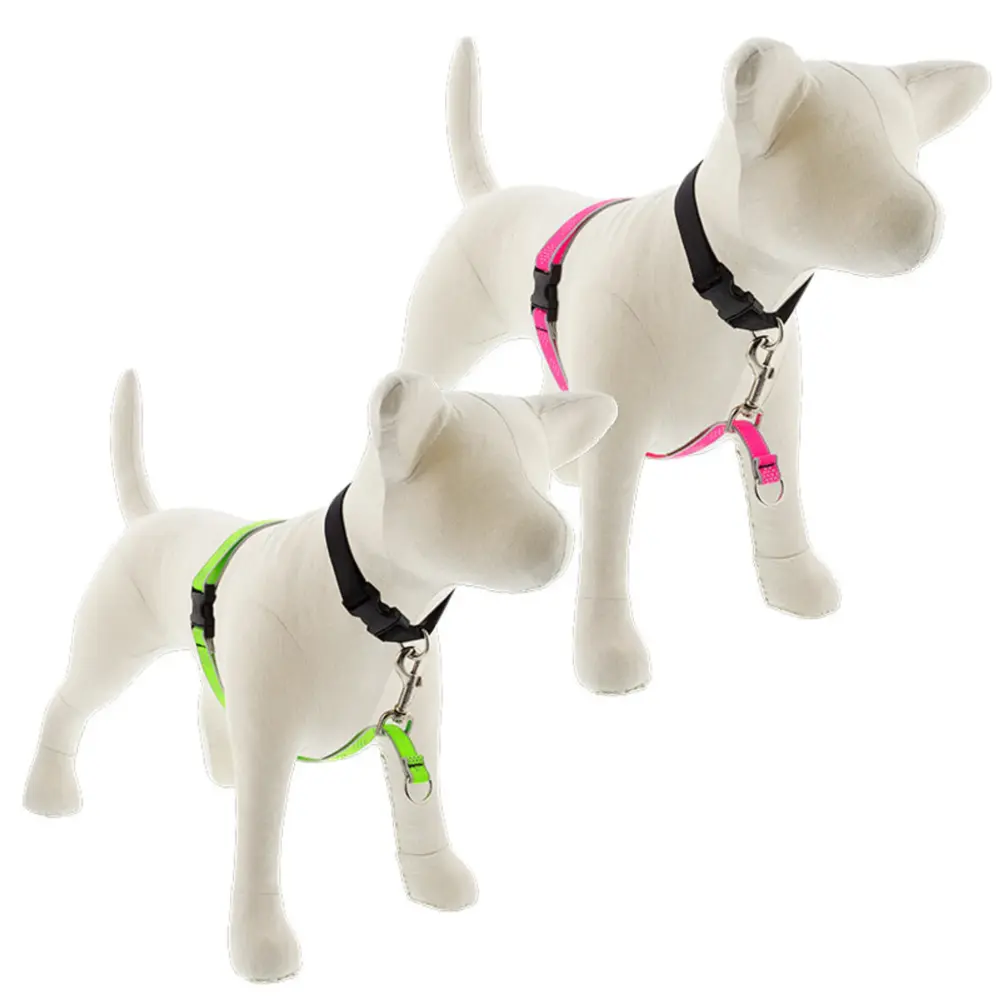
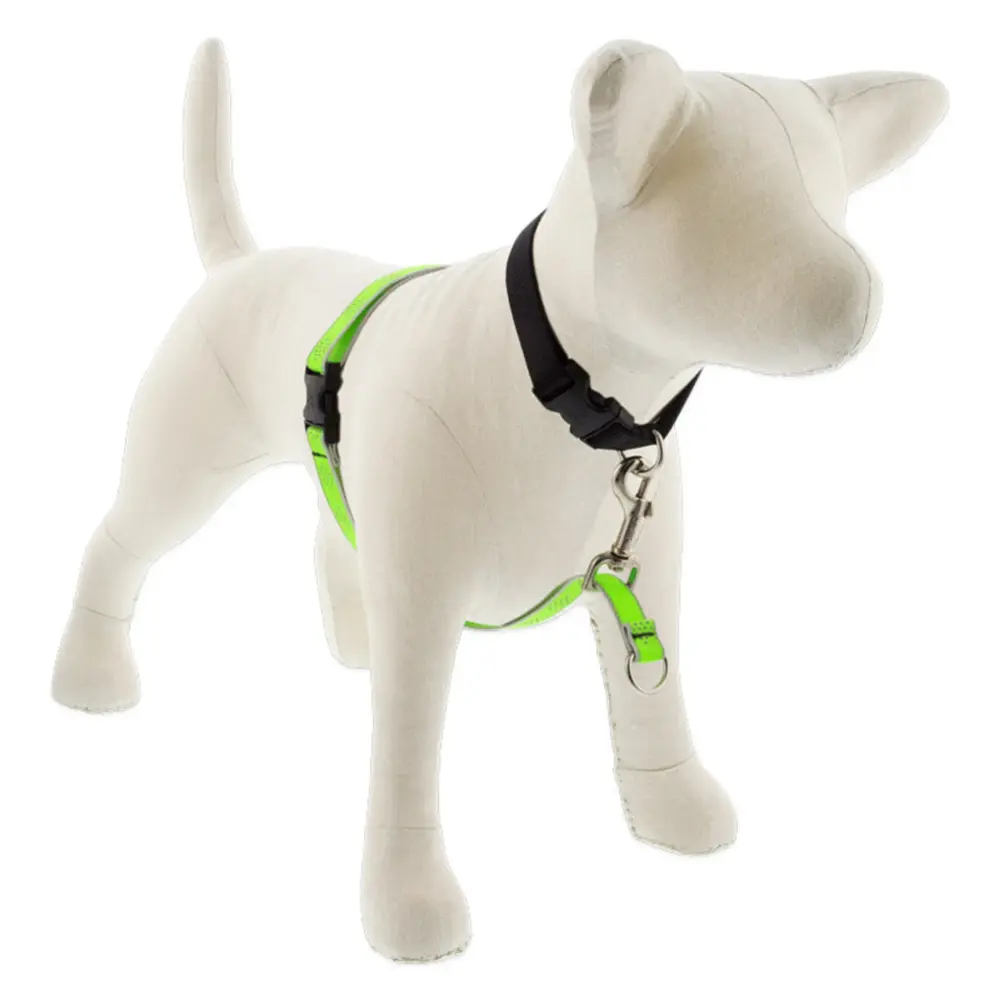
The Lupine Pet Reflective No-Pull Dog Harness isn’t a standalone harness: it’s designed to work with the flat collar and leash your dog already wears, so the collar is part of the setup and its fit matters as much as the harness straps. Lupine’s product page says it isn’t intended for martingale training collars, so pair it with a flat one. It’s sized for medium and large dogs only, at 16–26 or 26–38 inches of chest girth.
For a standalone setup, these two from our walking and training range cover the harness and the collar. Our picks come only from Nilosi’s own catalog, and we don’t sell double-ended leashes or connector straps, so you’ll need to get that piece elsewhere.
-
Lupine Pet
Reflective Dog Collar, Choose size & design
Price range: $22.95 through $28.95
Why it fits: A flat collar for the backup clip and ID tags, with a strong D-ring. Adjustable neck sizes from 6–9 in up to 25–31 in; measure first.
-
Mr. Peanut’s
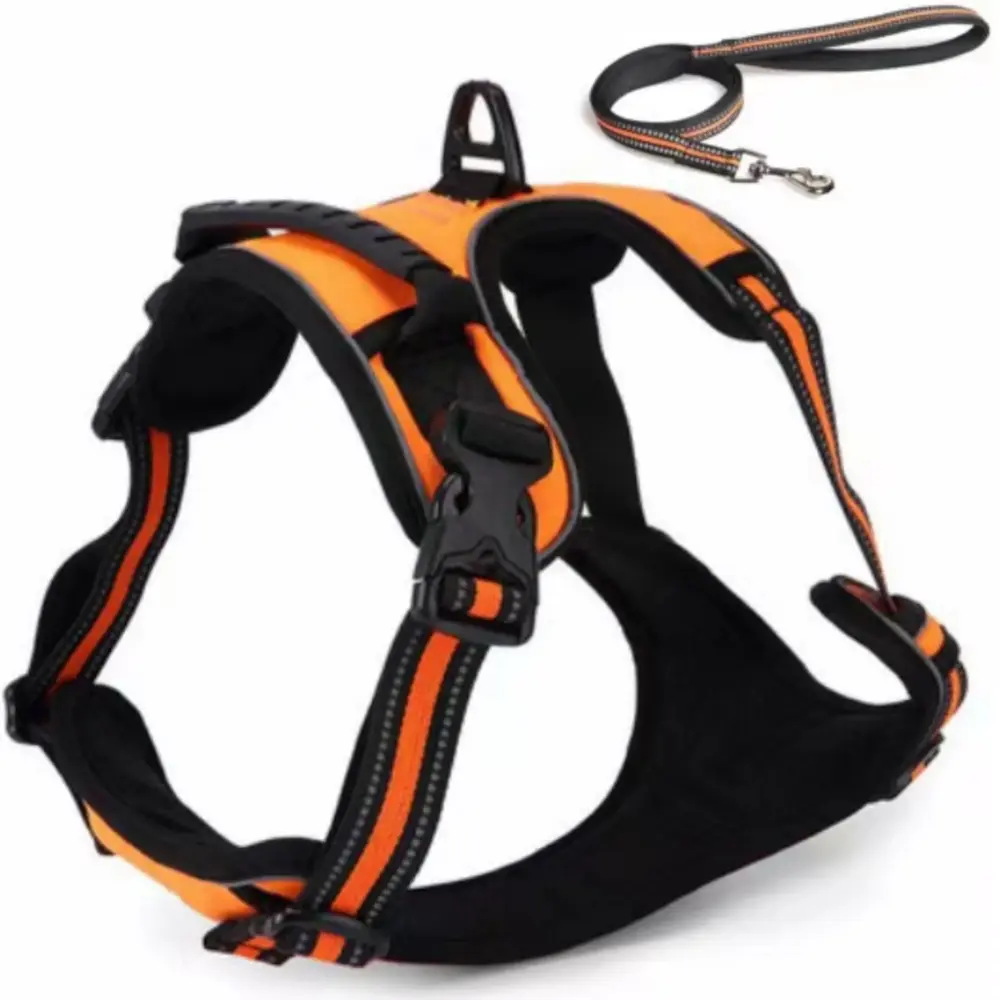
PetTrek Padded Harness and Leash Set, Choose size & color
Price range: $24.95 through $26.95
Why it fits: A standalone padded harness to pair with the collar, with adjustable straps for a snug fit and a matching leash. XS to Large only.


Teaching a calm ‘back to me’ with treats
The longer-term fix is a dog whose first response to a fright is to come toward you instead of away. Teach it at home, where nothing is scary, then on quiet walks, well before you need it on a busy street.
- Teach a hand touch. Hold your flat palm a few inches from your dog’s nose. When they bump it, say yes and treat. Repeat until the bump comes as soon as your hand appears.
- Add a cue and a step back. Say touch as you offer your hand, step backward so your dog has to come to you, and make each arrival worth it.
- Make light leash pressure mean come closer. Indoors, apply gentle, steady pressure on the leash. The moment your dog steps toward you, release it and reward. Never jerk or tug.
- Practice a cheerful turnaround. On walks, say let’s go, turn away and reward your dog for following. This becomes your exit from anything scary.
- Use it before the fright. When you spot a trigger in the distance, ask for a touch or a turnaround while your dog can still listen, and reward generously.
- Pay every return. Reward your dog every time they come to you, even after a slow return, so coming back never feels like trouble.
Tip
If your dog panics often, at noises, people or other dogs, the slip-outs are a symptom, and the fear itself is what needs work. Look for a certified professional trainer who trains with rewards, or ask your veterinarian about a referral to a veterinary behaviorist. A dog who turns jumpy out of nowhere should see the vet first, because pain can be behind it.
If your dog gets loose
If your dog does slip free, the next minute matters most. The AKC’s advice on what to do if your dog runs away or gets loose comes down to a few points:
- Stay calm. Dogs pick up on your anxiety and may ignore you or run farther.
- Don’t chase. Many dogs see it as a game, or feel pressured and keep going.
- Call cheerfully and move away. Use an upbeat voice, bend slightly or turn your back, and take a few steps away so your dog wants to follow.
- Offer what your dog loves. Treats, a favorite toy or, for a dog who loves rides, an open car door, if it’s safe to.
When your dog comes close, let them eat from your hand, then take hold gently from the side. If the collar is still on, clip the leash to it. If both came off, unclip the empty harness, thread the leash’s clip end through its handle loop to make a temporary slip lead and ease the loop over your dog’s head. Then praise, and don’t scold: coming back to you should always pay.
This is where ID on the collar earns its place: a dog who backs out of a harness still has their tags, and a registered microchip can still get your dog home if the collar is lost too. If your dog runs out of sight, switch to the search plan in what to do if your dog or cat is lost.
Mistakes that make slip-outs more likely
- Reeling your dog in. Hauling a frightened dog toward you, or toward the thing they fear, adds exactly the tension that slides a harness off.
- Sizing up for comfort. Spare room at the neck and chest is the gap a reversing dog wriggles through.
- A retractable leash on a nervous dog. The cord stays taut, and a dropped handle can clatter after a dog who is already frightened.
Troubleshooting a dog who keeps slipping out
- The harness rides forward when you step back. Try the AKC’s backward check: as your dog is moving forward, step back so the leash draws the harness toward the head. If it has room to pass over, tighten it.
- It happens in the same places. A barking yard dog, a busy corner or the vet’s entrance: change the route, cross early, and practice the turnaround there from farther away.
- Your dog backs away as the harness comes out. The harness itself may be the trigger. Slow the routine down and pair it with treats; how to put on a dog harness walks through calmer ways to get it on.
- It started suddenly. A dog who suddenly resists the harness, flinches when it’s touched or won’t walk may be sore. Check for red or rubbed skin under the straps and book a vet visit.
- It fits, and your dog still gets out. Some body shapes and some determined reversers need a different style of harness.
When a different harness style makes sense
If your dog backs out of a correctly fitted harness even with a collar backup and training in place, look at the design. The AKC’s advice on finding the right harness says step-in harnesses are harder to get out of when they fit properly, and a second AKC article on harness fit calls three-point harnesses, with a neck, chest and belly strap, ideal for escape artists. The idea is that the extra strap around the belly, behind the ribcage, would have to slide forward over the ribs before the harness could come off.
To be plain: Nilosi doesn’t sell a three-point harness or any harness built specifically for escape artists. Neither of our two dog harnesses should be relied on to hold a determined reverser without the steps above. If you’re shopping for a different design, our harness buying guide explains how overhead, step-in and vest styles differ. Whatever you choose, keep the collar backup: no harness makes slipping out impossible.
Related guides
-
How-to
What to Do When an Off-Leash Dog Approaches You and Your Dog on a Walk
A loose dog is heading for you and your leashed dog. How to read its body language in seconds, walk away without running, block it with your body and a firm voice, buy time with treats or an umbrella, and what to check and report if the dogs make contact.
-
How-to
Teaching Kids to Walk the Dog: When They’re Ready and How to Start
Your child wants to take the leash. Here’s how to tell whether your child and your dog are both ready, how to run practice walks with a backup leash, and what your child should do when the dog pulls, lunges or meets another dog.
-
How-to
How to Wash a Dog Harness, Collar and Leash by Hand or Machine
Check the care label, then hand wash nylon webbing in warm, mildly soapy water or machine wash it in a mesh bag if the label allows. Plus leather and retractable leashes, drying without heat, smells that won’t wash out and when to replace the gear.