Walking & Training Checklist
First Walks With a Rescue Dog: ID, Fit and a Calm Route
Short answer
Before the first walk, put an ID tag with your phone number on a snug collar, register the microchip in your name and clip the leash to both a fitted harness and the collar. Keep the first days to potty trips and short loops near home, watch for stress signals and turn back early.
A newly adopted rescue dog doesn’t yet know your street, your voice or, often, their new name. If something frightens them in the first weeks, running is more likely than coming back to you, so this checklist has two jobs: make a bolt hard, and keep each walk calm enough that your dog doesn’t want one.
First-walk checklist at a glance
Before the first walk
- An ID tag on the collar with your phone number
- The microchip number from the shelter, registered in your name
- Chest and neck measured, harness and collar fitted
- Notes from the shelter: how your dog walked there and what scares them
- A plan for the first days: potty trips, then one short loop
What your dog wears
- A flat collar with tags, snug enough for two fingers
- A harness that fits today, every buckle clicked shut
- The leash clipped to the harness, with a second clip to the collar
In your hands
- A fixed-length leash about 6 feet long, not a retractable
- Soft treats your dog already likes, within easy reach
- Poop bags and a way to carry a full one
- Your phone, charged
At every door
- Leash on and clipped before any door opens: house, car, lobby or gate
- Everyone in the household told that the new dog may bolt
- A gate or closed inner door between your dog and the front door
Don’t skip the shelter notes. Staff and volunteers have walked your dog, so ask what size harness they used, whether the dog has ever slipped out of gear and what sets them off: trucks, bikes, men in hats, other dogs. That’s your first route plan.
ID and microchip, sorted before you step outside
A tag is what a neighbor reads; a microchip is what a shelter or vet clinic scans. Get both working before the first walk, because a new dog can slip out on day one.
- Get the microchip number and register it. If the shelter or rescue chipped your dog, the chip can only bring your dog home if the registry lists you. Humane World for Animals’ guide to how a microchip keeps you and your pet together suggests using AAHA’s online microchip lookup to see whether the chip is registered, then registering or updating it with your own details. No number? Ask the shelter or your vet to scan for it.
- Put your mobile number on the tag. The same guide notes that a lost pet is likely to meet a private citizen first, not a scanner. Until the engraved tag arrives, a temporary tag or your number written on the collar beats nothing.
- Keep the collar on whenever your dog is out of the crate. Front doors, gates and car doors all give a new dog a chance to slip out. The exceptions: the AKC’s article on collar dangers notes that the risk of a collar catching rises in a crate and when dogs wrestle, so take it off for those.
- Take a few clear photos now: face, both sides and full body, in case you ever need a poster.
Two points of contact: collar and harness
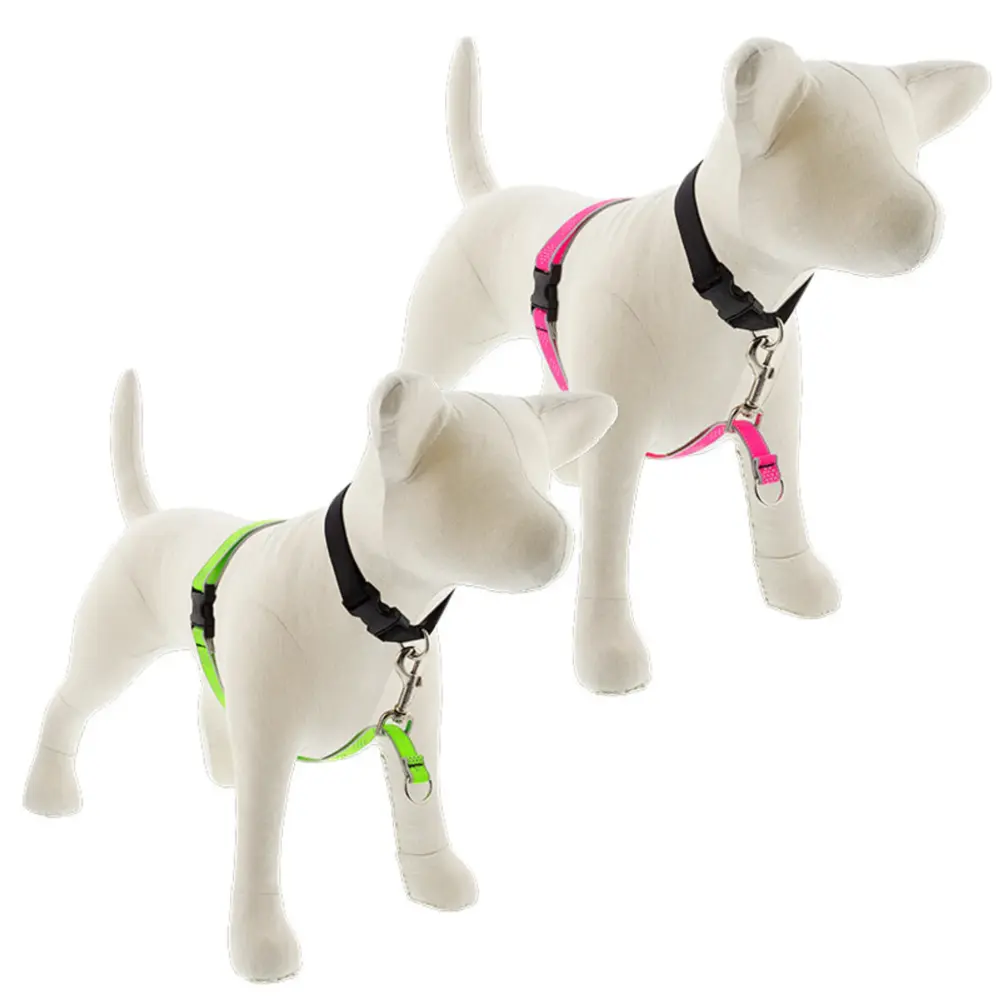
Many shelters and rescues give adopters one rule for the first weeks: two attachment points. The leash goes to a well-fitted harness and a second clip goes to the collar, so a dog who reverses out of one in a fright is still held by the other.
Use a double-ended leash, two leashes held in the same hand, or a short connector strap between the collar ring and the harness, with the collar side a little slacker so the harness takes the everyday pulls. If your dog has a flat face or a neck, throat or breathing problem, ask your veterinarian first, since the collar takes the jolt if the harness comes off. For the setup, and what to do with your hands when a dog starts to reverse, see our guide to dogs who back out of a harness.
A fit check before you go
- Measure first. Run a soft tape around the chest just behind the front legs, then around the neck where the collar rests. Our measuring guide shows exactly where.
- Two fingers, no more. They should slide flat under each harness strap and the collar. A fluffy coat can hide slack, so press down to the skin.
- Recheck after a few walks. Sliders creep with wear and washing, and gear bought before you met the dog is often sized by guesswork.
- Narrow head? If your dog’s head is barely wider than their neck, as with many sighthounds, a flat collar is easier to back out of. Ask the shelter whether a martingale would suit your dog better; we don’t sell one.
Gear we carry for first walks
From our walking and training gear, these two make the collar-plus-harness pair. We can only pick from what Nilosi stocks, and we don’t sell double-ended leashes or connector straps. We’ve left out our Lupine no-pull harness on purpose: Lupine designs it to attach to your dog’s own collar, so it works as one setup with the collar rather than as a separate backup.
-
Lupine Pet
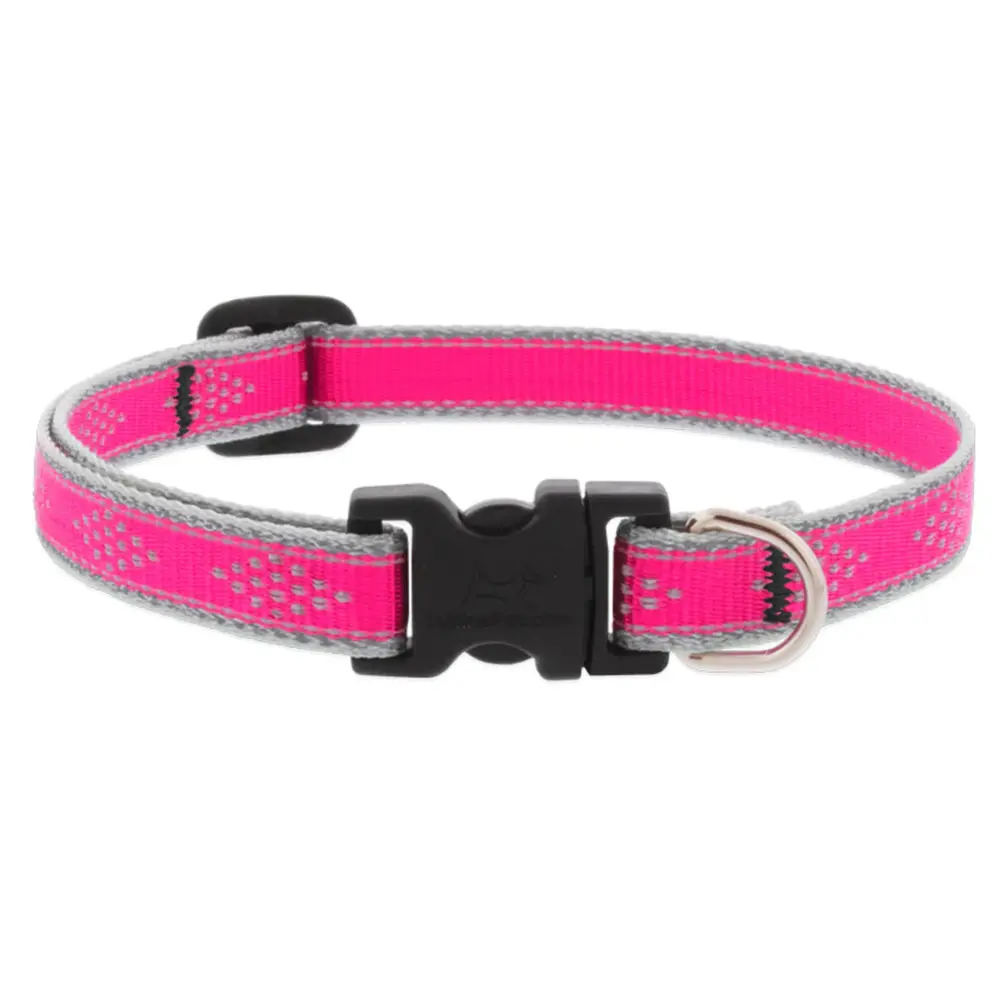
Reflective Dog Collar, Choose size & design
Price range: $22.95 through $28.95
Why it fits: Holds the ID tag and the backup leash clip on one strong D-ring, with woven reflective threads. Neck sizes from 6 to 9 in up to 25 to 31 in.
-
Mr. Peanut’s
PetTrek Padded Harness and Leash Set, Choose size & color
Price range: $24.95 through $26.95
Why it fits: A standalone padded harness with a matching leash, so the collar stays a separate backup. Adjustable straps; sizes XS to L only.


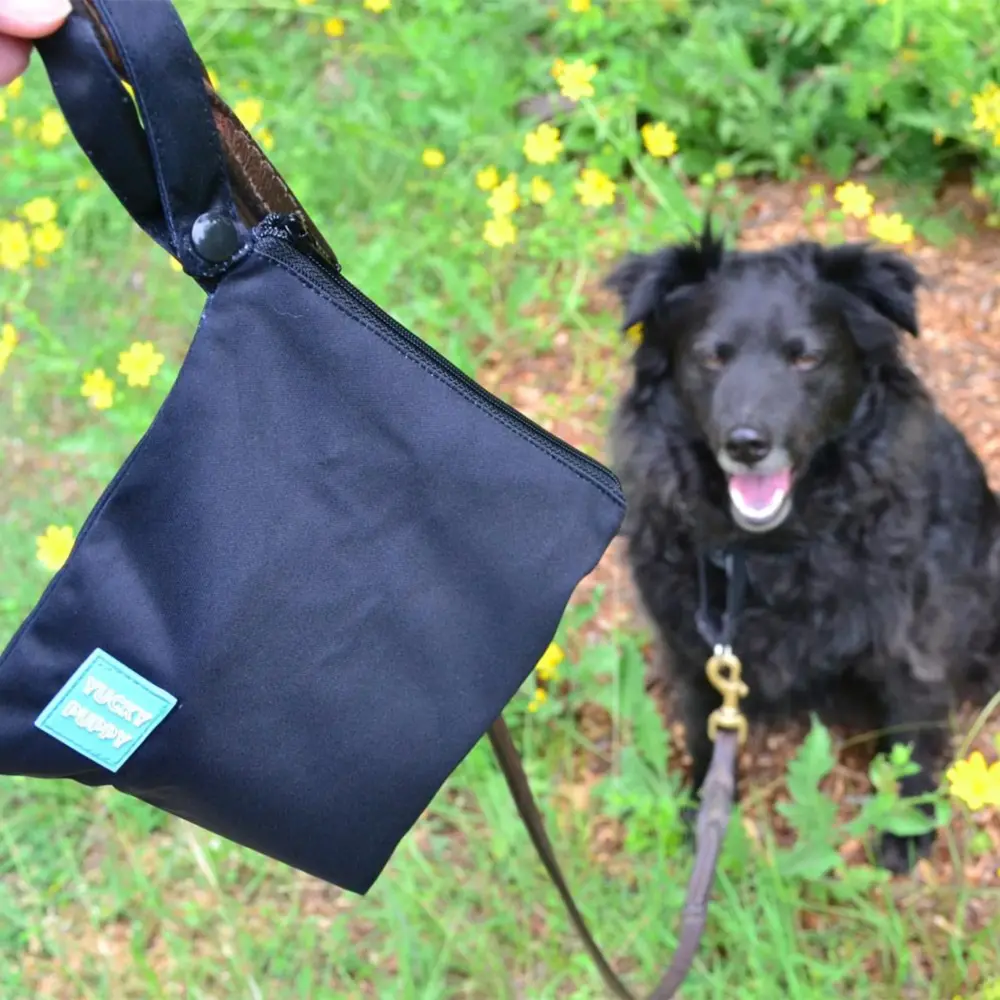
For the poop bag, the Yucky Puppy holder clips to the leash and zips a full bag out of the way, so you aren’t juggling it with a jumpy dog.
The first days: yard, hallway and short loops
For the first few days, a walk can simply be the trip to the potty spot and back. The AKC’s advice on helping an adult dog adjust to a new home is to take a new dog to the potty area on a leash as soon as you get home, and to beware of escapists who rush the door whenever someone comes in.
- The car door. At the end of the ride home, clip the leash on and hold it before anyone opens a door. An unfamiliar street on the other side is an easy place to lose a dog.
- Potty trips on leash, even in a fenced yard. You don’t know yet whether your dog digs, climbs or squeezes through gaps, so check the fence line and gate latch and stay out there with them. If your dog won’t go while leashed, see a dog who won’t pee on a leash.
- Hallways, stairs and lobbies. In an apartment, practice the route to the street when it’s quiet. Elevator chimes and slamming lobby doors are sudden noises, so let a crowded elevator go and step aside for neighbors.
- The first loop. A block or two at a quiet hour, the same way each time. Let your dog sniff; it’s how a new dog takes in the neighborhood.
If your dog is still hiding, trembling or won’t leave their bed at home, walks can wait a few more days. Our guide to decompression and the first weeks at home covers that side of settling in.
Choosing a quiet route and a quiet time
The AKC’s tips on easing anxiety on walks come down to managing distance and timing: spot triggers before your dog does, create space by crossing the street or putting parked cars and trees between you, and shift walks to hours when fewer people and dogs are out.
- Learn your street’s rhythm. School drop-off, trash and recycling pickup, the commuter rush and the hour every neighbor walks their dog. Walk around them.
- Pick a loop with room to move away. Wide sidewalks and quiet side streets let you cross or turn around. Narrow paths beside fences with barking dogs behind them leave you nowhere to go.
- Repeat it. The same loop for a week or two turns a strange place into a familiar one, and familiar is calm.
- Check the forecast and the calendar. Skip walks in thunderstorms and on fireworks nights, and keep those potty breaks short, close to home and double-clipped.
Reading stress signals on the walk
A new dog can’t tell you a walk is too much, but their body usually does, well before they try to bolt. Many of these signs appear in VCA Animal Hospitals’ guide to signs that a dog is stressed.
Early signs: slow down
- Tail lower than usual or tucked, ears pinned back
- Whites of the eyes showing, often called whale eye
- Lip licking, yawning, or panting when it isn’t warm and they haven’t exercised
- Shaking off as if wet, or sniffing the ground and turning away from something
- Turning down treats they would take at home
Signs it is too much: head home
- Freezing, crouching or planting their feet
- Pulling hard toward home, or spinning and backing up in the harness
- Barking, lunging or growling
- Hiding behind your legs or a parked car
When you see them, move away from whatever caused it and find a quieter spot to regroup. VCA advises not to keep asking a stressed dog to engage with you as the signs build. Turn around cheerfully, scatter a few treats on the ground and take the quietest way home, then plan a shorter walk next time. If your dog plants their feet and won’t move, don’t drag them; our guide to a dog who refuses to walk has ways to get moving again.
What to skip in the first weeks
Humane World for Animals’ guide to bringing a new dog home warns against heading straight to a busy park, a dog park or the pet supply store, because most dogs are overwhelmed simply by the move to your home. Farmers markets, patios and busy trails can wait too, along with these:
- On-leash greetings with other dogs. You don’t yet know how your dog feels about them, and a tight leash makes greetings tense. Wave and walk on.
- Strangers petting. Ask people to say hello without reaching for your dog, and let your dog choose whether to sniff them.
- Retractable leashes. They give a nervous dog plenty of line to bolt on and only reel in when the line goes slack. The AKC’s guide to using retractable leashes safely also warns that a dropped handle can clatter after a dog and panic them into running.
- Off-leash time anywhere unfenced, including a quick dash in the front yard.
- Long hikes, runs and drives to new walking spots. Save them for when your dog is relaxed on the home loop.
- Corrections for fear. Leash pops and scolding make a scared dog more scared. Distance and treats work better.
If your dog gets loose
A dog who has been with you a week may not answer to their name or trust you enough to come back, and every street is new to them. Humane World for Animals’ advice on searching for a lost dog says a frightened dog, or one lost somewhere unfamiliar, tends to hide or keep moving, and warns that chasing a nervous dog can push them right out of the neighborhood.
- Stop where you are. Stand still, keep your voice soft and cheerful, and don’t shout their name over and over.
- Get low and turn side-on. Crouch or sit if it’s safe, look away, and toss treats on the ground near you rather than at your dog.
- Move slowly away from the road. A nervous dog is likelier to follow someone walking away than to approach someone walking at them. Ask helpers to hang back; a group closing in can send a dog running.
- Let your dog eat before you reach. Then take hold of the collar or harness gently from the side, not over the head.
- Out of sight? Make the calls. Ring the shelter or rescue you adopted from and the microchip registry, then work through our lost dog and cat checklist.
Safety note
Never follow a frightened dog into traffic, and don’t coax them to you from across a road: a dog running toward you isn’t watching for cars.
Building up over the first few weeks
The same AKC article passes on behaviorist Patricia McConnell’s rough timeline of three days, three weeks and three months, from shock to settling to fitting into your routine. Treat it as a signpost for walks too, not a deadline; a fearful dog may need longer.
| Stage | Walks look like | Ready for more when |
|---|---|---|
| First days | Potty trips, yard or hallway | Eats, sleeps and explores at home |
| Early weeks | One short loop at quiet hours | Sniffs, takes treats, loose body |
| Later | Longer loops and new streets | Recovers quickly from a fright |
Change one thing at a time, whether that’s a longer loop, a new street or a busier hour, and if a step goes badly, return to the last easy stage for a few days. Once your dog is relaxed on the home loop, a long line clipped to the harness, never the collar, in a quiet, open space away from roads gives them room to sniff without being off leash. Keep the collar backup on longer than feels necessary, and always near traffic.
Tip
Bring in help early if fear isn’t easing on a familiar route after a few weeks, or if your dog starts lunging, barking or growling at people or dogs. A certified trainer who uses rewards can help; for intense fear, ask your veterinarian about a referral to a veterinary behaviorist. Your vet should also see any dog who suddenly limps, yelps or stops wanting to walk, since pain can look like fear.
Related guides
-
Checklist
What to Tell Your Dog Walker: A Handover Checklist
Everything a new dog walker needs on one page: where the gear lives and how it goes on, how your dog walks, leash and route rules, medications and treats, emergency contacts, the door routine, weather rules and a first walk together.
-
Guide
Walking a Dog in the City: Crowds, Crossings, Hazards and Potty Spots
Busy city sidewalks need their own habits. Learn how to keep your dog close in a crowd, teach a sit at every curb, pass doorways safely, spot glass, bones and rat bait before your dog does, and find a potty spot when grass is scarce.
-
How-to
Teaching Kids to Walk the Dog: When They’re Ready and How to Start
Your child wants to take the leash. Here’s how to tell whether your child and your dog are both ready, how to run practice walks with a backup leash, and what your child should do when the dog pulls, lunges or meets another dog.