Walking & Training How-to
Dog Refuses to Walk? Why Dogs Stop on Walks and What to Try
Short answer
An adult dog who plants their feet is usually hurting, scared, too hot or cold, tired, or bothered by gear that rubs. Rule out pain with your veterinarian first, especially if the change is sudden. Then check the harness, note where the stops happen, let the leash go slack and reward the first steps forward instead of pulling.
What the stop is telling you
A dog who pauses to sniff a lamppost isn’t refusing anything. The stops worth solving are the ones where your dog braces, sits or lies down and won’t budge when you invite them on, and how they happen usually narrows down the reason:
| Sign | Often points to | Try first |
|---|---|---|
| Limping | Pain or an injury | End the walk and call your vet |
| Lifting paws | Hot, icy or salty ground | Grass, shade or a shorter route |
| Freezing | Fear of something ahead | Add distance or go another way |
| Pawing at gear | A strap that rubs or pinches | Check the fit at every strap |
| Lying down | Tired, too warm or sore | Rest, water, then home slowly |
| Balks at turn | Doesn’t want to go home | Walk loops; save a treat for home |
For a week or two, jot down the spot, the time, the weather, how far into the walk it happened and what your dog was wearing. A pattern on paper is easier to fix than stops that seem random, and it helps your veterinarian or trainer too.
Tip
Young puppy or newly adopted dog? Puppies who sit down on the leash need the gentle start in how to leash train a puppy, and a dog in their first weeks home is better served by our first walks with a rescue dog checklist. This page is for adult dogs who have started stopping on walks.
Rule out pain first: when it’s a vet question
Many dogs in pain don’t cry out; they just stop wanting to go on. In its guide to recognizing pain in dogs, VCA lists less endurance for walks, reluctance to use stairs or jump onto furniture, difficulty getting into the car, and preferring to sit rather than stand during rest stops on walks. Book a visit with your veterinarian if your dog:
- suddenly refuses walks they used to enjoy, or stops at the same distance every time;
- limps, walks stiffly, holds up a paw or keeps licking one paw or leg;
- hesitates at stairs or the car, or flinches when touched or when the harness goes on;
- is older and has slowed down a lot (don’t write it off as age before a vet has looked);
- seems unwell in other ways, such as eating less or sleeping more.
Meanwhile, look over the paws in good light. Check between the pads for burrs, grass seeds and cuts, and look at the nails; if they click on hard floors, they’re likely too long, which can make walking uncomfortable. Stop if your dog pulls away, leave anything embedded to your veterinarian, and never give human pain relievers, several of which are dangerous to dogs.
Safety note
Go to a veterinarian right away if your dog collapses, can’t put weight on a leg, cries out when moving, or seems weak and short of breath.
Check the gear for rubbing and a poor fit
If the stopping started with a new harness, collar or coat, or after your dog gained or lost weight, check the gear before anything else. A strap that digs in with every stride is a good reason to stop.
- Two fingers under every strap. Snug, not squeezing. Straps loose enough to slide around can rub too.
- Behind the front legs. After a walk, part the fur in the armpits and along the chest strap. Red, bare or damp patches mean rubbing.
- Room for the shoulders. Watch your dog walk away from you: straps clear of the armpits and the point of the shoulder, and a normal stride.
- A fresh measurement. Dogs change shape with age and weight; how to measure a dog for a harness shows where the tape goes.
- Wet or gritty gear. A harness that stays damp or holds sand can chafe, so rinse it and let it dry fully.
Clip the leash to a harness while you work on this. On a collar, a dog who plants takes all of your pull on the neck; a harness spreads it across the chest. If your dog freezes as soon as the harness comes out, reintroduce it: on with a treat, off again, a few times a day until it’s no big deal.
Coats need the same check. One that pulls tight across the chest or bunches under a harness can rub, so look for free movement at the legs and a way for the leash to reach the harness. For other sizes and styles, browse our walking and training gear and dog clothes.
-
Mr. Peanut’s
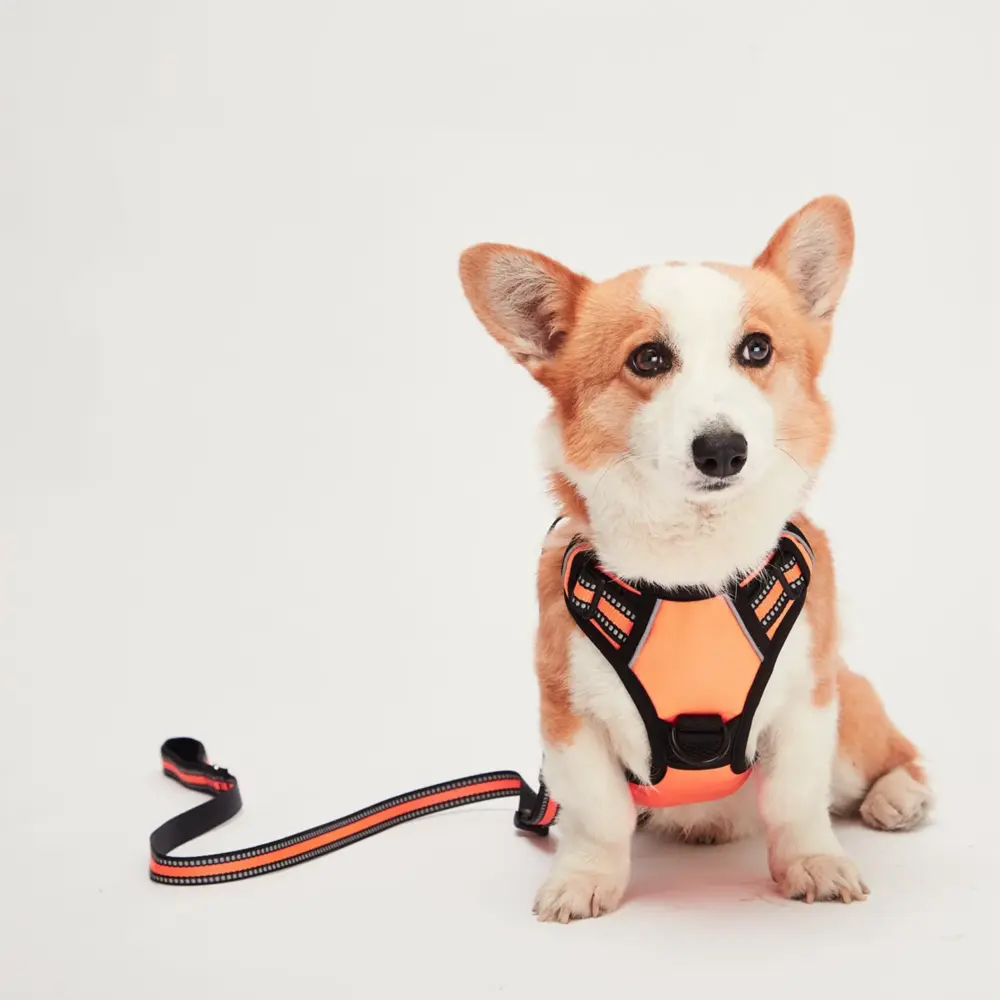
PetTrek Padded Harness and Leash Set, Choose size & color
Price range: $24.95 through $26.95
Why it fits: A padded harness in sizes XS to L that spreads pressure across the chest, with adjustable straps to refit a dog whose old gear rubs.
-
Doggie Couture NY
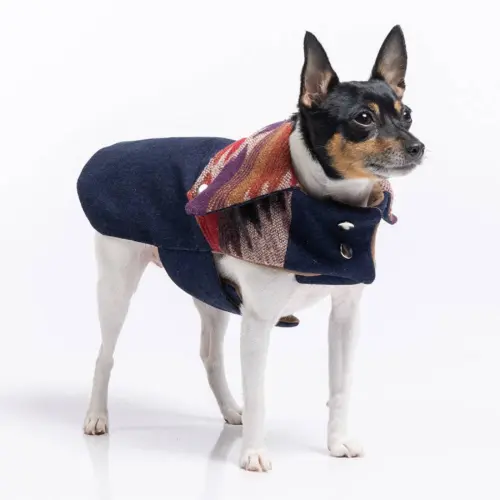
DCNY Ranch Dog Coat, Choose size & color
$72.95
Why it fits: A coat for small dogs only, sizes XXS to M, for a short-coated dog who slows on cold walks; Small and Medium have a harness opening.

Fear on the route: noises, places and other dogs
A frightened dog often stops dead, then tries to turn back, with a tucked tail, ears pinned, a lowered body or weight leaning away from something ahead. Common culprits are garbage trucks, construction, skateboards, a dog barking behind a fence, busy crossings and odd footing such as metal grates, or a spot where something startled them weeks ago.
- Give it room. Cross the street or back up until your dog can look at the thing without freezing.
- Pair it with something good. When the trigger appears at a distance your dog can handle, say yes and treat; when it’s gone, the treats stop. Over many walks, it starts to predict good things.
- Change the timing. Walk the route when it’s quieter, away from garbage day and the school rush.
- Keep it short after a scare. AKC advice on walk anxiety warns that piling one stressor on another, called trigger stacking, is likely to make a dog feel worse.
Some dogs balk only after dark, when shadows and sudden noises are harder to read. Walk at dusk on a well-lit route, and if an older dog starts refusing evening walks, mention it to your veterinarian, since fading eyesight can make dim light unsettling.
If the refusal starts at the front door, make the first minute easy: wait on the step with treats, go only as far as your dog is comfortable and head back in before they get worried. If fears are spreading or your dog panics, get help early; the last section covers who to ask.
Too hot, too cold or simply tired
Heat and hot pavement
A dog who lies down in the shade or veers onto the grass on a warm day is often telling you it’s too hot. Pavement in full sun gets much hotter than the air. The AKC’s check is to rest your hand on it for ten seconds: if it’s too hot for your hand, it’s too hot for paws. The ASPCA’s hot weather safety tips advise keeping walks to a minimum in extreme heat and say flat-faced, older and overweight dogs need extra care in the heat. Walk early and late, and bring water; a bottle with a fold-out bowl, like the Flipo Fold-A-Bowl, saves carrying a dish. How hot is too hot to walk a dog goes deeper.
Safety note
Heavy panting, trouble breathing, drooling, weakness or collapse on a hot day can be signs of overheating, according to the ASPCA, and heatstroke is an emergency. Get your dog into shade or air conditioning and call a veterinarian right away.
Cold, ice and road salt
Small, thin-coated and older dogs feel the cold sooner. Shivering, hunching or lifting one paw after another can mean cold, ice, packed snow between the toes or road salt. Shorten winter walks, put a coat on a small or short-coated dog, stick to cleared paths and wipe paws at home; how cold is too cold to walk a dog lists the signs to turn back.
Tired or worn out
A dog who stops late in a longer-than-usual walk, or after hard play, may simply have had enough. Let them rest, head home slowly and go shorter next time, or split the day into two easier walks; how long you should walk a dog covers what suits different ages. A sudden drop in stamina is different: VCA lists decreased endurance as a possible sign of pain.
The dog who stops only on the way home
Some dogs trot out happily, then plant their feet at the turn for home. If yours is relaxed, sniffing and keen to go any direction except back, they most likely don’t want the walk to end, and if stopping has bought extra time before, they’ll try it again. A dog lagging and panting on the way back is more likely tired or hot.
- Walk loops, not out-and-back routes, so the turn for home is less obvious, and vary them.
- Save something good for home, such as a meal, a chew or a lick mat waiting inside.
- Move the sniffing to the end. A slow sniff stretch on the last block keeps the best part from being over when you turn around.
- Sometimes walk past your door for another minute, so heading home doesn’t always mean the end.
- Check the spot. A stop at the same place near home every time, such as by a fence with a barking dog, is a fear stop, not stalling.
How to get a stopped dog moving, step by step
What you need:
- Small, soft treats in a pocket or pouch you can reach fast.
- A harness that fits and a fixed-length leash, so you can give slack and gather it back.
- Water on warm days, and a shorter loop to switch to.
- Stop and let the leash go slack. Pulling on a planted dog tends to make them brace harder. Stand still and relax your arm.
- Look where your dog is looking. Ears, eyes and weight usually point at the problem. If something ahead is scary, back away or cross the street first.
- Check for pain, heat or cold. A lifted paw, a limp, heavy panting or shivering means the walk is over. Head home the easiest way, carrying a small dog if needed.
- Wait a few seconds. Many dogs start moving on their own once nothing is pulling. Stay quiet rather than repeating their name.
- Turn sideways and invite. Step aside or take a couple of steps in a new direction with a cheerful “let’s go.” An angle is easier than heading straight past whatever stopped them.
- Reward the first steps. Say yes and treat at your side once your dog is moving, not while they’re still planted, so moving forward is what pays.
- Keep the next stretch short. Walk a few easy yards, reward again and let your dog sniff. If they stop again right away, take the easiest route home and go shorter next time.
What not to do when your dog won’t move
- Don’t drag or yank. On a collar it puts force on the neck, it can hurt a dog who is already sore, and it teaches a scared dog that the leash is part of the problem.
- Don’t wave a treat at a planted dog every time. If stopping makes a snack appear, some dogs learn to stop for one. Reward the moving instead.
- Don’t make carrying the default. Picking up a small dog is right when they’re hurt, terrified or on hot pavement, but done at every stop it can teach that stopping earns a ride.
- Don’t push past the scary thing. It rarely builds confidence and can make the next walk harder.
- Don’t scold. Most dogs who stop have a reason, and a raised voice gives a worried dog one more.
Rebuilding confidence on short, easy routes
Once pain is ruled out and the gear fits, rebuild the habit with walks your dog can’t get wrong:
- Repeat one short, quiet loop at a calm time of day until your dog walks it without stopping.
- Let your dog sniff; time to explore is part of what makes a walk worth taking.
- Change one thing at a time: a few more yards, a busier street or a new route, never all three at once.
- End while it’s going well, and keep your notes. Fewer and shorter stops mean it’s working.
If stops are getting more frequent, spreading to new places or coming with trembling or panic, go back to your veterinarian, since pain and anxiety can overlap. Then work with a certified trainer who uses reward-based methods, or ask about a veterinary behaviorist for severe fears. Bring your notes.
Related guides
-
Checklist
What to Tell Your Dog Walker: A Handover Checklist
Everything a new dog walker needs on one page: where the gear lives and how it goes on, how your dog walks, leash and route rules, medications and treats, emergency contacts, the door routine, weather rules and a first walk together.
-
Checklist
Winter Hiking With a Dog: Checklist for Cold, Ice and Short Days
A winter trail-day checklist: plan a shorter, sheltered route around daylight, keep your dog leashed and off frozen water, pack water that won't freeze and a coat for dogs who feel the cold, check paws for ice balls and salt, and know when to turn back.
-
Checklist
Traveling With a Senior Dog in the Car: A Checklist for Easier Rides
A car-trip checklist for an older dog: what to ask your veterinarian before a long drive, how to help a stiff dog in and out without a jump, a padded, secured spot in the back seat, hot and cold cars, more frequent stops, and the medications and records to keep in the cabin.