Seasons & Gifts Comparison
Dog Raincoat vs Winter Coat: Which One Your Dog Needs
Short answer
A raincoat is a shell that keeps water off and adds almost no warmth. A winter coat is insulation that keeps body heat in and may or may not resist water. If your winters are wet and cold, you want insulation with a water-resistant outer, which is what most quilted coats provide.
Two different jobs
The confusion comes from the word coat doing two jobs. One garment stops water reaching the dog; the other slows heat leaving the dog. They are built differently, and a garment that is excellent at one is often indifferent at the other.
Getting this wrong produces the two familiar complaints: a dog who is dry but shivering in a thin shell, and a dog who is warm but soaked through a fleece that has absorbed half the rain in the county.
What a raincoat actually does
A raincoat is a barrier. It keeps rain off the back, shoulders and often the chest, so the coat underneath stays dry and the dog does not come home soaked. Most are light, unlined and pack down small.
- Best for mild, wet days where warmth is not the issue
- Keeps the undercoat dry, which matters more than it sounds for thick-coated dogs
- Dries quickly and takes up almost no space
- Adds very little warmth on its own
- Usually easy to put on and take off mid-walk
What a winter coat actually does
A winter coat traps a layer of warm air against the body. The insulation does the work; the outer fabric decides how much weather it can take. A quilted coat with a water-resistant shell is the common compromise and suits most climates.
- Best for cold, dry or lightly wet conditions
- Covers the chest and belly, where small dogs lose heat fastest
- Heavier, bulkier and slower to dry
- Can cause overheating on a mild day or a fast walk
- Often reversible or layered, which extends the range of useful weather
Side by side
| Raincoat | Winter coat | |
|---|---|---|
| Main job | Keeps water off | Keeps heat in |
| Warmth | Minimal | Significant |
| Wet weather | Excellent | Depends on the shell |
| Bulk | Light, packs small | Bulkier |
| Drying time | Fast | Slow |
| Overheating risk | Low | Real on mild days |
Wet cold: the worst case
Cold rain is harder on a dog than either cold or rain alone, because wet fur loses most of its insulating value. A thick double coat handles dry cold well and handles soaking cold considerably less well, which is why short walks in dry snow are usually fine and long walks in driving rain are not.
For that combination, the right answer is insulation with a water-resistant outer rather than either garment alone. A reversible quilted coat covers the widest range of days, because you turn the shell out when it is wet and the fleece out when it is dry.
When one coat can do both
Most owners need one garment rather than two. A quilted coat with a water-resistant shell handles cold days and light rain, which is the majority of winter in most places. Add a separate light raincoat only if you walk in sustained heavy rain or if your dog overheats easily in insulation.
Dogs with thin coats, little body fat, or who are very young, very old or unwell benefit most from insulation. Dogs with thick double coats often need the shell rather than the padding. Which dogs need a coat covers which category yours falls into.
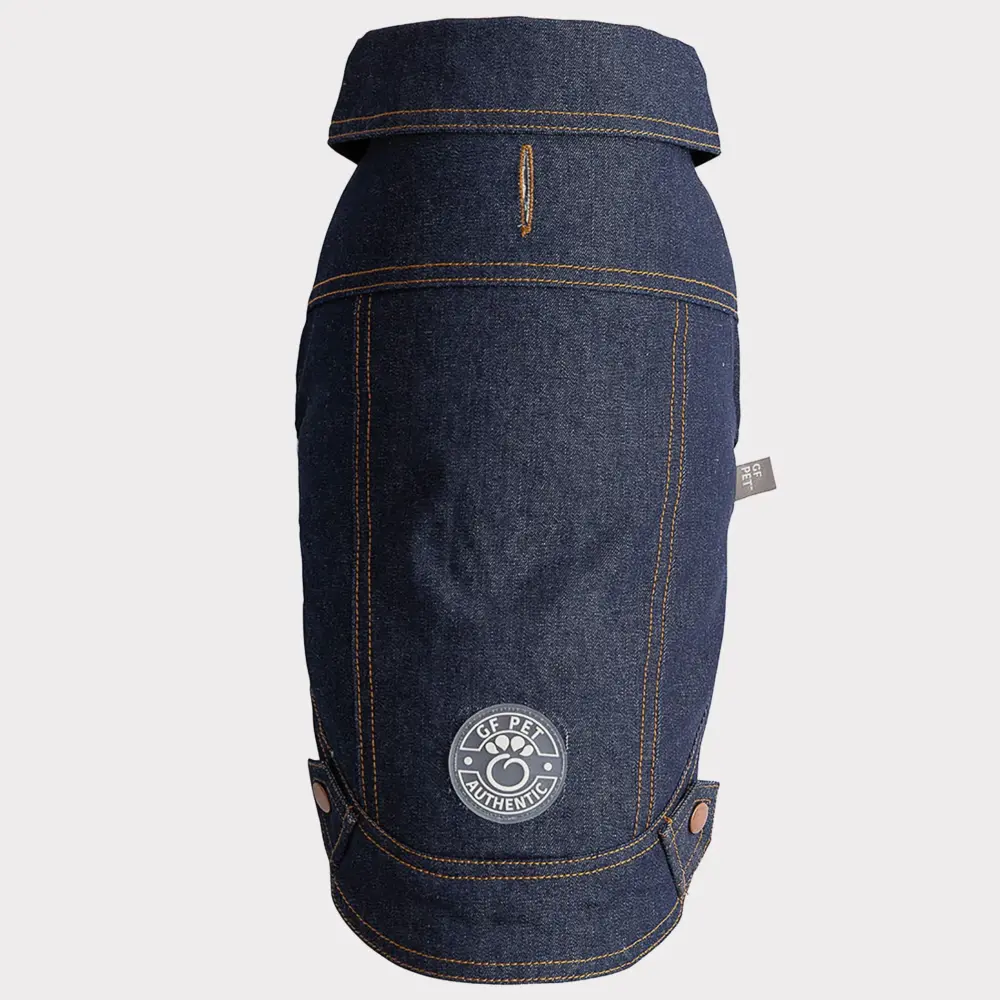
-
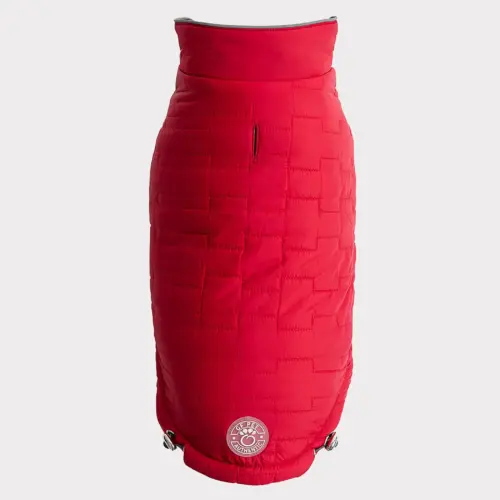
GF PET
Reversible Chalet Dog Jacket, Choose size
Price range: $44.95 through $68.95
Why it fits: Quilted water-resistant shell on one side and polar fleece on the other, which covers wet and dry cold.
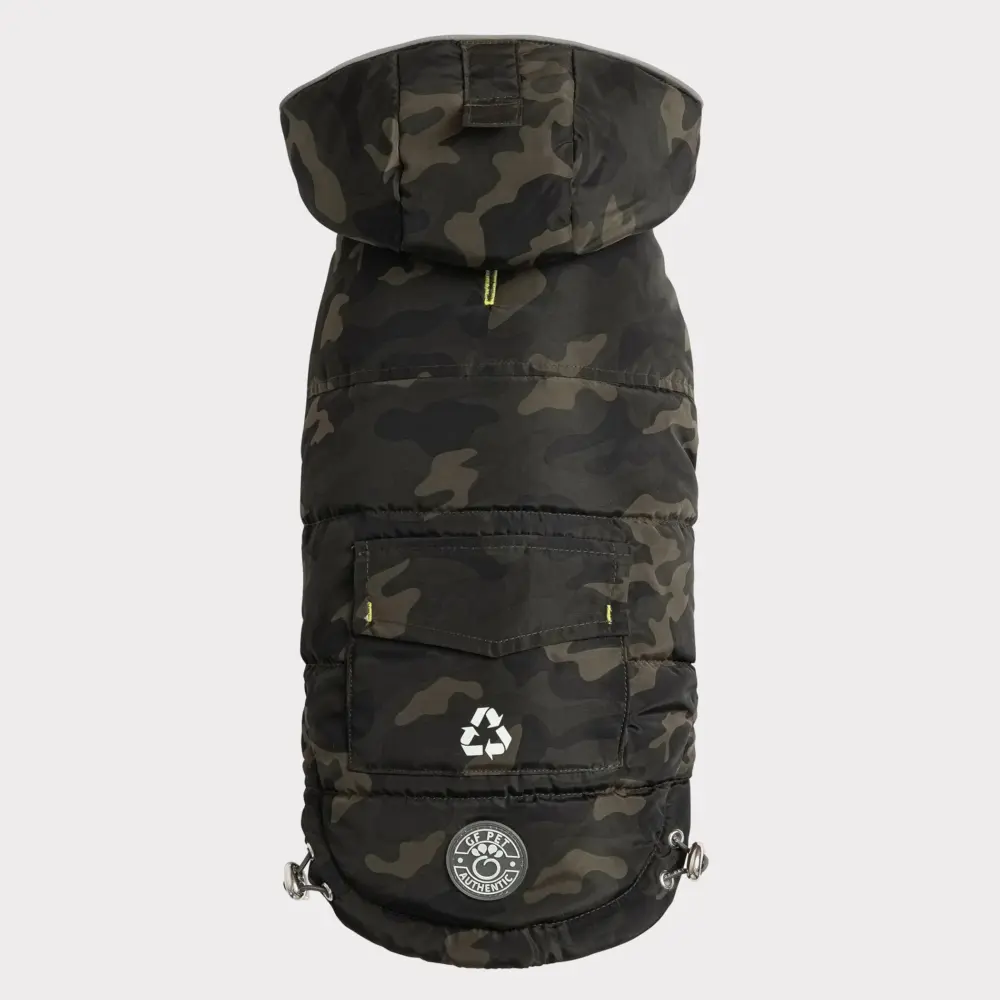
-
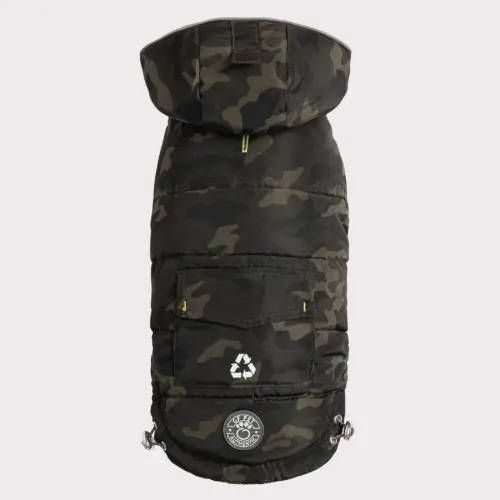
GF PET
Recycled Dog Parka, Choose size
Price range: $44.95 through $78.95
Why it fits: A hooded parka with a water-resistant shell and reflective piping, for cold days with weather in them.
-
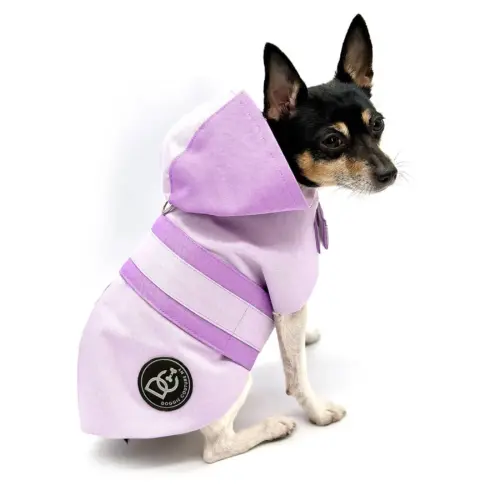
Doggie Couture NY
Sport Luxe Hooded Dog Raincoat, Choose size & color
$98.95
Why it fits: A proper hooded raincoat cut for small dogs, in canvas that holds its shape rather than flapping.
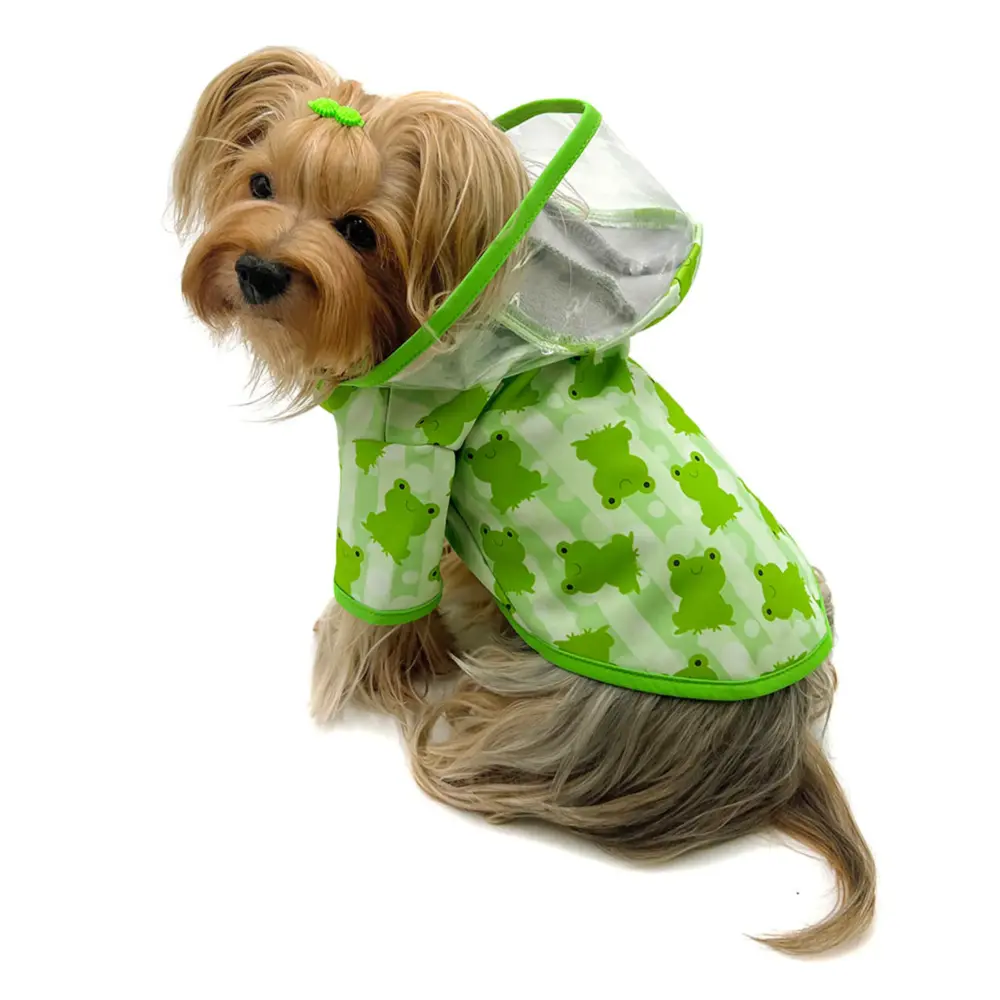
-
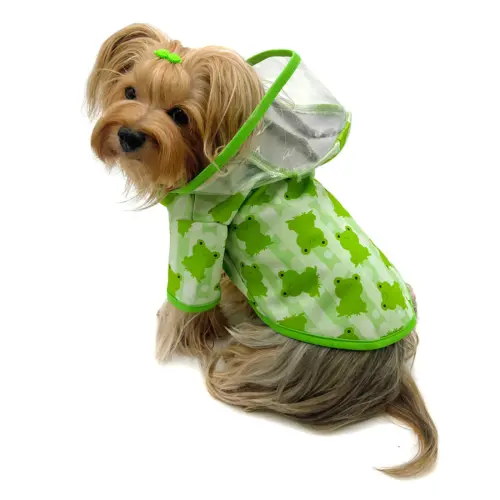
Klippo
Clear-View Froggy Dog Raincoat, Choose size
$46.95
Why it fits: A fleece-lined hooded raincoat with a clear panel, which covers mild wet days with some warmth.
-
Doggie Couture NY
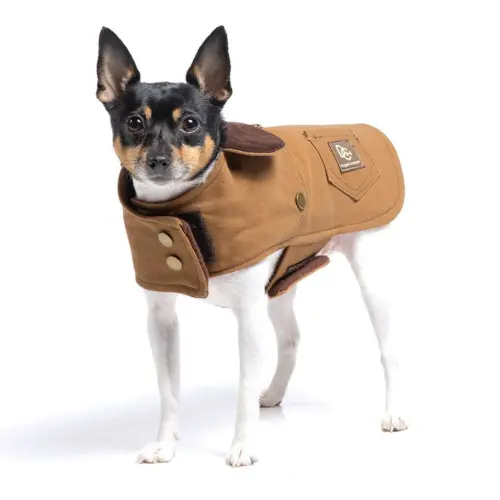
Canyon Working Coat, Choose size
$71.95
Why it fits: Fleece-lined canvas for dry cold, with a functional pocket and heavier workwear construction.
-
GF PET
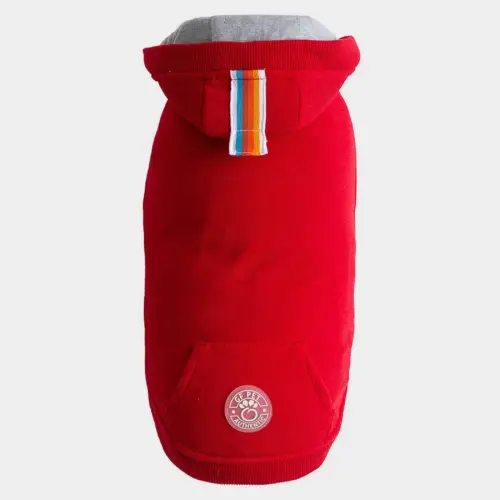
Urban Dog Hoodie, Choose size
Price range: $40.95 through $55.95
Why it fits: A fleece hoodie as the indoor and mild-day layer, rather than an outdoor garment on its own.
Fit matters more than either
A correctly specified coat that does not fit is worse than a cheap one that does. It twists, rides forward, rubs under the front legs and ends up being left at home. Measure back length, chest girth and neck before buying anything: how to measure a dog for clothes covers it.
Tip
Check the coat does not interfere with your harness. Some garments have a slit for a lead ring, others are meant to be worn under a harness. Wearing a harness over a bulky coat changes the fit of the harness as well.
What to look for in either
Beyond the insulation question, the same handful of details separate a coat that gets worn daily from one that lives in a cupboard.
- Belly coverage, or the lack of it, which decides how much warmth a small dog actually gets
- A cut that leaves the back legs and groin clear for toileting
- Adjustable straps rather than a fixed cut, for an unusual shape
- Reflective trim, which matters more than colour on a dark afternoon
- A lead slit or compatibility with your harness
- Quick fastening, because a coat that takes two minutes to fit gets skipped
- Washability, since a winter coat gets filthy
- No loose dangling parts that can catch on fences or undergrowth
Belly coverage is the detail most often missed. A coat that covers only the back leaves the chest and belly exposed, which is where a small dog standing in wet grass loses most of their heat. For thin-coated small dogs in real cold, a garment that wraps underneath makes a noticeable difference.
How to decide in one minute
- Is your dog thin-coated, small, very young, old or unwell? If yes, start with insulation.
- Is it wet more often than it is freezing where you walk? If yes, prioritise a water-resistant outer.
- Do you walk for more than half an hour at a time? If yes, buy insulation rather than a shell.
- Does your dog overheat easily or have a heavy double coat? If yes, a shell is probably enough.
- If you can only buy one, buy a quilted coat with a water-resistant outer.
- Measure before ordering, and size for the chest if the numbers disagree.
Reading the weather for your own dog
The decision changes with conditions as much as with temperature, and a few degrees matters less than wind and wet. A dry still day at freezing point is easier on a dog than a wet windy day several degrees warmer.
| Conditions | Usually best |
|---|---|
| Dry cold, still | Insulated coat |
| Cold and windy | Insulated with a windproof shell |
| Mild and raining | Raincoat |
| Cold and raining | Insulated with water-resistant shell |
| Wet snow | Water-resistant shell over insulation |
| Mild and dry | Nothing, for most dogs |
Watch the dog as well as the forecast. Shivering, hunching, lifting paws, slowing down or trying to turn for home are the signals that matter, and they arrive at different temperatures for different dogs.
Paws, which no coat covers
A coat does nothing for the part of a dog in direct contact with the ground. In winter that matters: road salt and grit irritate pads and are then licked off, ice balls form between the toes of hairy-footed dogs, and cold wet pavements crack pads.
Rinsing the paws when you get home deals with most of it, and trimming the hair between the pads reduces ice balls considerably. Cleaning dog paws after a walk and getting snowballs out of dog fur both cover the winter version.
Common questions
Will a coat stop my dog getting cold on short walks?
It helps considerably for thin-coated and small dogs, and it does not make an unsuitable temperature safe. How cold is too cold to walk a dog covers the limits.
Is water resistant the same as waterproof?
No. Water resistant sheds light rain and will eventually wet out in sustained heavy rain. For long walks in persistent rain, look for a garment described as waterproof rather than water resistant.
Can my dog wear a coat indoors?
A thin indoor layer is useful for short-coated and older dogs on cold floors. An insulated outdoor coat indoors causes overheating, so use a sweater or pajamas for that.
Do coats stop dogs getting dirty?
Partly, and that is a legitimate reason to own one. A coat takes the mud instead of the dog and washes more easily than a bath. How to wash dog clothes covers doing that without ruining the finish.
My dog hates wearing anything. Is it worth persisting?
If the dog genuinely needs the warmth, yes, and the build-up is short. Getting a dog used to wearing a coat covers it. If the coat is for appearance only, let it go.
For more on layering, see coat versus sweater, and for walking in persistent rain, walking a dog in the rain.
Related guides
-
Buying guide
Dog Jacket Linings Explained: Fleece, Sherpa, Quilted and Reversible
The shell gets the attention and the lining does the work. This explains what fleece, sherpa and quilted fills each contribute, why bulk matters as much as warmth, when a reversible jacket earns its price, and how to match a lining to your climate.
-
How-to
Harness Under or Over a Dog Coat? How to Layer Them Properly
Two pieces of gear on one dog is a mechanical problem nobody explains when you buy either of them. This covers when the harness goes underneath, when it goes on top, what a leash opening is for, and how to stop a coat twisting halfway down the street.
-
Buying guide
Which Dogs Actually Need a Coat, and Which Do Not
Coat type matters more than temperature, and some dogs are worse off wearing one. This guide sorts dogs into those who need insulation, those who need a shell, and those who need nothing at all.