Walking & Training Guide
When to Pick Up a Small Dog, When Not To, and How to Lift One Safely
Short answer
Pick up your small dog early, before a big dog gets close, and in crowds or on escalators. Hold off once that dog is close and worked up, or yours is lunging, when a lift risks a bite. To lift, say a cue, support the chest and rump, and hold your dog snug.
Pick up or not? Situation by situation
Timing is most of it: the same lift that heads off trouble early can make things worse once a big dog is at your knees.
| Situation | Pick up? | What to do |
|---|---|---|
| A big dog heading your way, still well off | Yes, early | Lift calmly, turn and walk away |
| A big dog already close and fixated | Usually not | Stand between the dogs and back away |
| Your dog barking or lunging | Not yet | Turn away and add distance first |
| Crowds, markets, busy platforms | Yes | Carry, or use a carrier for long stretches |
| Escalators | Always, or skip them | Hold close, leash gathered up |
| Elevators | Often | Hold, or keep a short leash at your side |
| A dog who hates being held | Only when you must | Teach a cue; use a perch or a carrier |
When picking up your small dog helps
The AKC’s article on when you should (or shouldn’t) pick up your small dog gives two good reasons to lift: keeping an approaching larger dog from reaching yours, and helping a small dog who is nervous or reactive around other dogs feel more secure. In practice:
- A large dog is heading your way. Spot it down the block, lift calmly and walk off before anything starts.
- Your small dog reacts to other dogs. The AKC article suggests picking a reactive little dog up and turning around so they never even see the other dog, which protects your training on days you can’t work on it.
- Crowds. On a packed sidewalk or a rush-hour platform, a tiny dog is easy to miss. The AKC’s guide to caring for toy breeds warns that very small dogs risk being stepped on and that in tight or crowded spaces, picking them up may be the safest option.
- A few steps of rough ground. Broken glass or a stretch of hot summer asphalt can be easier to carry your dog across than to walk around.
- A tired dog far from home. On a trail, our guide to hiking with a small dog covers realistic distances and when to carry, and the hiking with a dog checklist lists the signs that a dog is worn out.
Tip
Carrying is a tool, not the whole plan. The AKC notes that little dogs tend to get less training and socialization than big dogs, and that positive reinforcement can teach them to walk past other dogs, while counter-conditioning (pairing the sight of big dogs with treats, at a distance your dog can handle) helps a worried dog learn they’re okay. A dog who is scooped up every time never gets that practice.
When not to pick up your dog
The same AKC article names two real risks: if the large dog approaching seems aroused, picking your small dog up could lead that dog to bite you, and lifting a small dog who is already reacting can earn you a redirected bite from your own dog. Hold off in these cases:
- A big dog is already close, excited and focused on yours. Lifting your dog adds movement right in front of it, and it may jump at you to reach them. Stand between the dogs and back away instead; our guide to what to do when an off-leash dog approaches covers body blocks, distractions and what to do if the dogs make contact.
- Your own dog is barking, growling or lunging. That’s when redirected bites happen. Turn away and add distance first, and lift only once your dog is calm enough to take a treat.
- To let your dog greet a big dog from your arms. A held dog can’t move away if the meeting goes badly, and the other dog’s attention ends up at your face. Let greetings happen on the ground with a dog you know is friendly, or skip them.
- When you can’t hold on securely: arms full of shopping, icy footing or a dog squirming hard.
- When a stranger or a child asks to hold them. The AKC’s toy-breed guide notes that being lifted by a stranger can frighten a dog and raises the risk of injury if the dog is dropped, so it’s fine to say no. Children do best sitting on the floor and letting the dog come to their lap.
Elevators, escalators and crowded doorways
Elevators: watch the leash
In an elevator, the leash is the hazard. One that trails across the threshold can be trapped when the doors close, and if the car moves with it pinned, the dog on the other end can be yanked off their feet. Pick your small dog up before the doors open and step in and out with the leash gathered in your hand. If your dog rides on the floor, take up the slack and enter and exit together, never with the doors closing between you. For who waits and when to ask a neighbor first, see our apartment dog etiquette guide.
Escalators: carry or skip
Nails, toes, long fur and a dangling leash can be caught in the gaps along the sides of an escalator or in the comb plate where the steps disappear at each end. Carry your dog for the whole ride, from before you step on until you’re clear of the landing, with the leash gathered so nothing hangs. If your dog is too heavy or too wriggly to hold in one arm while your other hand takes the rail, use the elevator or the stairs, or wear a backpack carrier that frees both hands. BART, the Bay Area rail system, even recommends that service-dog handlers use the elevator or stairs whenever possible.
Doorways, revolving doors and platforms
Doorways are where people speed up and stop looking down. Pick up a small dog at the entrance to a busy shop or station, or step aside until the rush passes, and use a side door instead of a revolving one. On a crowded platform, carry your dog or use a carrier. Transit agencies set their own pet rules, and some allow pets only in an enclosed carrier; our guide to taking a dog on public transit shows how to check yours.
Teach a pick-up cue so it’s never a surprise
The AKC article recommends a verbal cue before you pick up your dog, so they know what to expect; a dog lifted without warning, especially from behind, may startle or learn to dodge your hands. VCA’s handling exercises for puppies add a useful rule: the start of the touch switches the treats on and the end switches them off. Teach the cue at home, when nothing is happening, so it works on the street when something is.
- Choose a word you’ll use only for lifting, such as “Lift” or “Carry.” Keep “Up” free for a jump onto a bench (see the options below).
- Say the word, rest one hand under your dog’s chest, give a treat and take your hand away. Repeat a few times.
- Say the word, put both hands in the lifting position (chest and rump), treat and let go.
- Say the word and lift an inch or two. Treat while your dog is up, then set them down on all four feet.
- Build to holding your dog against your chest for a few seconds, then standing up, then walking a few steps.
- Practice by the front door, in the hallway, then on a quiet street, before you rely on it when a dog appears down the block.
Keep sessions to a handful of repetitions, and if your dog stiffens or wriggles, go back a step.
How to lift and hold a small dog safely
The ASPCA’s general dog care guidance describes the basic hold for a small dog: one hand under the chest, with your forearm or other hand supporting the hind legs and rump. It warns never to grab a puppy or small dog by the front legs, the tail or the back of the neck; the collar and leash belong on that list too, since lifting by either hangs your dog’s weight from the throat.
- Say your cue, then crouch or kneel beside your dog instead of reaching down from above, bending your knees, not your back.
- Slide one hand under the chest, just behind the front legs.
- Bring your other arm under the rump so it supports the hind legs and takes part of the weight.
- Lift both ends together and draw your dog in against your body, keeping their back roughly level.
- To put your dog down, crouch again and let go only once all four feet are on the ground.
Carry your dog snug against your chest or side, one forearm under the body and the other hand steadying the chest, and don’t let them leap from your arms. The AKC’s toy-breed guide recommends ramps or dog stairs for beds and couches because big jumps may lead to injuries, and your arms are higher than most couches.
Long-backed dogs need both ends supported every time. The AKC names Dachshunds and Pembroke Welsh Corgis among the breeds whose build predisposes them to intervertebral disk disease, so keep the spine level and never lift from the chest alone. If your dog has had back trouble, ask your veterinarian how to lift them.
If another dog comes close while you’re holding yours, keep your dog tight to your chest, turn your back to the other dog and walk away steadily. Raising your dog overhead won’t keep them from a big dog that jumps, and it costs you your balance.
Safety note
If your dog yelps, flinches, snaps or goes rigid when you lift them, or a dog who used to be happy in your arms starts avoiding them, pain could be the reason. Stop practicing and call your veterinarian before you treat it as a training problem.
Carrying farther: a soft carrier or a backpack
Arms are fine for an elevator ride. For a long wait on a platform, a busy market or the walk home with a tired dog, a carrier is easier on both of you: your arms don’t tire, and a wriggling dog stays zipped in. When choosing one, check three things:
- Weight, then length. Compare your dog’s weight with the stated maximum, then make sure they can turn around and lie down inside.
- A top opening, so you can lower your dog in and lift them out with the same two-handed hold instead of pushing them through a side door.
- The inside strap. Clip it to a harness, not a collar, and keep the zips closed while you’re moving.
Introduce any carrier at home first. Our guide to getting a dog used to a backpack carrier goes from an open pack on the floor to the first short outing, and a dog who walks into the carrier on their own saves you lifting a reluctant one.
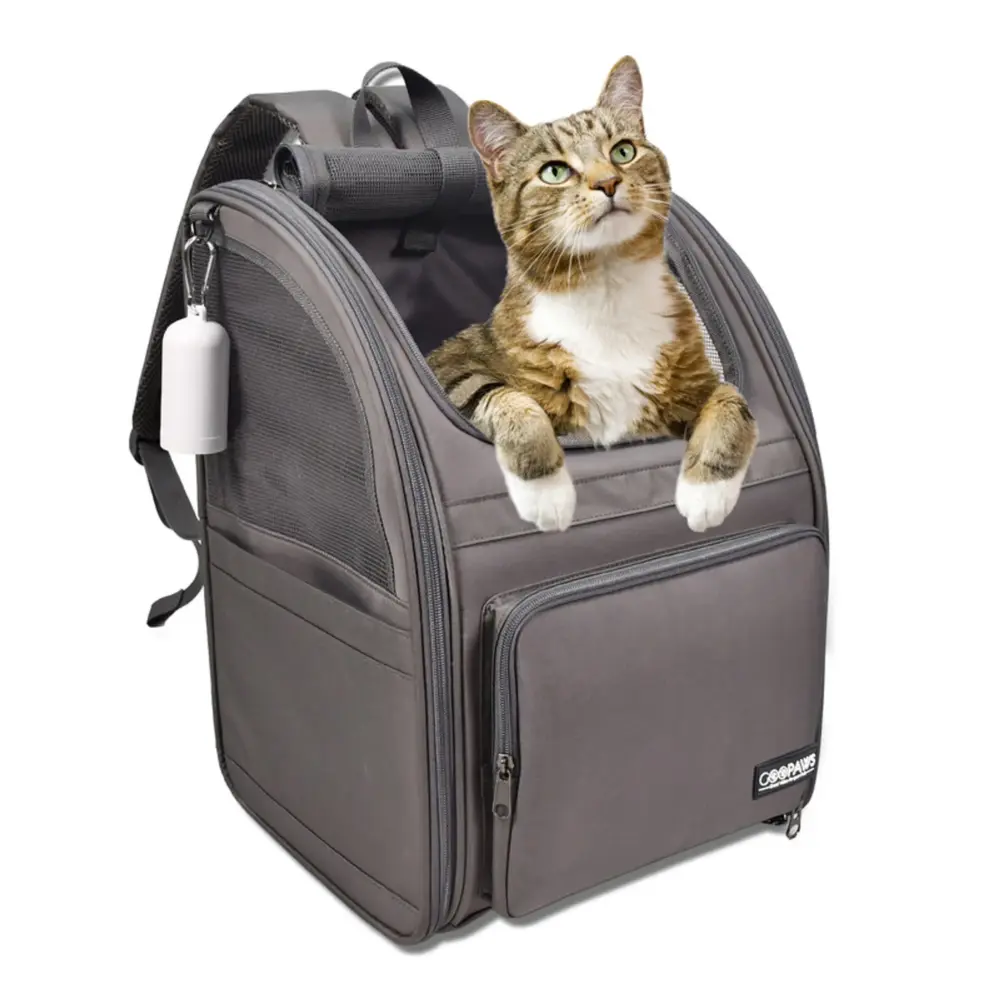
Nilosi stocks two carriers sized for small dogs (our other backpack, the K9 Sport Sack Kolossus, is made for medium to large dogs), so the shortlist below is limited to our own catalog. Weigh your dog against each limit before choosing, or browse all our travel and car accessories.
-
GOOPAWS
Cat and Small-Dog Carrier Backpack
$51.95
Why it fits: Hands-free for escalators, crowds and longer carries: a ventilated backpack with top and side openings and a safety strap inside, for cats and small dogs up to 25 lb.
Currently out of stock
-
Armarkat
Soft-Sided Pet Carrier, View product
$65.95
Why it fits: For platforms and waiting rooms: a soft-sided carrier with three zip openings and a canopy that expands so your dog can stretch out while you wait. Holds up to 22 lb, per Armarkat.

Other options: a raised spot, a U-turn or stepping aside
Not every encounter needs a lift. These keep four feet on the ground:
- A raised spot. The AKC article suggests teaching an “up” cue to hop onto a bench, rock or log, out of the way while a bigger dog passes. Keep the leash on and stand beside them; a perch suits a leashed dog walking by, not a loose dog running at you.
- A U-turn. Teach a cheerful “Let’s go”: say it, turn around and reward your dog for coming with you. Practiced at home first, it’s the quickest way out when you spot a dog early.
- Stepping aside. Move into a driveway or behind a parked car, stay between your dog and the path, and feed treats while the other dog goes by, so big dogs start to predict treats instead of trouble.
If your dog barks or lunges at other dogs even from far away, a certified reward-based trainer can help.
If your dog hates being held
Plenty of small dogs don’t enjoy being picked up, especially without warning. Watch for the signals in the AKC’s guide to signs of stress in dogs: whale eye (the whites of the eyes showing), lip-licking, yawning, ears pinned back, freezing and growling. Wriggling and pushing off with the paws say the same thing.
- Rule out pain first, as in the caution above.
- Go back a step. Return to the cue training at the last stage your dog was relaxed, and keep sessions very short.
- Lift less often. Ramps for the couch and bed, a perch cue and a carrier your dog walks into all mean fewer lifts.
- Don’t punish a growl. It’s your dog’s warning that they’re uncomfortable, and a dog punished for warning may skip straight to snapping.
- Get help for snapping or biting. Talk to your veterinarian, a veterinary behaviorist or a certified reward-based trainer, and keep lifting to the moments that truly need it until then.
Related guides
-
Guide
When to Call the Vet About a Cat: Signs That Cannot Wait
Cats hide illness, so by the time something looks obvious it is often urgent. This guide sorts common signs by urgency, covers the feline emergencies people miss, and explains how to get a reluctant cat to the clinic.
-
Guide
When to Call the Vet About a Dog: Emergency and Same-Day Signs
Sorting a worrying symptom into emergency, same-day or monitor is the decision every owner faces at ten at night. This guide groups the common ones, explains what to have ready when you call, and does not attempt to diagnose anything.
-
Guide
Camping With a Cat: Is Yours Ready, and How to Keep Them Safe at Camp
Camping suits a confident, harness-trained cat, and only with someone always beside them. How to tell if yours is ready, rehearse at home, make the tent or car a safe base, handle litter and food at camp, explore on a leash and find a cat who slips away.