Journal Guide
When to Call the Vet About a Cat: Signs That Cannot Wait
Short answer
Go immediately for straining in the litter box with nothing produced, difficulty breathing, open-mouth breathing, collapse, suspected poisoning, a dragging back leg, or any serious injury. Call the same day if your cat has not eaten for 24 hours, is hiding and unwell, or is vomiting repeatedly.

Safety note
This page helps you judge urgency. It does not diagnose anything. Cats mask illness extremely well, so a cat who looks mildly unwell may be considerably less well than they appear. If you are unsure, phone your vet.
How to use this page
The sorting below is a starting point for a phone call. The single most important thing to understand about cats is that they conceal illness as a survival behaviour, which means the threshold for calling should be lower than it would be for a dog showing the same signs.
The other difference is time. Cats deteriorate faster than people expect once they stop eating, because of how their liver handles a sudden lack of food. A dog who misses a meal is usually fine; a cat who misses a day of meals is not.
Go now, without calling first
- Straining in the litter box with little or no urine produced, especially in a male cat
- Crying while trying to urinate, or repeated trips to the box
- Difficulty breathing, fast shallow breathing, or open-mouth breathing
- Collapse, inability to stand, or sudden weakness
- Sudden paralysis or dragging of one or both back legs, often with crying
- Suspected poisoning, including lilies, antifreeze, human medication or flea products meant for dogs
- Any contact with a lily, including pollen on the coat
- A seizure, or repeated twitching episodes
- Serious trauma: a fall, a road accident, a dog attack, a deep bite wound
- Bleeding that does not stop with pressure
- Severe, sudden abdominal pain or a tense, painful belly
- A body temperature that feels very cold, with pale gums
The first two deserve emphasis. A blocked bladder is one of the most common feline emergencies and it is rapidly fatal without treatment. It is also frequently mistaken for constipation, because the cat is straining in the box.
Tip
Flea treatments containing permethrin are made for dogs and are highly toxic to cats. If a product intended for a dog has been applied to a cat, treat it as an emergency. The ASPCA animal poison control service can advise on exposures; a consultation fee may apply.
Call today
- Not eating for 24 hours, or eating much less for two or three days
- Vomiting more than once or twice, or vomiting with lethargy
- Diarrhoea lasting more than a day, or with blood
- Drinking noticeably more than usual, or urinating larger volumes
- Hiding and not coming out for food, play or company
- Limping, or no longer jumping onto familiar surfaces
- An eye held shut, weeping or cloudy
- A wound, abscess or swelling, particularly after a fight
- Drooling, pawing at the mouth, or dropping food
- Sudden weight loss, or a noticeably bony feel to the spine
- Any change in litter box habits, including going outside the box
Increased thirst is on this list because it is one of the most useful things an owner can notice. In an older cat it is associated with several common conditions that respond far better to early treatment.
Worth a call this week
- Gradual weight loss over weeks or months
- A coat that has become greasy, matted or unkempt
- Reduced grooming, or overgrooming one area
- Sleeping more, or in new and lower places
- Bad breath, or red gums at the tooth line
- Reduced interest in play or in people
- Lumps or bumps anywhere on the body
This group is where feline chronic disease usually first becomes visible, and it is also where it is easiest to treat. Our guide on signs a cat is in pain covers the slow changes in more detail.
Getting a reluctant cat to the clinic
The carrier is the obstacle in most households, and the solution is preparation rather than speed. A carrier that lives out as furniture, with a familiar blanket in it, is a far easier proposition than one that appears from the loft twice a year.
- Bring the carrier out well before you need it, and put a worn item of your clothing inside.
- Take the top off if it comes off, and use it as a bed in the weeks beforehand.
- On the day, close doors so there is nowhere to disappear to.
- Lower the cat in rear end first, or lift the top off and place them in.
- Cover the carrier with a towel in the car, which settles most cats.
- Keep the carrier off the floor in the waiting room and away from dogs.
Getting a cat used to a carrier covers the full build-up, and making vet visits less stressful covers the visit itself.
-
Armarkat
Soft-Sided Pet Carrier, View product
$65.95
Why it fits: A carrier with top and side openings, so a frightened cat can be lifted out rather than tipped out.
-
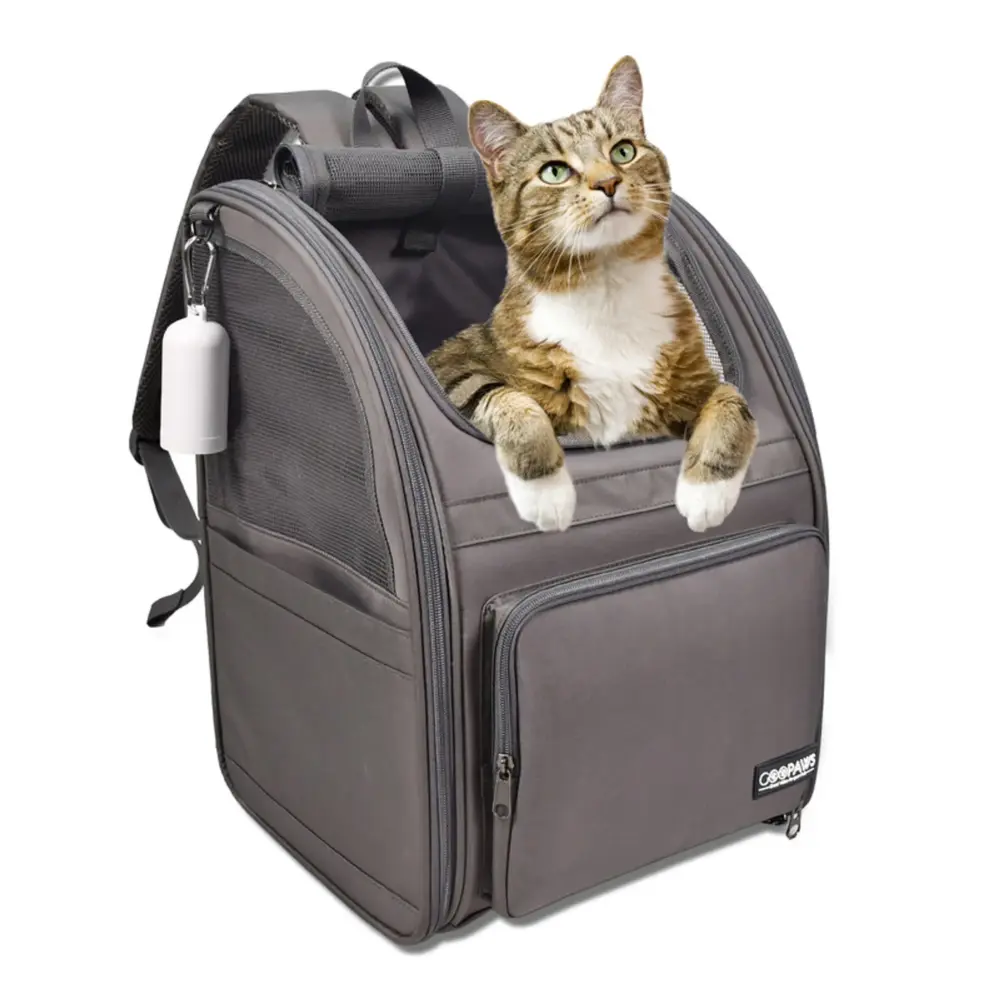
GOOPAWS
Cat and Small-Dog Carrier Backpack
$51.95
Why it fits: A ventilated backpack with an internal safety strap, useful when you are walking to the practice.
Currently out of stock
-
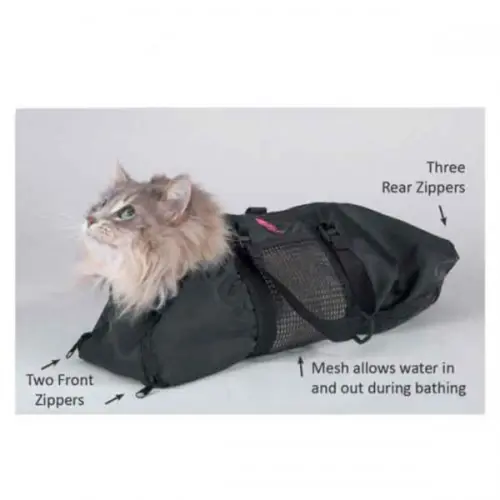
Top Performance
Cat Grooming Bag, Choose size
Price range: $30.95 through $33.95
Why it fits: A grooming bag for safe handling of a cat who cannot be held for ears, nails or medication.
-
GOOPAWS
Covered Cat Cave Bed, Choose color
$45.95
Why it fits: A covered bed for the recovery afterwards; a cat coming home from the vet wants somewhere to hide.


What to have ready when you phone
- Age, rough weight and whether the cat goes outdoors
- What you have seen and when it started
- Whether they are eating, drinking and using the litter box
- What the litter box looks like, which is often the key detail
- Anything they may have eaten, chewed or walked through
- Current medication and flea treatment, including the product name
- A short video if the problem is breathing, movement or straining
Why we do not diagnose online
Feline conditions overlap heavily in how they present. Straining in the box can be cystitis, a blockage or constipation; weight loss with a good appetite can be several different things, and the ones that matter are distinguished by examination and tests rather than by description. A page cannot do that, and a cat who is misclassified at home loses hours that matter.
Preparing before you need it
- Practice number and out-of-hours arrangement saved in your phone
- A carrier that is accessible rather than in a loft
- A towel kept with the carrier for wrapping and covering
- The address of the emergency clinic, checked in advance
- Current medication and flea product names written down
- Microchip number and registration details up to date
- Insurance details, if you have cover
- A plan for which room to shut the cat into if you need to catch them quickly
That last point is the one that saves the most time. A cat who senses urgency disappears, and a house with open doors is a difficult place to catch one. Knowing which room to close first turns a twenty-minute chase into a two-minute job.
What to do while you wait
Keep the cat warm, quiet and contained, ideally in a carrier with a towel over it. Do not offer food or water if sedation or surgery might be needed, and do not attempt to medicate at home.
If your cat has something on their coat that you suspect is toxic, prevent grooming if you safely can, by wrapping them in a towel, and tell the practice exactly what it was. Do not bathe a cat in an attempt to remove a chemical unless you have been told to, since several products are more dangerous once spread and wet.
Safety note
Never give a cat paracetamol. It is lethal to cats in very small doses, and it is one of the most common fatal poisonings seen in practice.
Common questions
My cat has not eaten since this morning. Should I worry?
Watch closely and call if nothing has been eaten by the 24 hour mark. Cats who go without food for a day or more are at risk of liver complications, so this is one of the few areas where cats are less robust than dogs.
My cat is straining in the box. Is that constipation?
It may be, and it may be a urinary blockage, which is an emergency. The two look similar from across the room. If little or nothing is produced, treat it as urgent and phone immediately, particularly with a male cat.
My cat is hiding. Is that enough reason to call?
If it is out of character and lasts more than a day, or they are missing meals, yes. Hiding is one of the main ways cats signal that something is wrong. Why cats hide covers the line.
Do indoor cats really need annual checks?
Yes. Annual examinations catch dental disease, weight change, heart murmurs and early kidney changes long before an owner would notice them, and indoor cats develop all of these.
My cat hates the vet so much I avoid going. What can I do?
Work on the carrier first, since that is usually the worst part, and ask your practice whether they offer cat-friendly appointment times or a separate waiting area. Avoiding visits altogether costs far more in the long run.
For preparation, see what to bring to a vet visit. The dog version of this page is when to call the vet about a dog, and the weekly at-home health check for cats is how most of these get caught earlier.
Related guides
-
Guide
When to Call the Vet About a Dog: Emergency and Same-Day Signs
Sorting a worrying symptom into emergency, same-day or monitor is the decision every owner faces at ten at night. This guide groups the common ones, explains what to have ready when you call, and does not attempt to diagnose anything.
-
Checklist
What to Bring to a Vet Visit, and What to Ask
Veterinary appointments are short. This checklist covers what to bring, what to record beforehand, why video beats description, and the questions worth asking before you leave the room.
-
Guide
When to Pick Up a Small Dog, When Not To, and How to Lift One Safely
Lift your small dog early, before a big dog arrives, in crowds and on escalators, but not once a big dog is worked up or your own dog is lunging. Learn a pick-up cue, the two-handed hold, elevator leash safety, when a carrier helps and what to do if your dog hates being held.