
Puppies & Kittens Checklist
How to Socialize a Puppy Before Vaccinations Are Done
Short answer
Don’t wait for the last shot. The puppy vaccine series usually finishes at 16 weeks or a little later, just as the main socialization window closes. Carry your puppy to see busy places, set paws down only where your veterinarian says the risk is low, and bring people, sounds and surfaces to your puppy at home.
Socialization isn’t about meeting as many dogs as possible. It’s a calm, rewarded first look at what your puppy will live with as an adult: all kinds of people, traffic, the vacuum, slick floors, being handled. Very little of that needs paws on public ground.
Puppy socialization checklist at a glance
Spread these over the weeks before the final vaccines: a few short experiences a day, each paired with a treat. Still setting up the house? Start with our new puppy checklist, then come back to this one.
Questions for your veterinarian
- Which outings and places are lower risk where you live
- Whether your own yard is fine for potty trips and play
- When puppy classes can start, and which local classes they trust
- Whether your puppy can meet healthy, vaccinated adult dogs you know
- When paws can go down in public, and when walks can begin
Packed for carried outings
- A carrier or backpack your puppy has already practiced in at home
- Small, soft treats your puppy will take anywhere
- Pet wipes, poop bags and paper towels
- A towel that smells of home, and water for longer trips
People to meet
- Men, women, teenagers and calm, supervised children
- People with beards, hats, hoods, helmets or sunglasses
- Someone using a cane, walker, wheelchair or stroller
- Delivery drivers and people in uniform
Sights and sounds
- Cars, trucks, buses, bikes and skateboards, seen from a distance
- The doorbell, knocking, the vacuum, the hair dryer and the blender
- An open umbrella, children playing, and recorded thunder and fireworks at low volume
- Car rides, elevators, stairs and automatic doors
Surfaces and handling
- Tile, carpet, wood, grass, a rubber bath mat and a towel over a cushion
- Paws, ears, mouth and tail touched gently, with a treat after each
- Being picked up, held, handed to a family member and set down
- A collar and harness worn indoors for short spells
Each group is something your puppy will meet constantly as an adult. Keep a running note on your phone of what your puppy has met and how it went: gaps show up fast (no bearded men yet, no buses), and so do the things worth repeating more gently.
Why socialization can’t wait for the last shot
Veterinary behavior specialists writing for VCA Animal Hospitals put the sensitive period for puppy socialization at about 3 to 16 weeks of age, and they point out the catch: by the time the vaccine series is finished, that period is over. The AKC’s puppy vaccination schedule places the last puppy doses at 16 to 18 weeks, so a puppy who comes home at eight weeks would spend the rest of the window waiting.
The caution is real, too. The AKC’s guide to parvovirus in puppies explains that the virus spreads through contaminated feces, bowls and gear, and through people who have handled infected dogs, and that it can survive outdoors for months. Its advice is to avoid unknown dogs and high-traffic public areas until vaccination is complete. That is the balance this checklist strikes: plenty of new sights, sounds and people, with paws kept off ground that lots of dogs use.
Risk varies by region and by puppy, so take the questions above to the first appointment. Your veterinarian knows what is circulating locally.
Safety note
If your puppy vomits, has diarrhea, stops eating or seems unusually tired, cancel outings and visitors and call your veterinarian the same day. Don’t wait to see whether it passes.
Carried outings to busy places
Carrying does most of the early work. From your arms or a carrier, your puppy can watch traffic, hear a crowd and smell a busy street without touching ground other dogs have used. VCA suggests new places at least twice a week, and carried, those trips can start well before the last vaccine.
Arms, carrier or backpack?
- Your arms suit a tiny puppy and short stops; hold your puppy against your chest, one hand under the rear.
- A soft-sided carrier is a den to retreat into on car trips and park benches.
- A backpack carrier frees your hands on foot; clip its inside strap to a harness, never a collar.
- Large-breed puppies outgrow small-dog carriers fast. On a cool day, sit with yours in the parked car, door open, and watch a busy lot, or use a pet stroller (we don’t sell one).
Where to take a carried puppy
- A store entrance: rattling carts, automatic doors and shoppers in coats and hats, watched from a nearby bench.
- A bus stop or busy road: engines, brakes and horns, from well back at first.
- The edge of a playground: children running and shouting, with your puppy on your lap.
- A friend’s home: new rooms, smells and people. If they have a dog, ask your veterinarian first.
- Short drives that end somewhere pleasant, not only at the clinic. Our guide to getting a dog used to car rides builds up from parked sessions.
- The clinic, just to say hello: ask whether the team welcomes a quick treats-only visit.
Keep the first outings to a few minutes and leave while your puppy is still relaxed. Pass a treat the moment something new appears, so new things predict good things, and ask people to let your puppy sniff their hand rather than reach in; VCA advises letting a puppy approach strangers at their own pace.
Carriers we stock for small puppies
These are the two carriers Nilosi stocks, so the picks are limited to our catalog; more trip gear is in travel and car accessories. Both are made for cats and small dogs. Check that your puppy can turn around and curl up comfortably inside, and check again every week or two, because puppies grow fast.
-
GOOPAWS
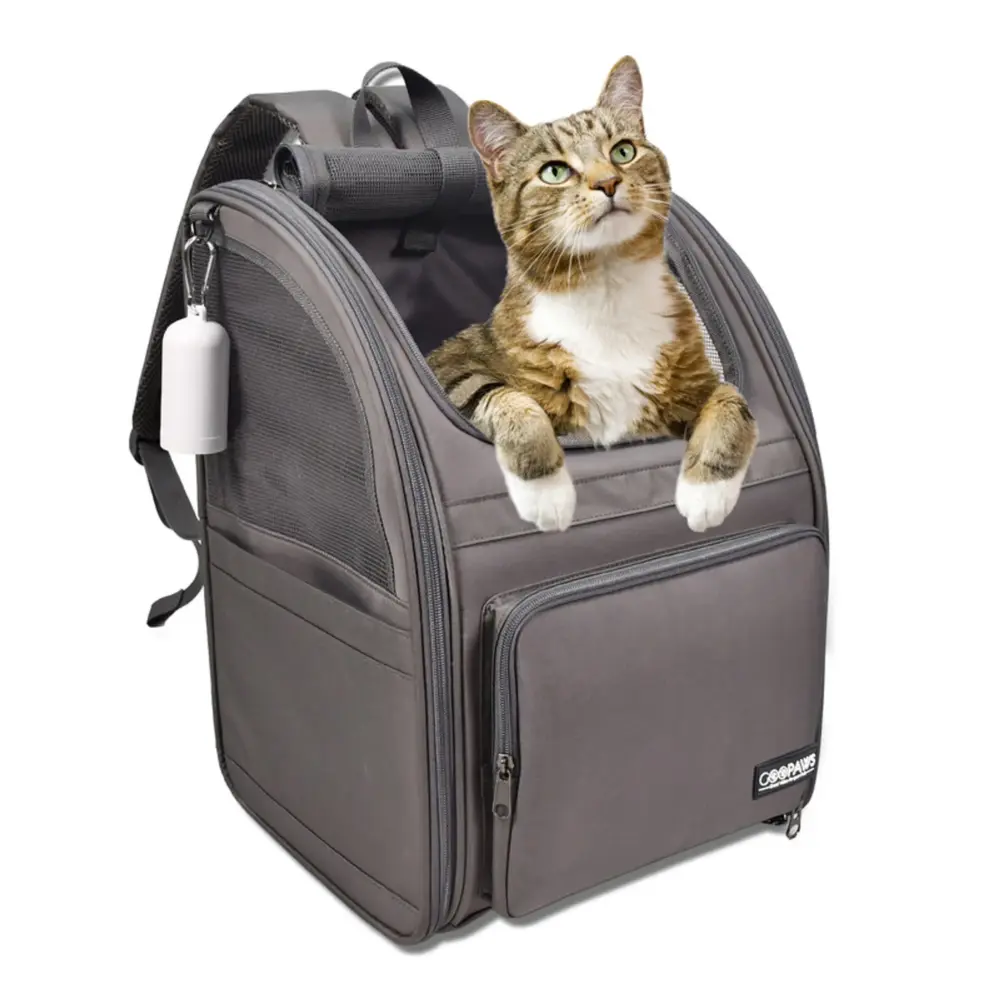
Cat and Small-Dog Carrier Backpack
$51.95
Why it fits: Keeps a small puppy off busy sidewalks during longer outings on foot; top and side openings and an inside safety strap, for pets up to 25 lb.
Currently out of stock
-
Armarkat
Soft-Sided Pet Carrier, View product
$65.95
Why it fits: Gives a small puppy a den to watch from on benches and car trips; mesh panels for a view out, three zip openings, for cats and small dogs.

Safety note
Never leave a puppy in a parked car, carrier or not; cars heat up quickly even on mild days. While driving, secure the carrier on the back seat or the floor behind a front seat so it can’t slide or tip. A carrier keeps your puppy contained, but it isn’t a crash restraint.
Get your puppy comfortable in the carrier first
A puppy zipped into a strange bag and carried into a noisy street learns that outings are scary, the opposite of the point. Spend a few days making the carrier a good place to be before the first outing.
- Leave the carrier open on the floor with a towel from your puppy’s bed inside. Toss in a treat now and then, and feed a few meals inside it with the zip open.
- Once your puppy steps in readily, close the zip for a few seconds, pass a treat through the opening, then open it. Build to a minute or two while you sit beside it.
- Lift the carrier a few inches, set it down and treat, then carry it around the room. With the backpack, clip the inside strap to a harness and wear it for a lap of the house.
- Make the first trip a short one: out to the front step or the parked car, a few treats, then straight back inside while your puppy is still relaxed.
If your puppy whines, scratches at the mesh or stops taking treats, go back a step for a day or two, and leave the carrier out between trips so it stays part of the room. Because the backpack’s strap clips to a harness, get your puppy used to wearing one indoors first. Our guide to getting a dog used to a backpack carrier covers the lift, wearing it and troubleshooting in more detail.
Where paws can touch the ground, and where to skip
Your veterinarian has the final word here, because local disease risk varies. These are the places most worth raising.
Usually worth asking about
- Your home, and the homes of friends whose dogs are healthy and vaccinated. A friend’s floors bring new surfaces and smells.
- Your own yard, if unknown or unvaccinated dogs haven’t used it.
- A puppy class run the way VCA recommends: vaccines and boosters up to date, no intestinal parasites, at least 10 healthy days in the new home, sick puppies kept home and a room that is easy to disinfect. The AKC’s socialization guide notes that puppies can join classes once their vaccinations have started.
Skip until your veterinarian says go
- Dog parks and dog beaches
- Pet store and grooming salon floors
- Rest-stop pet areas, sidewalk strips and park edges where many dogs relieve themselves
- The clinic’s waiting-room floor: carry your puppy in and out
- Greetings with unknown dogs, including a friendly stranger’s dog who wants to sniff your puppy in your arms
After an outing where paws touched down, a wipe of paws and belly keeps mud, and whatever your puppy stepped in, off your floors. Mr. Peanut’s Naturals Pet Wipes are large and thick enough that one wipe does the job. Wipes clean but don’t disinfect, so they don’t change where your puppy should go. Each wipe-down doubles as paw-handling practice, so pair it with a treat.
Socializing at home, between outings
On rainy days, and in the first week before outings start, bring the world to your puppy. Keep sessions to a few minutes, then let your puppy nap.
Visitors
- Invite one or two people at a time. Ask them to sit on the floor, let your puppy come to them and offer treats from a flat palm.
- Have children sit down to pet or hold the puppy, with an adult beside them; a puppy dropped from standing height can be hurt.
- Ask visitors who have dogs to wash their hands and leave outdoor shoes at the door, since parvovirus can travel on hands, clothing and shoes.
- Give your puppy a pen or crate to retreat to, and let them nap when they’ve had enough.
Sounds
Play recordings of thunder, fireworks, traffic and doorbells at a volume your puppy barely notices, during meals or play, and raise it a little over several days. Run the vacuum in another room first, with a treat each time it starts. If your puppy startles and doesn’t recover within a few seconds, turn things back down.
Surfaces and new objects
New floors and odd objects take only a few minutes a day. Our guide to puppy enrichment ideas sets them up as a kibble-baited texture trail and an object of the day. Let your puppy investigate at their own speed, keep everything low, and remove anything small enough to chew off and swallow.
Handling
Touch a paw, an ear, the tail and the side of the mouth, with a treat after each, for a minute or so a day. Add a gentle hold of the collar and being lifted and set down. These habits make vet exams, nail trims and brushing much easier later, and our guide to getting a puppy used to grooming builds them into a full routine.
Reading your puppy: move closer or back off
Aim to end every experience with a puppy at least as relaxed as when it began. Your puppy’s body tells you which way to go.
Ready for a little more
- A loose, wiggly body and a relaxed mouth
- Sniffing, looking around and checking back with you
- Taking treats as eagerly as at home
- Bouncing back within seconds from a sudden noise
Time to back off
- Trembling, a tucked tail or ears pinned back
- Refusing treats or play
- Trying to escape, pull away or hide behind you
- Freezing, or yawning and licking their lips again and again
Several of these are fear signs VCA lists, and its advice is to take a frightened puppy somewhere they feel safe rather than make them face the scary thing. Move farther away, let your puppy settle in the carrier or your arms, and try an easier version another day: the bus from across the road, not beside it.
Mistakes that set it back
- Too much at once. A party where everyone takes a turn holding the puppy is a lot for a ten-week-old. One or two new things per outing is plenty.
- Holding your puppy up to what scares them. Being carried closer to something frightening, with no way to back away, can make the fear worse.
- Only ever going to the clinic. If every carrier trip ends at the vet, the carrier starts to mean the vet.
If your puppy seems frightened of many things, or a fear isn’t easing after a week or two of easier steps, talk to your veterinarian. They can check for a health problem and refer you to a reward-based trainer or a veterinary behaviorist.
A simple week-by-week socialization plan
This plan assumes your puppy came home at about eight weeks; shift it if yours arrived later. Your veterinarian decides when a class can start and when paws go down in public, so those rows move with their schedule.
| Week at home | Focus | What to try |
|---|---|---|
| Week 1 | Settling in at home | Carrier games, handling, home sounds |
| Week 2 | First guest, first trips | One calm visitor, a short carried trip |
| Weeks 3–4 | Outings twice a week | Store entrance, bus stop, puppy class |
| Weeks 5–6 | Busier places | Busy sidewalks, a friend’s home |
| Weeks 7–8 | Last vaccines, first walks | Paws down where your vet says |
Keep going after the vaccines are done. VCA stresses that puppies past 16 weeks still need regular, positive social experiences, and leashed walks bring a whole new set of sights and smells at ground level. Our guide to leash training a puppy gets those first walks started.
Related guides
-
Checklist
Pet Emergency Kit Checklist: What Your Dog or Cat Needs to Evacuate
Everything your dog or cat needs to evacuate with you: records and ID, two weeks of food, water and medicine, a carrier or harness per pet, sanitation and first aid, plus where pets can stay and when to refresh the kit.
-
How-to
Taking a Dog on Public Transit: Rules, Carriers and Practice Rides
How to get a small dog onto the bus or subway calmly: what to look for in your transit agency’s pet policy, choosing a carrier by your dog’s size and your own back, carrier training at home, short off-peak practice rides, stairs, crowds and heat, and how service animal rules differ.
-
Checklist
What to Bring to a Vet Visit, and What to Ask
Veterinary appointments are short. This checklist covers what to bring, what to record beforehand, why video beats description, and the questions worth asking before you leave the room.
