How to Keep an Indoor Cat Warm in Winter: Warm Spots, Beds and Drafts
How to keep a cat warm in winter, in one line: fix where your cat sleeps before you touch the thermostat. Block drafts at floor level, lift the bed off cold floors, and offer an enclosed or rimmed bed that holds in your cat’s own body heat. Add a sunny window by day, and keep heaters and heating pads where your cat can step away from them.
Short answer: off the floor, out of drafts, in a bed that holds heat
- Find drafts at door bottoms and window frames, then block them or move the bed.
- Go up a level: a chair, sofa end or window seat beats tile or a slab floor.
- Offer a cave or rimmed bed for long naps, and a sunny window by day.
- Keep heat gentle: lowest setting, part of the bed only, never in an empty room.
- Turn the thermostat down, not off, when you go out.
- Play for a few minutes before a long nap.
Do indoor cats get cold? Signs your cat is chilly
Yes. Cats generally like it warmer than people do, which is why they follow sunbeams. A room that feels fine to you in a sweater can feel cool to a cat lying still for hours. Signs your cat is cold include:
- Sleeping in a tight ball, tail over the nose and paws tucked under.
- Seeking heat: a laptop, a sunny patch, a heating vent or your bed covers.
- Ear tips, paw pads or a tail that feel cool to the touch.
- A fluffed-up coat at rest, or moving less and sleeping more.
- Shivering, which is uncommon indoors and worth taking seriously.
Cats curl up and bask at any time of year, so look for several signs together, or a change from your cat’s usual habits.
Cats that feel the cold most
Kittens, seniors, thin cats, hairless and very short-coated breeds, and cats that are unwell or recovering from surgery lose heat faster. International Cat Care’s advice on hazardous weather recommends lots of warm, draft-free places to sleep for older and sick cats, and notes that an arthritic cat especially appreciates a little extra warmth.
Call your veterinarian if your cat feels cold to the touch, keeps shivering once it is somewhere warm, seems weak, stiff, unsteady or unusually sleepy, or stops eating. While you call, wrap it loosely in a warm, dry towel, and don’t press a heating pad or hot-water bottle against its skin.
How to keep a cat warm in winter, starting with the drafts
Cats spend hours asleep on or near the floor, where drafts are worst, so fix drafts before placing beds.
- Find them. On a windy day, hold a strip of tissue by window frames, door bottoms and outlets on outside walls. If it flutters, there’s a draft.
- Block door gaps with a draft stopper or a rolled towel, including doors to unheated rooms.
- Move beds away from exterior doors, drafty windows and the floor of an unheated basement or sunroom.
- Check the litter box and water bowl. If either sits in a cold garage or basement, move it somewhere heated if you can.
- Keep warm rooms open so your cat can choose them, and check closets before you shut them.
Have a dog too? The same checks help; see our guide to keeping a dog warm at night.
Warm spots: where cats like to sleep in winter, and a bed off the floor
In winter, cats sleep where heat collects: up high, in the sun, in enclosed spaces and next to you. Offer a version of each and let your cat choose; with more than one cat, set out a warm spot for each so a shy cat isn’t left on the floor.
Lift the bed off cold floors
Tile, slab and basement floors, and hardwood over a crawl space, stay cold all winter. Put a bed on a chair, the end of the sofa, a window seat or a cat tree platform, or at least on a thick rug. For a senior or stiff cat, choose a low perch it can step onto, not one that needs a jump.
Sunny windows by day, sheltered corners by night
In the US, south-facing windows get the most winter sun, so put a daytime bed there. After sunset the glass turns cold: close the curtains and move the bed back, or offer a second bed in a sheltered corner.
A bed that holds their heat
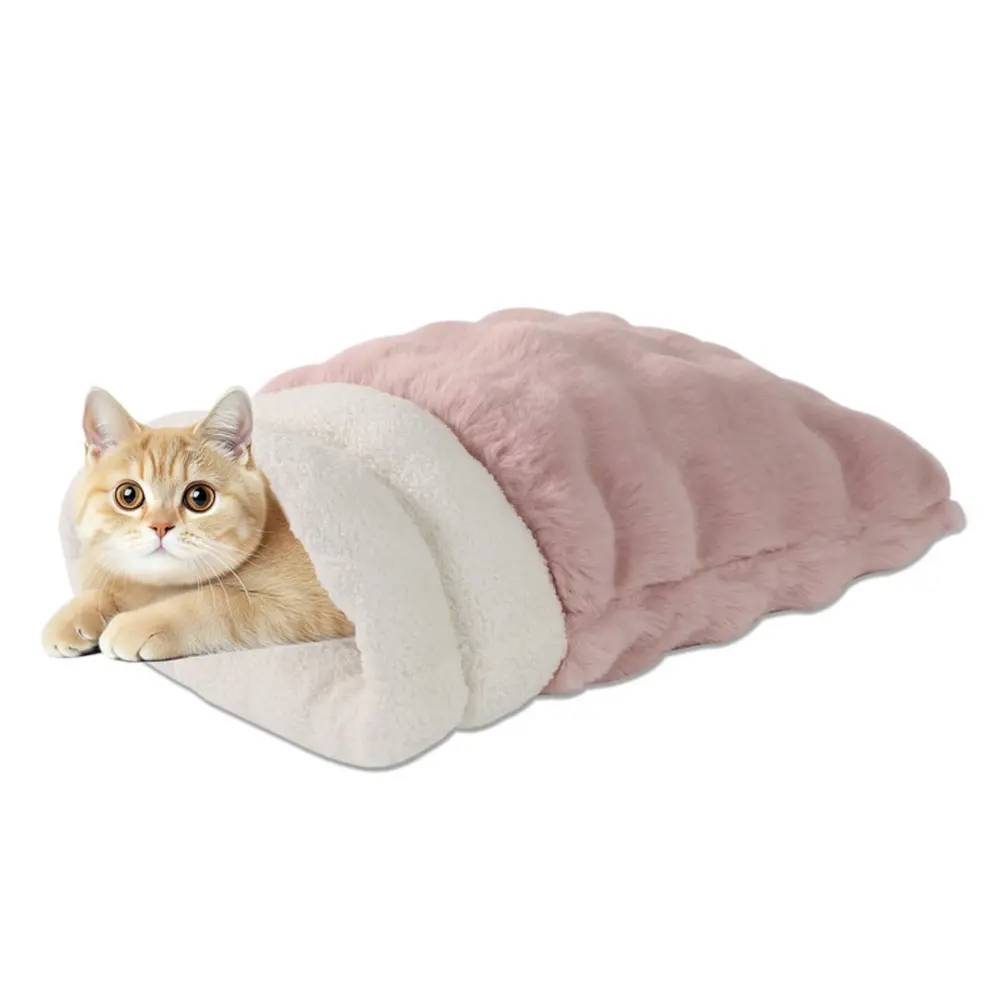
An enclosed or rimmed bed keeps your cat’s warmth close. The GOOPAWS 4-in-1 Self-Warming Cat Cave Bed works as a cave, a sack, an open bed or a flat mat, with a faux rabbit fur top over soft cotton fill. Its self-warming design traps your cat’s own body heat, so there is nothing to plug in. It suits cats that hide and burrow; check its 21 × 17 × 3 inch size against the chair seat or sill you have in mind.
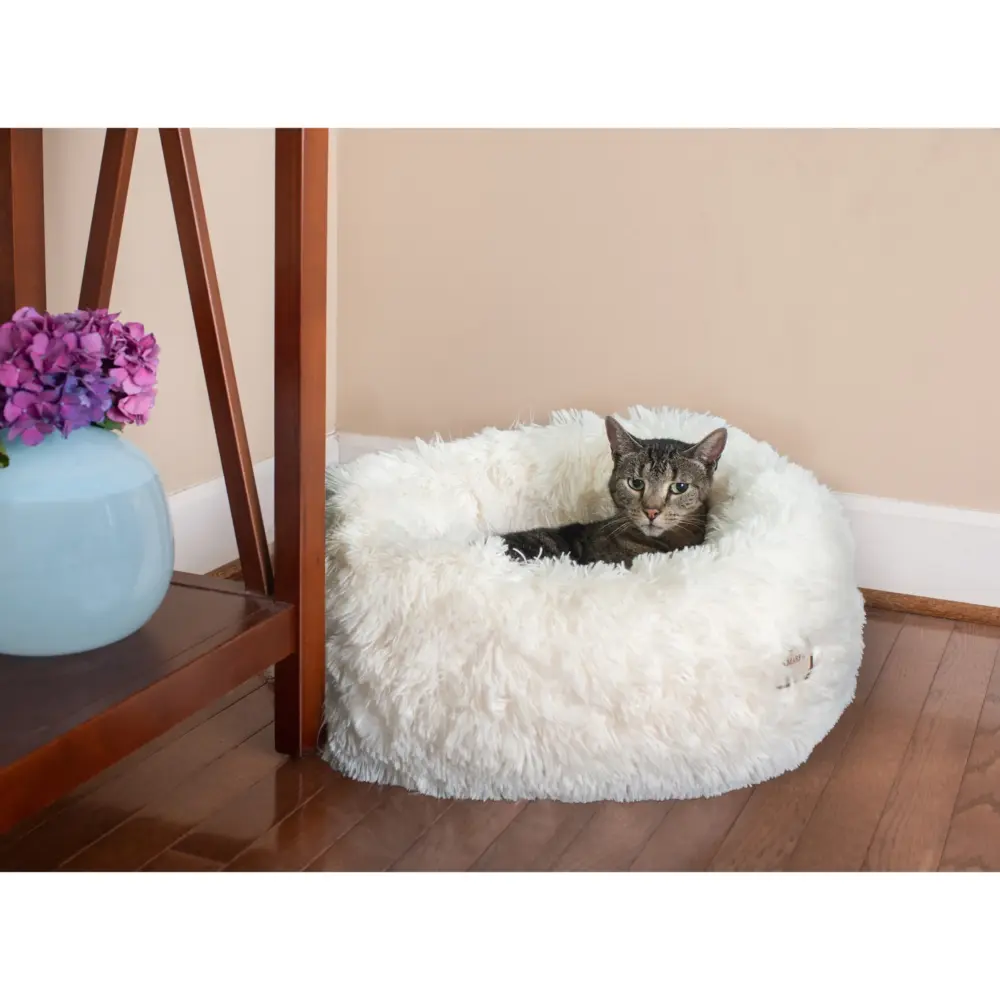
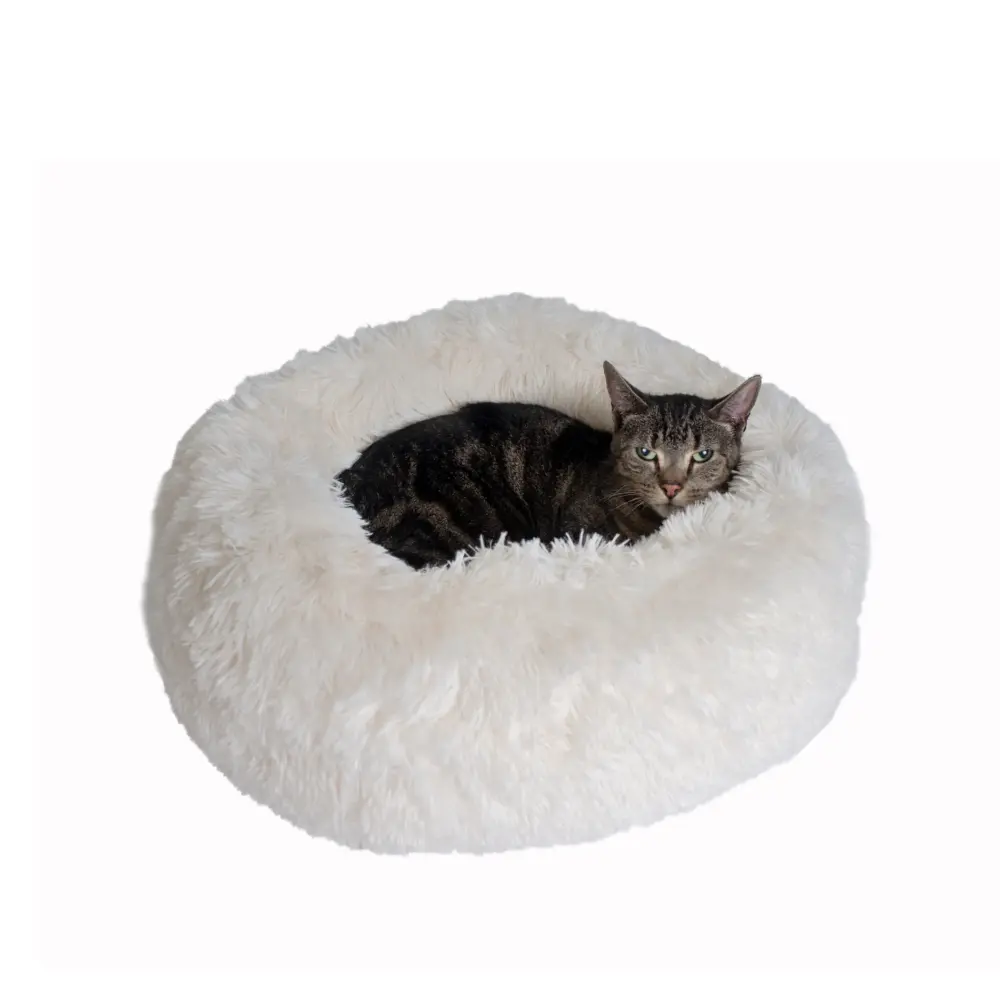
For cats that curl up against something, the Armarkat Ultra-Plush Cuddler Bed has a plush cover that holds warmth, a raised bolster all the way round and a water-resistant, skid-free base, in Small (22 × 22 × 8 inches) and Medium. Machine wash it on a gentle cycle (hand washing keeps the plush at its best) and let it dry fully; a damp bed is a cold one.
Considering an electric heated bed? Our guide to choosing a cat bed your cat will actually use compares self-warming and heated beds; if you go electric, the heating pad rules below apply.
-
GOOPAWS
4-in-1 Self-Warming Cat Cave Bed
$40.95
-
Armarkat
Ultra-Plush Cuddler Bed for Cats & Small Dogs
Price range: $55.95 through $72.95


Browse the beds and comfort range; a warm bed is a practical pick for what to get your cat for Christmas.
The carrier as a warm hideaway
A carrier left open with a soft pad or a worn towel inside makes a snug den, and each relaxed nap in it can make vet visits easier; see how to get a cat used to a carrier. Never put a heating pad in a carrier or crate, where your cat cannot move away from the heat.
Heating pads, space heaters and fireplaces: safety basics
Cats will sit closer to heat than is good for them, and a deeply asleep cat may not move away in time.
Heating pads
VCA Animal Hospitals cautions against heating pads because they can heat up over time and burn, especially older, arthritic or sick pets that sleep deeply or get up slowly. If you use one, choose a pad made for pets and follow the maker’s instructions:
- Use the lowest setting, under several layers of blanket.
- Cover only part of the bed, so your cat can step off the warmth.
- Keep the cord away from a cat that chews.
- Check on your cat while it is on, and switch it off when you go out.
Space heaters, fireplaces and the dryer
- Use a space heater with tip-over shut-off and a cool-touch case, set on a hard, level floor.
- Keep beds, blankets and curtains well clear, and never leave a heater running in an empty room.
- Screen an open fire, and keep your cat away from any fire, wood stove or candle you cannot watch.
- Keep the dryer door closed and check the drum before each load; warm laundry draws cats in.
Should you leave the heat on while you’re out?
Yes, on cold days: turn it down a little if you like, but don’t switch it off. A healthy adult cat with a warm, draft-free bed copes with a modest setback; kittens, seniors and thin, hairless or unwell cats need it warmer. A thermometer next to the bed shows how cold that spot really gets.
If the power goes out, gather beds, blankets and the carrier into one small interior room and close the door. Never run a generator or grill indoors.
Play to warm up on cold days
Moving makes heat: a few minutes of chasing warms a cat that has slept all afternoon. Try short sessions when you get home and before bedtime.
Drag a wand toy along the floor and up the stairs like prey, let your cat catch it, then offer a small treat or a meal. When you are home to watch, the Motion-Activated Rolling Cat Toy Ball wakes when touched, has two play modes, runs about an hour per USB charge and works best on hard floors or short-pile rugs. Put string and wand toys away after play.
Age and energy decide how long to play with your cat each day. For long weeks indoors, add indoor cat enrichment ideas, like a window spot or hidden kibble. Some extra winter sleep is normal, but a cat that suddenly won’t play, hides or seems stiff should see a veterinarian.
If you are considering a warming product, the two types work very differently. Self-warming vs heated pet beds compares what each one actually delivers and the safety questions for the powered version.
Winter cat FAQ
Is my cat cold at night?
It may be, since many homes turn the heat down overnight. Burrowing under your covers or pressing against you often means your cat is keeping warm. Put an enclosed or rimmed bed off the floor in your bedroom, or leave the door open so your cat can choose.
What temperature is too cold for an indoor cat?
There is no single cutoff that suits every cat. A healthy adult with a thick coat handles a cooler house than a kitten, a senior or a thin or hairless cat. If your cat spends the day balled up and pressed against every warm surface, its spot is too cool, whatever the thermostat says.
Do cats need blankets in winter?
Not strictly, in a heated home, but many cats like one. Fold a washable fleece throw on a favorite chair and let your cat choose rather than tucking it in. Keep blankets away from heaters, and skip loose fabric for a cat that chews or sucks on it.
Why does my cat sit on the heating vent?
It is one of the warmest spots in the house, and sitting on a floor vent is usually harmless. A warm bed in a draft-free spot nearby gives your cat a comfier option; just never push bedding up against a space heater. If an older cat suddenly seeks heat all the time, mention it to your veterinarian.
Related guides
-
Checklist
Multi-Cat Household Setup: How Many Litter Boxes, Bowls and Beds
Two cats need three litter boxes, and the same one-per-cat-plus-one rule covers feeding stations, water bowls, scratchers and resting spots. See where each one goes, how to tell bonded cats from rivals, the quiet signs a home is too crowded, and a walk-through checklist.
-
Checklist
When to Replace a Dog Bed: 7 Signs, Plus Cat Beds and Gel Mats
A checklist for deciding when a dog or cat bed is past saving: the fold-and-press test for flat filling, smells that return after a proper wash, tears that put a chewer at risk, worn bases, rims and gel mats, a pet who has outgrown the bed, and what only needs a wash.
-
Guide
How to Wash a Dog Bed, and How Often, Including Beds That Don’t Unzip
De-hair it, read the care label, wash it gently with fragrance-free detergent and dry it all the way through. Here is how often to wash a dog bed, what to do with beds that don't unzip, foam and gel mats, and how to wash a cat bed without upsetting your cat.