Beds & Comfort Comparison
Self-Warming vs Heated Pet Beds: Which Is Safer, Which Is Warmer
Short answer
A self-warming pad reflects your pet’s own heat back at them. It cannot get warmer than the animal, it only works once they are lying still on it, and it has no cord, no power and nothing to go wrong. A heated bed adds energy from the mains and gets genuinely warm, which is better for a cold room or a stiff old dog, at the cost of a cable, a burn risk and a device that needs checking. For most healthy pets in a heated house, the passive pad is enough.
How each one works
A self-warming pad is a reflective layer sandwiched inside fabric. Heat radiating from the animal hits that layer and comes back instead of escaping into the floor. Some use a metallic film; others use materials such as activated bamboo charcoal that hold heat and release it slowly. There is no energy source and no moving part.
A heated bed contains a low-voltage element and a thermostat, powered from the mains through a transformer. It warms whether or not an animal is on it, usually to somewhere around body temperature, and holds that level.
The distinction matters most for a cold animal. A self-warming pad cannot warm a pet who is already chilled, because it has nothing to give; it only slows the loss. A heated bed can.
What self-warming actually means
The phrase sounds like the bed produces heat. It does not. The honest description is that it insulates upwards and reflects, so your pet lies in a pocket of their own warmth rather than losing it into a cold floor.
That is genuinely useful, because conduction into a hard floor is how most indoor pets lose heat. A cat on tile is losing warmth continuously; the same cat on a reflective pad is not. But the effect is modest, it takes ten or fifteen minutes of lying still to build, and it disappears the moment the animal gets up.
If you touch a self-warming pad in an empty room and it feels cold, it is working exactly as designed. People return them for this reason.
How warm each one gets
| Self-warming pad | Heated bed | |
|---|---|---|
| Heat source | The animal | Mains electricity |
| Warm when empty | No | Yes |
| Time to feel warm | Ten to fifteen minutes of stillness | Immediate |
| Maximum temperature | Cannot exceed the animal | Around body temperature |
| Works in an unheated room | Barely | Yes |
| Helps a chilled pet warm up | No | Yes |
| Running cost | None | Low but continuous |
Safety, cords and chewers
This is where the comparison is least balanced. A passive pad has no failure mode beyond getting dirty. A heated bed brings a cable into the place your pet sleeps.
- Chewing. A dog or cat who chews a live cable can be electrocuted. Steel-wrapped cords help; they do not make it a non-issue.
- Low-temperature burns. Prolonged contact with a surface only slightly above body temperature can damage skin, particularly on an animal who cannot move away.
- Thermostat failure. Any device can fail. A bed that has become hot rather than warm should be unplugged and replaced, not kept in use.
- Moisture. An incontinent pet and a mains-powered bed are a poor combination; check the manufacturer’s guidance before using one with a pet who may wet it.
- Covering it. Blankets piled on a heated bed trap heat the thermostat is not expecting.
Safety note
Never use a human electric blanket or heat pad for a pet. They run hotter, they are not built for chewing or for an animal who cannot move away, and they have caused burns and fires. If you use a powered pet bed, buy one from a known manufacturer, follow the instructions, unplug it when nobody is home, and inspect the cable every week.
Side by side
| Self-warming | Heated | |
|---|---|---|
| Safety | No electrical risk | Cord and burn risk to manage |
| Warmth delivered | Modest | Substantial |
| Suits crates and carriers | Very well; thin and flat | Rarely; the cord is a problem |
| Travel | Yes | No |
| Unsupervised use | Fine | Follow the maker’s guidance |
| Washing | Usually machine washable | Cover only; the element is not |
| Lifespan | Years | Limited by the element and the cable |
Pets who should not use a powered bed
The common factor is an animal who cannot move away from heat they are not enjoying.
- Puppies and kittens, who cannot regulate temperature well and chew everything
- Very old or arthritic pets who struggle to get up, unless a veterinarian has advised it
- Any pet with reduced sensation, paralysis or recent surgery near the contact area
- Pets who are sedated or recovering from an anaesthetic
- Dogs who chew cables, regardless of the cable’s construction
- Pets with skin conditions, without veterinary advice first
Tip
A warm bed is comfort, not treatment. If your pet is stiff, reluctant to move, or seems sore, a heated bed may make them more comfortable but it does not address the cause. Speak to your veterinarian about the stiffness rather than only buying a bed.
Where you put it decides how well it works
This is the single biggest factor for a self-warming pad and it is routinely ignored. A passive pad only works when the animal lies still on it, which means it has to go where the animal already sleeps rather than where you would like them to sleep.
Put it in the existing favourite spot, keep it off the coldest part of the floor, out of draughts from doors and under windows, and slightly raised if you can. Cats in particular choose height and enclosure over warmth, so a pad in a cave bed or on a shelf gets used while the same pad in the middle of the room does not.
A pad inside a crate, a carrier or an existing bed is often the best use of one, since it adds the reflective layer to a spot the animal has already chosen. Keeping a cat warm in winter covers placement in detail, and keeping a dog warm at night covers the same for dogs.
Our picks
-
The Green Pet Shop
Thera-Pawz Warming Pad, Choose size
Price range: $41.95 through $63.95
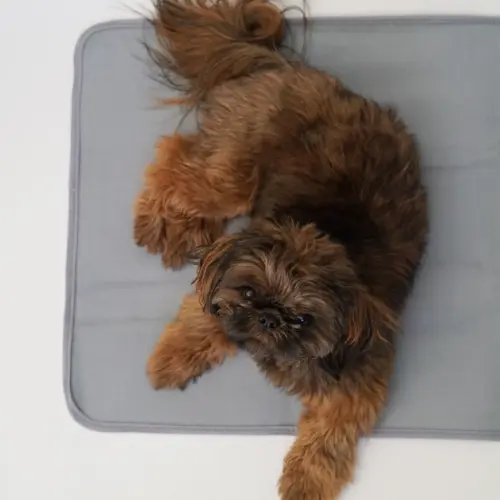
Why it fits: A quarter-inch warming mat with an activated bamboo charcoal layer and no cord, battery or plug. Thin enough to drop into a crate, carrier or existing bed.
-
GOOPAWS
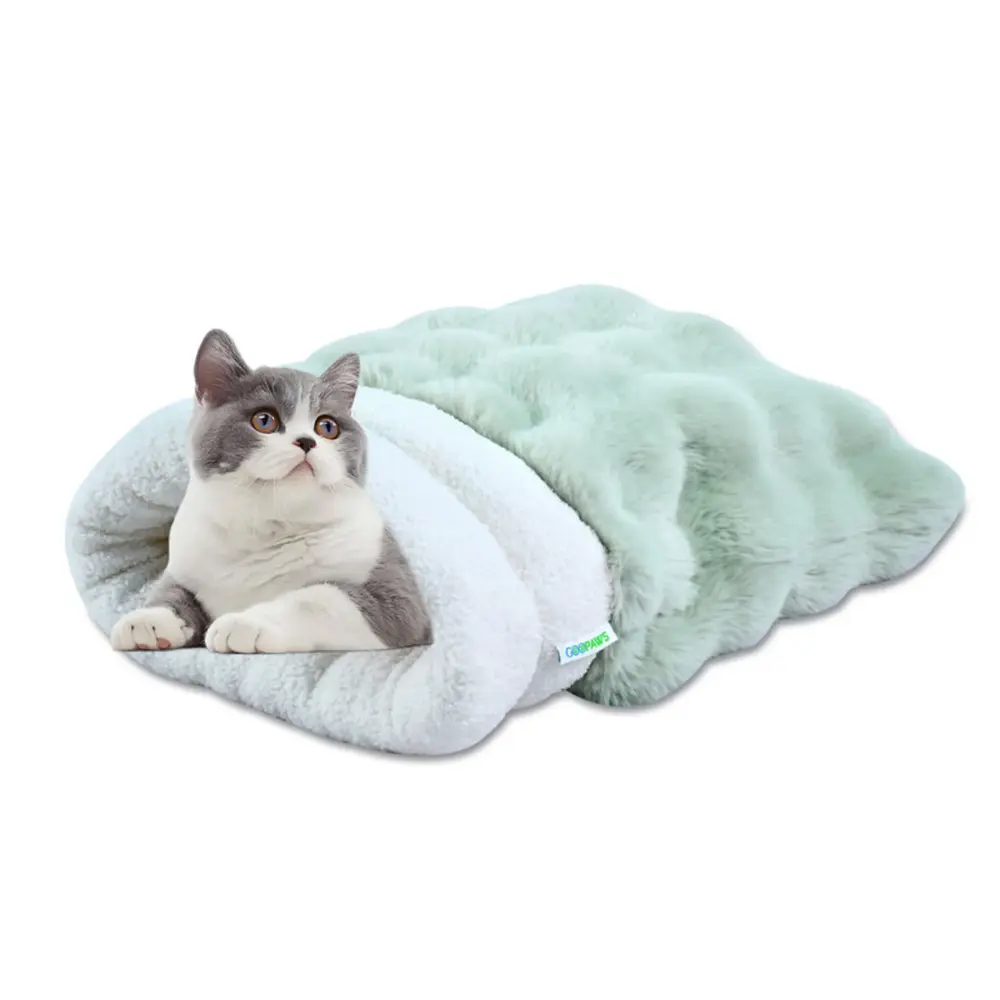
4-in-1 Self-Warming Cat Cave Bed, Choose color
$40.95
Why it fits: A self-warming cat bed that folds four ways, from an enclosed cave for a cold night to a flat mat for a warm afternoon, with a reflective lining and nothing to plug in.
-
The Green Pet Shop
Chillz Cooling Gel Mat for Dogs & Cats, View product
$45.95
Why it fits: The opposite problem, for summer: a pressure-activated cooling gel mat that needs no water, ice or electricity and recharges itself between uses.


Which to choose for your home
| Situation | Choose |
|---|---|
| Heated house, healthy pet, cold floor | Self-warming pad |
| Unheated room or outbuilding | Heated bed, with the safety rules |
| Crate, carrier or car | Self-warming pad |
| Senior dog with stiffness, vet aware | Heated bed |
| Puppy or kitten | Self-warming pad only |
| Dog who chews | Self-warming pad only |
| Travelling or staying away | Self-warming pad |
If you are choosing the bed itself rather than the warmth layer, start with shape and washability instead: bolster vs flat dog bed and what to look for in a waterproof bed cover the decisions that come first.
Why a cat chooses one spot and ignores another
Cats select sleeping places by a combination of warmth, height, enclosure and sightlines, and warmth is rarely the deciding factor on its own. A heated bed in an exposed corner will be ignored while an unheated cardboard box on a shelf gets used daily.
That is the practical reason so many warming products disappoint. The product was fine and the location was wrong. Before buying anything, spend a few days noting where your cat actually sleeps at different times, and put the warming layer there instead of choosing a new spot for them.
Height matters particularly in a house with a dog or children, where a floor-level bed offers no retreat. Warmth rises, so a raised spot is usually warmer anyway. How to choose a cat bed covers the shape and placement decisions.
Safer ways to add warmth without either
There is a middle ground that costs nothing and solves most cases, particularly for a healthy adult animal in a house that is simply a bit cold at night.
- Lift the bed off the floor. A few inches of air, or a folded blanket underneath, stops conduction into cold tile or concrete.
- Move it out of the draught. Air moving along a floor from a door or a vent removes heat faster than cold air alone.
- Add a cover or sides. An enclosed bed traps a pocket of warm air, which is the same principle as a self-warming pad and usually more effective.
- Use a snug bed rather than a large one. A cat in a bed twice their size has more air to heat.
- A microwavable heat pad under a blanket for the first hour, which covers the settling period without any mains power.
- A blanket the animal can get under, which lets them regulate for themselves rather than you deciding.
Letting the animal choose is the principle underneath all of these. Any warming arrangement should allow the pet to move away from it easily, which is exactly what a bed with a warm end and a cool end achieves.
Common questions
Do self-warming beds really work?
They work in the sense that they reduce heat loss into the floor, which makes a real difference to a thin-coated animal on a hard surface. They do not generate heat and will never feel warm to the touch in an empty room.
Can I leave a heated bed on all night?
Follow the manufacturer’s instructions, which usually permit it for beds designed for continuous use. Do not leave one running in a house with nobody home, and unplug it if the cable or the surface shows any damage.
Is a microwavable heat pad a middle option?
It is, and it suits short periods such as settling a pet after a cold trip. It cools within a couple of hours, must never be overheated, and should always have a cover between it and the animal.
Related guides
-
Checklist
When to Replace a Dog Bed: 7 Signs, Plus Cat Beds and Gel Mats
A checklist for deciding when a dog or cat bed is past saving: the fold-and-press test for flat filling, smells that return after a proper wash, tears that put a chewer at risk, worn bases, rims and gel mats, a pet who has outgrown the bed, and what only needs a wash.
-
Guide
How to Wash a Dog Bed, and How Often, Including Beds That Don’t Unzip
De-hair it, read the care label, wash it gently with fragrance-free detergent and dry it all the way through. Here is how often to wash a dog bed, what to do with beds that don't unzip, foam and gel mats, and how to wash a cat bed without upsetting your cat.
-
Guide
How to Choose a Cat Bed Your Cat Will Actually Use
Choose a cat bed by watching how your cat already sleeps: caves for hiders, cuddlers for curlers and a cooling mat for hot days. Plus where to put the bed so your cat is more likely to use it.