Beds & Comfort Buying guide
Waterproof Dog Beds: What the Label Means and What to Look For
Short answer
Look for a waterproof liner around the inner cushion, not just a water-resistant outer cover. The cover sheds a spill long enough for you to notice; the liner is what stops urine or water reaching the fill, and the fill is what holds smell permanently. A non-slip waterproof base matters too, because liquid that soaks through ends up on the floor underneath.
Our picks at a glance
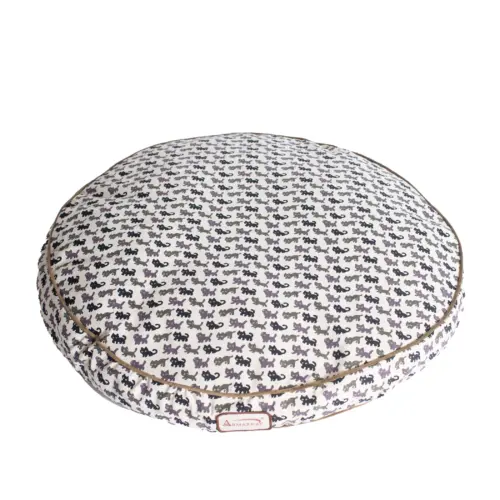
- Canvas Pet Bed PadHeavy canvas over a waterproof lining with a zip-off cover and a skid-free base
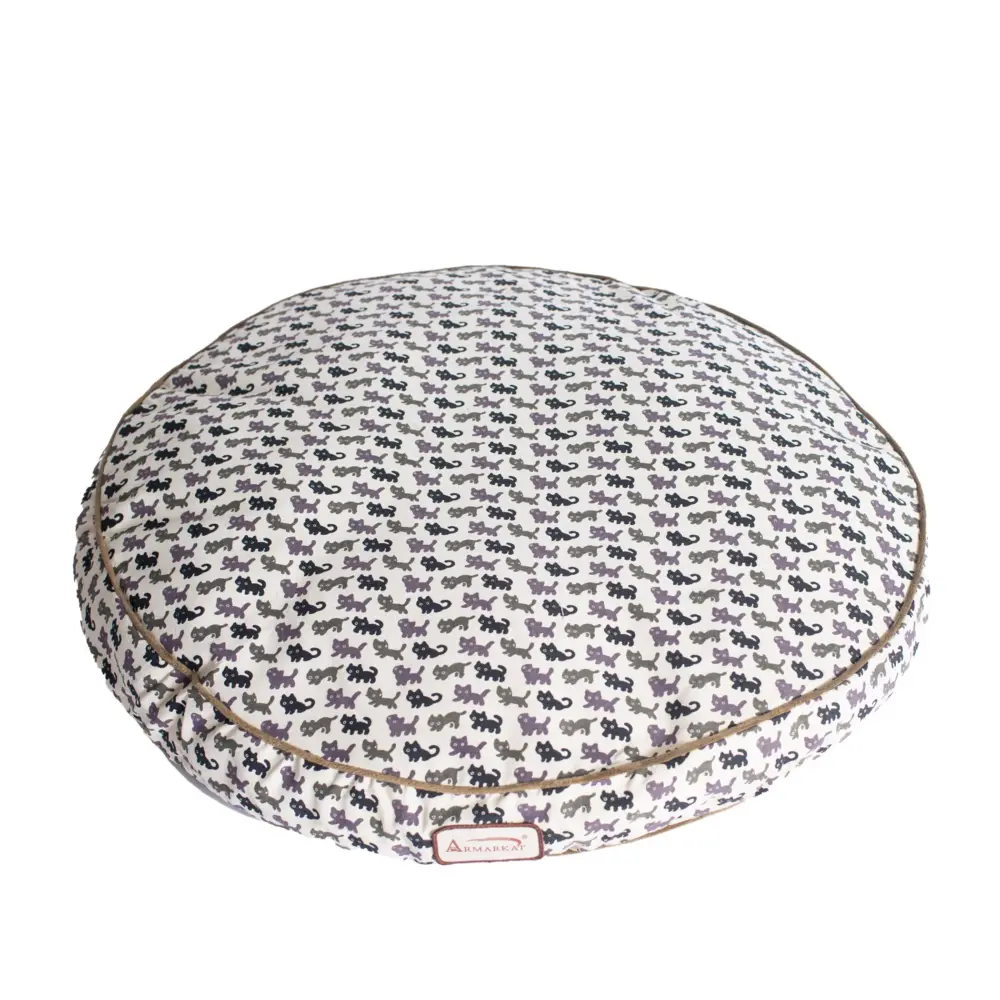
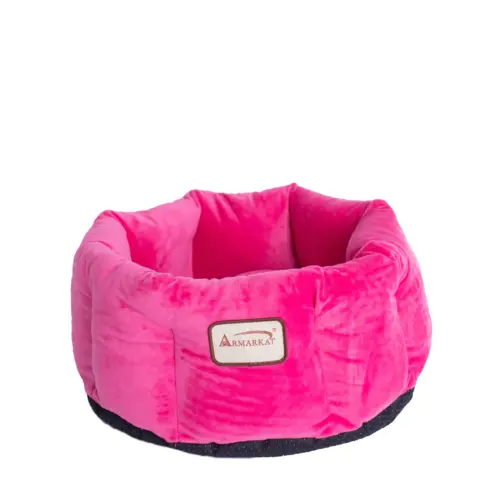
- Cuddle Cat BedA small velvet cuddle bed for cats and extra-small dogs with a waterproof
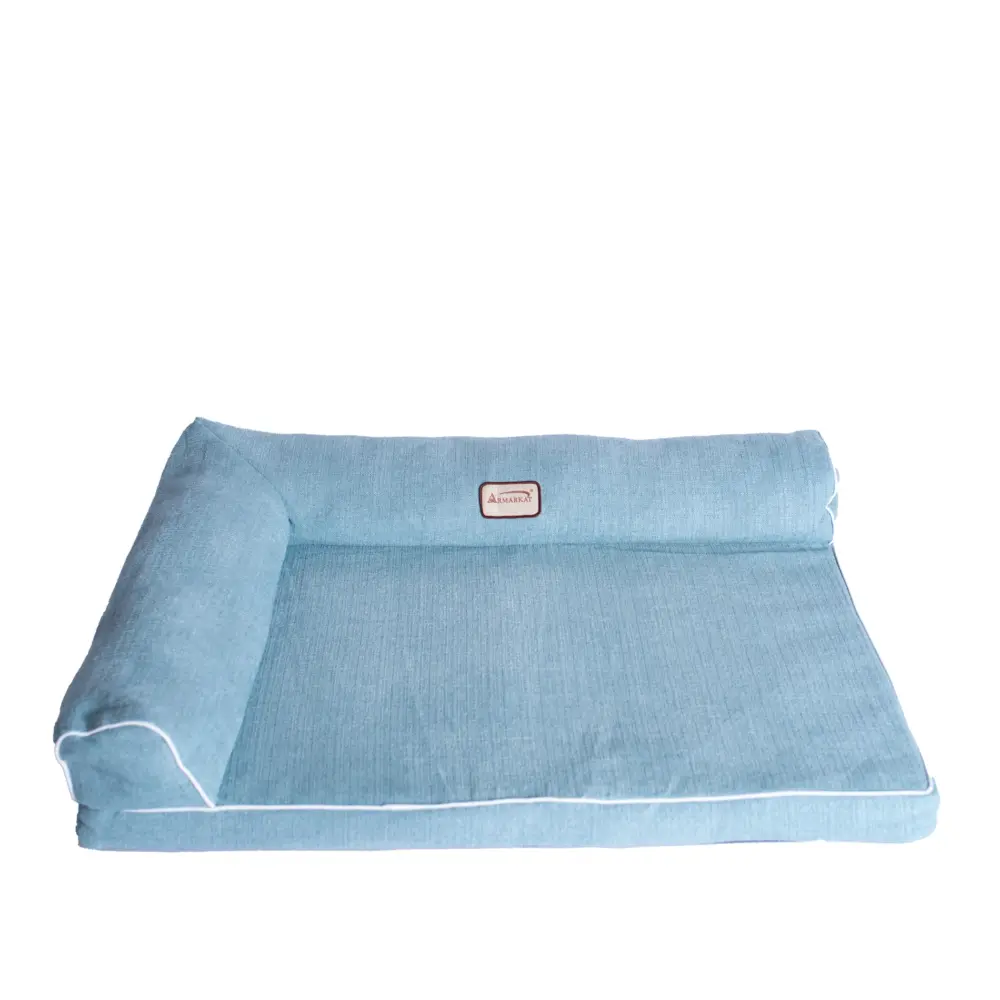
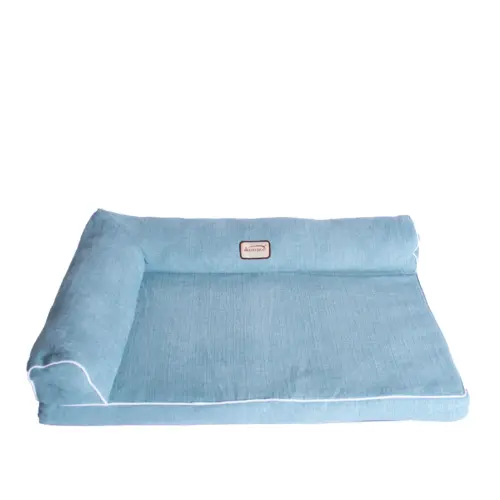
- Bolstered Dog BedA bolstered bed on upholstery-grade fabric with a removable cover
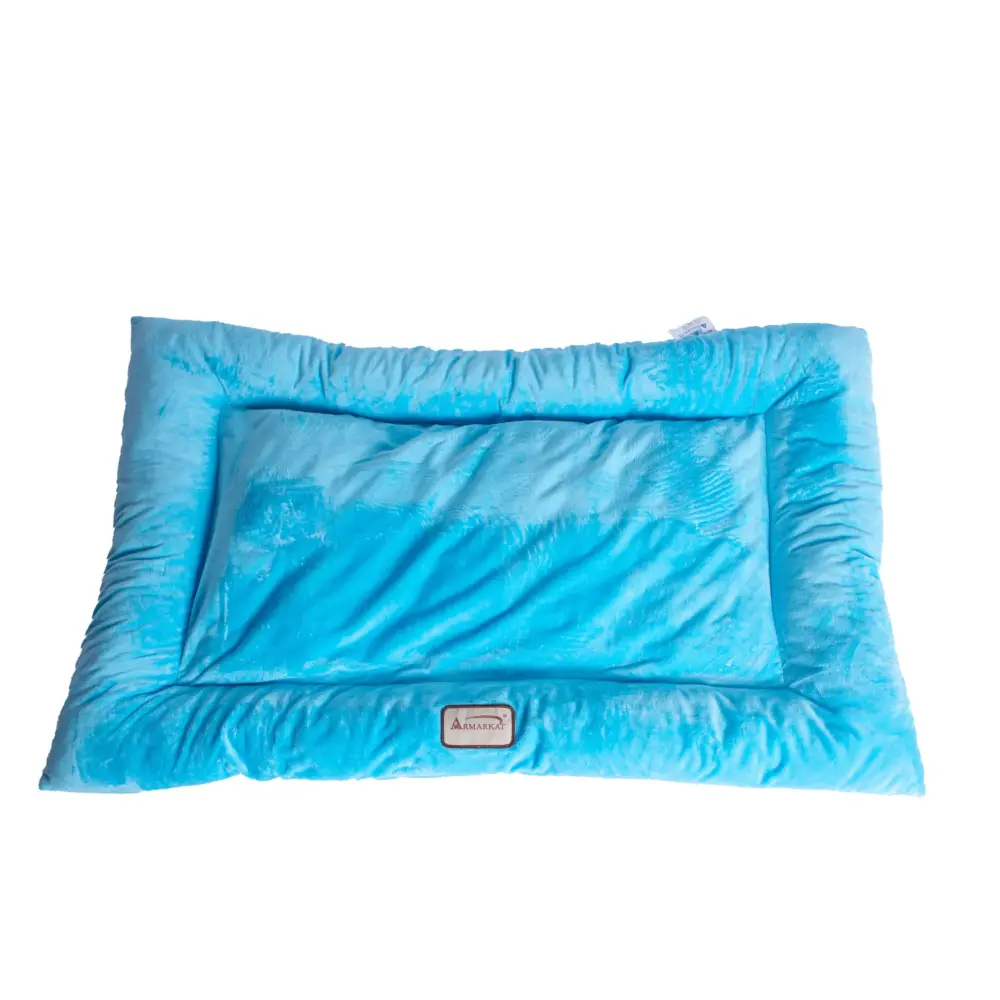
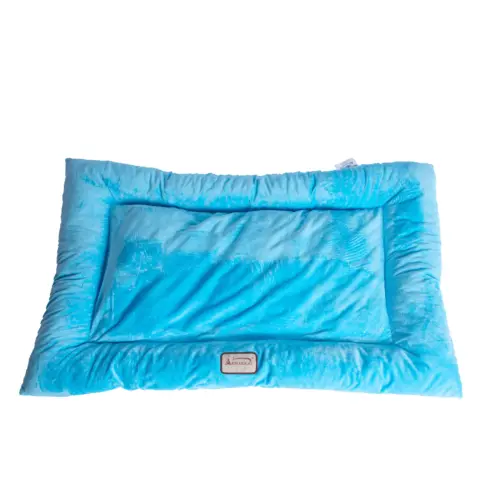
- Velvet Crate MatA flat velvet mat where the entire cushion machine washes rather than a cover alone
Water-resistant, waterproof and the gap between them
Water-resistant fabric repels liquid for a while. A splash beads up and can be wiped off, and a spill gives you perhaps a minute before it starts going through. Almost everything sold as a waterproof dog bed is actually this.
Waterproof means liquid does not pass, under pressure, over time. In a bed that normally means a laminated or coated membrane, usually polyurethane bonded to fabric, sealed around the inner cushion. A dog lying on a wet patch applies exactly the kind of pressure that pushes liquid through a merely resistant fabric.
The marketing uses the words interchangeably, so read the construction instead of the headline. If the description mentions a liner, a membrane or a laminated inner, it is doing the real job. If it only mentions the cover fabric, it is not.
The three layers in a bed
Almost every bed has three parts, and they do completely different things.
| Layer | What it does | What it cannot do |
|---|---|---|
| Outer cover | Takes the wear; usually removable and washable | Stop liquid for more than a moment |
| Inner liner | The waterproof membrane, if there is one | Survive being washed on hot repeatedly |
| Fill | The comfort; foam or polyester | Ever be fully cleaned once soaked |
The fill is the part that decides whether a bed survives an accident. Soaked polyester fill can sometimes be washed and dried; soaked foam effectively cannot, because the liquid goes deep into the structure and the foam will not dry fully before it starts to smell. Once a foam core has been through one accident, the bed is usually finished.
The base is the part people forget
A bed can have a perfect waterproof top and still ruin a floor. Liquid finds the seams, runs down the sides and pools underneath, where it sits against wood or carpet for hours before anyone notices.
A proper waterproof base solves two problems at once: it stops that, and it stops the bed sliding on hard floors. Look for a coated or laminated underside rather than the same fabric as the top, and a non-slip finish, often printed dots or a rubberised layer.
For crates and hard floors the base matters more than anything else on the bed, because a crate tray turns a small leak into a puddle that the dog then lies in.
Zip-off covers and what they do not do
A removable cover is a genuinely useful feature and it is not a waterproofing feature. Its job is washing hair, mud and skin oils off the surface. Anything that goes through the cover reaches whatever is underneath.
Two beds can both advertise a zip-off cover and behave completely differently. One has the cover over a bare foam block; the other has the cover over a sealed, lined inner. Only the second survives an accident, and from the photographs they look identical.
- Does the description mention a liner or membrane, not just the cover?
- Is the base a different, coated material rather than the same fabric?
- Does the zip run far enough round to get the cover off without a fight?
- Is the zip covered by a flap, so it is not against the dog’s skin?
- Can the cover go in a domestic machine, at what temperature?
- Are replacement covers sold separately?
- Is the fill polyester, which can be washed, or foam, which cannot?
Who actually needs waterproof
- Puppies. Accidents are routine for months, and a ruined bed is an expensive part of house training.
- Senior dogs. Incontinence is common with age and often arrives without warning.
- Dogs with urinary or kidney conditions, under veterinary care.
- Dogs who come in wet. A swimmer, a dog walked in all weather, or one with a muddy garden.
- Dogs who drool, particularly the heavy-jowled breeds, where the bed under the head is permanently damp.
- Crates and cars, where there is nowhere for moisture to go.
- Post-operative recovery, where there may be discharge or a drain site.
A healthy adult dog with a reliable bladder who sleeps indoors on a dry floor does not need it, and will get a more comfortable bed for the same money without it.
Tip
New incontinence in an adult dog is a veterinary matter, not a bedding matter. A dog who starts leaking urine, drinking much more than usual, or having accidents after being reliably clean should be examined. A waterproof bed manages the laundry; it does not address the cause.
What it costs you in comfort
Waterproofing is a trade. A membrane does not breathe as well as plain fabric, so a lined bed runs warmer and can feel slightly clammy under a dog in summer. The liner also makes a faint crinkling sound that some dogs dislike at first, and adds a little stiffness.
The way around most of this is a lined inner under a soft, breathable outer cover, which keeps the membrane away from the dog. Beds where the waterproof layer is the surface the dog lies on are the ones that feel like a hospital mattress.
For a hot sleeper, consider whether you need the whole bed waterproof or just a washable pad on top. A flat waterproof mat under a comfortable bed is often the better arrangement; crate mat vs dog bed covers that system.
Checking a bed before you buy
- Read the construction section rather than the headline, looking for the words liner, membrane or laminated.
- Check what the fill is. Polyester can be washed; foam cannot recover from a soaking.
- Check the base material separately from the cover, and look for a non-slip finish.
- Check the maximum wash temperature, since hot washes degrade a waterproof membrane over time.
- Measure your washing machine drum against the bed dimensions, not just your dog against them.
- Check whether replacement covers exist, which tells you the maker expects the bed to outlast one.
- For a crate, check the shape: a square pad fills a square crate, a round one does not.
Our picks
-
Armarkat
Canvas Pet Bed Pad, View product
$68.95
Why it fits: Heavy canvas over a waterproof lining with a zip-off cover and a skid-free base, square at 23 inches for crates, puppies and dogs who come in wet.
-
Armarkat
Cuddle Cat Bed, View product
$59.95
Why it fits: A small velvet cuddle bed for cats and extra-small dogs with a waterproof, skid-free base that keeps the floor dry and the bed in place.
-
Armarkat
Bolstered Dog Bed, View product
$89.95
Why it fits: A bolstered bed on upholstery-grade fabric with a removable cover, and replacement covers sold separately so the bed outlasts the first one.
-
Armarkat
Velvet Crate Mat, Choose size & color
Price range: $45.95 through $47.95
Why it fits: A flat velvet mat where the entire cushion machine washes rather than a cover alone, which is the simplest answer to regular accidents.
Keeping the waterproofing working
Membranes degrade. Heat is the main enemy: hot washes and tumble dryers break down the laminate, and a bed that was waterproof when new can stop being so after a year of hot cycles.
Wash covers cool and air dry them. If the inner liner needs cleaning, wipe it rather than machine washing it unless the maker says otherwise. Avoid fabric softener, which leaves a residue that stops water beading on the outer fabric, and avoid bleach entirely.
Check the seams every few months. Liquid gets through stitching long before it gets through fabric, and a bed whose liner seams have opened is no longer doing the job. When to replace a dog bed covers the other signs that a bed is finished.
Protecting a bed you already own
If you have a bed your dog likes, buying a waterproof one is often the wrong move, because dogs are attached to a familiar bed and a new one may simply be ignored. The alternative is to add the waterproofing rather than replace the bed.
- A waterproof mattress protector sized for a cot or a single bed, cut and sewn or simply tucked under the cover.
- A washable incontinence pad laid on top, which is designed for exactly this and comes in several sizes.
- A flat waterproof mat under the bed, which saves the floor if not the bed.
- A spare cover, so one is always clean while the other is in the wash.
- A towel over the head end for a drooling breed, changed daily.
Any of these is cheaper than a new bed and keeps the bed your dog already chooses to sleep in. The one thing to avoid is a plastic sheet directly under the cover, which crinkles, holds heat and makes the bed unpleasant enough that many dogs stop using it.
Crates and cars, where it matters most
The two places waterproofing is close to essential are a crate and a vehicle, because in both there is nowhere for liquid to go and the surface underneath is either a plastic tray or your car.
In a crate, a waterproof base is more important than a waterproof top, since anything that gets through runs straight to the tray and then sits against the bedding from below. A square pad with a coated base, sized to the tray rather than to the dog, is the arrangement that works.
In a car, treat the bedding and the seat protection as two separate items: a waterproof cover for the upholstery and a washable mat on top for comfort. One product rarely does both well. Cargo liner vs back seat cover covers the first half.
Common questions
Can I just put a towel on a normal bed?
For drool or wet fur, yes, and it is a sensible cheap option. For urine it is not, because a towel saturates and the liquid reaches the fill underneath within seconds.
Is a plastic sheet under the bed enough?
It protects your floor and does nothing for the bed. If the goal is saving the bed, the waterproof layer has to be inside it.
How do I get the smell out of a bed that has already been soaked?
Wash the cover, then treat the inner with an enzymatic cleaner designed for pet urine rather than a general detergent, and dry it completely before use. If the smell returns once the bed warms up under the dog, the fill is contaminated and the bed needs replacing.
Related guides
-
Comparison
Crate Mat vs Dog Bed: When a Flat Pad Is the Better Buy
Thin washable pad or proper bed? The answer changes by location. This compares the two for crates, cars and second sleeping spots, including cost per wash, what happens with a dog who digs and shreds, and why hot sleepers often prefer the thinner option.
-
Guide
How Much Sleep Does a Dog Need, and What Disrupts It
Adult dogs sleep far more than most owners expect, and puppies more again. This guide covers typical totals by life stage, what interrupted rest does to behaviour, and how to set up a bed that actually gets used.
-
Guide
Signs a Dog Is in Pain: What Changes Before They Limp
Dogs hide pain well, and most early signs are changes rather than symptoms. This guide covers what to watch in how a dog lies down, moves, behaves and eats, and how to give your vet something useful to work with.