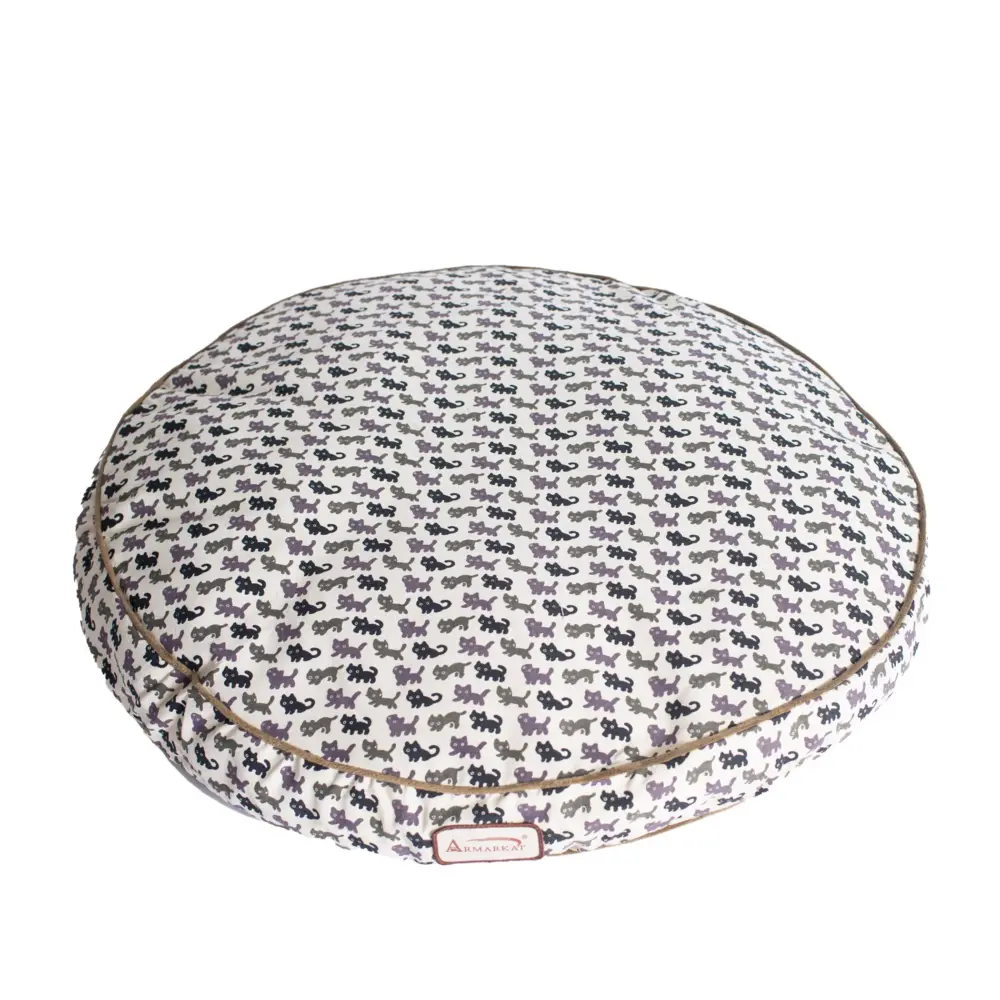
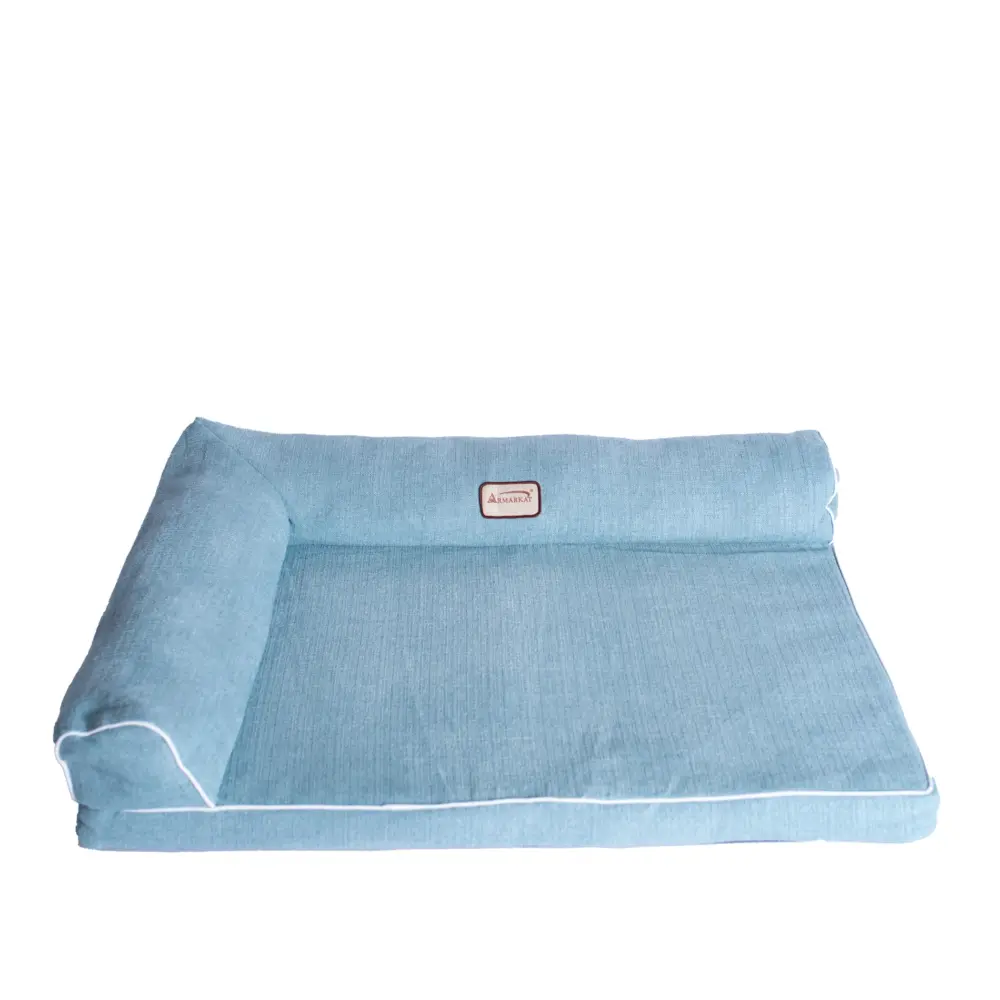
Beds & Comfort Comparison
Crate Mat vs Dog Bed: When a Flat Pad Is the Better Buy
Short answer
A flat mat wins in a crate, in the car, as a second bed and for any dog who digs, shreds or has accidents, mostly because the whole thing goes in the washing machine. A full bed with sides wins as the main sleeping place for a dog who curls up, leans on something and sleeps there all night. Most households end up with one of each rather than choosing.
The difference that matters
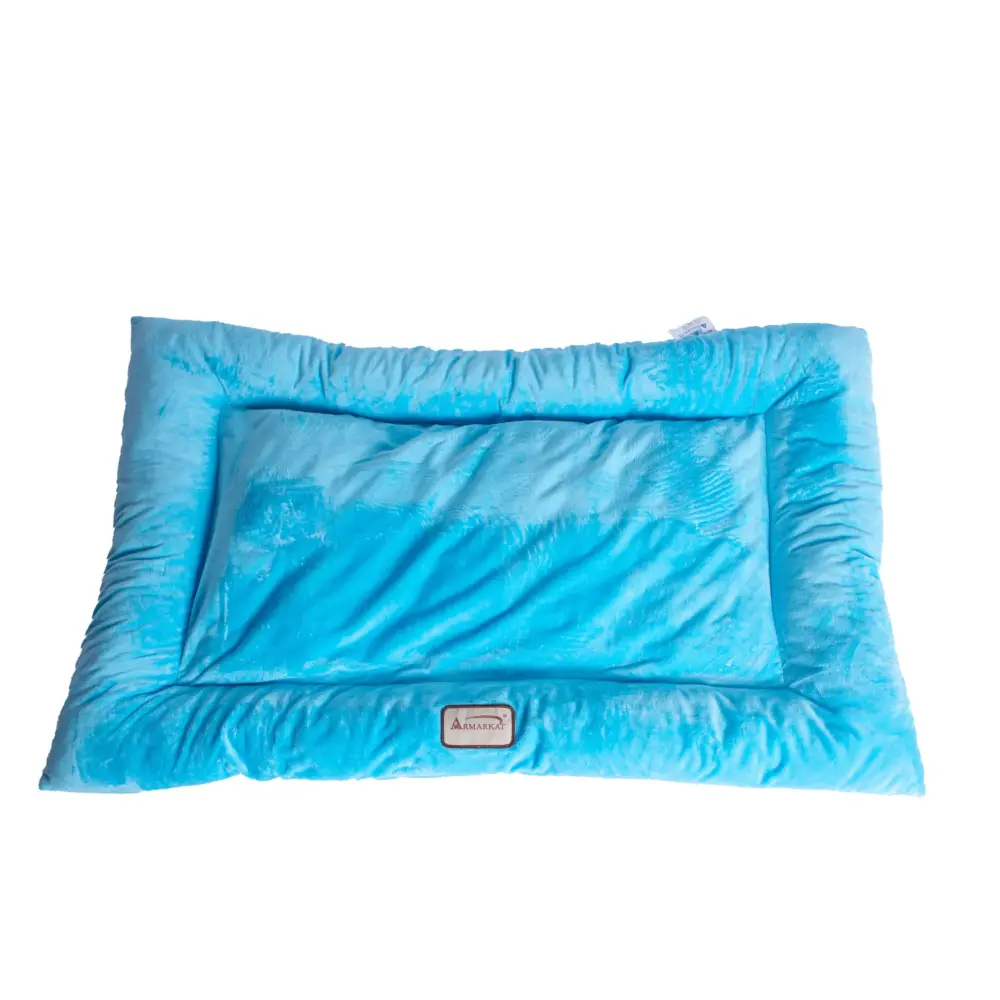
It is not thickness, though that is the obvious one. It is what happens at the washing machine. A flat mat is a single cushion that goes in whole and comes out in one piece. A full bed usually has a zip-off cover that washes while a bulky inner stays dirty, or a sealed construction that does not fit in a domestic machine at all.
That decides where each one belongs. Anywhere mess happens regularly, the washable item wins regardless of comfort. Anywhere a dog sleeps for eight hours a night, comfort wins.
Where a flat pad wins
- Crates. A rectangular pad uses the whole floor; a round bed wastes the corners and leaves a gap the dog falls into.
- Cars. Flat packs down, does not slide around and does not take up boot space when not needed.
- Second and third spots. A pad by your desk or in the kitchen costs less and takes less room than another bed.
- Puppies. Accidents are frequent and the whole thing needs washing, often.
- Dogs who dig and circle. There is nothing to pull apart and no stuffing to redistribute.
- Hot sleepers. Less insulation underneath, and no sides holding heat in.
- Travel and staying away. A familiar mat rolls up and goes in a bag.
Where a full bed wins
- The main sleeping spot. Depth matters over a whole night in a way it does not over an afternoon nap.
- Dogs who curl and lean. A raised edge gives a head rest and a sense of enclosure that a flat mat cannot.
- Hard floors. Two inches of fill on tile is tolerable; half an inch is not.
- Older dogs. Pressure on hips and elbows matters more as a dog ages and loses muscle.
- Draughty rooms. Bolstered sides block the cold air that runs along the floor.
- Dogs who feel exposed. Sides make a bed feel like a place rather than a surface.
Side by side
| Flat pad | Full bed | |
|---|---|---|
| Comfort over a full night | Adequate | Better |
| Fits a crate properly | Yes | Often not |
| Washing | Whole thing, every time | Cover only, usually |
| Dries | Hours | A day or more |
| Survives digging | Usually | Often not |
| Cost per sleeping spot | Lower | Higher |
| Takes up space when unused | Minimal | Significant |
| Suits hot sleepers | Yes | Less so |
Washing: the real deciding factor
Dog beds get dirty in a way people underestimate. Hair, skin oils, saliva, mud from feet and the occasional accident all accumulate, and a bed that is not washed monthly becomes a genuine source of smell and of skin irritation.
With a zip-off cover you wash the fabric and leave the inner, which is where most of the smell lives. Some beds have a waterproof liner between the two, which solves the problem properly; many do not. A one-piece mat has no such compromise: everything that got dirty goes in the machine.
Check before you buy whether the bed fits in your machine at all, because a large bolstered bed often does not. How to wash a dog bed covers the cycles, drying and the mistakes that destroy the fill.
Chewers and diggers
Circling and scratching at bedding before lying down is normal behaviour and nothing to discourage. The problem is when it goes through the fabric, which puts stuffing on the floor and sometimes in the dog.
A flat mat is more survivable: there is less to grip, no piping to chew along, and the whole thing lies flat under the dog’s weight. A heavy canvas cover survives claws far better than soft bedding fabric, which is why canvas pads exist.
A dog who destroys any bedding should not have bedding unsupervised, since swallowed stuffing causes intestinal obstructions. Use a bare crate tray with a mat only when you are there, and work on the underlying reason, which is usually anxiety or boredom rather than the bed.
Hot sleepers and thick beds
A thick bed with sides is a heat trap, which is exactly what you want in January and the opposite of what a double-coated dog wants in July. Dogs who abandon their bed for the kitchen floor every summer are not being awkward; the bed is too warm.
A flat mat is the better summer surface, and some households swap between the two seasonally. A cooling mat on top of a flat pad is the usual summer arrangement; a thicker bed with bolsters is the winter one.
Our picks
-
Armarkat
Velvet Crate Mat, Choose size & color
Price range: $45.95 through $47.95
Why it fits: A flat velvet mat with two inches of fill where the whole cushion machine washes, not just a cover. Two sizes for crates, car floors and second spots.
-
Armarkat
Canvas Pet Bed Pad, View product
$68.95
Why it fits: Heavy canvas with a waterproof lining and a zip-off cover, square so it fills a crate corner to corner. For puppies and anything that comes in wet.
-
Mr. Peanut’s
OrthoPlush Pet Bed, View product
$41.95
Why it fits: A plush surface over a firmer core that keeps its loft, with a grippy base. A proper bed for the main sleeping spot on a hard floor.
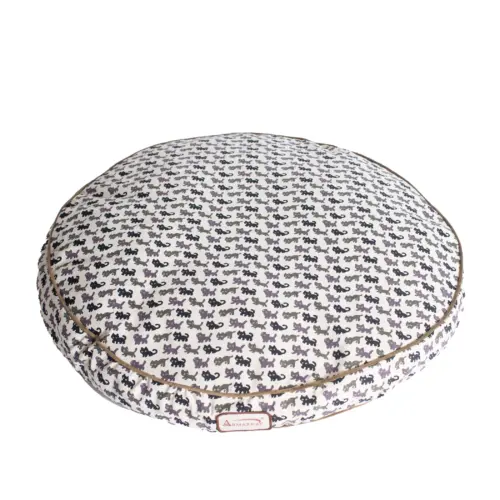

The two-pad system most homes end up with
The arrangement that works for most households is not one or the other. It is a proper bed in the room where the dog sleeps at night, and flat mats everywhere else: the crate, the car, the kitchen, the home office.
That gives the dog a comfortable place for the long sleep and a familiar surface everywhere they spend time, at a fraction of the cost of multiple beds. It also means there is always a clean one while another is in the wash, which is the practical reason it survives contact with real life.
Buy two of the flat mats in the same size so they are interchangeable. For sizing either type, measure your dog stretched out on their side and add a few inches; measuring a dog for a bed has the method, and what to put in a dog crate covers the rest of the crate setup.
Fill types and what they are worth
Both formats come with the same range of fills, and the fill decides comfort and lifespan more than the shape does. Loose polyester fibre is the cheapest and flattens fastest, usually within months of nightly use, after which the dog is effectively lying on the floor through a layer of fabric.
Bonded or high-loft polyester holds its shape far longer because the fibres are held together rather than migrating to the edges. Foam cores keep their thickness longest of all, at the cost of weight, washability and heat retention. A firm core with a plush surface is the usual compromise on a good bed, and it is the one that suits older dogs best.
On a flat mat, the fill matters less because you are not relying on it for depth. Two inches of ordinary polyester in a mat that washes whole is a better buy than four inches of the same fill in a bed that you cannot get clean.
Where each one goes in a car
Cars are the place the choice is clearest. A flat mat sits on a boot floor or a back seat without sliding, packs away when you need the space, and survives being thrown in a washing machine after a muddy walk, which is the only cleaning regime a car item will realistically get.
A bolstered bed in a boot is worse than nothing in a crash, because the raised sides stop the dog bracing and the bed itself becomes a projectile. Bedding is not restraint; a crash-rated crate or a properly fitted harness tether is what keeps a dog in place. Dog crate vs seat belt in the car covers the restraint decision.
If you want padding and protection together, a waterproof cover over the seat with a flat mat on top is the arrangement that works and washes.
Cost over three years
The sticker price is misleading, because the number that matters is how many you buy in three years. A mat that goes through the machine weekly and lasts two years is cheaper than a bed that cannot be cleaned and is replaced every eight months because of the smell.
| Flat mat | Full bed | |
|---|---|---|
| Typical lifespan with weekly washing | Eighteen months to three years | One to three years |
| Replaced because of | Wear and flattening | Smell, damage, flattened fill |
| Replacement covers available | Rarely needed | Often, which extends life |
| Number needed per household | Two or three | One |
The practical answer for most homes is one good bed in the main sleeping spot, replaced rarely, and two cheap mats in rotation everywhere else.
Common questions
Does a dog need any bedding in a crate?
Most dogs are more settled with something, and a flat pad is the usual answer. Puppies who chew bedding, and dogs who overheat, sometimes do better on the bare tray; that is a reasonable temporary arrangement rather than a failure.
Is a thicker mat always better?
No. Beyond about two inches you gain comfort and lose the things that made the mat useful: it stops fitting the crate, stops fitting the machine and starts holding heat.
How often should either be washed?
Monthly as a baseline, more often for a puppy, a dog with skin problems, or anything that comes in wet and muddy. Wash more often if you can smell it from across the room, which is already overdue.
Related guides
-
Buying guide
Waterproof Dog Beds: What the Label Means and What to Look For
Most beds sold as waterproof have a water-resistant cover and an absorbent inner, which is the layer that holds the smell. This explains the three layers in a bed, why the base matters as much as the top, and how to check a bed before you buy it.
-
Comparison
Bolster vs Flat Dog Bed: What Your Dog’s Sleeping Position Tells You
The shape of a bed matters more than the price, and the way your dog already sleeps tells you which shape to buy. This compares bolstered and flat beds for curlers, sprawlers and leaners, covers the overhang problem on big dogs, and what changes as a dog gets older.
-
Guide
How Much Sleep Does a Dog Need, and What Disrupts It
Adult dogs sleep far more than most owners expect, and puppies more again. This guide covers typical totals by life stage, what interrupted rest does to behaviour, and how to set up a bed that actually gets used.