Cat Care How-to
How to Clean a Cat Without a Bath, From Sticky Fur to Messy Bottoms
Short answer
A healthy cat rarely needs a full bath. Brush out loose hair, then wipe just the dirty patch or soiled fur under the tail with a damp, lukewarm cloth, softening dried mess rather than pulling it, and press it dry. If paint, oil, a cleaning product or anything unknown is on the coat, call your veterinarian right away.
Do cats need baths at all?
Rarely. A healthy cat’s tongue and teeth do most of the work, and the ASPCA’s cat grooming tips save a bath for a cat who is very dirty or has gotten into something sticky or smelly. International Cat Care goes further in its guide to grooming your cat: it sees no reason to bathe a healthy cat, and says most cats don’t tolerate it well.
Your part is the one-off mess a cat can’t fix alone: dust from under the bed, food on the chest, a soiled rear after soft stool. A whole coat that has turned greasy, dull or unkempt is different. It usually means your cat has stopped grooming, and VCA Animal Hospitals notes that coat condition can be the earliest sign of a health problem. Start with a veterinary check; our guide to grooming a senior cat covers the care that follows.
What you need
- A brush that suits the coat. Soft pins or rubber for a short coat; a slicker and a wide-toothed comb for medium and long fur.
- Two soft washcloths or a few cotton balls, plus a bowl of lukewarm water.
- A dry towel for your lap and for pressing fur dry.
- Disposable gloves for anything under the tail.
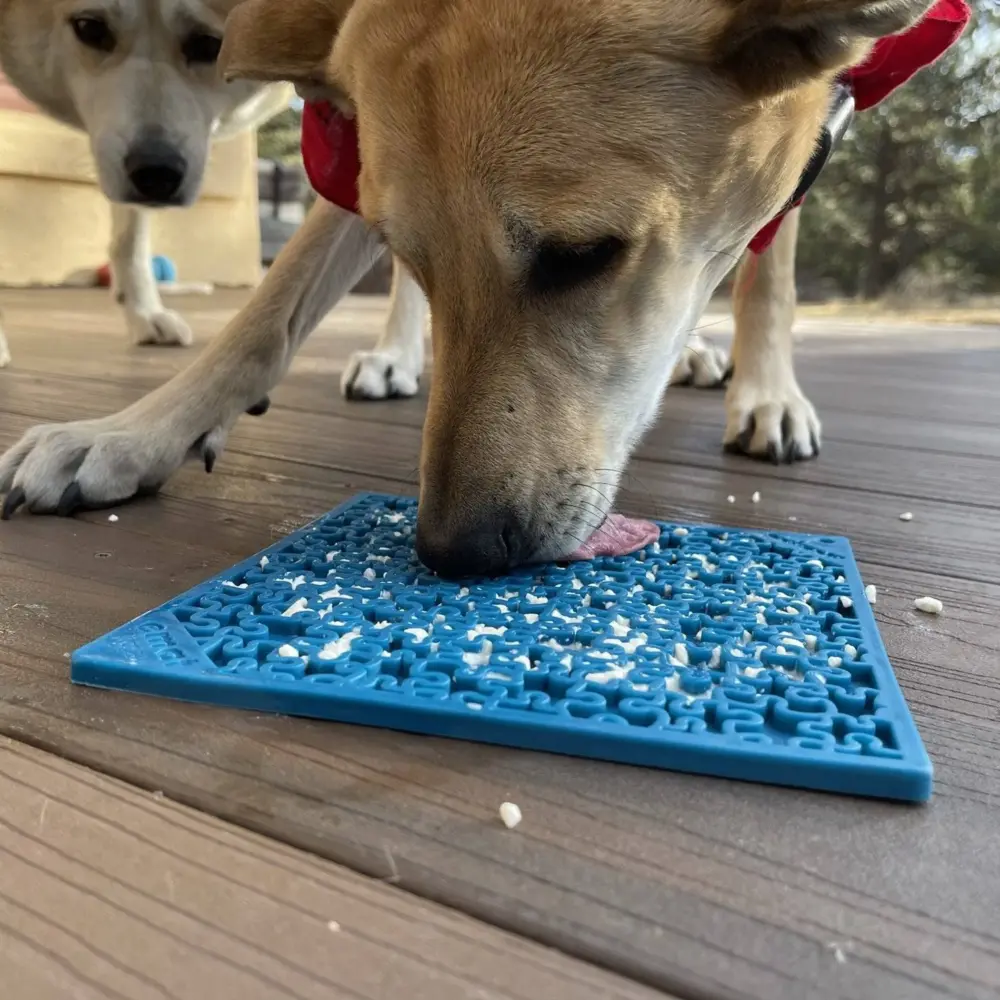
- Treats, or a little wet food spread on a lick mat such as the SodaPup Jigsaw Lick Mat, which suits cats as well as dogs.
- Optional: a shampoo or wipe labeled for cats.
Brush first to lift loose hair, dust and dander
Brushing does much of the cleaning: the ASPCA notes that it removes dirt, grease, dead hair and skin flakes. Brush a dry coat with the lie of the fur and light pressure. For a final pass, International Cat Care suggests a damp cotton or rubber glove to pick up the last loose hairs.
On medium and long coats, use a slicker that reaches the layer next to the skin, where litter and dried mess hide. For a schedule by coat length, see how often to brush a cat; if yours bolts at the sight of a brush, start with brushing a cat that hates being brushed before you add a damp cloth to the routine.
From our own catalog, one brush for each coat type:
-
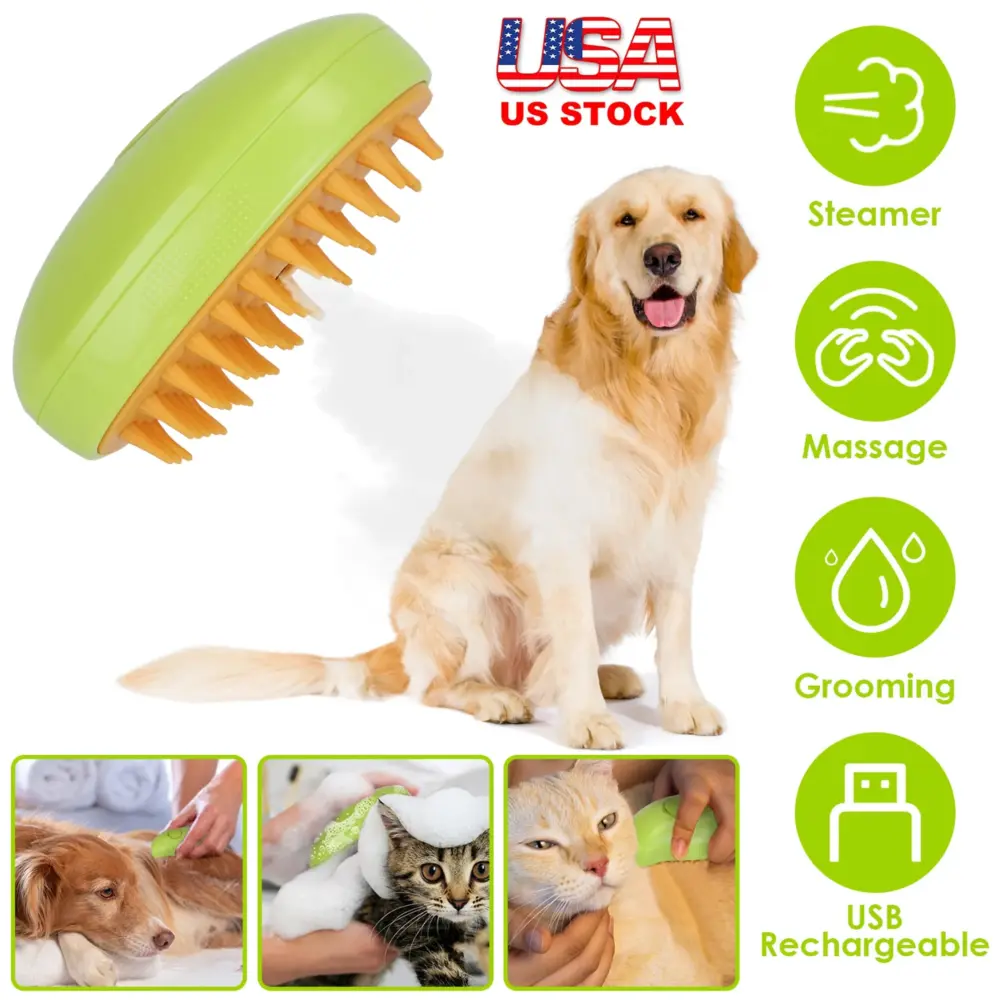
3-in-1 Steam Grooming Brush for Cats & Dogs, View product
$36.95
Why it fits: Soft silicone pins clear loose hair from a short coat before you clean a patch; start dry, then add the mist away from the face.
-
Sakabase
Curved Slicker Brush, View product
$39.95
Why it fits: The curved head and fine pins reach the undercoat on medium and long fur; brush a cleaned patch only once it is dry, and gently.


Spot cleaning a dirty patch, step by step
Use this for food on the chin or chest, a muddy paw or dust that brushing didn’t shift; if you don’t know what the mess is, read the veterinarian section first. Pick a relaxed moment, such as after a meal, and sit with your cat on a towel across your lap.
- Brush the patch while it’s dry. Lift out loose hair and anything that crumbles, so the cloth only has to deal with what’s stuck.
- Wring a soft cloth in lukewarm water until it’s damp, not dripping. Lukewarm is gentler than cold, and a cloth that doesn’t drip keeps water from soaking down to the skin.
- Stroke the patch in the direction the hair grows, in short, gentle passes. Rinse and wring the cloth often, so you lift the dirt instead of spreading it.
- If water alone won’t shift it, add a drop of cat shampoo to the bowl, work it in with the cloth, then wipe it out with clean water until the fur no longer feels slippery.
- Press the area dry with a towel rather than rubbing, and keep your cat in a warm room, away from drafts, until the fur is dry to the skin.
- Brush the patch once it’s dry and finish with a treat. Expect your cat to groom the spot afterward; that’s normal, and it’s why nothing should be left on the fur.
Rinse well: whatever stays in the coat ends up on your cat’s tongue, and the ASPCA warns that leftover shampoo can irritate the skin and attract dirt. Use a shampoo formulated for cats; VCA explains that cat skin differs from ours in thickness and pH, and that even baby shampoo is too harsh for it.
Tip
For the face, swap the cloth for a damp cotton ball. The ASPCA suggests wiping away from the corner of the eye, with a fresh cotton ball for each eye. Keep shampoo off the face and water out of the ears.
Litter stuck in fur or paws
Clumping litter grabs damp fur and toe tufts and sets hard. Let it dry, then brush or comb it out rather than wetting it again, which only makes it clump. For paws, the ASPCA suggests a gentle wipe with a damp cloth, checking between the toes and around the pads. If litter keeps riding out of the box, our guide to stopping cat litter tracking covers the box, the litter and long toe fur.
How to clean a cat’s messy bottom
Soiled fur under the tail is hard for some cats to fix alone, especially long-haired cats with fluffy “britches” on the back legs. VCA notes that in long-haired cats, diarrhea can show up as staining or soiling of the fur around the back end, and overweight or arthritic cats may struggle to reach it at all. Don’t tug at dried clumps: International Cat Care points out that the skin between the hind legs is very thin and sensitive.
- Set up first. Put on disposable gloves and lay your cat on a towel, or have a helper gently steady the front end and offer treats.
- Soften dried mess by holding a warm, damp cloth against it for a minute or two. Repeat until it lets go, rather than pulling at it.
- Ease it out from the ends of the hair, holding the fur at the base between your fingers so the skin takes no pull. Use a clean part of the cloth for each pass.
- Wipe the skin gently, away from the genitals, go over the area once more with clean water, then press it dry with a towel.
- Comb or brush the fur once it’s completely dry, reward your cat, then wash your hands.
If a clump won’t soften, leave it to a groomer or your veterinarian rather than reaching for scissors: thin cat skin gets pulled up into the clump and is easy to cut. A long-haired cat who is often soiled may do better with a sanitary trim, a short clip around the rear done with clippers. While you’re looking, the ASPCA suggests checking around the anus for tan, rice-sized objects, which may indicate tapeworm; if you see any, tell your veterinarian.
Did the accident happen in the carrier? Clean your cat first, then see how to clean a cat carrier after an accident.
Safety note
Call your veterinarian if soiled fur under the tail keeps coming back, or if frequent liquid or semi-liquid stools last more than two days, the point at which VCA advises a call. Call right away for bloody diarrhea, vomiting, weakness, loss of appetite or a cat who seems unwell. Red or sore skin, scooting and constant licking under the tail also need a check.
Baby wipes, waterless shampoo and what to avoid
A cat licks off whatever you leave behind, so any product you use should be made for cats and used as its label says.
- Baby wipes and other wipes for people. They’re made for human skin and are often scented. Use a wipe labeled for cats, or a damp cloth, which does the same job.
- Antibacterial and disinfecting wipes. Never on a cat. International Cat Care warns that disinfectants such as benzalkonium chloride, found in many household and antibacterial products, wipes included, can make cats sick when they lick or groom them off.
- Waterless or no-rinse shampoo. Only one labeled for cats, on a small patch and away from the face. If your cat seems to need cleaning often, VCA suggests asking your veterinarian, who may recommend a dry or medicated shampoo.
- Essential oils, perfume and scented sprays. The ASPCA warns that cats are especially sensitive to essential oils, and a clean cat doesn’t need a scent.
- Dog flea treatments. International Cat Care warns never to use a dog flea product on a cat: some contain permethrin, which can kill cats, and even contact with a recently treated dog can be enough. If you have a dog, follow its product label on keeping pets apart.
- Paint thinner, solvents and degreasers. Never on fur; see the next section.
When something on the coat needs a veterinarian
Paint, motor oil, a cleaning product, a dog’s flea treatment, an essential oil or anything you can’t identify on the fur or paws can be swallowed the next time your cat grooms. The first job is stopping the licking, not scrubbing.
- Stop the grooming. Wrap your cat loosely in a towel or keep them in a small room where you can watch, away from other pets who might lick them.
- Call right away. Phone your veterinarian, the ASPCA Animal Poison Control Center at (888) 426-4435 or Pet Poison Helpline at (855) 764-7661. Both answer 24/7; expect a consultation fee.
- Have the product or its packaging at hand, and say roughly when it happened and how much is on the coat.
- Skip solvents and home remedies, and don’t try to make your cat vomit unless your veterinarian tells you to.
How to wash it off depends on the substance. For a disinfectant, International Cat Care says to wash it off with water and call your veterinary team immediately. For paint or varnish, VCA’s paint and varnish poison alert suggests mild liquid dish soap or careful trimming with clippers, never scissors, and no paint thinner or mineral spirits unless your veterinarian or Pet Poison Helpline says so. A little paint left in the fur, VCA adds, is usually better than an injury.
Safety note
Go to your veterinarian or an emergency clinic straight away if your cat drools, vomits, trembles, wobbles, struggles to breathe or seems suddenly unwell after contact with any product, even if the coat already looks clean.
Mistakes and troubleshooting
- Soaking a large area. A soaked coat takes a long time to dry, and few cats put up with it. If the mess covers most of the body, see the bath section below.
- Wetting a mat. VCA warns that tangles can become impossible to remove after a bath, so work mats out dry. Our guide to grooming a long-haired cat explains how to ease out small mats and when to call a groomer.
- Your cat won’t sit still. Try when your cat is sleepy, clean one small area per session, and have a helper offer treats or the lick mat. Stop at the first tail swish rather than holding your cat down.
- The patch feels sticky once dry. That’s usually leftover shampoo or wipe lotion. Go over it again with a cloth and plain water, then dry it.
- A smell lingers. If the fur is clean but the smell comes from the ears, mouth, skin or under the tail, cleaning won’t fix it; ask your veterinarian.
- Black specks keep turning up. They may be flea dirt. International Cat Care’s test: comb your cat over a white surface with a flea comb and put the specks on damp cotton wool, where flea dirt slowly dissolves into red-brown marks. Ask your veterinarian about a flea treatment for cats.
- Your cat keeps licking the spot. Some extra grooming after cleaning is normal. Licking that goes on for days, or leaves a thin or bald patch, is worth a veterinary visit.
When a real bath is the right call
The ASPCA and VCA describe these cases for a bath:
- Your cat is very dirty, or has gotten into something sticky or smelly over a large area.
- An outdoor cat has met a skunk.
- An arthritic or overweight cat who struggles to groom needs an occasional bath to clear loose hair and odors.
- Your veterinarian prescribes regular baths as part of treatment, for example for allergies.
A poison line may also tell you to wash a product off. To bathe at home, the ASPCA suggests brushing out tangles first, a rubber mat in the sink or tub, three to four inches of lukewarm water and a cat shampoo. Keep water out of the eyes, ears and nose, rinse until no residue is left, then wrap your cat in a large towel and dry them somewhere warm and away from drafts.
If your cat fights hard enough that one of you could get hurt, don’t force it: the ASPCA suggests booking a professional groomer or your veterinarian, and VCA notes that some owners have their cat sedated and groomed at the clinic. For the brushes in this guide, browse our grooming tools or the rest of our cat essentials.
Related guides
-
Guide
Can Dogs and Cats Share Water Bowls, Beds and Brushes?
A healthy dog and cat can share a water bowl, beds, cooling mats and grooming tools if you clean them between pets; food, the litter box and small toys stay separate. Here's the item-by-item guide, plus when to stop sharing and the dog flea products that can poison cats.
-
How-to
How to Keep a Cat Cool in Summer: Cool Spots, Water and Heat Signs
A hot-day plan for indoor cats: why panting is a red flag, heatstroke first aid, blinds and safe airflow, extra water, a cool floor or gel mat, brushing instead of shaving, play at the cool ends of the day, and leaving your cat home in the heat.
-
How-to
How to Use a Slicker Brush Without Scratching the Skin
A slicker scratches when it is gripped hard and pressed in. Here’s how to hold one, test your pressure on your own forearm, brush in sections down to the skin, ease out a small tangle, handle thin-skinned spots and cats, and spot brush burn early.