Walking & Training Guide
Dog Walking Games: Sniff Breaks, Find-It and Loose-Leash Play
Short answer
Give one stretch of every walk to your dog’s nose, then add one short game: find-it with a tossed treat, a loose-leash game such as connect the dots or chase me, or a curb or bench trick. Change the route or the game each week, and match both to your dog’s age, energy and the day’s weather.
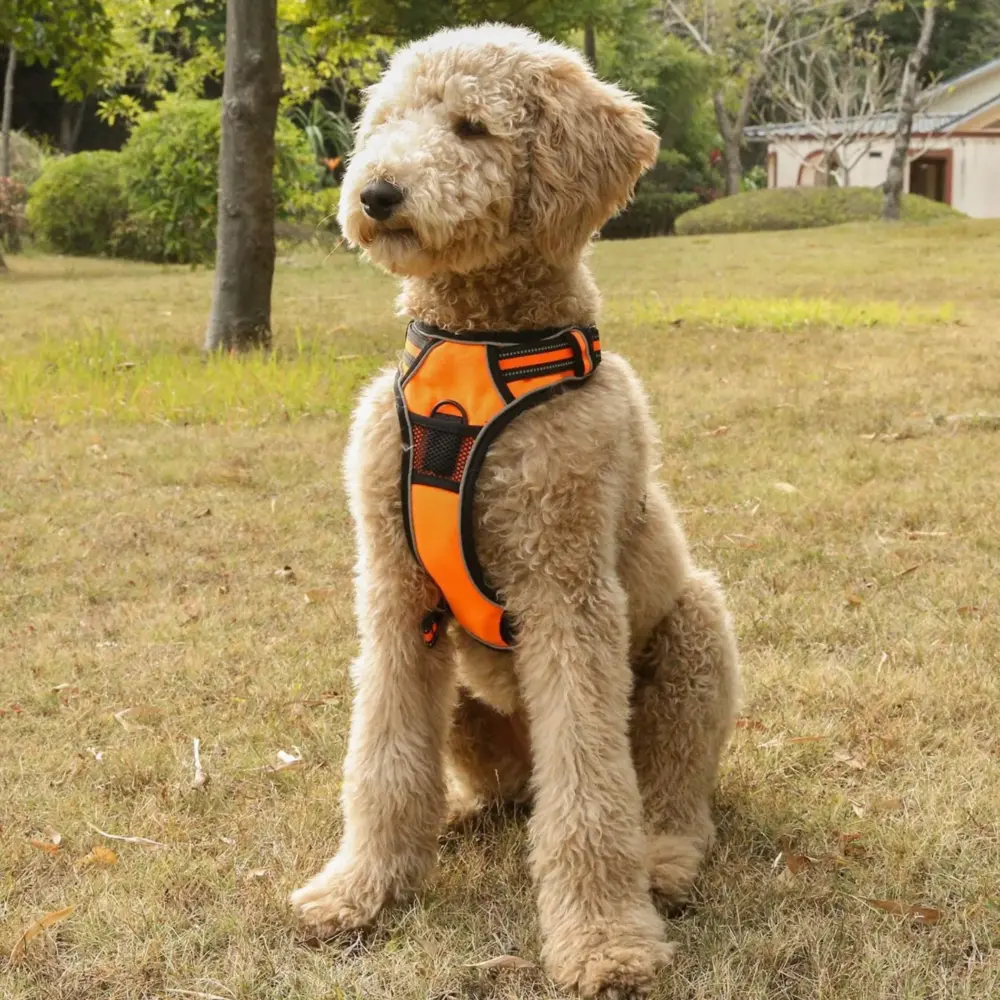
A simple shape for a more interesting walk
You don’t need a new park or a bag of props. Most of the change happens on the loop you already walk:
- Open with a sniff stretch. The first part of the walk belongs to your dog’s nose, at your dog’s pace.
- Play one game. A few minutes of find-it, a loose-leash game or a curb trick, somewhere quiet.
- Walk on normally. Ordinary walking in between keeps each game short and your dog keen.
- Head home on an easy stretch. Finish with slow sniffing, not a game that leaves your dog wound up at the door.
How long the whole walk should be is a separate question, answered in our guide to how long to walk a dog. The ideas here make the minutes you already have more interesting.
Sniff walks: why a nose-led stretch counts
For a dog, much of a walk is reading: who passed the lamp post, what crossed the lawn overnight. That reading is real mental work. Cornell’s Riney Canine Health Center counts sniffing among the natural behaviors that enrichment should make room for, and suggests letting a dog sniff without being rushed along and, when it is safe, choose which way to go.
A sniff stretch puts that advice into practice:
- Pick a stretch with plenty to smell and little traffic: a grass strip, the edge of a park or a quiet block.
- Let the leash hang in a loose curve and stop when your dog stops. Wait out a long sniff instead of calling your dog on.
- At a safe corner, let your dog choose the turn. Steer away from the road, trash and anything your dog might eat.
- End with a cheerful cue and walk on, so the stretch has a clear finish.
If your dog drags you toward every smell, make each sniff start on a slack leash. Our plan to stop a dog pulling on the leash turns sniff breaks into the reward and shows how to teach the release cue.
Find-it games on the go
Find-it turns a pause on the walk into a short search. Teach it at home first, where nothing competes with the treat, then take it outside:
- Show your dog a treat, say “find it” and drop it at your feet. Repeat four or five times.
- Toss the next one a step away onto a rug or short grass, so your dog has to look for it.
- On the walk, stop at a clean patch of short grass, say “find it” and toss a treat a couple of steps ahead.
- Make it harder slowly: slightly longer grass, a longer toss, or three pieces scattered across a small patch.
- Say your walk-on cue once the last piece is found, and carry on.
Two variations for the park
- Kibble scatter. Sprinkle a small handful of your dog’s usual kibble across clean grass and let your dog hunt it out piece by piece. It is slow, absorbing and easy on the joints.
- Dropped-toy search. On a quiet path, let a small favorite toy fall behind you, walk on a few steps, then turn and say “find it.” Walk back together while your dog follows the trail you just made, and add distance as your dog gets the idea.
Use small, soft treats or part of the day’s kibble, and count them toward the day’s food. VCA Animal Hospitals suggests treats make up no more than 10% of a dog’s daily calories; if your dog is on a special diet, ask your veterinarian which rewards fit.
Safety note
Find-it tells your dog that something on the ground is fair game, so check the spot before you toss anything. Skip areas with litter, dropped food, cooked bones or anything that could be a pill, and lawns with pesticide warning flags. A reliable “leave it” keeps the ground off-limits the rest of the time. If your dog swallows something unknown, call your veterinarian.
Loose-leash games that feel like play
The American Kennel Club’s dog walking games include two that make loose-leash practice feel like play. The AKC starts them at home or in the yard, on a standard fixed-length leash, before you take them out to a quiet sidewalk. They are practice games, not a training plan: for a dog who pulls most of the way, the pulling plan above does the teaching and these keep it fun.
Connect the dots
- Set four or five markers, such as cones, plastic bottles or cans, in a straight line about 5 feet apart.
- Walk your leashed dog from one marker to the next. At each one, stop and reward if the leash stayed loose.
- At the end of the line, turn and come back the same way, rewarding at every marker.
- If the leash tightens between markers, move them closer together, then spread them out again as your dog succeeds.
If a new place is too exciting, take the line back to the yard or indoors. Once your dog has the idea, the trees or fence posts along your route can stand in for the markers.
Chase me
Take a few steps forward. When your dog is watching you on a loose leash, say “yes,” step or jog backward a few steps and reward your dog for following. Mix up the number of steps forward and back so your dog keeps an eye on you. Despite the name, this isn’t a game of tag: you move only a few steps, and the leash stays on and loose. Check what is behind you before you reverse, and keep it to a few short bursts with an excitable dog.
Red light, green light
This one is from the AKC’s training games for walks. Say “red light” at a random moment, ask for a stand-stay and reward your dog for stopping and holding it; “green light” means walk on. Start somewhere quiet before you try it near distractions. The same guide suggests pace changes too: hold a treat at your side to guide your dog as you slow down or speed up, and reward your dog for matching you.
For a sillier yard version, the AKC’s egg-and-spoon game has you carry a plastic egg on a spoon in your leash hand. When your dog drifts or the leash tightens, you call your dog and walk backward instead of steering with the leash.
Bench, post and curb tricks
Street furniture makes good props. Dog parkour, sometimes called urban agility, uses park benches, tree stumps and posts for balancing, going around and going under. The AKC suggests two front feet on a low obstacle as a first move, and the beginner moves are plenty for an ordinary walk:
- Paws up. Lure two front paws onto a low, stable surface such as a stump, a low wall or the edge of a bench seat, reward, then lure your dog back down.
- Go around. Guide your dog in a circle around a tree or post and back to your side.
- Touch. If your dog knows a hand target, hold your palm beside a post or a bench leg and reward the nose touch.
- Curb wait. Ask for a sit or a stand at each curb and cross on your release word. Keep the leash short and watch the traffic yourself; a wait is good manners, not a safety system.
The AKC’s guide to dog parkour sets out the safety basics: a well-fitted harness with the leash clipped at the back, a leash six feet or shorter so you can steady your dog, no jumping down from tall objects, and a reward when your dog tells you a move is too much.
Safety note
Keep puppies low and slow. The AKC notes that a puppy’s growth plates don’t close until at least 12 months of age, so skip any trick that has a young dog jumping on or off things. For seniors and dogs with joint, back or balance problems, stick to touches, waits and go-arounds on level ground, and ask your veterinarian before adding anything that climbs.
Choose props nobody is using, brush muddy paw prints off a bench seat before you leave, and skip playgrounds and anywhere posted as off-limits to dogs. Our guide to dog walking etiquette covers the rest of sharing sidewalks and parks.
New routes and new surfaces
A new route is the easiest game of all, because it changes every smell at once. Change one thing a week:
- Walk your usual loop in reverse, or turn left where you normally turn right.
- Add a block you never use, or cross to the other side of the street.
- Save one weekend walk for a different park or an easy trail.
- Look for new ground underfoot: packed dirt, a sandy path, fallen leaves or a grassy slope. Avoid hot pavement, sharp gravel and broken glass, and check your dog’s pads afterward.
Muddy trails and sandy paths come home on the paws, so keep a towel or pet wipes by the door for the first few minutes back.
Not every dog wants novelty. For a nervous dog, a strange street can be a lot. Keep the familiar loop, add one new block at a time and let your dog sniff it at their own pace. Turn back if your dog freezes, tucks their tail or keeps trying to head home, and if fear on walks keeps growing, talk to your veterinarian or a certified, reward-based trainer.
Matching games to your dog and the weather
The same game can suit one dog and be wrong for another. Use this as a starting point:
| Dog or day | Good games | Go easy on |
|---|---|---|
| Puppy | Find-it, name game, short sniffs | Jumping on or off anything |
| Senior dog | Sniff stretches, touch, curb waits | Climbing, sprints and long loops |
| High energy | Chase me, find-it, paws up | Games right before you get home |
| Puller | Connect the dots, pace changes | Long stretches with no reward |
| Hot day | Shady sniffing, find-it on grass | Hot pavement and running games |
| Icy day | Short loops, sniffing, curb waits | Chase me and tricks on ice |
Puppies learn fast but tire fast. Once your veterinarian says your puppy is ready for walks in public places, keep each game to a minute or two and try the name game from the AKC’s training games: say your puppy’s name once and reward a glance back at you.
Older dogs often get the most from the nose. Our guide to enrichment for senior dogs has slower sniff walks and floor-level scent games that suit stiff joints.
Hot days call for early or late walks, shade, grass and water offered often. Flat-faced, older and overweight dogs struggle in the heat sooner, so give them the gentlest games. Icy days rule out running games and climbing; keep to sniffing and short loops, and on days too cold or wet for much of a walk, switch to indoor games for dogs.
When the games fall flat
- Your dog ignores treats outside. There is too much going on. Move somewhere quieter, make the game easier, try a treat your dog values more, or play a round at home before you leave.
- Your dog gets wound up. Shorten the active games and follow chase me with find-it or a sniff stretch, which many dogs find calming.
- Your dog won’t leave a smell. Wait a few seconds, then give your walk-on cue cheerfully and reward your dog for catching up. Hauling on the leash usually just makes a dog lean the other way.
- Your dog would rather just sniff. That’s fine. Keep the games short, or skip them on that walk.
- Your dog lags, limps or pants hard. Stop the games and head home slowly. Call your veterinarian about limping that doesn’t clear up or a dog who seems unwell, and get help promptly for weakness or stumbling on a hot day.
What to bring for walk games
Games add a few things to the usual walk kit and change how you carry the rest:
- Small, soft treats or a portion of kibble, in a pocket or treat pouch.
- Water, because a sniff walk runs longer than a quick loop and chase me is thirsty work.
- Somewhere to stow a full poop bag, so both hands stay free for treats and toys.
- A well-fitted harness and a fixed-length leash rather than a retractable one.
- A small toy for the dropped-toy search.
For the full list, including ID tags and gear for after dark, see our dog walking essentials. Nilosi doesn’t stock treat pouches or cones; a jacket pocket and a few plastic bottles do the job. These four picks are limited to Nilosi’s own catalog and cover the rest of a game-filled walk. You’ll find more in walking and training gear.
-
Mr. Peanut’s
PetTrek Padded Harness and Leash Set, Choose size & color
Price range: $24.95 through $26.95
Why it fits: A padded harness with a matching leash, so a lurch toward a tossed treat or a good smell puts pressure on the chest, not the neck. XS to Large.
-
Flipo
Fold-A-Bowl Dog Water Bottle with Fold-Out Bowl, Choose color
$28.95
Why it fits: Water at the halfway point of a long sniff walk, since the cover of the 26 oz bottle folds out into a bowl and a wrist strap frees a hand.
-
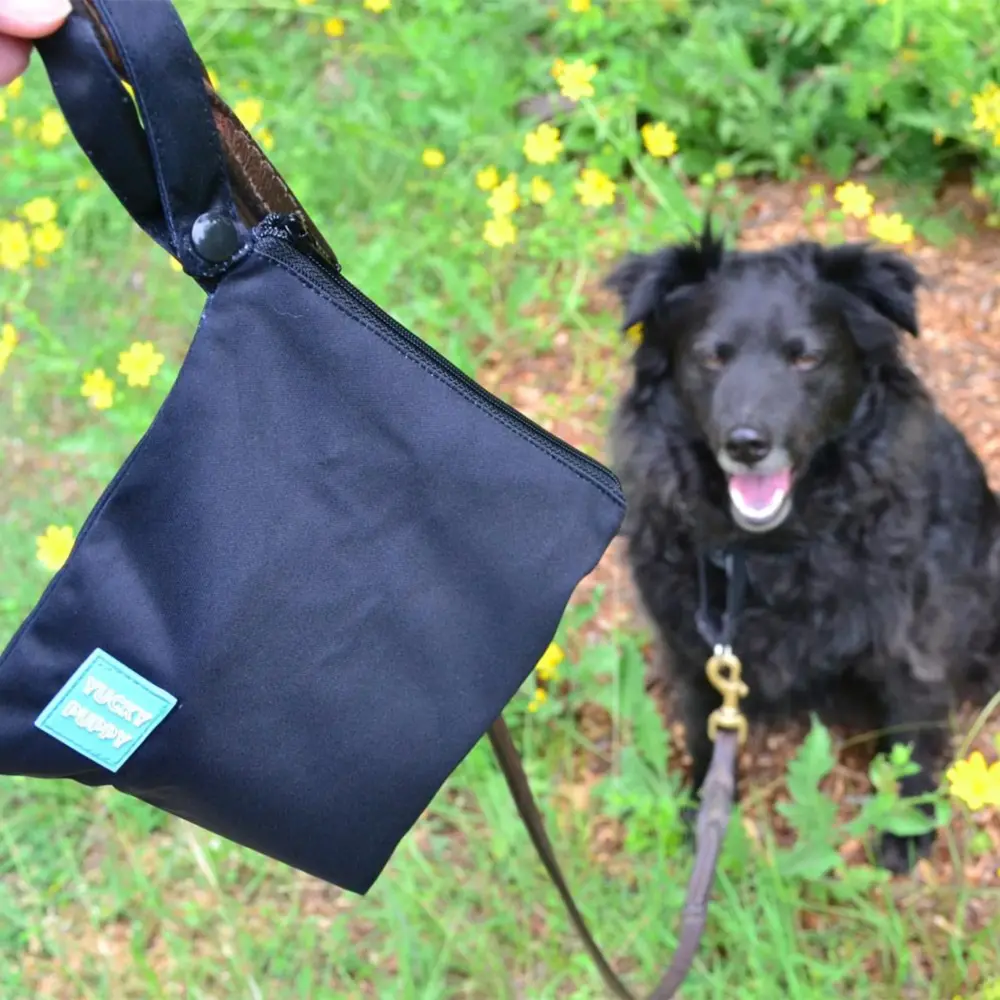
Yucky Puppy
Waterproof Poop Bag Holder, Choose size
Price range: $23.95 through $24.95
Why it fits: Clips a full bag to the leash out of sight, so both hands stay free for treats, toys and the next game. Waterproof, extra-large, set of two.
-
Mr. Peanut’s
Naturals Pet Wipes
$26.95
Why it fits: Thick 6 × 10 in wipes for paws after a new trail or muddy field, so the new route stays outside. 150 wipes per container.
Currently out of stock




Related guides
-
Checklist
What to Tell Your Dog Walker: A Handover Checklist
Everything a new dog walker needs on one page: where the gear lives and how it goes on, how your dog walks, leash and route rules, medications and treats, emergency contacts, the door routine, weather rules and a first walk together.
-
Guide
Dog Walking Essentials: What to Bring on Every Walk, Including After Dark
What to bring on every dog walk, from an ID collar and harness to water and a way to carry full poop bags, plus reflective gear and a light for darker evenings after the clocks change in November.
-
Guide
Walking a Dog in the City: Crowds, Crossings, Hazards and Potty Spots
Busy city sidewalks need their own habits. Learn how to keep your dog close in a crowd, teach a sit at every curb, pass doorways safely, spot glass, bones and rat bait before your dog does, and find a potty spot when grass is scarce.