Halloween Safety Tips for Dogs: Doorbells, Costumes, Candy and the First Dark Walk
The Halloween safety tips for dogs that matter most are simple: keep your dog in a quiet room away from the front door, keep every piece of candy out of reach, and skip any costume your dog does not enjoy. If your dog comes trick-or-treating, add reflective gear, a fixed-length leash and a current ID tag. In 2026 Halloween is a Saturday, and the clocks go back early the next morning, so darker evening walks start right after.
Halloween safety tips for dogs in brief
- A quiet room away from the door, set up before dusk with water, a bed and something to do.
- A closed door or a leash whenever the front door opens.
- Candy up high or shut away, including the kids’ haul.
- Battery lights in pumpkins, with cords and glow sticks out of reach.
- A costume only for a dog who is relaxed in one.
- ID on, even indoors: a readable tag and an up-to-date microchip record.
- Reflective gear and a light on any walk after dusk.
The week before: practice the doorbell and plan the room
For many dogs the hardest part of the night is a bell that rings again and again. A few short practice sessions teach your dog that the bell predicts something good, away from the door.
- Pick the room. A back bedroom or office works well. Spend a few minutes there with your dog each day, with a treat or a game. A crate your dog already likes can go in there; Halloween is not the night to introduce one.
- Start quiet. Play a doorbell recording at low volume while your dog is relaxed, then toss a treat away from the door. Three or four repeats make a session.
- Build up slowly. Over several days, raise the volume, then try the real bell and a few knocks, only as fast as your dog stays calm. If your dog barks or rushes the door, go back a step.
- Preview the costumes. Let your dog watch family members put on masks and capes, with a treat each time.
- Check the escape routes. Latch gates, fix fence gaps and make sure the tag and any microchip record show your current phone number.
Trick-or-treat night: managing the front door
Keeping a dog calm on Halloween mostly comes down to distance: the farther your dog is from the bell, the costumes and the open door, the less there is to react to.
Before the first knock
- Walk or play while it is still light.
- Serve dinner a little early, then offer a last bathroom break.
- Settle your dog in the back room with water, their bed and a radio or fan running to soften the bell.
- Bring yard dogs inside for the evening.
Something to do in the back room
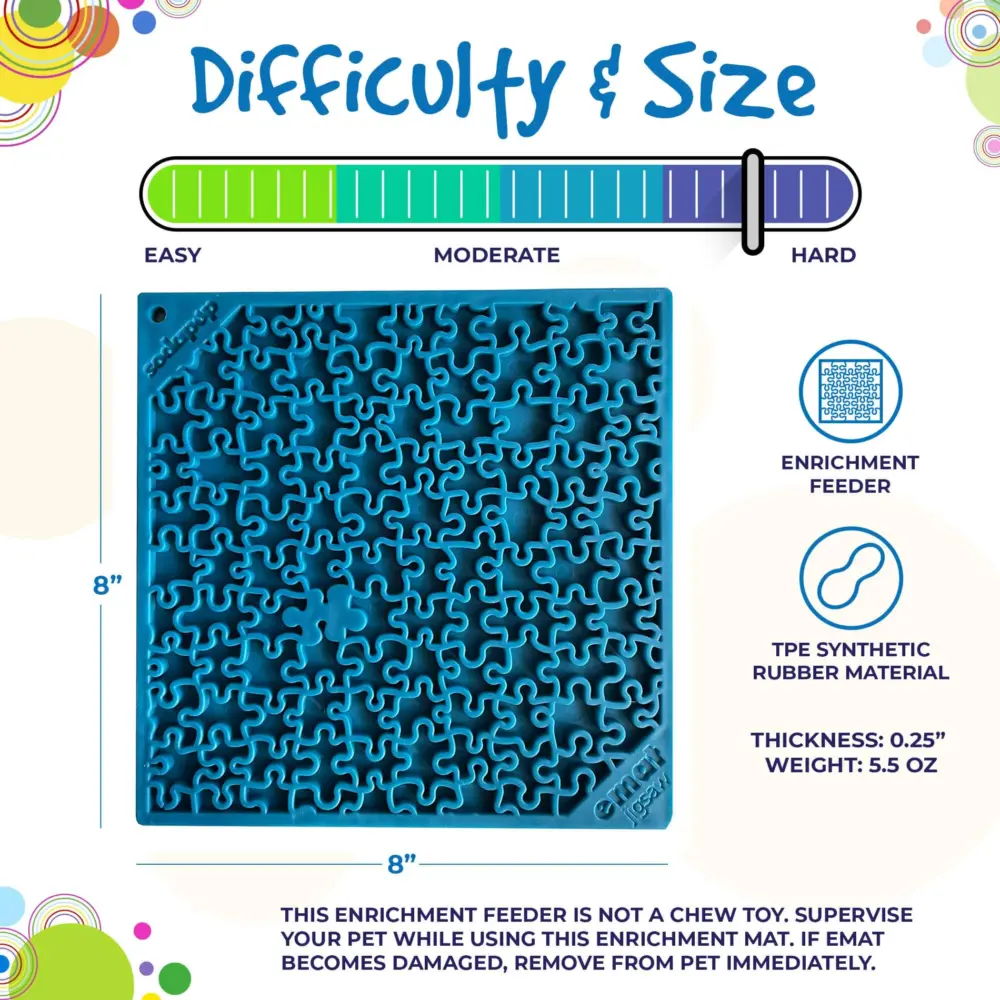
Give your dog a job that lasts: a familiar chew, a food puzzle or a find-it game from our guide to indoor games for dogs. A lick mat spread and frozen the day before is another long, quiet job; see what to put on a lick mat for ideas. Check on your dog between visitors and pick up the empty mat, which is not a chew toy.
Answering the door
- Keep the room door closed; an excited dog can jump or push over a baby gate.
- If your dog has to be nearby, keep them on a leash whenever the front door opens.
- To skip the bell entirely, hand out candy on the porch or post a sign asking visitors to knock gently.
- If your dog slips out, don’t chase; call cheerfully and move away so your dog follows you.
If your dog pants, paces, hides or trembles for long stretches anyway, ask your veterinarian about fear of noise and visitors. The same door routine works for later holiday guests and belongs in any Thanksgiving dog safety plan for hosts.
Candy, wrappers and decorations: what to keep out of reach
According to the ASPCA, chocolate in all forms, especially dark or baking chocolate, can be very dangerous for dogs, and sugar-free candy containing xylitol can cause serious problems too. Treat all candy as off-limits.
- The visitor bowl: on a counter or high shelf, not a low table by the door.
- The kids’ haul: stored in a closed cupboard, with a reminder not to share it with the dog.
- Wrappers and lollipop sticks: straight into a lidded trash can. Swallowed foil, cellophane or sticks can cause a blockage in the gut.
- Jack-o’-lanterns: a battery tea light, not a candle, because a wagging tail can knock one over.
- Glow sticks and glow jewelry: out of reach. A chewed one can cause heavy drooling, and swallowed plastic can cause a blockage.
- Cords and small costume pieces: tucked away or picked up before they can be chewed or swallowed.
If your dog gets into the candy, the trash or the decorations, call your veterinarian or the ASPCA Animal Poison Control Center at (888) 426-4435 right away, even if your dog seems fine; a consultation fee may apply. Don’t try to make your dog vomit unless a veterinarian tells you to.
Costumes: comfort first, or skip it
Plenty of dogs would rather not wear anything, and that is fine. If you want to try a costume, check that it:
- leaves your dog free to walk, lie down, see, hear, breathe, bark and pant;
- has no dangling strings, bells or small parts that could be chewed off;
- stays off the face and ears, with nothing tight around the throat;
- comes off quickly.
Measure the neck and chest before you buy; our guide to how to measure a dog for a harness, collar or coat shows where. Introduce the costume a few days early: a sniff, a minute on with treats, then off. A tucked tail, pinned ears, freezing, lip licking or rubbing at it means skip it, and never leave a dog alone in a costume.
Trick-or-treating with your dog: visibility and ID
Trick-or-treating with a dog suits only dogs already relaxed around crowds, children, masks and sudden noise. For everyone else, the quiet room is the kinder choice. If your dog is coming, plan for the dark:
- Reflective gear. Reflective threads or trim on the collar, harness and leash bounce headlights back toward drivers, but only when light hits them, so carry a flashlight or headlamp too.
- A fixed-length leash, kept short near driveways and groups of kids.
- A harness that fits: two fingers under each strap and no room to slip backward out of it. Check the fit on a daylight walk first.
- A short, early route at the edge of the crowd, with your dog waiting on the sidewalk rather than at doors.
- Your own treats, and a polite no to candy offered to your dog.
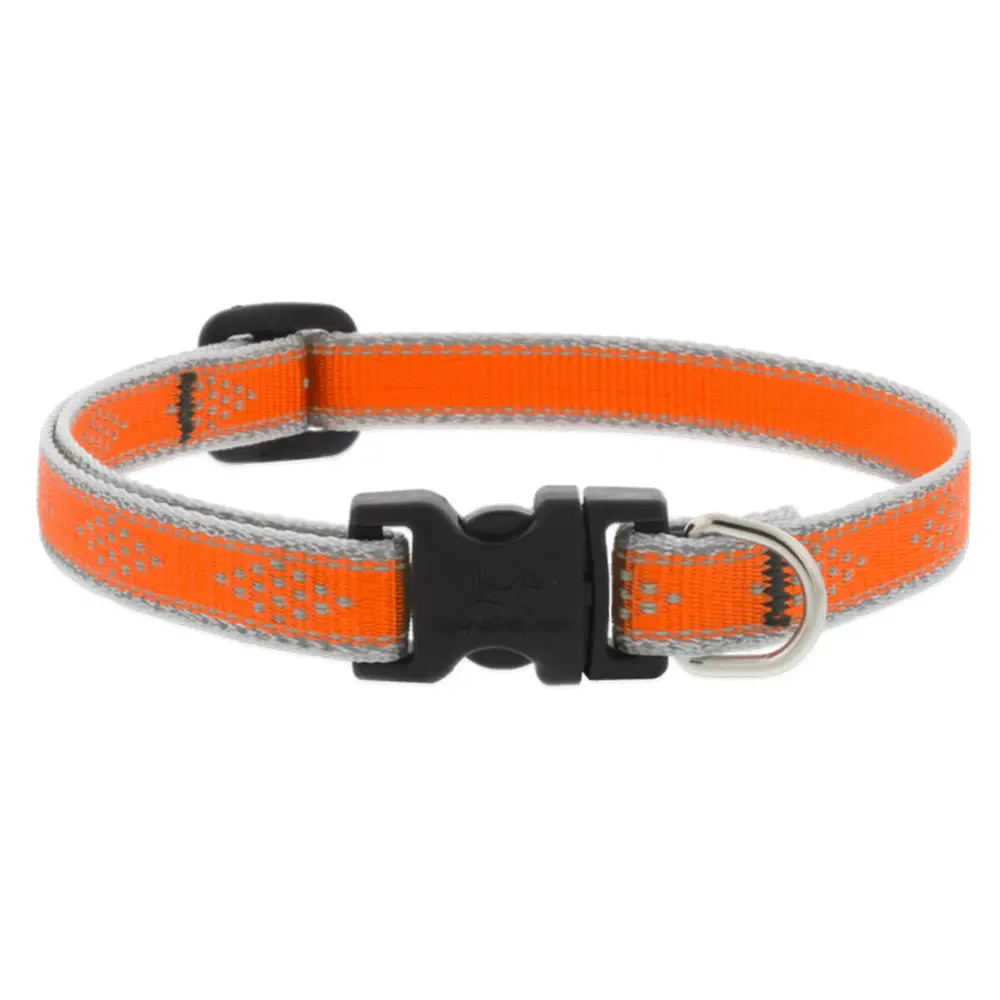
Two items from our walking and training gear cover the basics, and both come in orange. The Lupine Pet Reflective Dog Collar, made in the USA, has reflective threads woven into the pattern rather than printed on top, a strong D-ring for the leash and ID tags, and adjustable 3/4 in and 1 in widths; one design is Orange diamond. The Mr. Peanut’s PetTrek Padded Reflective Dog Harness & Leash Set pairs a padded oxford-nylon harness with a matching leash, both with reflective stitching, in sizes XS to Large.
Ordering for the night? Measure first and allow up to seven business days for delivery (see our shipping details).
-
Lupine Pet
Reflective Dog Collar
Price range: $22.95 through $28.95
-
Mr. Peanut’s
PetTrek Padded Harness and Leash Set
Price range: $24.95 through $26.95


November 1: darker walks and a sidewalk full of wrappers
In most of the US, daylight saving time ends at 2 a.m. on Sunday, November 1, 2026, so the after-work walk moves into dusk or full dark and the reflective gear from Halloween becomes everyday kit. Our dog walking essentials checklist covers the rest.
That first morning also brings candy, wrappers and lollipop sticks dropped on sidewalks and lawns, so keep the leash short and reward your dog for leaving them. For the colder evenings ahead, see how cold is too cold to walk a dog, and browse more seasonal guides for the holidays.
Cats on Halloween
Most Halloween pet safety tips apply to cats too, and a cat can slip through a door left open for seconds.
- Keep cats indoors, and bring outdoor cats in before dusk.
- Close them in a quiet room with a bed, water, a litter box and a hiding spot.
- Keep candles and lit pumpkins off shelves and windowsills a cat can reach.
- Put away wrappers, ribbon, glow sticks and cords, which cats like to bat and chew.
- Skip the costume, and check your cat’s ID: a breakaway collar with a tag, and current microchip details.
Our cat essentials include a cave-style bed that makes a good hiding spot.
Halloween dog safety FAQ
What should I do if my dog eats Halloween candy?
Call your veterinarian or the ASPCA Animal Poison Control Center now, without waiting for signs, and keep the wrapper so you can say what was eaten. Chocolate, especially dark or baking chocolate, and sugar-free candy containing xylitol can both be dangerous for dogs, so keep all candy out of reach, as the ASPCA’s Halloween safety tips advise.
Should my dog wear a costume?
Only if your dog is relaxed wearing it, and only while you are watching. Take it off at the first sign of a tucked tail, pinned ears, freezing or rubbing at it. For a dog who dislikes costumes, a festive bandana or a bright collar is an easy alternative.
How do I keep my dog calm on Halloween?
Put distance between your dog and the door: a back room with background sound and a long-lasting chew, and candy handed out on the porch. If your dog barks at the bell, practice it in the week before and reward quiet moments rather than scolding. If your dog stays frightened despite this, talk to your veterinarian.
Is it safe to take my dog trick-or-treating?
It can be, for a calm, social dog on a short route early in the evening, wearing reflective gear and ID on a fixed-length leash. If masks, crowds or noise make your dog nervous, leave them at home in their quiet room.
Related guides
-
How-to
How to Keep a Dog Calm and Safe During Fireworks
A fireworks plan for the Fourth of July and New Year’s Eve: ID and harness checks, an early walk and dinner, a quiet den, a licking job, how to comfort a scared dog, practice for next year, cats, and when to call your veterinarian.
-
Guide
How Hot Is Too Hot to Walk a Dog? Pavement, Timing and Warning Signs
The AKC says the ground may be too hot to walk a dog at 85°F or above when the pavement hasn’t cooled. Learn the ten-second hand test, which dogs struggle first, how to plan cooler walks, and the overheating signs that mean it’s time to stop.
-
Checklist
Winter Hiking With a Dog: Checklist for Cold, Ice and Short Days
A winter trail-day checklist: plan a shorter, sheltered route around daylight, keep your dog leashed and off frozen water, pack water that won't freeze and a coat for dogs who feel the cold, check paws for ice balls and salt, and know when to turn back.