How to Slow Down a Cat That Eats Too Fast: Spreading, Splitting and Play Before Meals
A cat that bolts its food is usually very hungry, racing another pet, or both, so to slow down a cat that eats too fast, take away those reasons first. Spread wet food thin on a plate or lick mat, split the day’s food into smaller meals, feed each cat in its own spot and let your cat chase a toy for a few minutes before dinner. None of this needs a new food, and the daily amount stays the same.
Short answer: how to slow down a cat that eats too fast
What to do if your cat eats too fast depends on why it rushes. Start with the change that matches your home:
- Another pet nearby at meals: feed each cat in its own room or at its own height.
- Wet food gone in seconds: spread it thin on a flat plate or lick mat.
- Two big meals a day: split the same amount into more, smaller meals.
- Kibble eater: scatter it on a baking sheet or use a simple food puzzle.
- Bored cat pacing before dinner: play a short chase game first.
Change one or two things at a time and give each about a week. If the fast eating is new rather than lifelong, see the veterinarian section first.
Cat eats too fast? Why some cats bolt their food
A cat that hunts for itself eats many small meals across the day and night. Two full bowls a day is very different, and some cats respond by eating as fast as they can. Common reasons:
- Competition. Another cat, or a dog, nearby at mealtime, even if nobody actually steals.
- A past with too little. Former strays, shelter cats and kittens that competed with littermates may keep eating as if the food could vanish.
- Long gaps. With meals at 7 a.m. and 7 p.m., a cat waits half a day and arrives very hungry.
- Boredom. For an indoor cat with little to do, dinner can be the most exciting event of the day.
- Health. Some medical conditions make a cat hungrier than usual, so a cat that has suddenly started gulping needs a veterinary check.
How to slow down a cat eating wet food: spread it thin
Spreading changes the shape of the meal, not the amount. A cat can’t take a big mouthful from a layer a few millimeters deep, so it takes smaller bites and pauses to move along the plate.
- Pick a wide, flat surface: a dinner plate, a clean rimmed baking sheet or a lick mat. Cats generally prefer shallow dishes that don’t brush their whiskers.
- Spread the wet food thinly with the back of a spoon, pressing pâté down into any grooves. Mash chunks in gravy with a fork first.
- For kibble, scatter the pieces across a baking sheet so each one sits on its own.
- Serve wet food at room temperature; cats tend to prefer food near body temperature, not straight from the fridge.
- Pick up and wash the plate or mat once your cat walks away; don’t leave wet food out for hours.
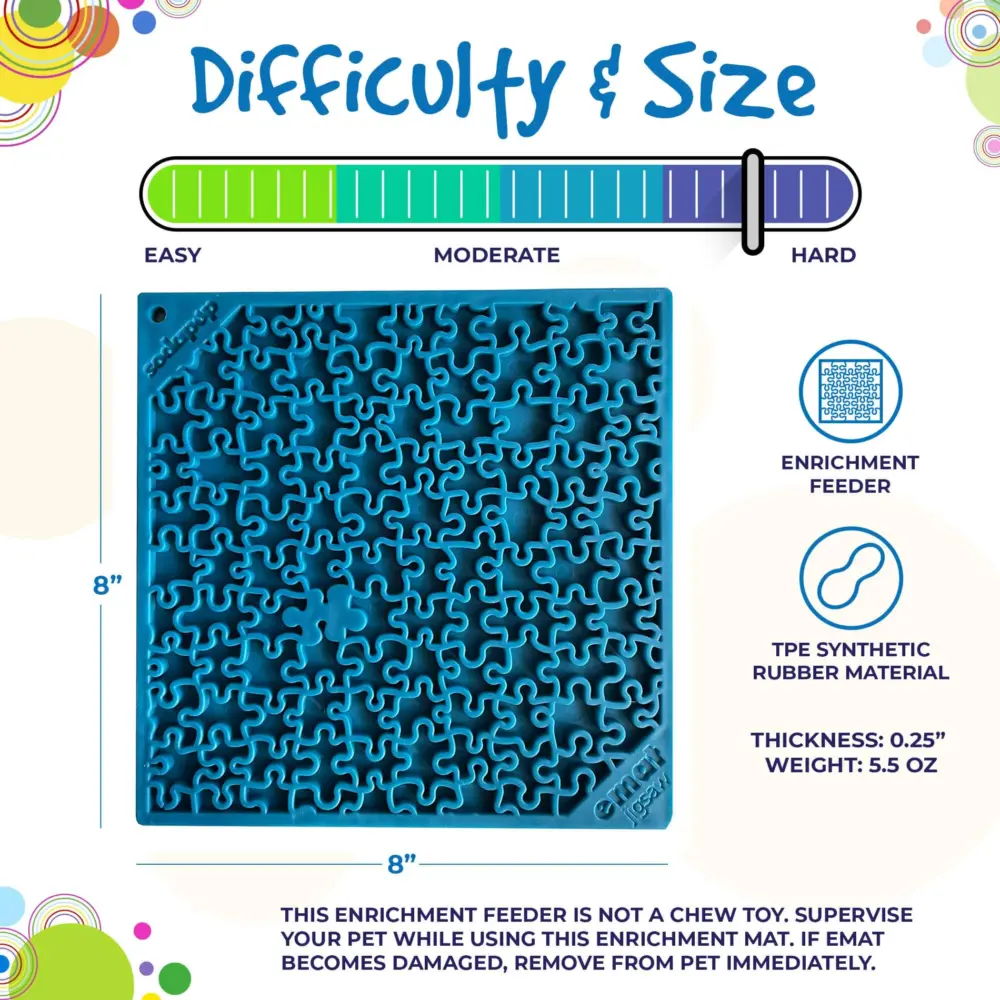
The SodaPup Jigsaw Enrichment Lick Mat is made for this kind of spreading. Its jigsaw texture holds soft food and slows licking, it suits cats as well as dogs, and it is dishwasher safe. SodaPup makes it in the USA. Leave a little food on top the first few times so your cat learns where dinner is, stay nearby, and take the mat away if your cat starts chewing it. For cat-friendly spreads and cleaning, see what to put on a lick mat for dogs and cats.
Smaller, more frequent portions
A very hungry cat eats fast, so splitting the same daily amount into smaller meals takes the edge off. International Cat Care’s feeding advice suggests dividing the daily ration into at least five portions across the full 24 hours, served in a quiet spot where your cat can eat out of sight of other cats.
- Keep the daily total the same. Divide what your cat already eats, or the amount your veterinarian recommends; don’t add meals on top of it.
- Do what your schedule allows. If five meals isn’t realistic, three or four (before work, after work, evening and bedtime) still beats two.
- Cover the hours you’re out with a little dry food from the ration hidden around the house, or an automatic feeder for dry food.
- Change gradually over a week or two if your cat is used to two big meals.
If your cat is a kitten or a senior, eats a prescription diet or has a health condition, ask your veterinarian before changing how often you feed.
Feeding two or more cats without a race
When several cats share a home, feeding multiple cats separately is often the change that helps most. Cats generally prefer to eat alone, and a cat that eats beside another may race to finish, then raid the other bowl.
- Give each cat its own dish in its own spot, out of sight of the others. Separate rooms with the door closed work best when one cat steals.
- Use height. A confident climber can eat on a counter, shelf or cat tree while a less agile cat eats on the floor.
- Serve everyone at the same time, so nobody hovers.
- Stay until all the cats have finished, then pick up the dishes so leftovers don’t become a prize.
- If one cat grazes all day and another gulps, move both to set meals, since a bowl left down invites the fast eater.
Dogs count as competition too, so feed your cat where the dog can’t reach. If your dog gulps as well, see how to slow down a dog that eats too fast.
Hunt, then eat: a short play session before meals
A cat’s natural routine runs stalk, chase, catch, eat, groom, sleep. Playing just before a meal puts the hunt back in front of the food, so dinner becomes the reward for the catch, and a cat that has just finished a chase often comes to the plate calmer than one that has been pacing the kitchen.
- About ten minutes before mealtime, start a game with a wand toy moved like a mouse, or let a self-moving toy do the first few chases.
- Let your cat stalk, chase and pounce for a few minutes. Slow the wand toy down toward the end so your cat makes a final, easy catch.
- Put the meal down straight away, spread on a plate or mat.
- Put wand and string toys away afterward, since string, ribbon and elastic are dangerous if swallowed.
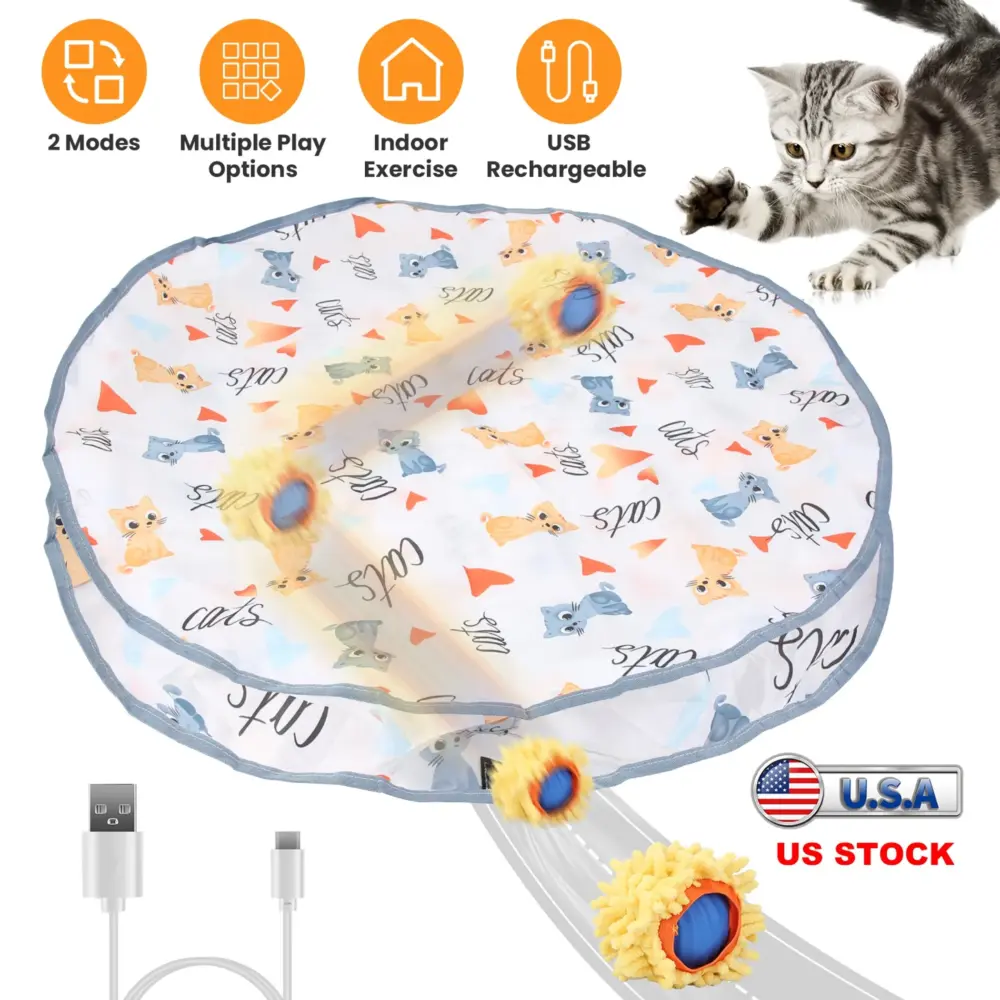
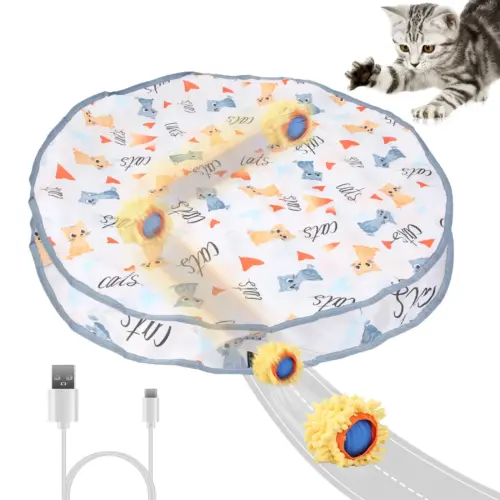
The Motion-Activated Rolling Cat Toy Ball suits the warm-up. It wakes when your cat touches it, then dashes, changes direction and pauses like prey, with two play modes and about an hour of active play per charge, and it runs best on hard floors and short-pile rugs. It can’t hand your cat a final catch, so finish with the wand, stay nearby while the ball runs and put it away afterward. For session lengths, see our guide to how long to play with your cat.
-
Motion-Activated Rolling Cat Toy Ball
$42.95
-
SodaPup
Jigsaw Enrichment Lick Mat for Dogs & Cats
$25.95

Simple DIY food puzzles for cats
A food puzzle slows a meal because your cat has to work out one or two pieces at a time. International Cat Care’s advice on puzzle feeders for your cat is to keep part of the food in the bowl at first, make the puzzle easy, and add difficulty only while your cat shows no signs of frustration. Try:
- Egg carton: lid off, with a few pieces of kibble in each cup.
- Muffin tin: kibble in the cups. Once that is easy, cover some cups with a ping-pong ball.
- Ice cube tray: wet food pressed into the cubes, licked out one cube at a time.
- Cardboard tube: ends folded closed, with a few holes cut slightly larger than a piece of kibble and some kibble inside.
Take puzzle food from the daily ration, throw cardboard away once it is soggy or chewed, and wash trays and tins after every wet meal. For more ways to keep an indoor cat busy, see indoor cat enrichment ideas for every day, or browse our feeding and enrichment range.
When to call your veterinarian
Fast eating on its own is usually a habit you can manage at home. Call your veterinarian if:
- your cat suddenly starts eating much faster, or seems far hungrier than usual;
- fast eating comes with frequent vomiting, weight loss or lethargy;
- your cat stops eating, or eats much less than normal;
- you are unsure how much your cat should eat each day, or want to change its food.
Mention the changes you have already tried. For more everyday mealtime advice, browse our feeding and enrichment guides.
Fast-eating cat FAQ
How long should it take a cat to finish a meal?
There is no standard number of minutes, because a cat that hunts for itself eats one small meal at a time. The useful sign is the bowl, not the clock: a cat that clears a full portion in seconds and then searches for more needs smaller, spread-out meals, and one that often brings food back up soon after eating should see your veterinarian.
Do slow feeders work for cats?
They can, if the design suits a cat: shallow and wide, with low ridges your cat can reach without pushing its face into a deep bowl. Many slow feeders sold for dogs are too deep for a cat. If your cat still gulps from one, try smaller portions and check whether another pet is nearby at meals.
How do I stop one cat eating the other’s food?
Feed them at the same time behind closed doors and open the doors only once both have finished. If one cat needs a special diet, ask your veterinarian about a microchip feeder that opens only for that cat.
Why does my cat act like it’s starving all the time?
Often it is habit: long gaps between meals, or a cat that has learned that meowing brings dinner. Smaller, more frequent meals and play before food often help. A cat that is hungrier than usual and losing weight needs a veterinary check, because conditions such as an overactive thyroid or diabetes can cause both.
Related guides
-
How-to
Working From Home With a Cat: Fewer Paws on the Keyboard
A home-office plan for cat owners: a warm bed beside the desk instead of on it, cables and coffee out of reach, play before calls, midday puzzle and lick-mat jobs, a kind fix for keyboard walkers and a gentle switch back to office days.
-
Checklist
When to Replace Dog and Cat Gear: A Monthly Wear Check
A five-minute monthly check for everything your dog or cat uses: the wear signs that mean a collar, harness, leash, toy, bowl, lick mat or scratcher insert should go, the fit checks growing and changing pets need, and what only needs a wash.
-
How-to
How to Stop Your Cat From Waking You Up at Night
Cats wake you before dawn because it is hunting time, the gap since dinner is long and waking you has paid off before. Here is a three-step plan: a bedtime hunt and meal, breakfast that doesn’t depend on you, and a firm no-response rule, plus a night setup, troubleshooting and signs to see your vet.