Senior Pets Checklist
Adopting a Senior Cat Checklist: Shelter, Vet and First Two Weeks
Short answer
Before pickup, get the shelter’s records, book a vet visit for the first week and set up a quiet room with familiar food and litter, a low-sided box, water and a warm bed at floor level. Then let your cat set the pace: hiding for days is normal, but a day without eating means calling your vet.
The adopting-a-senior-cat checklist at a glance
An older cat arrives with its habits already formed: a litter it trusts, a food it eats, perhaps a medicine schedule and a health history. Most of the work is collecting that history before pickup, so that as little as possible changes when it comes home. Not sure the cat you’ve met counts as a senior? See when a cat becomes a senior.
- Shelter: records copied, questions answered, microchip number noted
- Vet: a visit booked for the first week, records sent ahead if the clinic wants them
- Base room: one quiet room with a door, everything at floor level, set up the day before
- Supplies: the shelter’s litter and food, a low-sided box, water in two places, a warm bed, a floor scratcher
- Ride home: a top-opening carrier with a kennel blanket, secured where it can’t slide
- First two weeks: familiar meal times, quiet company, daily notes on food and litter
- On hold: new food or litter, other pets, the run of the house and going outdoors
Questions to ask the shelter or rescue
Kennel cards are brief, but the staff or foster family who cared for your cat often know far more. Ask before adoption day, and get anything medical in writing.
History and routine
- Why your cat came to the shelter, and when
- Whether it lived indoors only or spent time outdoors
- Life with other cats, dogs or children, and how it went
- Its daily rhythm: meal times, favorite sleeping spots, lap cat or not
- How it takes being lifted, brushed, having its nails trimmed and going into a carrier
- Whether it is bonded to another cat at the shelter
The handling answers shape your first week: a cat that fights the carrier is usually easier to lower in through a top opening than to push through an end door, and one that has never been brushed shouldn’t meet a brush yet.
Health and medicines
- Copies of every record: vaccinations, tests, bloodwork, dental work, spay or neuter
- Whether it has been tested for FeLV and FIV, and when
- Each medicine’s name, dose and time, the last dose given, how your cat takes it and how many doses come home with it
- Any diagnosed condition, and what the shelter’s veterinarian said to watch for
- Its weight on arrival and now
- The microchip number, and whose name it is registered in
A chip only helps if the registry can reach you. Humane World for Animals suggests checking the chip with AAHA’s online lookup tool and, if it isn’t registered, registering it with your own name and contact details. If it’s still in the shelter’s or a past owner’s name, ask the shelter how to transfer it.
Food and litter habits
- The exact food, wet or dry, how much and how often, including any prescription diet
- Whether it eats readily, slowly or only with coaxing
- The litter brand and type, such as clumping clay or pellets
- The box: open or covered, and how high the sides are
- Any accidents outside the box, constipation, diarrhea or straining
- How much it drinks, if anyone has noticed
Matching the litter and food takes two changes out of a move that is already a big one. Ask, too, whether you can take home a blanket from the kennel, and who to call with questions after adoption.
The first vet visit: records and questions
Book it before pickup, for the first week at home, and sooner if your cat takes daily medicine or has a known condition; ask whether the clinic wants the records sent ahead. Besides catching anything the shelter missed, it gives you a baseline: a weight and test results that later checkups can be compared against.
What to bring
- The shelter’s records and the microchip number
- Every medicine in its packaging, with the dose and timing written down
- The name of the food, or a photo of the label, and how much your cat eats
- Notes from the first days: meals, water, urine clumps, stools and any vomiting
- A fresh stool sample, if the clinic asks for one
- Your questions, written down
What to ask your veterinarian
- What your cat weighs, and whether that suits its frame
- Which baseline tests make sense: VCA Animal Hospitals mentions blood and urine tests, plus imaging of the chest and abdomen where needed
- Whether to check blood pressure, which VCA notes is more common in older cats and often points to an underlying condition such as kidney or thyroid disease
- How its teeth look, since VCA calls periodontal disease common in senior cats
- Any sign of stiffness or pain, and how it would show at home
- Whether its current food suits it, before you change anything
- Which vaccines and parasite control are due, given what the records show
- When to come back: VCA recommends an exam at least twice a year for senior cats, and your vet will set the schedule for yours
Already have a cat? Keep the two apart until this visit, then follow our step-by-step plan for introducing a new cat to your cat.
Supplies to have ready before pickup
Keep the list short, and lay it out so nothing calls for a jump or a staircase. International Cat Care’s advice for senior cats includes keeping resources on one level when stairs are hard, and a litter box with lower sides that is easier to get in and out of. We don’t sell food, litter, litter boxes or bowls.
- A litter box with at least one low side, in a quiet corner
- The shelter’s litter, a scoop and a mat at the box exit
- The usual food, in a bowl it can reach without a jump, away from the litter box
- Water in more than one spot, also away from the food
- A warm, low bed and somewhere to hide, such as a covered bed or a box on its side
- A floor-level scratcher beside the bed
- A non-slip rug where your cat eats or lands on a slick floor
- A top-opening carrier, an absorbent pad and a towel
- Enzyme cleaner and paper towels for accidents
It all goes in one quiet room with a door, set up the day before. Our guide to helping a cat adjust to a new home covers the base room and opening up the house room by room, and making your home senior-cat friendly covers the layout once your cat has the run of the place. Ordering online? Leave time for delivery; our shipping page has the timings.
From our cat essentials and travel accessories, these four suit an older cat’s base room and the ride home. The picks are limited to Nilosi’s catalog, which has no low-entry litter boxes or pet steps.
-
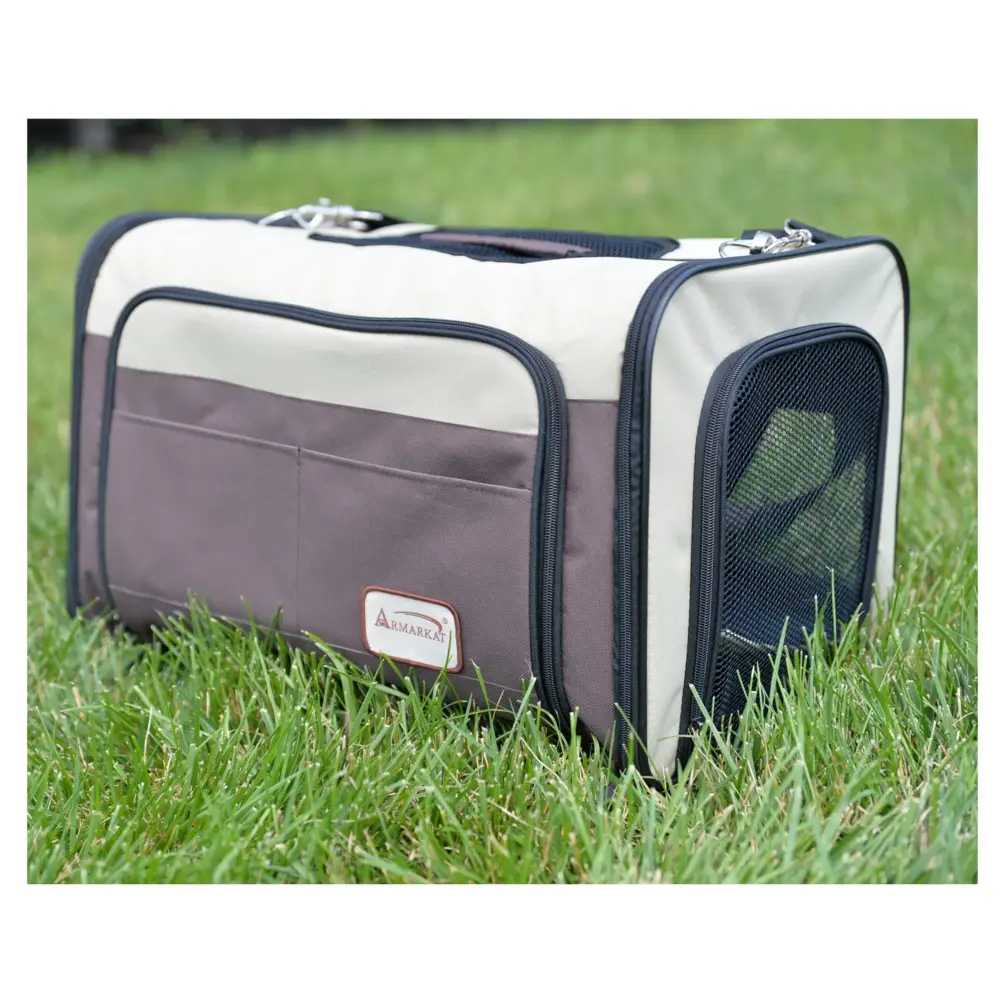
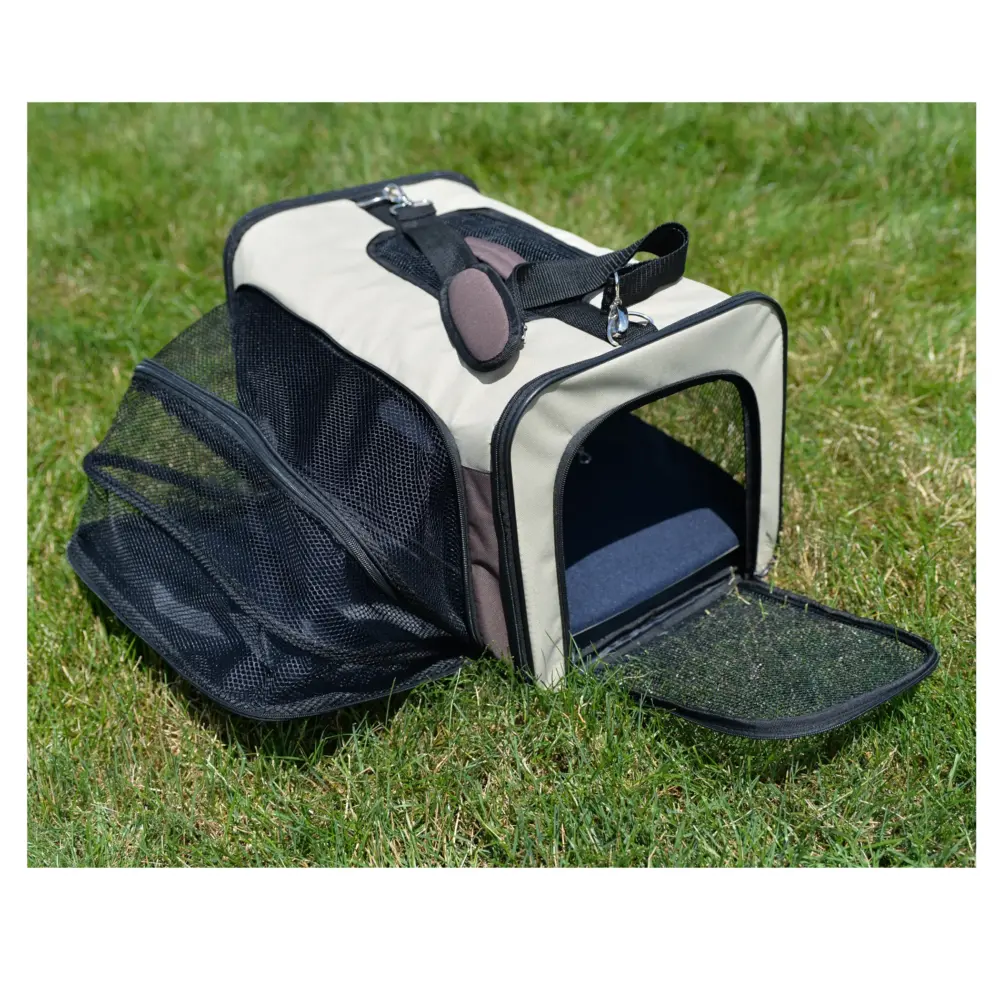
Armarkat
Soft-Sided Pet Carrier, View product
$65.95
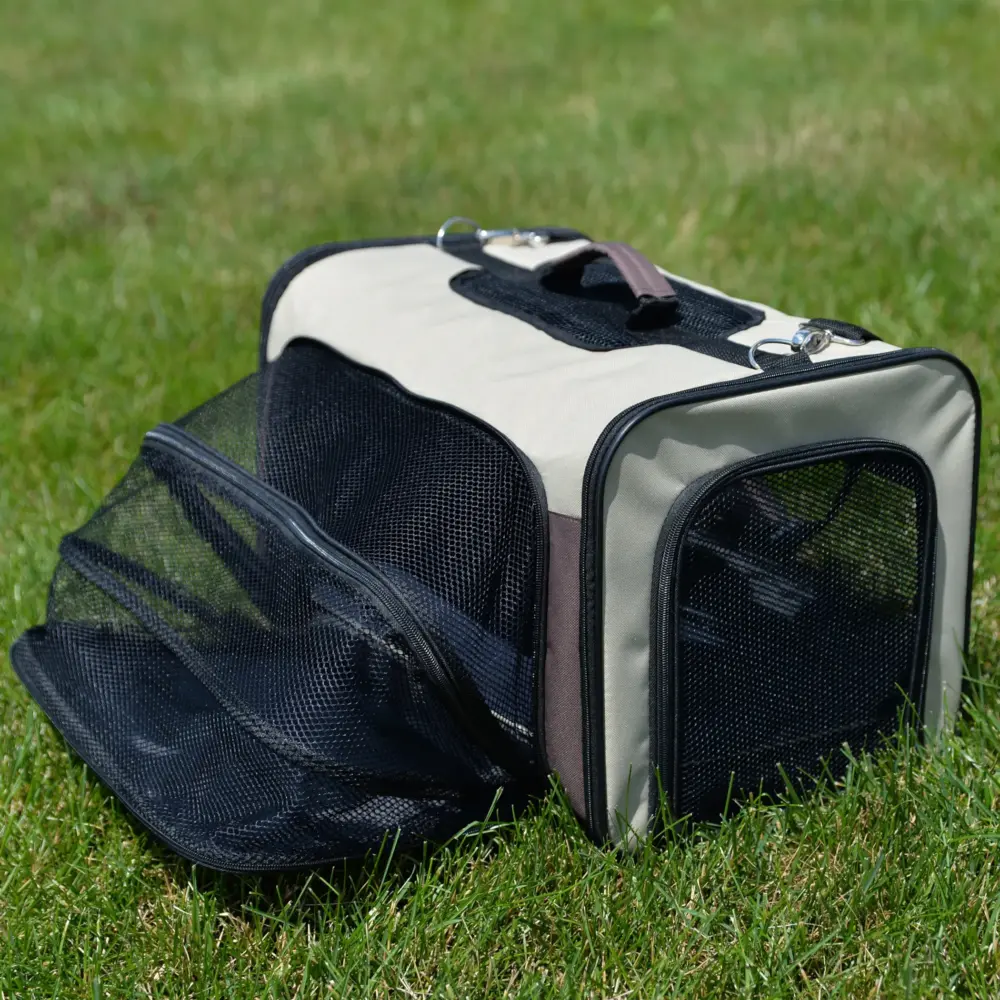
Why it fits: Lets you lower a stiff older cat in through the top, then unzip a side so it can walk out; 19 x 12 x 12 in, up to 22 lb, per Armarkat.
-
GOOPAWS
4-in-1 Self-Warming Cat Cave Bed, Choose color
$40.95
Why it fits: A low and warm hiding spot for the base room, a cave while your cat settles and a flat mat once it naps in the open; 21 x 17 x 3 in.
-
Cat Scratcher Guy
Wooden Cat Scratcher with Reversible Insert, View product
$32.95
Why it fits: A scratching spot at floor level, set by the bed on day one so a stiff cat needs no stretch up a post; about 19.5 x 5.5 x 2 in.
-
Double-Layer Honeycomb Cat Litter Trapping Mat, View product
$53.95
Why it fits: Catches litter at the box exit in a carpeted base room; the waterproof base protects the floor, and it opens like an envelope to empty.




The carrier ride home
Choose one you can open from the top. International Cat Care’s guide to taking your cat to the vet notes that a top opening lets you lift a cat gently in or out, which spares a stiff older cat being pushed in or tipped out, and adds that it shouldn’t be so large that your cat slides about inside. The Armarkat soft-sided carrier we stock opens from the top and both sides, and Armarkat lists it at 19 x 12 x 12 inches for pets up to 22 lb. A big or long-bodied cat can be under that weight and still cramped, so ask the shelter for its size, or use a larger hard-sided carrier.
- Line the carrier with an absorbent pad and a towel, with the blanket from the kennel on top.
- Ask a staff member to help lower your cat in through the top, and zip it shut before you leave the building.
- Carry it level against your body, with an arm underneath, rather than swinging it from the handle.
- Secure it in a footwell behind a front seat, or belted onto the back seat, so it can’t slide; International Cat Care suggests a towel underneath to keep it level.
- Cover the carrier with a light towel to keep your cat calm, leaving some mesh uncovered for air.
- Drive straight home at a comfortable temperature, radio low, with no errands. Never leave your cat in a parked car.
- In the base room, close the door, unzip the carrier and step back. Let your cat come out on its own, even if that takes hours.
Safety note
A carrier keeps your cat in one place, but it isn’t built to protect it in a crash, so where and how you secure it matters. Keep it off the front passenger seat, and keep it zipped all the way home, even if your cat cries.
Leave the carrier open in the base room afterward, blanket inside, as one more hiding place. Our guide to getting a cat used to a carrier builds on that, so the first vet trip doesn’t start with a chase under the bed.
What’s normal in the first two weeks
Expect a slower start than with a kitten. International Cat Care notes that older cats don’t cope well with changes to their routine, and many newly adopted cats spend the first days hiding, sleeping and eating little. That is usually fine, even if a shy cat runs a week or more behind the table below, as long as the basics keep happening: food, water and the litter box.
| When | Often normal | Call your vet if |
|---|---|---|
| Days 1 to 3 | Hiding, long sleeps, small meals | Nothing eaten in a whole day |
| Days 4 to 7 | Short trips out of hiding, a sniff | Eating far less than at the shelter |
| Week 2 | Naps in the open, asks for company | Hiding again, or a dip in appetite |
Helping your cat settle
- Keep the shelter’s schedule. Feed at the times your cat knows, and shift them gradually if you need to.
- Keep it company quietly. Sit in the room with a book and let your cat come to you; don’t reach into the hiding place.
- Play low and short. Drag a wand toy slowly along the floor for a few minutes and let your cat make the catch.
- Widen its world slowly. Once your cat eats, uses the box and naps in the open, open one more room while you’re home, and keep the base room as its retreat.
- Keep notes. Meals, water, urine clumps and stools, jotted down each day, become the first record of this cat’s normal, for you and your vet.
Some newly adopted cats cry at night at first. If it carries on past the first week, tell your veterinarian rather than putting it down to the move: nighttime yowling in an older cat can have a medical cause, and VCA notes that cats with an overactive thyroid are often restless at night.
Safety note
Call your veterinarian the same day if your new cat hasn’t eaten for 24 hours: VCA advises immediate veterinary attention at that point, and International Cat Care warns that cats can develop liver problems if they go without food even for a short time. Call, too, about repeated vomiting, diarrhea, or a cat that hides and refuses both food and water. Straining in the litter box with little or no urine, especially in a male cat, is an emergency, as are labored or open-mouth breathing and collapse.
What to skip for now
Fewer changes make for easier first weeks, so some good ideas can wait until your cat has settled.
- A new diet. Keep the shelter’s food until your veterinarian has seen your cat. Whether it needs a senior or prescription food depends on its exam and test results, not its age alone.
- New litter or a covered box. Start with what it knows, then change one thing at a time once it has settled.
- A tall cat tree. Watch how your cat jumps first; a sturdy chair by a sunny window may be all it wants for now.
- Meeting your other pets. Introductions start after the vet visit, and slowly.
- Baths and long grooming sessions. Start with a few strokes once your cat seeks you out. A matted or greasy coat is a question for the first vet visit.
- Going outdoors. If your cat had outdoor access before, keep it in while it settles; International Cat Care suggests a couple of weeks indoors in a new home before a first, supervised trip out.
- Visitors and the run of the house. One quiet guest at a time, and the rest of the home closed until your cat is confident in its room.
- Bulk buys. Stock up on food and litter once you know what your cat eats and your vet agrees.
Adopting an older dog as well, or instead? Our adopting a senior dog checklist covers the walking gear, bed and shelter questions for a dog.
Related guides
-
Guide
Should You Get a Second Cat? How to Tell if Yours Would Welcome One
A second cat can be good company or a daily source of stress. Learn what lonely behavior often means, what makes a cat likelier to accept a newcomer, which pairings tend to work, what one more cat takes in space, money and time, and what to try first.
-
How-to
How to Introduce a New Cat to Your Cat: A Step-by-Step Plan
A staged plan for adding a cat to a home that already has one, from a transition room and scent swaps to sightings and short supervised meetings, with how long each stage takes, the body language to watch and what to do if it goes wrong.
-
How-to
How to Help a Cat Adjust to a New Home After Moving
A settling plan that starts at the new front door: what goes in the base room, how arrival day and hiding should go, why the old bed and litter stay, when to open more rooms, how to secure doors and screens, how long settling takes and when to call your veterinarian.