Journal How-to
How to Check Your Dog Is a Healthy Weight at Home
Short answer
Feel the ribs with flat hands: you should find them easily under a thin layer, without pressing. Look down from above for a visible waist behind the ribs, and from the side for an upward tuck of the belly. If all three are there, your dog is about right.

Scales are not the whole answer
A number on its own means very little, because healthy weight varies enormously between dogs of the same breed and height. What vets use instead is body condition scoring, a hands-on assessment that works on any dog regardless of size or coat.
Scales still matter for tracking change. Weigh your dog every month or two, write the number down, and use the hands-on check to decide whether that number is the right one.
The three-part hands-on check
- Stand your dog on a level surface, relaxed and not sitting.
- Rib check: lay both hands flat along the ribcage and run them backwards with light pressure. You should feel each rib under a thin covering, similar to the back of your hand.
- Waist check: look down from directly above. There should be a visible narrowing behind the ribs, in an hourglass shape rather than a straight line or a bulge.
- Tuck check: look from the side. The belly should rise upward from the end of the ribcage toward the back legs rather than running level.
- Repeat the same three checks once a month and note what changes.
Tip
Do this with flat hands rather than fingertips. Pressing with fingertips finds ribs on almost any dog and gives a falsely reassuring answer.
What each result feels like
| Result | What you find |
|---|---|
| Too thin | Ribs and spine visible; no fat cover; sharp hip bones |
| About right | Ribs easy to feel; clear waist; belly tucks up |
| Overweight | Ribs need pressure; waist faint; belly nearly level |
| Obese | Ribs hard to find; no waist; belly rounded or hanging |
Coat length changes what you see but not what you feel, which is the main reason the hands-on part matters more than the photograph. A fluffy dog can look well covered and be too thin underneath.
Why it matters more than it looks
Excess weight is the most common preventable health problem in pet dogs and it is strongly associated with joint disease, reduced exercise tolerance, heat intolerance, and a shorter life. It also makes existing problems worse: a dog with arthritis carrying extra weight is in more pain than the same dog at a healthy weight.
The reason it goes unnoticed is that it happens slowly, and because we see our own dogs every day. Owners are also calibrated by the dogs around them, and when a majority of dogs in the park are carrying extra weight, a dog at a genuinely healthy weight starts to look thin. The hands-on check sidesteps that entirely, which is why vets use it.
Tip
A useful second opinion costs nothing: most veterinary practices will weigh your dog and body condition score them at a free nurse appointment. It is worth doing once so you know what the correct score feels like on your own dog.
The most common mistake with treats
Weight gain in pet dogs is nearly always small amounts of extra food rather than large ones. Training treats, the end of a sandwich, a dental chew every evening and the food someone else in the house gives without mentioning it add up quickly, particularly for a small dog where a single biscuit can be a meaningful share of the daily total.
- Count treats as part of the daily food, not as extra
- Take training treats out of the measured meal rather than adding to it
- Use the dog’s own kibble for training where possible
- Agree in the household who feeds what, and write it on the food bin
- Weigh food rather than using a scoop, which is less accurate than it looks
- Remember that a chew can carry as many calories as a meal
What to change first
If the check says overweight, the order that works is: measure what is going in now, cut the extras before cutting the meals, then reduce the meal portion gradually and reassess monthly. Crash dieting is both unnecessary and bad for dogs; losing weight slowly over months is the goal.
Exercise helps, though less than people expect compared with food. What exercise does reliably is preserve muscle while fat comes off, and keep the dog occupied through the adjustment. Enrichment feeding is the useful trick here: the same reduced portion spread across a lick mat, a puzzle or a slow feeder takes twenty minutes instead of thirty seconds, which makes a smaller meal feel like a bigger one.
-
SodaPup
Honeycomb Slow Feeder Dog Bowl, View product
$30.95
Why it fits: Turns a reduced portion into several minutes of work, which matters when meals get smaller.
-
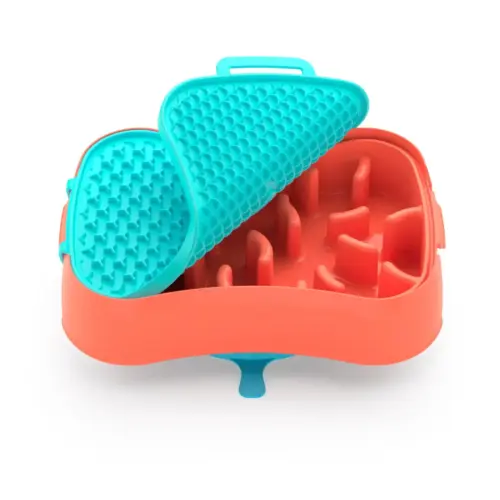
Super Feedy
4-in-1 Slow Feeding System, Choose color
$58.95
Why it fits: A slow feeder bowl, a lick mat and a lid in one; useful for splitting a daily ration across the day.
-
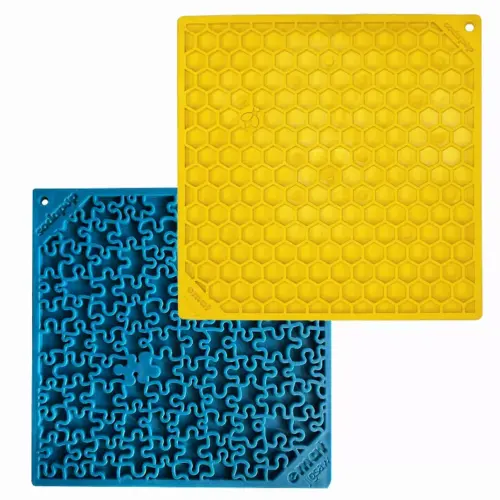
eMat Lick Mat Bundle, View product
$35.95
Why it fits: Two lick mats for spreading a portion of wet food thin; freeze one to make it last longer.
-
Super Feedy
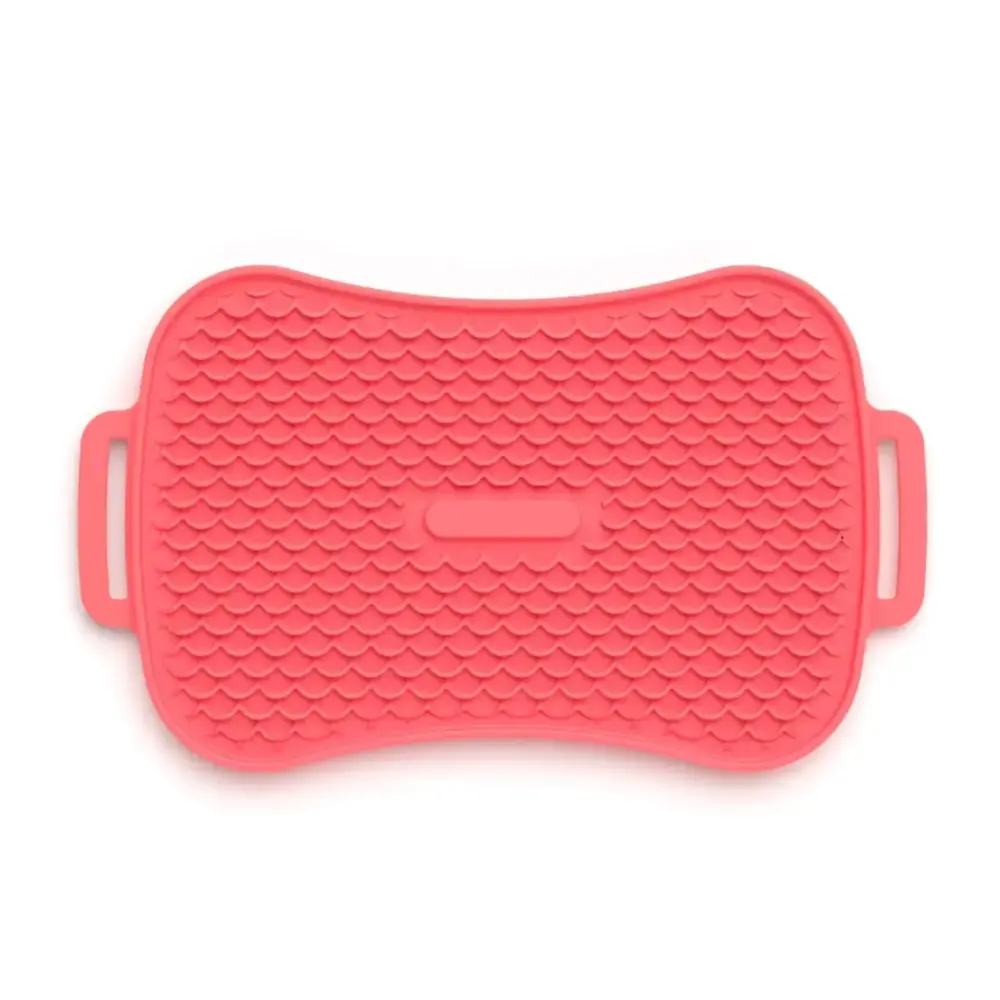
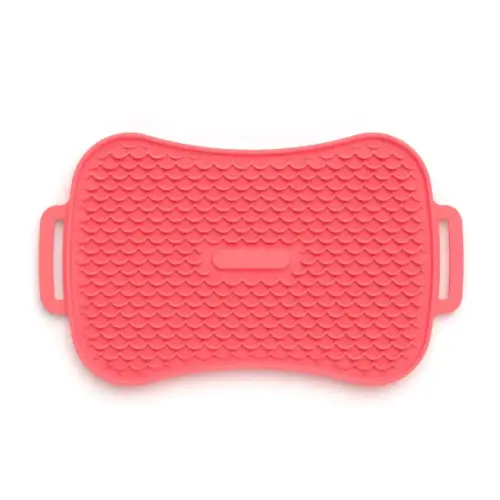
Reversible Dog Lick Mat, Choose color
$37.95
Why it fits: A thick reversible mat with two patterns, so the puzzle stays interesting as the diet goes on.

Our comparison of slow feeders and lick mats covers which tool suits which problem, and slowing down a dog that eats too fast covers the gulping side of it.
Breed shapes that confuse the check
A few body types do not fit the standard description, and knowing which one you have prevents both unnecessary worry and false reassurance.
| Type | What to expect |
|---|---|
| Sighthounds | Ribs and hips visible normally; judge by muscle |
| Deep-chested breeds | Strong tuck is normal; use the ribs instead |
| Barrel-chested breeds | Waist is subtle even when healthy |
| Heavy-coated breeds | Feel, never look; the coat hides everything |
| Puppies and adolescents | Lean is normal while growing |
Sighthounds are the classic example. A greyhound or whippet at a correct weight shows the last two or three ribs and the hip bones, which looks alarming to anyone used to labradors. Conversely, a labrador with the same visible ribs would be underweight. If you are unsure what is right for your breed, ask your vet to show you on your own dog.
Common questions
How often should I check?
Monthly is plenty, and it takes a minute. Checking more often makes small, meaningless fluctuations look significant.
How much weight should a dog lose per week?
Slowly is the answer, and your vet should set the target for your dog. Rapid weight loss is not the goal, and a diet plan supervised by a veterinary nurse is both safer and considerably more successful than guessing at home.
Will switching to a diet food fix it?
Not on its own. Portion size and extras usually matter more than the brand on the bag. Start by measuring what is actually going in each day, including treats and chews, which is often a surprise.
My dog always seems hungry. Am I underfeeding?
Probably not; some breeds behave as if they are starving regardless of intake. Judge by body condition and weight rather than by enthusiasm, and spread the ration across puzzles and slow feeders so it lasts longer.
Does neutering cause weight gain?
Neutering lowers energy requirements, so dogs who continue on the same portion after the operation tend to gain. The fix is adjusting the amount rather than avoiding the procedure, and it is worth asking your vet to recalculate at the post-operative check.
What to measure besides weight
Two numbers tracked together tell you more than either alone. Weight catches change in mass; a tape measure catches change in shape, which is what actually matters for a dog gaining or losing fat.
- Weigh monthly, on the same scales, and write it down.
- Measure around the waist at its narrowest point, behind the ribs.
- Measure around the chest at its widest point.
- Photograph your dog from directly above and from the side, standing square.
- Repeat monthly in the same spot with the same lighting.
- Compare photographs three months apart rather than week to week.
Photographs are more useful than most owners expect, because the change happens too slowly to notice day to day. Two pictures three months apart answer the question immediately, and they are the evidence a vet will find most useful.
Working with the rest of the household
Weight management fails for social reasons more often than nutritional ones. One person measures carefully and another gives the crusts; a neighbour feeds the dog over the fence; the children share their snacks. None of it is ill-intentioned and all of it adds up.
The practical fix is visibility rather than rules. Put the daily allowance in a container each morning, including treats, and let everyone feed from it. When it is empty, the day is done. It removes the argument entirely and it is the single most effective change most households can make.
When weight loss is the warning sign
Losing weight without a deliberate change is a different matter entirely and needs a veterinary appointment. The same applies to a dog who is eating normally or more than usual and still losing condition, or losing muscle over the back and hind legs while the belly stays round.
Weigh before you worry, because coat and season both change appearance. If the scales confirm it, book the appointment rather than waiting another month. When to call the vet about a dog helps with urgency, and the cat version of this check is how to check your cat is a healthy weight.
Related guides
-
Comparison
Slow Feeder vs Lick Mat: Which One Does Your Dog Need?
A slow feeder stretches out a meal; a lick mat fills time and settles a dog. Buying the wrong one for the problem is the usual mistake. This comparison covers both, including the dogs who defeat them.
-
How-to
How to Clean a Lick Mat Properly, Including the Grooves
A lick mat is a textured surface designed to hold food, which is exactly what makes it hard to clean. This covers rinsing before it sets, the soak that does most of the work, when the dishwasher is fine, and what frozen toppings leave behind in the pattern.
-
Checklist
A Realistic Daily Dog Care Routine
A workable daily routine for a dog, split into morning, daytime and evening, with the weekly jobs that are easy to forget and an honest note on what you can skip when the day gets away from you.