Journal Guide
Signs Your Dog Is Stressed, and What Actually Helps
Short answer
Stressed dogs lick their lips, yawn, turn away, shake off and freeze long before they growl. Look for several of these together in the same situation, then change the situation rather than reassuring the dog and carrying on. Persistent stress with no obvious trigger deserves a vet visit first.

Stress rarely starts with growling
Dogs escalate in a predictable way. They ask quietly, then more clearly, then loudly. Most owners only learn to recognise the loud end, which means the dog has to get there before anything changes. The quiet end is where the useful information is.
None of these signals is proof on its own. A dog yawns because they are tired. A dog sniffs the ground because something smells good. What matters is the pattern: several signals, in the same situation, repeatedly.
Early signals people walk past
- Lip licking with no food in sight
- Yawning when not tired
- Turning the head or body away from something
- Sniffing the ground abruptly in a social moment
- Shaking off when dry
- Panting that does not match the temperature or exercise
- Pacing, or not being able to settle
- Scratching at an odd moment
- Refusing food they would normally take
That last one is worth its own line. A dog who will not take a treat they normally love is over threshold. It is the fastest check available to you on a walk or in a waiting room.
Signals that mean stop now
If you see these, the dog is past asking politely. Create distance immediately and do not wait to see what happens next.
- A hard stare, held
- A freeze, with the body still and weight forward
- Whale eye, the whites showing in a crescent
- Lifting a lip, showing teeth
- A low growl
- Tucking the tail and trying to get behind you or out of the room
Safety note
Never punish a growl. It is a warning, and a dog who learns that warnings get them told off may skip straight to snapping next time. Note what caused it, create distance, and speak to your vet and a qualified behaviourist if it repeats.
Common everyday stressors
Most stress in pet dogs comes from ordinary life rather than dramatic events. The usual list:
- No way to opt out: open-plan homes with no quiet corner and no closed door.
- Being handled without a build-up: nails, ears, harnesses, towels after a wet walk.
- Unpredictable routine: meals, walks and alone time at random times.
- Too much greeting: visitors, children, other dogs, all at close range.
- Walks with no choice in them: a tight lead, no sniffing, the same route.
- Noise: fireworks, building work, a busy street outside a front window.
- Not enough sleep: an under-rested dog has a much shorter fuse.
Stress that looks like something else
A fair amount of what gets treated as training failure is stress wearing a different hat. Recognising the disguise saves months of working on the wrong problem.
- Not listening. A dog over threshold genuinely cannot process cues. This is not defiance, and repeating the cue louder makes it worse.
- Pulling hard on the lead. Often arousal and tension rather than a manners problem.
- Mouthing and jumping. Common in an overtired or overstimulated dog, especially adolescents in the evening.
- Destructiveness when left. Usually separation-related distress rather than boredom, particularly if it happens within the first half hour.
- Eating things outdoors. Frequently increases when a dog is anxious.
- Barking at the window. Rehearsed daily, this becomes a habit that raises baseline stress across the whole day.
The window case is worth singling out, because it is easy to fix. A dog who patrols and barks at every passer-by is practising vigilance for hours a day. Blocking the view at dog height with film or moving the sofa away from the window often lowers the whole household’s temperature within a week.
What helps in the moment
- Increase distance from whatever is causing it. Distance works when nothing else does.
- Stop handling the dog. Let go of the collar, stop stroking, step back.
- Give the dog somewhere to go and let them choose to go there.
- Drop the pressure on yourself too: stop talking, stop fussing, stand side on rather than face on.
- Offer something slow to do once the dog is calm enough to take food.
- End the situation rather than pushing through it. Nothing is being taught by continuing.
What helps over weeks
The in-the-moment fixes stop a situation getting worse. These change the baseline so fewer situations get there.
- A predictable day. Dogs settle on routine more than on quantity.
- Real rest. Adult dogs need a great deal of sleep, and interrupted napping shows up as reactivity. See how much sleep does a dog need.
- A proper retreat. One quiet bed, in a low-traffic spot, that nobody disturbs.
- Sniffing time. A slow, long-lead walk on quiet ground does more for a stressed dog than a fast one. Our guide on using a long line covers how.
- Chewing and licking. Both are settling activities for most dogs and easy to build into an evening.
- Fewer forced greetings. Your dog does not have to meet every dog or person.
-
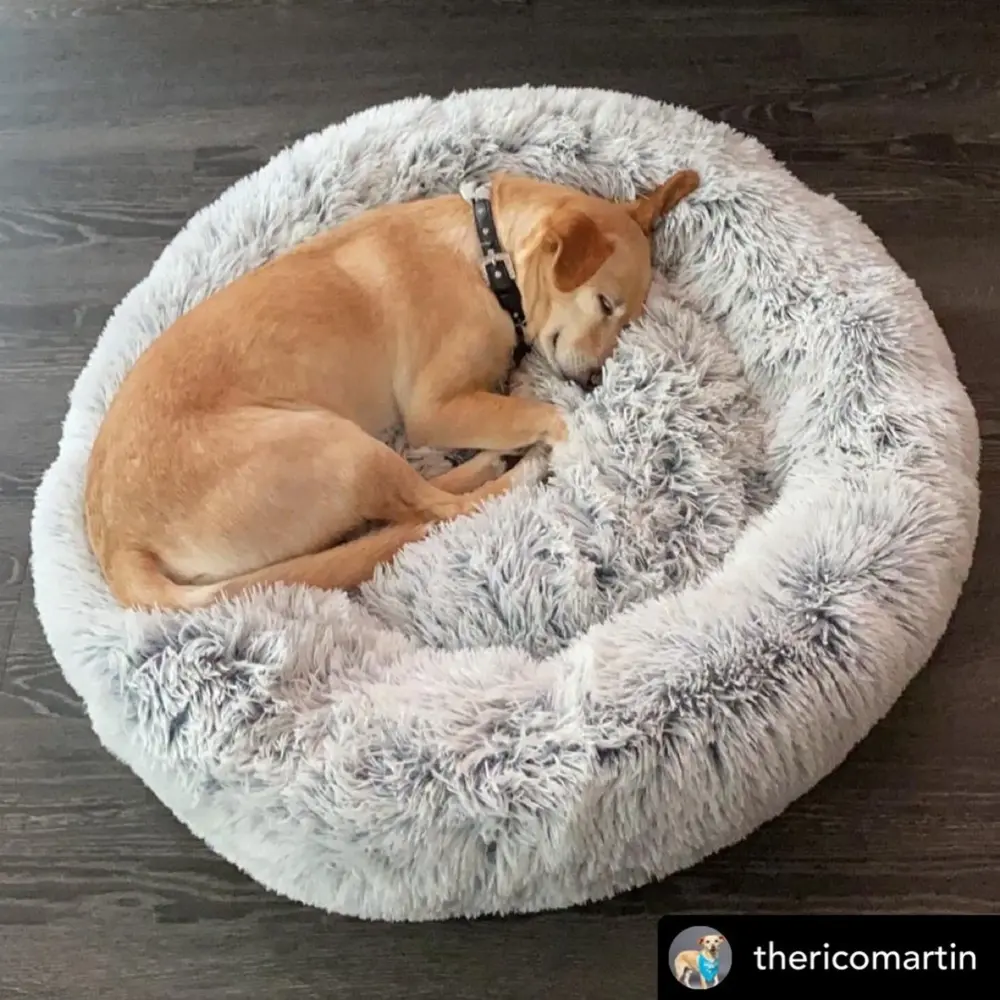
Armarkat
Ultra-Plush Cuddler Bed for Cats & Small Dogs, Choose size
Price range: $55.95 through $72.95
Why it fits: A walled bed for the quiet corner; a retreat that nobody disturbs does more for a stressed dog than any product.
-
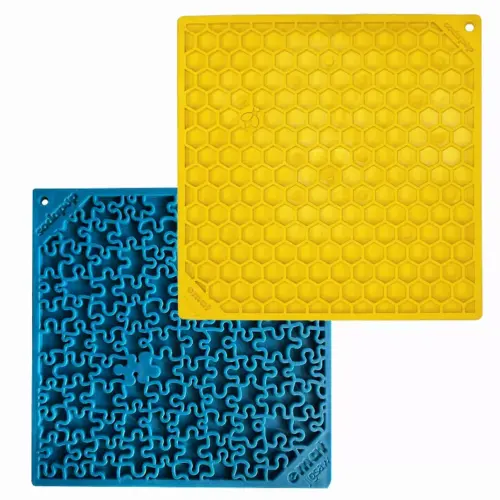
eMat Lick Mat Bundle, View product
$35.95
Why it fits: Two lick mats for a wind-down routine; licking is slow, repetitive work that most dogs settle into after a tense day.
-
3-in-1 Dog Enrichment Tube, Choose color
$42.95
Why it fits: A puzzle that rewards problem solving; a dog with something to work out is a dog not scanning the room.
-
Mr. Peanut’s
OrthoPlush Pet Bed, View product
$41.95
Why it fits: A supportive bed for a dog who struggles to settle; poor sleep and a short fuse travel together.


Three situations that cause most of it
The vet waiting room
A small room full of unfamiliar animals, with nowhere to go, is close to the worst possible environment. Ask whether you can wait in the car and be called in, take a mat your dog already settles on, and stand so your dog can face away from the room rather than into it.
The car
Car stress is often motion sickness first and fear second, and the two feed each other. Short, pleasant journeys that end somewhere good, rather than only ever ending at the vet, change the association over weeks. Getting a dog used to car rides covers the build-up.
Visitors
The usual mistake is asking the dog to greet everyone at the door. Put your dog somewhere quiet before the doorbell, let people come in and sit down, then let the dog choose whether to join. Most dogs who struggle with visitors are fine once the arrival itself is over.
What does not help
- Flooding. Making a dog stay near the thing they fear until they stop reacting teaches them that nothing they do works.
- Punishing the signals. It removes the warning, not the feeling.
- Reassuring in a tense voice. Comfort is fine; your own body language is what the dog reads.
- More exercise. A tired, stressed dog is still stressed, and over-exercising an anxious dog usually makes them worse.
- Buying a product and changing nothing else. No bed, mat or toy solves stress on its own.
How long improvement takes
Environmental changes, such as a quiet bed, a blocked window view and a predictable routine, often show results within one to two weeks. Changes that need the dog to learn something new, such as being comfortable with visitors or recovering from a frightening experience, take considerably longer and rarely move in a straight line.
Expect setbacks. A dog who has had a good month and then reacts badly has not lost the progress; they have usually had a bad day on top of an existing load. Keep a simple diary of incidents for a few weeks and the pattern tends to become obvious: a particular time of day, a particular route, or the days after a disrupted night.
Tip
If you are working on something serious, such as fear of people or of other dogs, find a qualified behaviourist who works with reward-based methods and ask your vet for a referral. Aversive methods suppress the outward signs while leaving the underlying fear intact, which is how a dog ends up with no warning signals left.
Common questions
Is my dog stressed or just excited?
Both look busy. Excitement tends to be loose, bouncy and recoverable, with the dog settling within a few minutes. Stress tends to be tight, repetitive and difficult to interrupt, and the dog struggles to take food or settle afterwards.
Should I comfort a stressed dog?
Yes. You cannot reinforce fear by providing comfort. What matters is that your own body stays relaxed, because tension in you is readable. Comfort the dog and, more importantly, change the situation.
Will more exercise help?
Rarely on its own, and sometimes it makes things worse. An anxious dog run hard every day becomes a fitter anxious dog with a higher baseline arousal. Sniffing, chewing, rest and predictability do more.
My dog only gets stressed in the evening. Why?
The usual explanation is accumulated load across the day combined with not enough sleep. Try protecting afternoon rest for a week and see whether the evenings change.
Can stress make a dog ill?
Chronic stress is associated with digestive upset, skin problems and poor sleep in dogs, and it lowers tolerance generally. It also works the other way round: illness and pain commonly present as behavioural change, which is why a vet check belongs early rather than late.
Keeping a simple record
Stress rarely has one cause, and the pattern is usually invisible without notes. A short diary for two or three weeks turns a vague sense that things are getting worse into something you can act on.
- Note the date and roughly what time an incident happened.
- Write what you saw, not what you concluded.
- Note where you were and what else was present.
- Note what happened in the hours before, including sleep and exercise.
- Rate the intensity out of five, so you can see trends rather than events.
- Review it weekly and look for repeated times of day, places or combinations.
The usual finding surprises people: incidents cluster on days following a disrupted night, or in a specific place, or after two or three mild stresses in a row. That is information you can act on, and it is also exactly what a vet or behaviourist will ask for.
Finding good professional help
For anything beyond mild, start with your vet. They can rule out pain and illness, which is the right first step, and they can refer you onward. For behaviour work, look for someone who uses reward-based methods, who is accredited by a recognised body, and who is willing to explain what they intend to do and why.
Be cautious of anyone promising fast results, using the language of dominance, or recommending equipment designed to cause discomfort. Suppressing the outward signs of fear leaves the fear in place and removes the warnings, which is how dogs end up biting without a growl first.
When a vet should be involved
Stress that appears suddenly in a dog who was previously fine, stress with no identifiable trigger, or stress alongside changes in appetite, sleep, toileting or movement is worth a veterinary appointment before it is treated as a behaviour problem. Pain makes dogs irritable and anxious, and it is common for a behavioural change to be the first visible sign of it.
Our guide on signs a dog is in pain covers what to look for, and when to call the vet about a dog helps you judge urgency. If the picture is restlessness and destructiveness rather than fear, read signs your dog is bored first, because the fixes are different.
Related guides
-
Guide
Signs Your Dog Is Bored, and What Actually Fixes It
Boredom, anxiety and pain produce similar behaviour and need completely different responses. This guide separates them, explains why more walking often fails, and sets out a weekday plan that works.
-
Guide
How Much Sleep Does a Dog Need, and What Disrupts It
Adult dogs sleep far more than most owners expect, and puppies more again. This guide covers typical totals by life stage, what interrupted rest does to behaviour, and how to set up a bed that actually gets used.
-
Guide
Signs a Dog Is in Pain: What Changes Before They Limp
Dogs hide pain well, and most early signs are changes rather than symptoms. This guide covers what to watch in how a dog lies down, moves, behaves and eats, and how to give your vet something useful to work with.