Walking & Training How-to
How to Hold a Dog Leash: Grip, Slack and Which Side Your Dog Walks On
Short answer
Slip your thumb through the handle loop, close your fist over it and fold any spare leash into the same hand instead of wrapping it around your wrist. Keep that anchor hand at your hip, let your other hand guide lower down, and leave a loose J of slack between you and your dog.
What you need before you start
The thumb lock works on any flat, fixed-length leash with a handle loop. A few things make it easier:
- A leash sized to your dog. For big dogs and dogs still learning to walk on a leash, the AKC’s guide to choosing a leash suggests a thicker, wider one with a padded handle to help prevent leash burn.
- A harness that fits. With the leash on a harness, a firm hold presses across your dog’s chest rather than the throat.
- Treats and bags off your hands. Keep treats in a pouch or pocket on your hip and bags clipped elsewhere, so both hands stay on the leash.
- Shoes with grip. When a dog lunges, your footing does as much work as your hands.
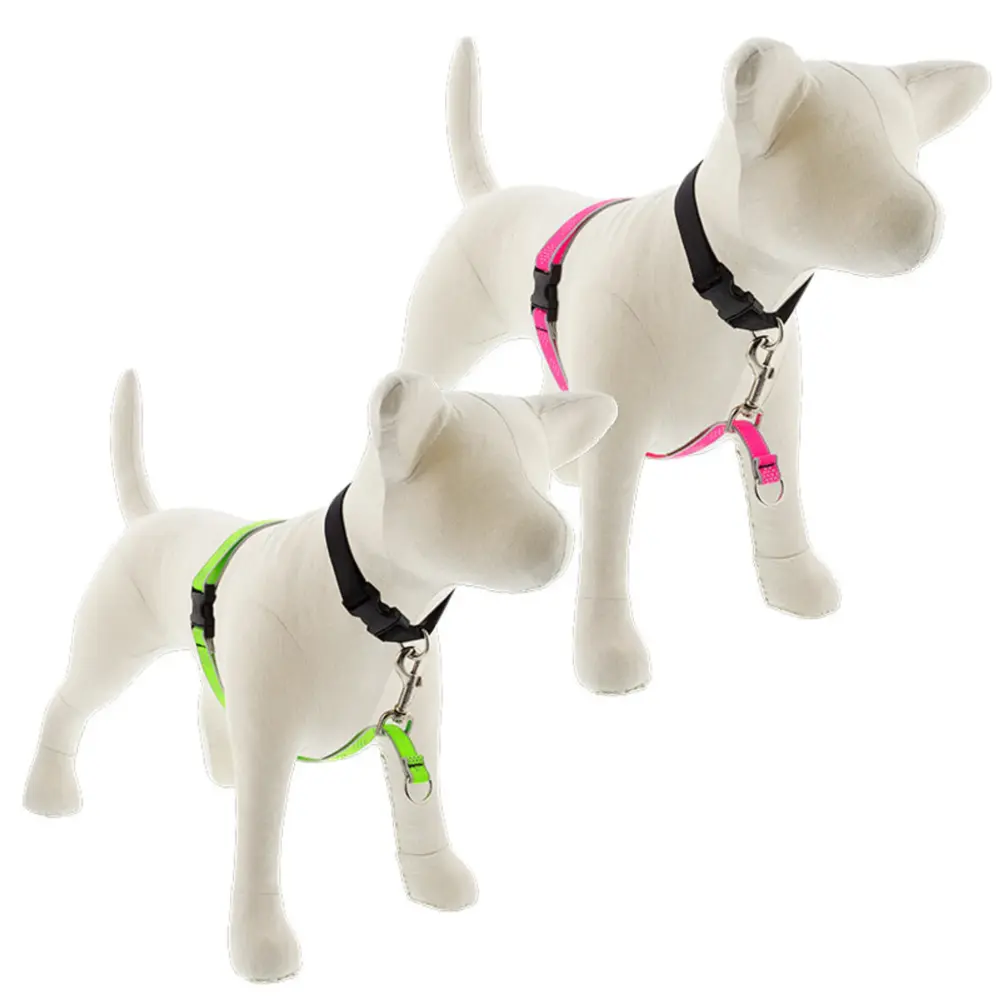
These are the two dog harnesses in our walking and training range; check the size limit in each reason before you order.
-
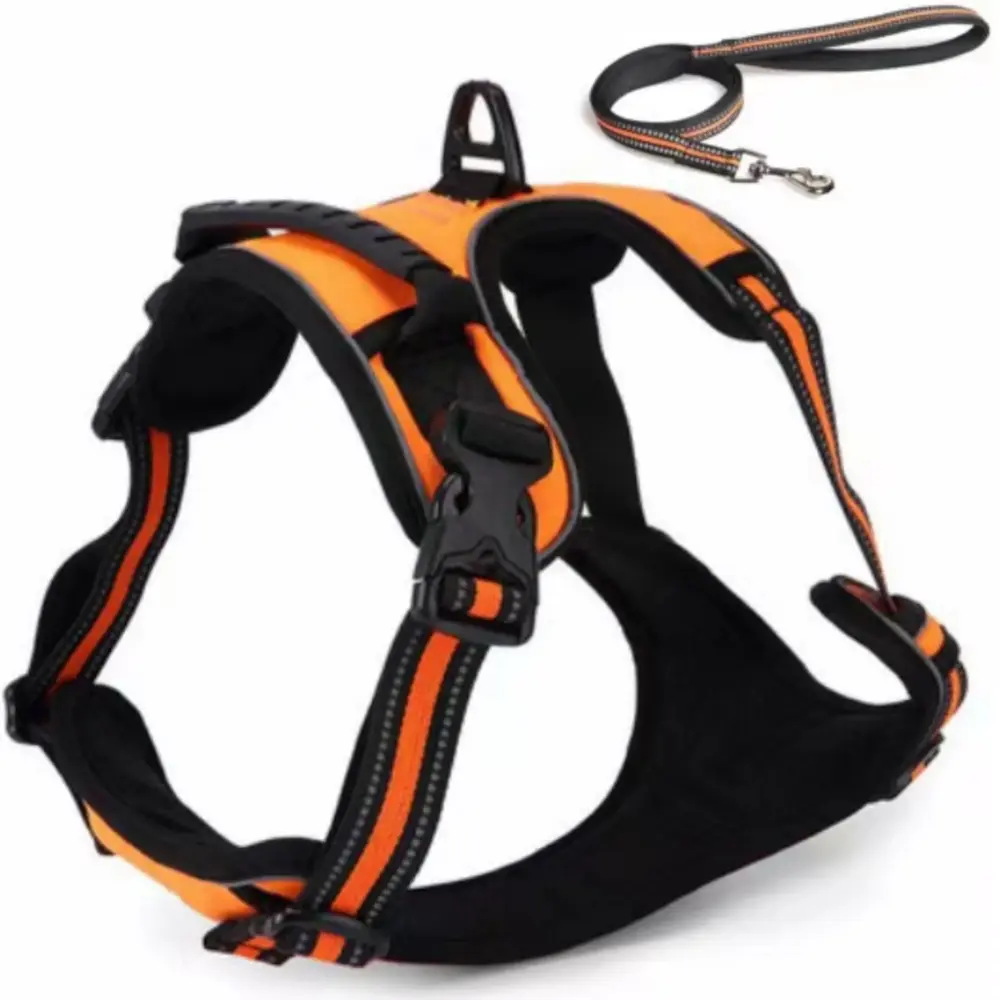
Mr. Peanut’s
PetTrek Padded Harness and Leash Set, Choose size & color
Price range: $24.95 through $26.95
Why it fits: A padded harness and matching leash in one set; the harness spreads a firm hold across the chest, not the neck. Sizes XS to Large only.
-
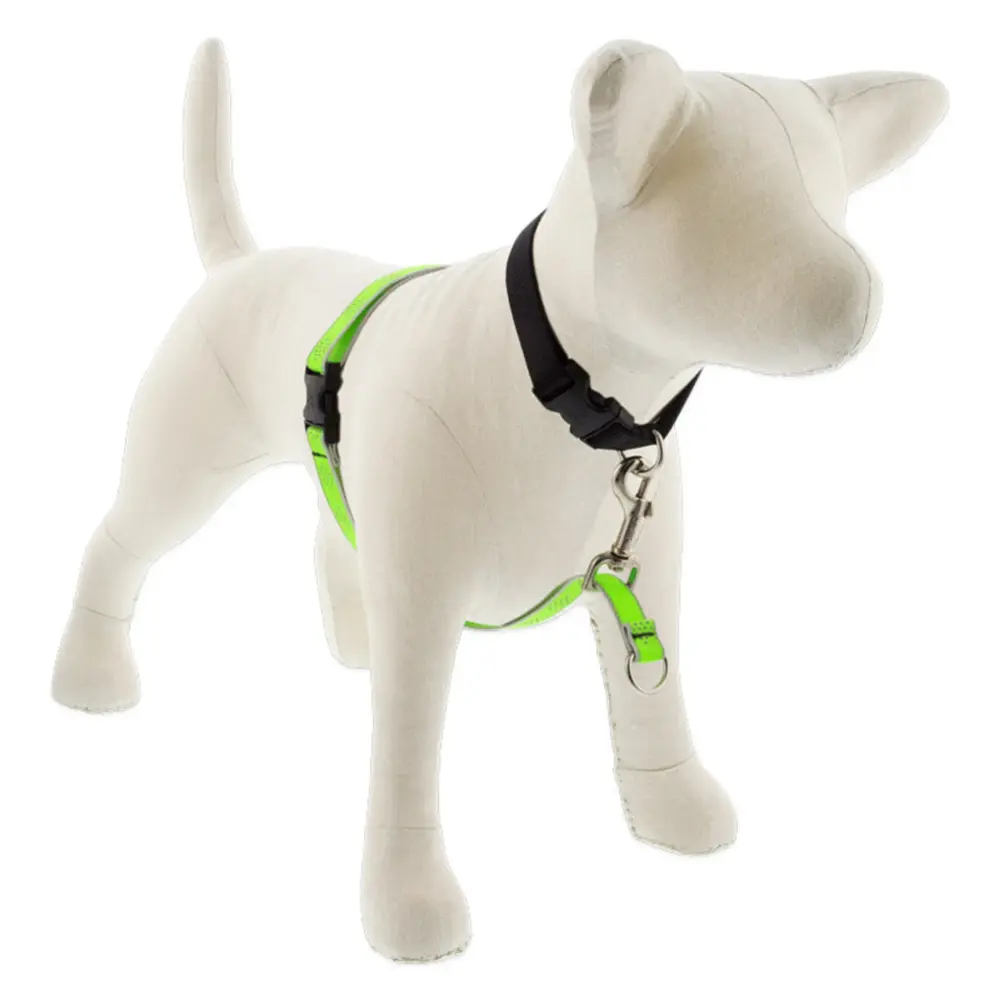
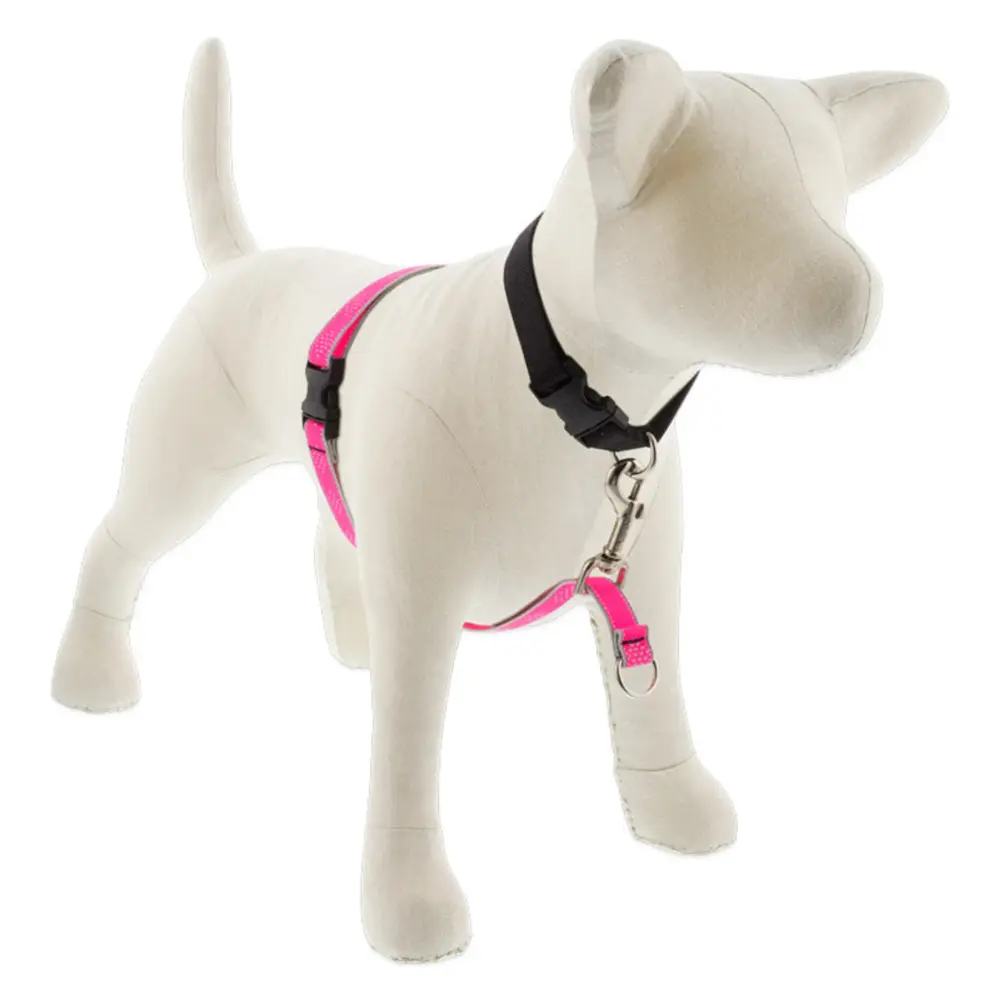
Lupine Pet
Reflective No-Pull Dog Harness, Choose size & design
Price range: $41.95 through $45.95
Why it fits: A front-clip harness for medium and large dogs who still pull; it turns a surge back toward you. Fits 16 to 38 in girths only.


The thumb lock: holding the handle safely
Shelter staff and trainers commonly teach the thumb lock, because it holds firm when a dog surges without tying the leash to your body. Use the hand farther from your dog: that becomes your anchor hand.
- Thumb in the loop. Hold your anchor hand out, thumb up, and hook the handle loop over your thumb so it rests in the crook at the base.
- Add a fold if needed. To shorten the leash, fold a length of slack into your palm beside the handle. Add a second fold for a shorter leash still.
- Close your fist. Curl your fingers around everything in your hand, thumb on top, so the leash leaves your fist past your little finger and runs toward your dog.
- Anchor at your hip. Rest that fist against your hip or just in front of your belly button, elbow bent and close to your side.
- Add your guide hand. Hold the leash loosely with your other hand, lower down toward your dog. It shortens, lengthens and hands out treats; the anchor hand stays put.
Held this way, a sudden pull tightens the handle against your thumb and fist, not your wrist or fingers, and you can still open your hand if a big dog is about to pull you over. Letting go is a last resort, especially near traffic, but a leash knotted around your wrist takes that choice away. Slipping your whole hand through the loop is a common alternative and holds well with a calm dog, but the loop then sits around your wrist and is slower to release, so stick with the thumb lock for a strong puller.
Taking up slack without wrapping the leash
You’ll shorten and lengthen the leash dozens of times on a walk: short for a passing jogger, longer for a good sniff. How you store the extra decides whether it pays out smoothly or bites into your hand.
- Fold, don’t wrap. Fold spare leash back and forth into your anchor palm, like an accordion. Loops wound around your hand cinch tight when your dog pulls, and you can’t loosen them fast.
- Shorten with the guide hand. Slide it down the leash toward your dog, then bring the gathered slack back to your anchor hand and fold it in. To lengthen, open a fold and let it slip out.
- Let running slack run. If your dog lunges while you’re holding folds, relax your fingers and let them slip. The handle stays locked on your thumb, so the leash stops at the loop. Squeezing a leash that’s already sliding is how palms get leash burn.
- Shorten before you need to. Gather the leash when you see a dog, a bike or a curb ahead, not once your dog has already reached the end of it.
Bracing for a lunge
When your dog suddenly surges toward a squirrel or another dog, your body does more than your grip:
- Pull your anchor hand in to your hip or belly, so the force goes through your core rather than your shoulder.
- Turn sideways to the pull, bend your knees a little and keep your weight back.
- Slide your guide hand toward your dog to shorten the leash, smoothly rather than with a jerk.
- Once your dog turns back to you, soften both hands and reward.
Practice this before you need it. In a CDC analysis of emergency-department visits from 2001 to 2006, 26% of fall injuries involving dogs happened while people were walking them.
A loose leash: what J-shaped slack looks like
A loose leash hangs from your hand in a gentle curve, dipping below the clip and rising again to your dog, so it looks like the letter J or a shallow U. Glance at it now and then; its shape tells you what’s going on at the other end.
| The leash | What it means | What to do |
|---|---|---|
| Soft J | Your dog is walking with you | Leave it; reward now and then |
| Straight line | Your dog is pulling or leaning | Stop, anchor at hip, wait for slack |
| Low loop | Too much slack for this spot | Fold some into your anchor hand |
| Held high | Your hand has crept up or out | Bring your fist back to your hip |
Aim for enough slack that the clip hangs freely, but not so much that the curve reaches your dog’s paws, where a front leg can step through it. A long loop swinging in front of your dog’s face also invites grabbing; if yours treats the leash as a toy, see how to stop a dog biting the leash.
Resist keeping the leash short and tight “just in case.” Constant tension gives your dog something to push against, and it hides the moment a tightening leash would have warned you. If tight is your dog’s default, handling alone won’t change it: our plan to stop a dog pulling on the leash pairs this grip with stop-and-wait training.
Left or right: choosing your dog’s side
Tradition says left, because in competition obedience “heel” means walking at the handler’s left side. For everyday walks, the AKC’s puppy training advice says the side is up to you, as long as you stay consistent so your dog doesn’t learn to zigzag in front of you. A few things can tip it:
- Your stronger hand. The anchor hand is the one farther from your dog, so pick the side that leaves your stronger hand on the handle.
- Traffic. If your usual route keeps the road on one side, walk on the road side yourself, with your dog on the inside.
- What else you hold. A cane, a stroller or a child’s hand needs a free side; your dog goes on the other.
- A second dog. Two leashes need a plan of their own; how to walk two dogs at once covers positions and holding both.
Once you’ve chosen, make that side pay. Hand out treats with your guide hand, right beside your leg, so the reward never lures your dog across in front of you. To switch sides, guide your dog behind you, passing the leash from hand to hand behind your back, so it stays out from under your feet.
Holding the leash with a front-clip harness
On a front-clip harness the leash attaches at the middle of the chest, so a pull turns your dog back toward you instead of letting them lean in. The grip stays the same; the handling changes a little:
- Keep the leash on your side of your dog. It should run from the chest ring back along the side nearest you. If it drifts across the chest or under a leg, stop and lift it clear.
- Carry less slack. Extra leash dangling from a chest ring swings around the front legs, so keep the J shorter than you would on a back clip and let your guide hand do more of the work.
- Hold low and steady. Keep your hands near hip height and let the harness do the turning. A quick jerk on a chest ring swings your dog sideways and teaches nothing.
- Watch where the ring sits. If it keeps sliding to one side, the straps are probably loose. Refit them rather than holding the leash harder.
The Lupine no-pull harness in our picks attaches to your dog’s everyday collar (our Lupine Pet reflective collar is one option) and to the leash you already own, so the grip you’ve practiced doesn’t change. For whether a front or back clip suits your dog in the first place, see front-clip vs back-clip harnesses.
Leash length, and when a retractable gets in the way
For everyday walks, an ordinary 4- to 6-foot leash is the easiest length to hold well: long enough for a soft J and a sniff at arm’s length, short enough to fold the extra into one hand. A 4-foot leash keeps your dog close on busy sidewalks with little to fold; a 6-foot one gives more room to sniff on quiet streets.
A retractable leash is a different tool. Its plastic handle can’t be held in a thumb lock, and a button, not your guide hand, sets the length. The AKC’s advice on retractable leashes names crowds, sidewalks, lots of other dogs and places like the vet’s office as times for a standard leash instead, and notes that a retractable rewards pulling and that a thin cord can burn or cut skin.
Safety note
Never grab the cord or tape of a retractable leash to stop your dog, and don’t let it wrap around your fingers or legs. If you use one in open spaces, lock it short near people and switch to a standard leash for streets.
Mistakes that hurt hands, wrists and shoulders
- Wrapping it around your hand, wrist or fingers. A lunge cinches the wrap and puts the whole force on a small area. Keep everything inside your fist.
- Holding your arm straight out. A lunge on a straight arm arrives as a jolt in the shoulder. Keep your elbow bent and your anchor hand at your hip.
- Squeezing all walk. A white-knuckle grip tires your hand and forearm. Your thumb holds the handle; your fingers can relax until you need them.
- Full hands. Coffee, a phone or a full poop bag in your leash hand means a one-handed catch when it matters. Carry bags in a zippered holder that clips to the leash or your belt instead.
- Letting the leash drag. Slack on the ground catches your dog’s legs and your own feet.
When the grip still isn’t right
- Your palm gets sore. Try a wider leash or a padded handle, and grippy gloves in cold weather. If pulling is the cause, a front-clip harness and training help more than a tighter grip.
- The leash slips through your fist. The handle has probably come off your thumb, or you’re holding too many folds. Reset the thumb lock with a single fold.
- Your dog weaves side to side. Reward only on your chosen side and take up a little slack until the habit sets in.
- It hurts anyway. Hand, wrist, elbow or shoulder pain that lingers after walks is worth raising with your doctor or a physical therapist. If your dog coughs or gags when the leash tightens, switch the leash to a harness and tell your veterinarian.
Practice drills in the hallway
Five minutes indoors makes the grip automatic before a squirrel tests it. Do the first three without your dog.
- Grip drill. Clip the leash to a door handle and set the thumb lock with one fold ten times, until your hand does it without your looking.
- Shorten and lengthen. Walk toward the door and away from it, sliding your guide hand and folding slack in and out so the J stays the same size.
- Brace drill. Ask a helper to hold the clip end and pull steadily, then a little harder, while you pull your anchor hand to your hip, turn sideways and soften your knees.
- Treat hand. With your dog on your chosen side, walk the hallway handing out treats by your leg with your guide hand. Stop now and then, and reward your dog for ending up beside you on a soft J.
- Pickup drill. Move the whole leash into your anchor hand, crouch as if to pick up after your dog, and stand again without letting the slack drop.
With a puppy, use a lighter leash, keep your hands low and keep the dog drills to a couple of minutes; see how to leash train a puppy for the first walks outside. Teaching a child the grip? Start here too, then read teaching kids to walk the dog before handing over the leash outdoors.
Related guides
-
How-to
Teaching Kids to Walk the Dog: When They’re Ready and How to Start
Your child wants to take the leash. Here’s how to tell whether your child and your dog are both ready, how to run practice walks with a backup leash, and what your child should do when the dog pulls, lunges or meets another dog.
-
How-to
How to Wash a Dog Harness, Collar and Leash by Hand or Machine
Check the care label, then hand wash nylon webbing in warm, mildly soapy water or machine wash it in a mesh bag if the label allows. Plus leather and retractable leashes, drying without heat, smells that won’t wash out and when to replace the gear.
-
How-to
How to Walk Two Dogs at Once Without Tangles or Pulling
Two dogs, two leashes and no knots: train each dog alone first, give each one a usual side, walk at the slower dog’s pace, untangle crossed leashes safely and know what to do when one dog pulls or reacts.