Walking & Training How-to
Why Does My Dog Bite the Leash? How to Stop Grabbing and Tugging
Short answer
Dogs usually grab the leash when excited, bored or frustrated, and pulling back turns it into tug-of-war. To stop it, keep the leash loose and behind your dog, go still the moment it’s grabbed, and reward a quiet mouth. Then give that mouth a better job: a toy to carry, or a short, planned game of tug.
Why dogs bite and tug the leash
In most dogs, leash grabbing is play or frustration, not aggression. The AKC’s advice on dogs that tug on leashes names boredom, not yet understanding the leash and frustration in exciting places as the usual reasons. The timing usually tells you which one you have:
- At the door or in the first few minutes: excitement with nowhere to go yet.
- On a dull stretch, or while you stop to chat: boredom. Walking nicely earns nothing; grabbing the leash gets you talking, looking and pulling back.
- Near dogs, people or squirrels: frustration. Your dog wants to go over, the leash says no, and the leash gets bitten.
- Whenever the leash swings: a loop bouncing in front of a dog’s face moves just like a tug toy.
- Whenever their mouth is empty: some dogs simply like holding something.
Whatever starts it, the habit grows because it works: you pull, your dog pulls back, and now you are playing tug. It shows up most in young, energetic dogs who are still learning what the leash means.
Tip
A young puppy who mouths hands, sleeves and shoelaces as well as the leash is going through normal puppy mouthing: start with how to stop a puppy biting, and see how to leash train a puppy for the first walks. This page is for older puppies and adult dogs who have turned the leash into a game.
Leash handling that doesn’t invite a game
Part of the fix happens before any training. The AKC suggests keeping the leash loose and behind your dog, where it stops looking like a toy:
- Hold it at your hip, with a small, relaxed curve of slack. The leash should run back from your dog toward you, not hang in a loop in front of their nose. A tight leash adds frustration; a long, drooping one hands your dog something to grab.
- Fold up the extra. Spare leash flapping from your hand is a moving target. Fold it into your palm rather than wrapping it around your wrist; how to hold a dog leash shows the grip.
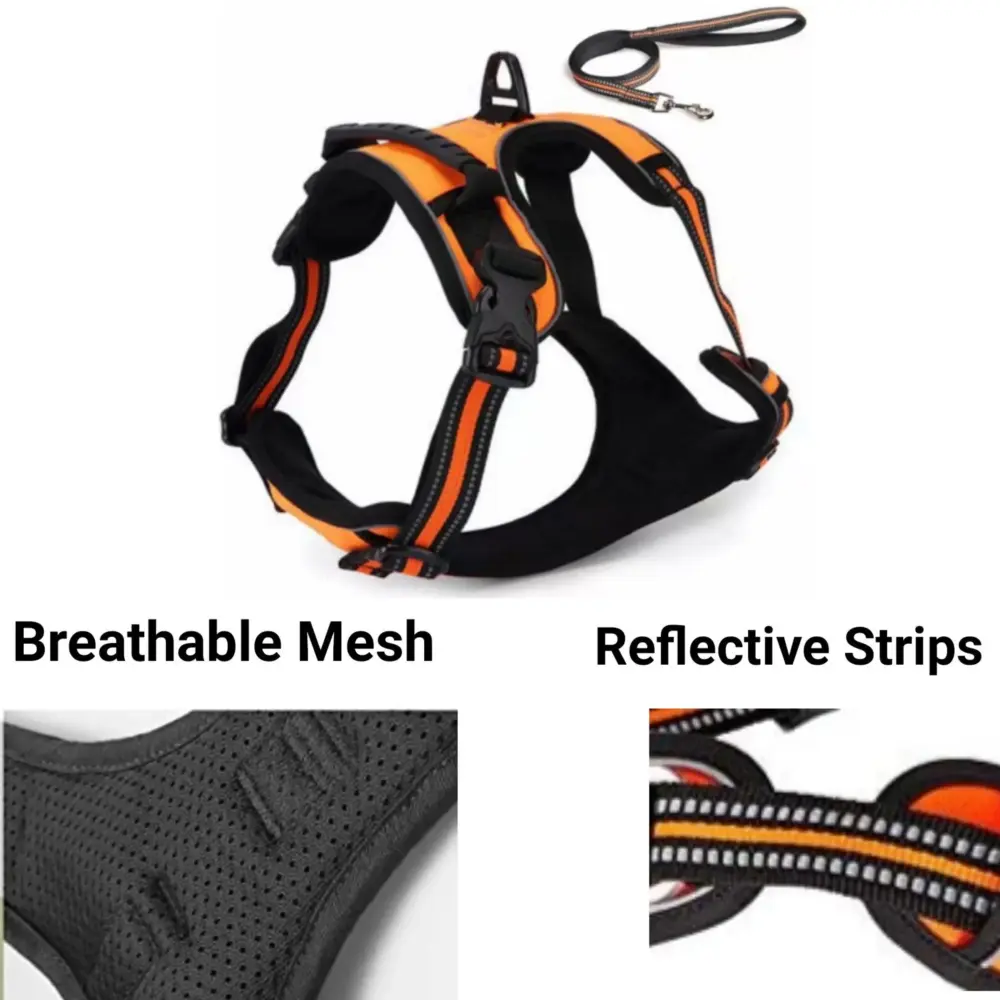
- Clip it to a harness. A dog mid-grab often spins, jumps or lunges, and a harness puts any pressure from that across the chest rather than on the throat. The Mr. Peanut’s PetTrek harness and leash set pairs a padded harness with a matching leash that clips straight on, in sizes XS to Large.
- Notice where the leash attaches. A leash clipped at the chest, as on a front-clip harness, runs right past your dog’s mouth. If that is where the grabbing happens, use a back attachment on quiet walks where you don’t need the steering.
- Hang it up at home. A leash left on the floor, or trailing from a dog nobody is watching, becomes a chew toy.
Safety note
Check the leash after walks with a grabber. Punctures, fraying and chewed stitching, especially near the clip, weaken it, and a damaged leash can give way just as your dog lunges toward a road. Replace it rather than waiting to see.
How to stop leash biting, step by step
What you need:
- Small, soft treats your dog loves, counted toward the day’s food. If your dog is on a special diet, ask your veterinarian which treats fit.
- A fixed-length leash on a harness, held as described above.
- One walk toy your dog likes to carry or tug, kept for walks so it stays special.
- Take the edge off before you leave. Two or three minutes of tug with the walk toy in the hallway or yard burns off some of the first-minute excitement behind so many grabs.
- Start calm at the door. Clip the leash on and wait. If your dog grabs it, go still until they let go, then reward and open the door.
- Pay for a quiet mouth. In the first minutes, and on stretches where grabs usually happen, say a quick yes and treat every few steps while the leash stays out of your dog’s mouth, and especially when they glance at it and leave it. Deliver treats low, beside your leg.
- When teeth close on the leash, go still. Stop walking, pin your leash hand at your hip and say nothing. Don’t pull, shake or pry. A leash that doesn’t move, held by a person who has gone boring, is a poor tug toy.
- The moment it drops, reward and walk on. Moving forward is a reward too. If your dog grabs again straight away, ask for something easy, such as a sit or a hand touch, and reward that first.
- Trade if your dog won’t let go. Hold a treat at their nose and say your drop cue as they release. Teach the cue at home first; the tug rules in toys for dogs who destroy toys show how.
- Keep score. Count grabs per walk: fewer and shorter means it is working, even before they stop. Everyone who walks your dog needs to follow the same rules.
Something to carry: a toy in the mouth instead of the leash
For a dog who grabs the leash because they want something in their mouth, the simplest fix is something better to hold. The AKC suggests giving a dog a ball or other toy to carry while walking.
- Hand the toy over at the door, before your dog has a chance to look at the leash.
- Pick one too big to swallow and comfortable to carry for the whole walk.
- Let your dog drop it to sniff or toilet, then offer it again later. Take it back on hot days, or whenever your dog is panting hard, so their mouth is free.
- Check it after each walk, and retire it once a seam opens or the material starts to split.
-
Fire Hose Crocodile Dog Toy, View product
$30.95
Why it fits: About 26 in of stuffing-free fire hose, great for tug and fetch: long enough to keep your hand clear of teeth, and tougher than plush for a dog who mouths a carry toy hard.
-
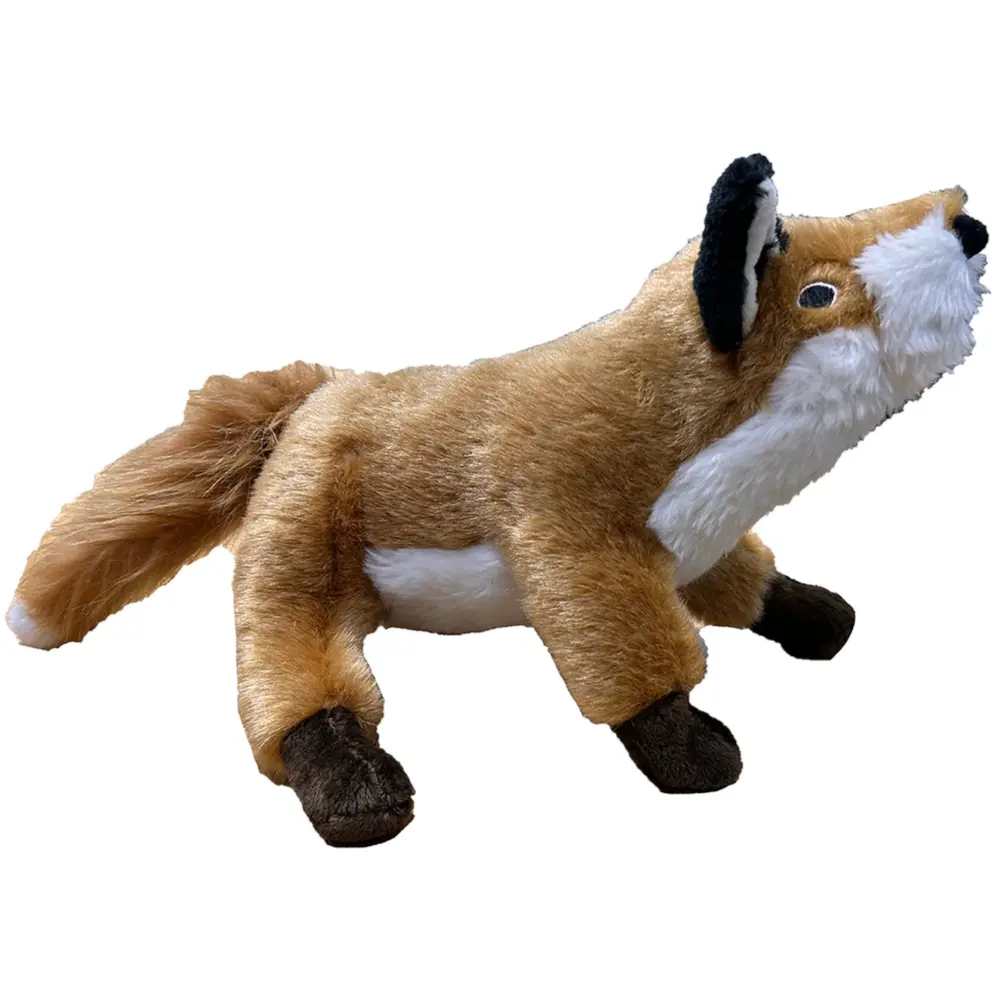
Realistic Plush Fox Dog Toy with Squeaker, View product
$30.95
Why it fits: Soft plush with an easy-to-carry body and a 6 in tail for gentle tug, for a soft-mouthed dog who mostly wants something to hold. Best for gentle to moderate chewers, not shredders.


No toy is indestructible, so supervise and retire any toy that is coming apart; there are more options in toys and play gear. What about letting your dog carry the leash itself? Even a calm leash carrier can easily slide into chewing or tug, which weakens the leash you rely on near traffic, so a toy is the better job.
Tug as a planned outlet, not a mid-walk battle
A leash grabber is often asking for exactly what tug offers: something to grip and pull against. Tug isn’t the problem; tug with the leash is, because the leash is attached to your dog and you can’t put it away. A toy has an on and off switch that you control.
- Before the walk: a couple of minutes at home, as in step 1.
- As a reward on the walk: the AKC suggests bringing out a tug toy before your dog starts biting the leash. After a good stretch with a quiet mouth, stop somewhere calm for a few seconds of tug, then put the toy away and walk on.
- After the walk: a short game at home gives the end of the walk something to look forward to.
Keep the rules the same every time: you start the game, it ends on your drop cue, and teeth on skin or clothing pause it. If your dog has dental, neck or joint concerns, ask your veterinarian before you play tug.
Tip
Watch what tug does to your dog. Many settle after a short game; some come out of it more wound up. If yours does, swap the mid-walk tug for a sniff break, which the AKC describes as rewarding and calming, and save tug for home.
Busy streets and greetings: heading off the trigger spots
Frustration grabs happen in predictable places. Note where yours happen over a few walks, then get there first with the toy, a cue or a few treats, before the leash goes in.
- Other dogs. Give them room early, before yours locks on: cross the street, step into a driveway or turn away, and hand over the toy or a few treats while the other dog passes. If your dog pulls toward dogs too, the stop-and-wait plan in how to stop a dog pulling on the leash works alongside these steps.
- Greetings and chats. A neighbor stopping to say hello brings a burst of excitement and then standing around with nothing to do, both prime moments for a grab. Keep it short, ask for a sit and scatter a few treats to sniff out, or hand over the toy; the same works while you wait at a crosswalk.
- The turn for home. If grabs cluster on the way back, finish with a sniff stretch and the toy, so heading home isn’t the end of everything good.
- Busy routes. While you work on it, walk quieter streets at quieter times, and add busier ones once grabs are rare.
A dog has less reason to grab when the walk itself is interesting; dog walking games has sniff stretches, find-it and loose-leash games to mix in.
Troubleshooting: when the grabbing keeps coming back
- Grab, drop, treat, repeat. If your dog has learned that grabbing and letting go pays, put the treats into walking with a quiet mouth, let walking on be the only reward for a release, and hand out the toy before the trouble spots rather than after a grab.
- Your dog won’t let go and keeps tugging. Somewhere quiet, clip a second leash to another harness ring or the collar. When your dog tugs one, let that one go slack and hold the other; if they switch, so do you. With nothing pulling back, the game stops.
- The grab turns into jumping and nipping. Your dog is too wound up to think. Stand still and quiet; if it doesn’t settle, head home calmly and go shorter next time.
- It only happens with one person. Usually that person pulls back or talks more. Agree on one set of rules, and keep children off the leash of a dog who grabs and tugs until it is under control.
- It started suddenly. Check that the harness fits and isn’t rubbing behind the front legs, and ask your veterinarian about any sign of pain, such as flinching when the harness goes on, limping or a change in mood.
What not to do, and when to call a trainer
- Don’t hit, tap the nose, grab the scruff or hold the mouth shut. In its guide to mouthing and play biting in adult dogs, the ASPCA warns that physical punishment can make a dog bite harder, make them afraid of you and even lead to real aggression.
- Don’t wave the leash or a toy in your dog’s face. Quick, jerky movement invites grabbing; offer the toy calmly.
- Don’t rely on quick fixes. A bitter spray or a chain leash may make the leash less fun to bite, but neither gives the mouth another job, and a frustrated dog stays frustrated.
Grabbing with a loose, wiggly body is usually play. Get help from a certified professional dog trainer who uses reward-based methods if:
- your dog lunges, barks or growls at dogs or people as well as grabbing the leash;
- the body goes stiff, the lips pull back or the bites are quick and hard, which the ASPCA links to aggression rather than play;
- the teeth move from the leash to your hands, legs or clothes, hard enough to hurt;
- you can’t hold your dog safely when they grab, or it gets worse despite steady practice.
For aggression, the ASPCA recommends a certified applied animal behaviorist, a board-certified veterinary behaviorist or a certified trainer experienced with aggression. Ask your veterinarian about any sudden change in behavior first, since pain can be part of the picture.
Related guides
-
Buying guide
Gifts for Small Dogs: Beds, Coats, Car Seats and More That Fit
Gift ideas chosen by size, not breed: a rimmed cuddler bed, a coat in XXS to Medium, a booster seat for dogs up to 24 lb, a backpack carrier up to 25 lb, a padded XS or Small harness set and a 10-inch plush fox, plus the measurements to get before you order.
-
Guide
Can Big and Small Dogs Live Together? Play Rules and Separate Spaces
Big and small dogs can share a home if you plan for the size gap. How to judge the match, set play rules and time-outs, give the small dog a place to escape, keep toys, meals and beds apart, walk both dogs and know when to call a trainer.
-
How-to
How to Teach a Dog to Fetch, Even One Who Won’t Bring It Back
Teach fetch from zero: choose a toy your dog can carry, start with short hallway throws, make the return the best part of the game and teach a drop without a tug-of-war. Then move outside on a long line, with breaks and water on hot days.