Walking & Training Comparison
Slip Lead vs Standard Leash: When Each One Belongs
Short answer
A slip lead is a single piece that goes over the head and tightens as the dog pulls. It is excellent for short handling: rescue work, the vet, dog sports and getting a dog from A to B quickly. For daily walking with a dog who pulls, a harness and standard lead spread the force far better.
What a slip lead actually is
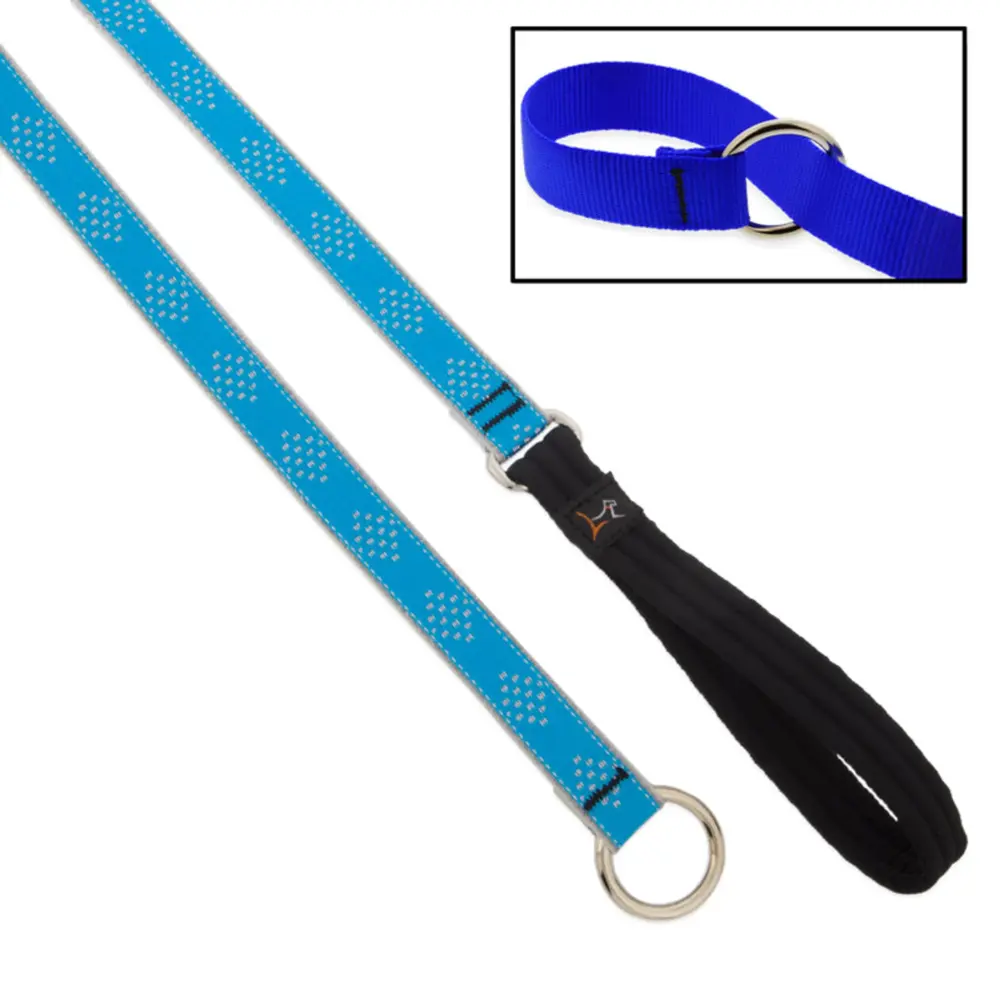
A slip lead is a length of rope or webbing with a ring at one end, forming a loop that goes over the dog’s head. There is no buckle and nothing to clip. Pull on the handle and the loop closes; release and it loosens, provided the material runs freely.
Most have a stopper, a small sliding piece that limits how far the loop can close. Setting that stopper correctly is the single most important thing about using one, and it is the step most people skip.
Where slip leads genuinely help
- Rescue and kennel work. One lead fits any dog, goes on in a second, and nothing has to be clipped onto a frightened animal.
- Vet and grooming handling. Quick on, quick off, no fiddling with a buckle.
- Dog sports. Easy to remove at the start line and put back on afterwards.
- A spare in the car. Fits any dog you might need to move.
- Dogs who slip collars. A correctly fitted slip lead is harder to back out of than a collar.
- Short, controlled handling where a harness is impractical.
The common thread is brevity. Slip leads are tools for getting a dog safely from one place to another, used by people who handle a lot of dogs.
What tightening does
The mechanism is the point and also the problem. Pressure concentrates on the neck, and on a dog who pulls hard and continuously, that is a lot of force in a small area that contains the trachea, the oesophagus and major blood vessels.
For a few seconds of handling, that is a reasonable trade. For a forty-minute walk with a dog who pulls the whole way, it is not, and a harness that spreads the same force across the chest is the better engineering answer.
Safety note
Set the stopper so the loop cannot close tighter than a properly fitted collar, and position it high on the neck just behind the ears rather than low near the shoulders. A loop that closes without limit is not a training tool; it is a choke.
Side by side
| Slip lead | Collar and lead | Harness and lead | |
|---|---|---|---|
| Speed on and off | Fastest | Medium | Slowest |
| Pressure point | Neck, tightening | Neck, fixed | Chest, spread |
| Escape risk | Low if fitted | Medium | Low if fitted |
| Suits constant pullers | No | No | Yes |
| Best use | Short handling | Trained walkers | Everyday walking |
Fitting and the stopper
- Open the loop and pass it over the head, with the sliding ring on the left if walking on your left.
- Position the loop high on the neck, just behind the ears and under the jaw.
- Tighten gently until it is snug, then slide the stopper down against the ring.
- Check: you should fit two fingers under the loop at its tightest setting.
- Walk a few steps and re-check the position; slip leads migrate downward.
- Reset the stopper if the loop has loosened or moved.
A slip lead that has slid down to the base of the neck does nothing useful and puts pressure in the worst possible place. Re-seating it during a walk is normal rather than a sign of a bad lead.
Dogs who should not be on one
- Dogs who pull hard and constantly, for everyday walks
- Flat-faced breeds, whose airways are already compromised
- Dogs with any history of tracheal, throat or neck problems
- Dogs with eye conditions where pressure is a concern
- Puppies learning to walk on a lead
- Dogs who lunge suddenly at triggers
- Any dog, if nobody sets the stopper
For a dog who pulls, the honest answer is that no equipment fixes it. A harness makes it safer while you train; it does not teach anything on its own. How to stop a dog pulling on the leash covers the training.
-
Lupine Pet
Lupine Reflective Slip Lead, Choose size & design
Price range: $33.95 through $35.95
Why it fits: A reflective slip lead with a padded handle, for handling, training and transport rather than daily pulling.
-
GF PET
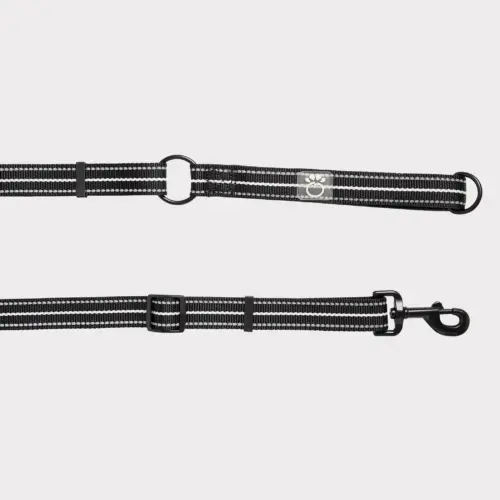
Eezy-6 Reflective Dog Leash, Choose size & color
Price range: $27.95 through $32.95
Why it fits: An adjustable six-function lead that covers standard walking, hands-free and a short traffic hold.
-
Dockside Adventures
Waterproof Dog Leash, View product
$42.95
Why it fits: A waterproof six-foot lead with a locking clip, for everyday walks that end in mud or water.
-
Lupine Pet
Lupine Eco No-Pull Training Harness, Choose size & design
Price range: $38.95 through $40.95
Why it fits: A no-pull harness that attaches to the collar and lead you already own.
-
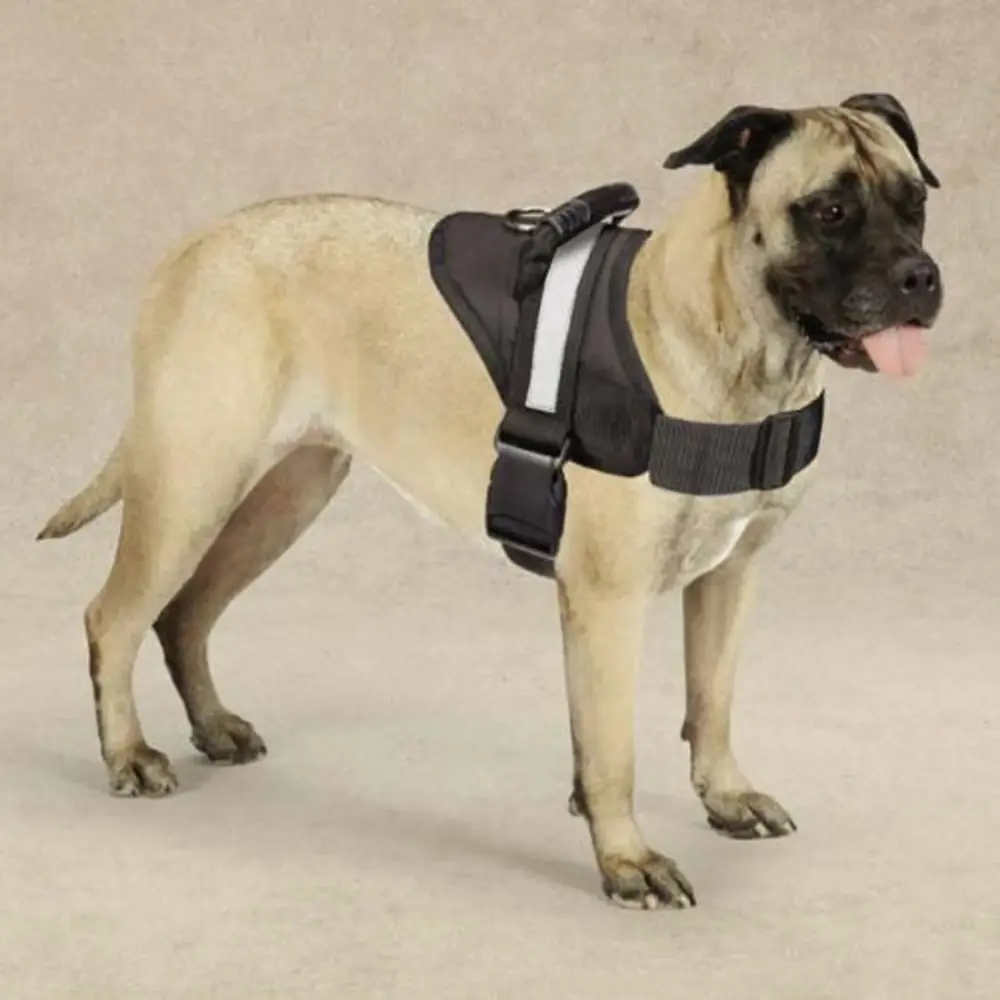
Guardian Gear
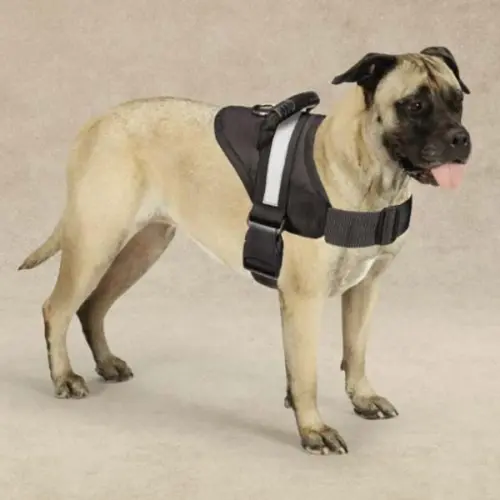
Excursion Dog Harness, Choose size
Price range: $35.95 through $48.95
Why it fits: A padded harness with a grab handle, which gives control without pressure on the neck.
-
Lupine Pet
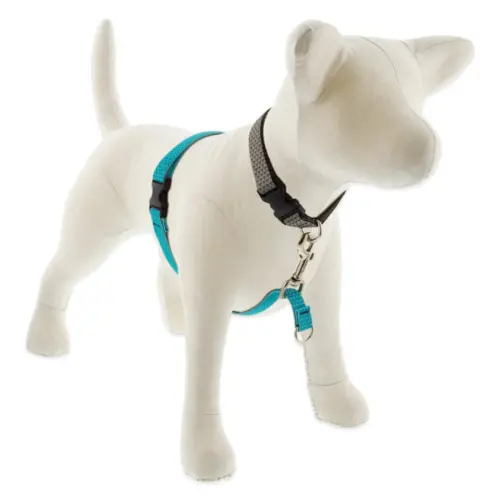
Reflective No-Pull Dog Harness, Choose size & design
Price range: $41.95 through $45.95
Why it fits: A reflective no-pull harness in medium and large, for dogs who need the force spread across the chest.

The honest recommendation
Own one, use it for what it is good at. A slip lead in the car or by the door is genuinely useful, and for a trained dog who walks on a loose lead it is a perfectly reasonable everyday option.
If your dog pulls, walk them on a well-fitted harness and work on the training separately. The slip lead is not the villain some people claim; it is simply a handling tool being asked to do a training job it was never designed for.
What a slip lead cannot do
It is worth being explicit about the claims attached to slip leads, because several of them do not hold up.
- It does not teach loose-lead walking. It makes pulling uncomfortable while worn, which is not the same thing.
- It does not establish leadership. That framing comes from a model of dog behaviour that has not held up.
- It does not prevent lunging. A dog who lunges on a slip lead takes the full force on the neck.
- It is not safer by default. Correctly fitted it is secure; incorrectly fitted it is worse than a collar.
- It does not suit every dog. Flat-faced breeds and dogs with airway or neck problems should not use one.
Equipment is not training
The reason this comparison matters is that lead-pulling is a training problem with an equipment component, and most people buy their way around it for years. Equipment buys you control and safety while you teach the behaviour; it does not replace teaching it.
The behaviour itself is straightforward and slow: reward the position you want, stop moving when the lead tightens, and practise somewhere boring before somewhere interesting. How to stop a dog pulling on the leash covers the method, and it works regardless of which lead you own.
Common questions
Are slip leads cruel?
Used briefly, fitted correctly with a stopper, no. Used for hours on a dog who pulls constantly, with no limit on how far the loop closes, they cause real pressure on the neck. The tool is neutral; the use decides.
Is a slip lead the same as a choke chain?
No. A choke chain is metal and is designed to deliver a correction. A slip lead is rope or webbing with a stopper that limits closure, and it is intended for handling rather than correction.
Will a slip lead stop my dog pulling?
It makes pulling uncomfortable, which suppresses it in some dogs while they are wearing it. That is not the same as teaching loose-lead walking, and the pulling usually returns on other equipment.
My dog backs out of collars. Is a slip lead safer?
Correctly fitted, it is harder to escape than a flat collar. A well-fitted Y-front harness is usually the better long-term answer: see a dog backing out of a harness.
Can I use one on a puppy?
Better not for everyday walking. Puppies pull because they are learning, and a tightening loop is the wrong teacher. How to leash train a puppy covers the alternative.
For the broader attachment question, see harness versus collar and how to choose the right dog harness. For long-line work, see how to use a long line.
Related guides
-
Comparison
BioThane vs Nylon Leashes: Which Holds Up Better
Coated webbing and traditional nylon behave completely differently once they get wet. This comparison covers how BioThane is made, where it genuinely wins, and the situations where nylon remains the sensible choice.
-
Guide
When You Need a Harness With a Handle, and How to Use It
The handle on a harness looks like a lifting strap and is not one. This covers the situations where it earns its place, the honest answer about lifting a dog by it, the harnesses actually built for assisted lifting, and the hazards of leaving a handle on a loose dog.
-
Buying guide
Reflective Gear for Walking a Dog at Night: What Drivers Actually See
Most night-walk kit is bought for the dog, when the person is the harder one to see and the one standing in the road. This covers the difference between reflective and light-emitting gear, how far ahead a driver needs to pick you out, and where reflectivity actually belongs.