Walking & Training Comparison
BioThane vs Nylon Leashes: Which Holds Up Better
Short answer
BioThane is polyester webbing coated in flexible PVC. It does not absorb water, mud or smell, wipes clean in seconds and stays flexible in the cold. Nylon is lighter, cheaper, easier to grip and available in far more styles, which still makes it the better everyday choice for many people.
Two very different materials
Most leads are woven nylon webbing: strong, light, inexpensive and absorbent. Coated leads use the same kind of woven core sealed inside a flexible plastic skin, so nothing reaches the fibres underneath.
That single difference, whether the material can absorb anything, drives everything else in this comparison. It explains the smell, the cleaning, the cold-weather behaviour and the price.
How BioThane is made
A polyester webbing core is coated in a layer of flexible PVC, bonded so there are no seams for water to enter. The result is a strap that behaves somewhat like leather, without absorbing anything or needing conditioning. It is used for harnesses and long lines as well as leads, and the same material appears in horse tack for the same reasons.
Strength comes from the core rather than the coating, so a coated lead of the same width is comparable in strength to a good nylon one. The coating is what resists abrasion, water, mud and UV.
Water, mud and smell
This is where coated leads earn their price. A nylon lead that goes into a lake stays damp, and damp webbing starts to smell within days. The smell is bacteria in the fibres, which is why washing helps temporarily and the problem returns.
A coated lead has no fibres exposed, so there is nowhere for water or bacteria to sit. It wipes dry immediately and does not develop an odour. For dogs who swim, walk in mud, or train in wet fields, that is a genuine practical difference rather than a marketing one.
Grip, weight and cold
Nylon wins on grip. Woven webbing has texture, which matters when a dog pulls suddenly and your hands are wet. Coated material is smooth, and a thin coated lead can slip through a cold hand, which is why many are sold with a padded or stitched handle.
Coated lines stay flexible in freezing weather, where wet nylon goes stiff and icy. They are also heavier for the same length, which matters for a thirty-foot long line on a small dog but not for a six-foot lead.
Side by side
| BioThane | Nylon | |
|---|---|---|
| Water | Does not absorb | Soaks and stays damp |
| Smell | None | Develops over time |
| Cleaning | Wipe with a cloth | Hand wash and dry |
| Grip | Smooth; handle helps | Textured, better grip |
| Cold weather | Stays flexible | Stiffens when wet |
| Weight | Heavier per foot | Lighter |
Cleaning
A coated lead is wiped with a damp cloth, and for a bad day, warm water with a little mild dish soap. It is dry immediately and ready to use. Nylon needs hand washing, thorough rinsing to remove detergent, and a full day to dry; our guide on washing a dog harness, collar and leash covers the method.
If you own one lead and walk in all weathers, the drying time is the practical argument. A lead that is still wet the next morning gets used wet, and that is how the smell starts.
Where nylon still wins
- Price. Nylon is considerably cheaper, which matters for growing dogs and spares.
- Grip. Better in the hand, especially for strong dogs.
- Weight. Lighter for small dogs and for long lengths.
- Choice. Far more patterns, widths and matching collar options.
- Reflectivity. Reflective thread can be woven in, which is harder to do with coating.
- Everyday dry walks. If your walks are mostly pavement, the advantages of coating barely apply.
-
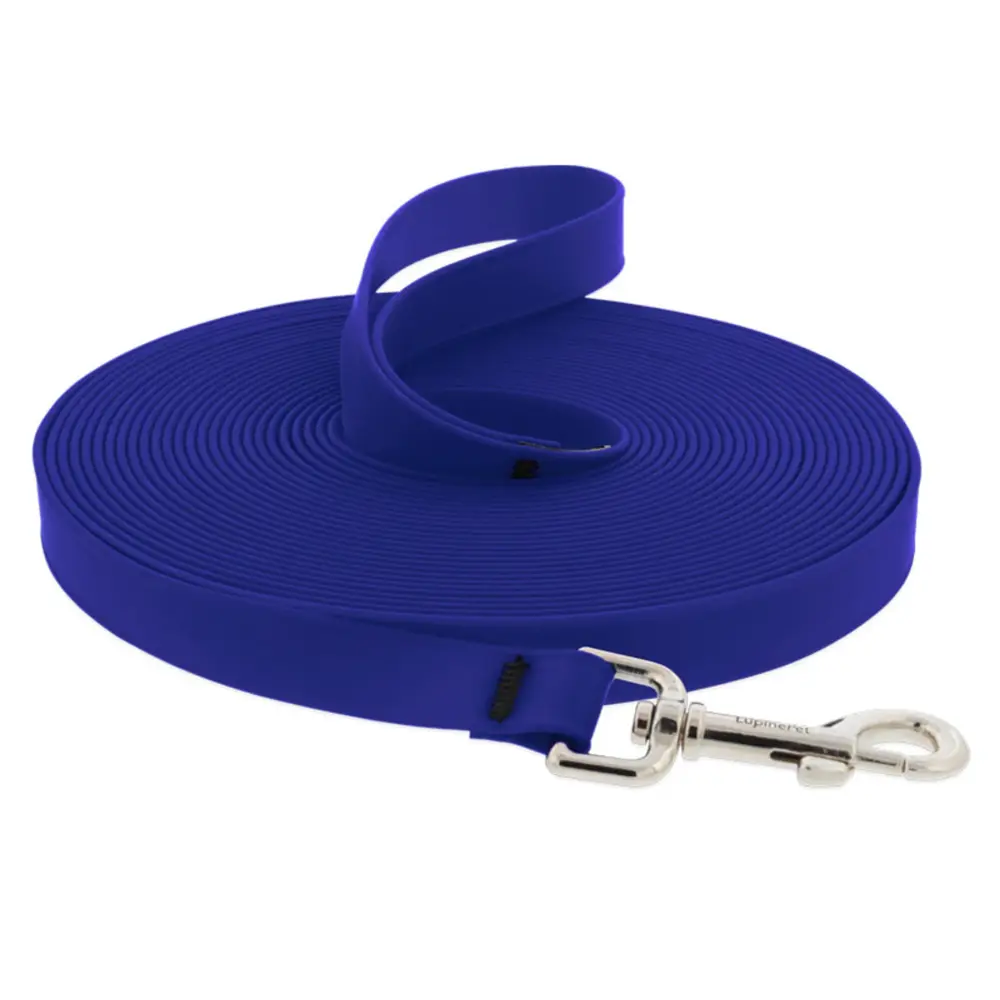
Splash Waterproof Training Leash, Choose size & design
Price range: $55.95 through $83.95
Why it fits: A coated training line in 15 and 30 foot lengths, which is where the material advantage is largest.
-
Dockside Adventures
Waterproof Dog Leash, View product
$42.95
Why it fits: A waterproof six-foot lead with a locking clip, for dogs who swim or walk in mud.
-
Dockside Adventures
Waterproof Dog Collar, Choose size
$36.95
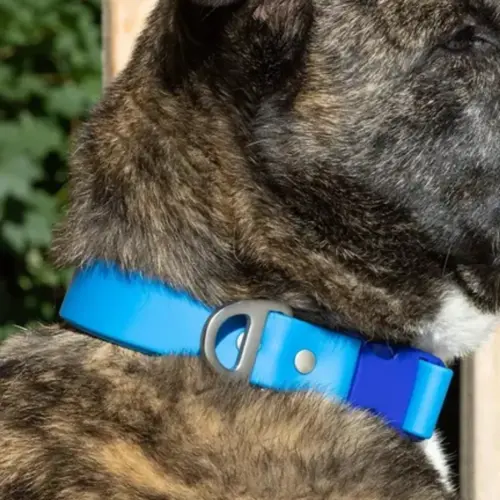
Why it fits: A matching waterproof collar, which solves the damp-collar smell that outlasts any lead.
-
Lupine Pet
Reflective Dog Collar, Choose size & design
Price range: $22.95 through $28.95
Why it fits: A reflective nylon collar with woven reflective thread, which coated material cannot match.
-
GF PET
Eezy-6 Reflective Dog Leash, Choose size & color
Price range: $27.95 through $32.95
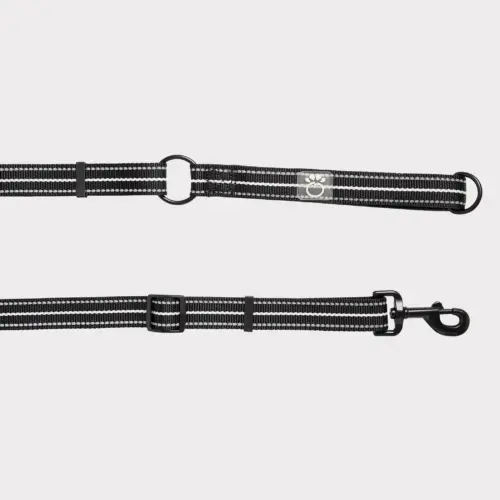
Why it fits: An adjustable reflective nylon lead with a padded handle, for everyday walks in the dark.
-
Lupine Pet
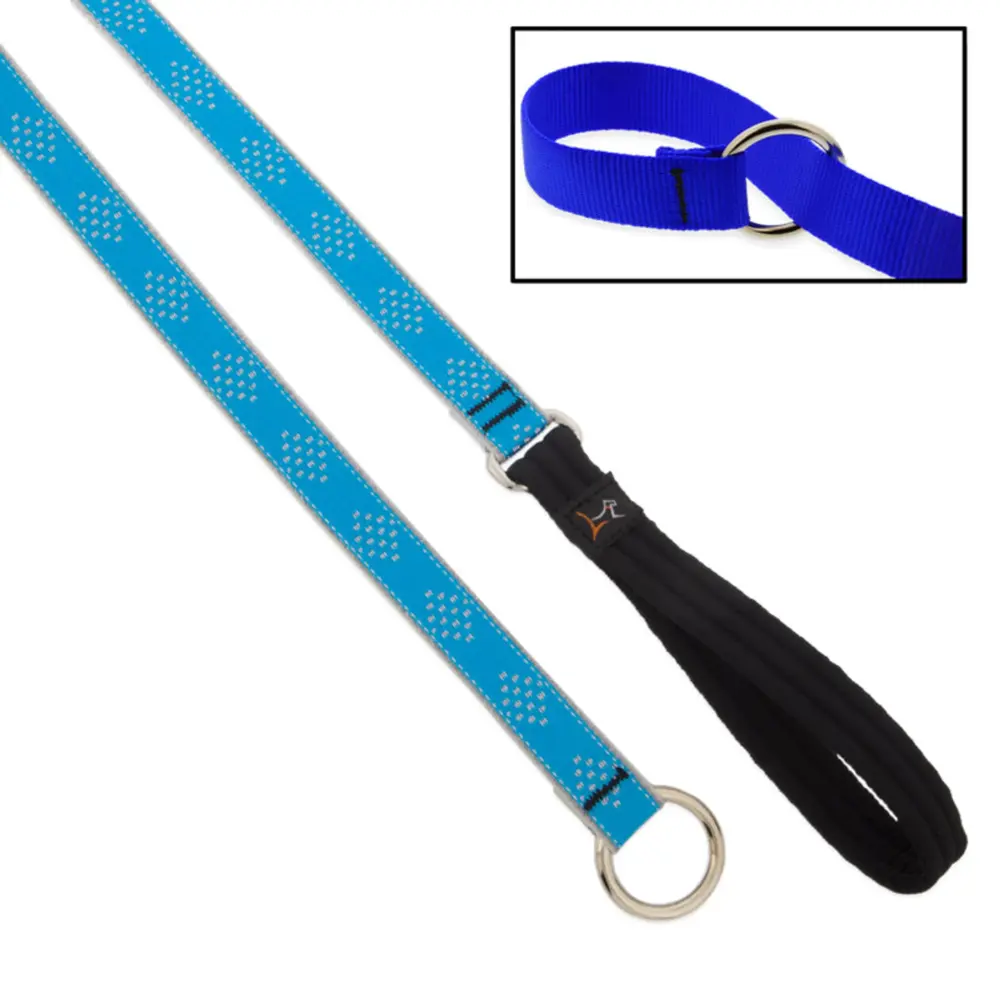
Lupine Reflective Slip Lead, Choose size & design
Price range: $33.95 through $35.95
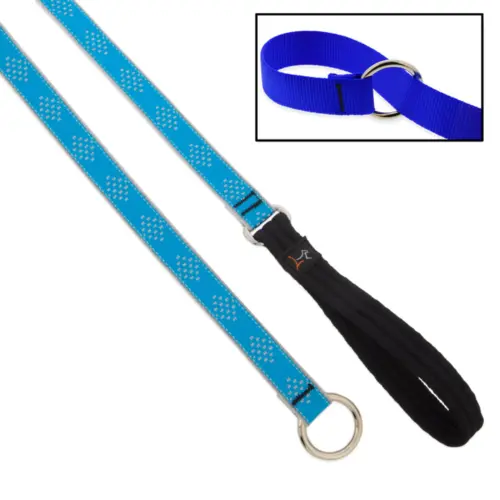
Why it fits: A reflective nylon slip lead for training and handling, where grip matters most.

Leather, rope and the other options
The comparison is usually framed as coated against nylon, and two other materials are worth knowing about because each suits a specific case.
| Material | Suits |
|---|---|
| Leather | Everyday dry walks; softens with use |
| Climbing rope | Strong dogs; good grip; absorbs water |
| Chain | Dogs who chew the lead, with a fabric handle |
| Reflective nylon | Dark walks, where visibility is the priority |
| Coated webbing | Water, mud and smell; long lines |
Leather is the traditional choice and genuinely pleasant to use once broken in, with the caveat that it needs occasional conditioning and does not enjoy repeated soakings. Rope leads grip well and are strong, and they hold water much like nylon does. A short section of chain near the clip is the standard answer for a dog who chews through leads, though it is heavy for small dogs.
When to retire a lead
- Fraying anywhere along the webbing or at the stitching
- A clip whose spring has weakened or sticks
- A clip gate that does not close fully every time
- Cracking or splitting in a coated lead
- Stiffness and dryness in leather
- Stitching that has worked loose at the handle or clip
- Any lead a dog has chewed, even partly
Hardware fails suddenly rather than gradually, which is why checking it is worth more than checking the webbing. Run the clip through your fingers once a week while the lead is off the dog. When to replace dog and cat gear covers the rest of the kit.
What to look at besides the material
Hardware fails before webbing does, on any lead. Look at the clip: a solid cast or machined clip with a strong spring, or a locking carabiner style, outlasts a stamped sheet-metal trigger clip by years. Check stitching at the handle and at the clip, which are the two points that take the load.
Width matters too. A wider lead is stronger and more comfortable to hold for a large dog; a narrow one is lighter and less cumbersome for a small one. Most people are better served by a well-made lead of the right width in either material than by the more expensive material in the wrong size.
Matching the lead to the dog
| Dog | Sensible choice |
|---|---|
| Small dog, dry walks | Light nylon |
| Small dog, muddy walks | Narrow coated webbing |
| Large strong dog | Wide nylon or rope, padded handle |
| Swimmer | Coated webbing |
| Dog who chews the lead | Chain section near the clip |
| Dog in training on a long line | Coated webbing |
Width matters more than material for a strong dog. A narrow lead concentrates force on a small area of your hand, and that is what causes the burns and the dropped leads rather than the fabric itself.
Two leads are better than one
Most households are better served by two leads than by one expensive one: a short everyday lead for pavements and a longer or more weather-resistant one for fields and water. They cost less together than one premium lead and they cover genuinely different jobs.
A spare also means a lead is never used while still wet, which is what causes most of the smell problem that drives people toward coated materials in the first place.
Common questions
Is BioThane waterproof or just water resistant?
The coating does not absorb water at all, so in practice it is waterproof. The webbing core is sealed inside, which is the reason it neither soaks nor smells.
Does it hurt more if it runs through your hand?
It can. Coated material is smooth, so a fast-moving line slides rather than gripping. Use a lead with a padded handle, wear gloves for long-line work, and never wrap any lead around your hand.
Is it worth it for a six-foot everyday lead?
If your dog swims or you walk in mud regularly, yes. For dry pavement walks, a good nylon lead does the same job for less money.
Does it degrade in sunlight?
The coating resists UV better than bare webbing, which is one reason it is used in horse tack. Both materials should still be checked periodically for cracking, fraying and worn stitching.
Which is better for a long line specifically?
Coated material, clearly. Long lines spend their lives dragging through wet grass and mud, which is exactly the situation where nylon becomes heavy, dirty and smelly. How to use a long line covers the technique.
For slip leads specifically, see slip lead versus standard leash. For collars, how to choose a dog collar, and for the rest of the kit, dog walking essentials.
Related guides
-
Comparison
Slip Lead vs Standard Leash: When Each One Belongs
A slip lead is a collar and lead in one piece that tightens when a dog pulls. That makes it excellent for handling and a poor everyday choice for a dog who pulls constantly. This comparison covers both sides honestly.
-
Buying guide
Reflective Gear for Walking a Dog at Night: What Drivers Actually See
Most night-walk kit is bought for the dog, when the person is the harder one to see and the one standing in the road. This covers the difference between reflective and light-emitting gear, how far ahead a driver needs to pick you out, and where reflectivity actually belongs.
-
How-to
How to Use a Long Line for Recall Training
A long line gives a dog real freedom while you keep a way to stop things going wrong. This guide covers choosing a length, why it goes on a harness, how to handle it without burning your hands, and how recall training actually progresses.