Puppies & Kittens Comparison
Kitten or Adult Cat: Which Should You Adopt for Your Home?
Short answer
Choose a kitten if someone is home most of the day for the first few months and you want to raise a cat from the start. With long workdays, young children, a dog or an older cat at home, a confident adult is usually the easier match: its size, coat and temperament are already known.

Either way, you are mostly choosing an adult cat. International Cat Care (iCatCare) points out that kittenhood lasts about six months of a life that can run 14 years or more. The real question is whether you meet that adult now, at the shelter, or raise a kitten and find out who it becomes.
Kitten vs adult cat at a glance
iCatCare separates confident adults, which tend to settle quickly, from nervous ones that need more patience, so the table splits adult cats in two.
| Option | Personality | Daily time | Settling in | Often suits |
|---|---|---|---|---|
| Kitten | Still forming as it grows | High: meals, play, supervision | Explores fast; needs kitten-proofing | Someone home most of the day |
| Outgoing adult | Known to the shelter or foster | Moderate; easier to leave alone | Often settles quickly | Busy homes, kids, first-timers |
| Shy adult | Known, but slow to trust | Moderate, plus patience | Needs time and a quiet room | Calm, adult-only homes |
Treat the last column as a starting point, not a rule. A relaxed, people-loving kitten can suit a busy family, and some adults find any change hard. The individual cat matters more than its age.
What a kitten brings, and what it asks of you
iCatCare notes that a kitten lets you build a lifelong relationship and look after your cat well at every stage. You can make handling, brushing, nail trims and the carrier ordinary parts of life early, and you get the all-out, slightly ridiculous play that only kittens manage.
The unknowns
What you don’t get is a preview. VCA’s pet selection guidelines point out that kittens change physically and behaviorally as they grow, while an adult’s size, coat, athleticism and behavioral tendencies are already plain to see. Until a kitten grows up, its adult personality is a best guess.
VCA puts a kitten’s most sensitive period for socialization at about 2 to 7 weeks of age, so it is usually over by the time a kitten goes to a new home. A kitten that was handled gently and met people, household noise and other animals in that window has a head start, which makes “How was it raised?” the first question to ask.
The time it takes
- Attention and safety. iCatCare notes that kittens are especially inquisitive and more prone to illness or injury, so they need plenty of attention and a home made safe from cords, string, open doors and gaps behind appliances.
- Meals through the day. Cornell’s Feline Health Center says kittens usually do best on three meals a day until they are six months old, so plan who will serve the midday one.
- A run of vet visits. According to VCA’s guide to cat vaccines, kittens usually get their first shots at six to eight weeks, then boosters every three to four weeks until 16 to 20 weeks. Your veterinarian sets the schedule.
- Spay or neuter. Depending on where your kitten comes from, iCatCare notes, you may need to arrange neutering as well as the first vaccinations; ask your veterinarian about timing.
- Teaching gentle play. Kittens play with teeth and claws, and steering them toward toys instead of hands takes consistency. See how to stop a kitten from biting and scratching.
What an adult cat brings: a known personality
With an adult, what you meet is close to what you get: its size and coat, how active it is, and how it reacts to being stroked, lifted or left alone. Shelter staff and foster caregivers often know more, such as whether it has lived with children, dogs or other cats, how reliably it uses the litter box and scratcher, and what it eats.
iCatCare describes adult cats as generally less work than a kitten and easier to leave on their own, and most arrive already neutered and vaccinated. Confident ones are likely to settle in much faster than a nervous cat.
Shy and nervous adults
A shy adult can become a devoted companion, but it needs time. iCatCare says nervous cats need more patience to settle, and VCA adds that a cat that is slow to approach will probably need extra patience and training, and may always be most comfortable somewhere quiet. A calm, adult-only home where nobody minds waiting for the cat to come out on its own terms suits them best.
What about a senior cat?
An older cat is an adult with more history and a well-established personality, but it may need more veterinary care, so ask for its health records before you commit. Our adopting a senior cat checklist covers the questions to ask and the first two weeks.
Children, dogs and other cats in the home
Young children
Many children get on wonderfully with cats, but iCatCare’s advice on introducing cats to children cautions that boisterous households are a poor fit and that very nervous or timid cats find life with children highly stressful. It suggests a confident cat or kitten that is well socialized with adults and children and happy to be handled. VCA likewise steers families with young children away from fearful or overly excitable pets.
That points many families with toddlers toward an adult whose foster caregiver has already seen it around children. A kitten can work too, but small children move fast and grab, and a kitten answers with teeth and claws; iCatCare says young children should always be supervised with a new cat. Whichever you choose, expect most of the care to fall to the adults. Our guide to cats and kids covers gentle handling and the escape routes a family cat needs.
A dog in the house
iCatCare’s guidance on introducing cats and dogs explains that close cat and dog relationships usually grow from good early experiences and carefully managed introductions, and that a pet that has lived happily with the other species before makes things easier. An adult with a known record around dogs removes much of the guesswork. iCatCare also flags terriers and chase-prone breeds such as greyhounds as more likely to follow the urge to chase, and a kitten is small enough to be hurt by a dog that chases, so be honest about yours.
Another cat already at home
iCatCare’s summary of whether a cat will accept a new cat says younger resident cats are generally more likely to accept a newcomer. The catch is an elderly resident: a kitten or adolescent can be a problem if it aims too much of its play at the older cat, and iCatCare suggests a pair of kittens, who can play with each other, may then work better than a single one. Whether to add a cat at all is its own decision, covered in should you get a second cat.
Safety note
For the first meetings, keep a dog on a harness and leash, as iCatCare advises, so the new cat or kitten can’t be chased or injured. Keep a newcomer apart from resident cats until your veterinarian has checked it, and don’t leave new housemates alone together until you are confident they get along.
Long workdays and small spaces
Most cats can fit around a busy household, but iCatCare names young kittens, along with seniors and cats with health or behavior problems, among those that may not suit long periods alone. A kitten’s schedule is the sticking point: meals spread through the day, play that burns off energy before it is aimed at your ankles, and a room that is safe to leave it in.
If everyone is out for a full workday, a confident adult is usually the kinder choice, ideally one the shelter describes as independent. Set on a kitten anyway? Plan time off for the first weeks, arrange a midday visit, or ask about adopting two kittens raised together: they can play with each other while you’re out, and iCatCare notes that related cats tend to be friendlier to one another. Two kittens also means two of everything, from litter boxes to vet bills.
Space matters less than you might think. A small apartment means fewer rooms to kitten-proof, but also nowhere to escape a kitten in full play, while an adult’s energy level is something you can see before you commit. Whatever the age, iCatCare says indoor cats need extra provision, such as scheduled playtimes, so plan for climbing spots, a scratcher and daily play.
Which to choose: the verdict by household
- Someone home most of the day: either works, and a kitten is a great fit if you want to raise one.
- Out at work all day: a confident adult that is used to some time alone.
- Toddlers or young children: a confident adult known to be relaxed around children; a kitten only with close supervision.
- A dog at home: an adult that has lived calmly with dogs.
- An older resident cat: a calm adult, or two kittens that will play with each other instead.
- A young, playful resident cat: a kitten or young adult is often the easiest match.
- First-time owners: a confident adult is the gentler start; a kitten if you have the time.
- A quiet, adult-only home: a good place for a shy adult or a senior that needs a calm start.
Still torn? Let your time decide. A kitten asks for months of supervision, vet visits and training before its personality settles. A confident adult asks for a quiet room and some patience, and you know who you are bringing home.
Questions to ask the shelter or breeder
Ask the same questions whichever age you lean toward, then spend time with the cat. VCA suggests gently stroking a potential adoptee and lifting it into your lap to see how it reacts, and taking care with a cat that stiffens, struggles or swats.
- How was it raised? For a kitten, ask whether it was handled daily and met people, children, household noise and other animals.
- Where has it lived? For an adult, ask why it was rehomed and what its last home or foster home was like.
- How is it with children, dogs and other cats? Ask what staff or foster caregivers have actually seen, not what they expect.
- How does it like to be handled? Being picked up, brushed and having its paws touched all count.
- What health care has it had? Vaccines, spay or neuter, microchip, and any tests or ongoing conditions. Take the records to your veterinarian.
- What does it eat, and which litter does it use? Start with the same at home.
- Can we visit again? A second meeting, with everyone who lives with you, shows more than one visit can.
- What if it doesn’t work out? Ask about the return or rehoming policy before you sign.
Tip
If the cat or kitten has lived in a foster home, ask to speak with the foster caregiver. They have watched it through visitors, vacuuming and mealtimes in an ordinary household, which tells you more than a short visit to a busy shelter can.
What both need on day one
The setup is the same at any age, and our new kitten checklist covers it for kittens and adult cats alike: one quiet room with food, water, a litter box, a scratcher, a bed and a hiding spot, plus a vet visit booked for the first few days. Only a few things change with age:
- Litter box: low sides a kitten can step over, sized up as it grows; a full-size box from the start for an adult.
- Kitten-proofing: a must for a kitten that climbs and squeezes into gaps; for an adult, cords, string and toxic plants still need putting away.
- Hiding time: a confident cat may explore within hours, while a shy adult may hide for days. Let it come out in its own time.
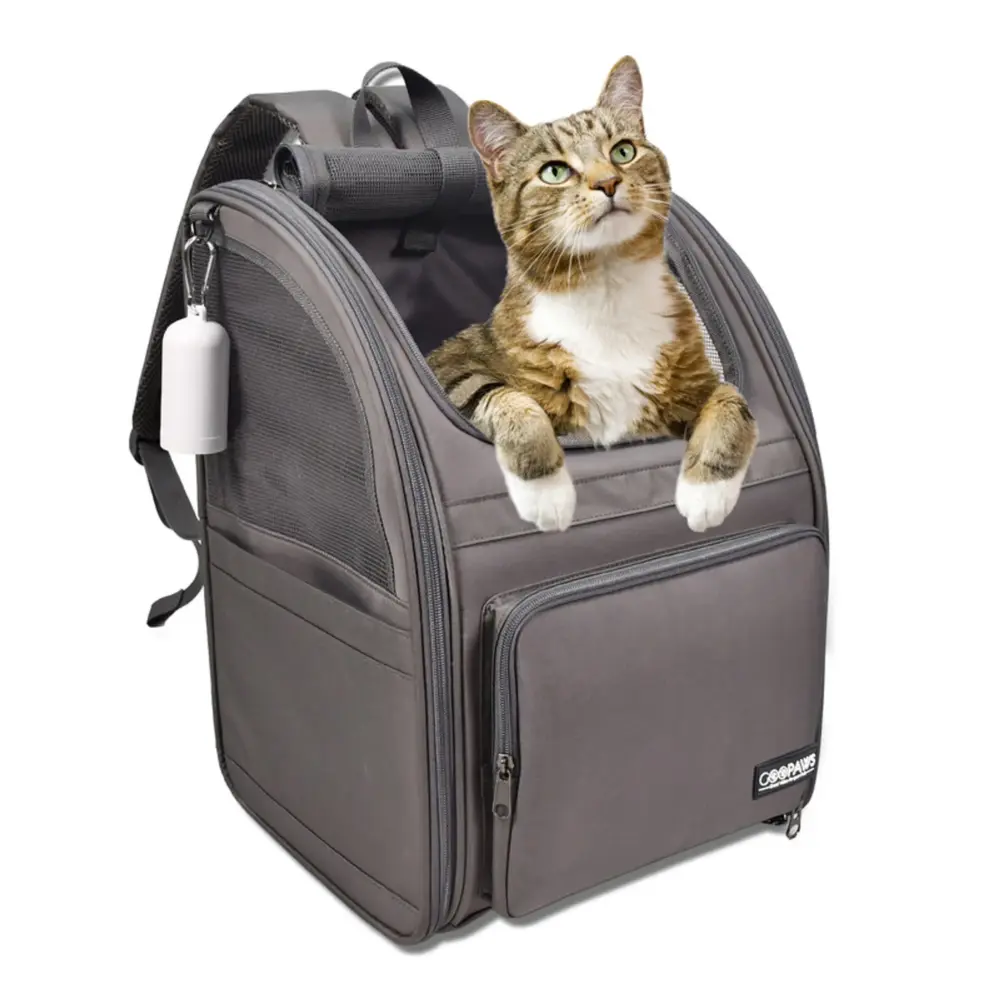
For the ride home, the Armarkat soft-sided carrier we stock has zip openings on the top and both sides, so you can lower a kitten or a wary adult in rather than pushing it through a door. Armarkat lists it at 19 x 12 x 12 inches, rated for pets up to 22 lb. A kitten fits with room to spare; for an adult, ask the shelter for its weight and check that a large or long-bodied cat can turn around inside. Afterward, leave it out at home as a familiar den rather than the box that means the vet; see how to get a cat used to a carrier. For a scratcher, a litter mat and toys for the first weeks, browse our cat essentials.
Related guides
-
Checklist
How to Socialize a Puppy Before Vaccinations Are Done
A puppy’s vaccine series usually ends just as the socialization window closes, so waiting isn’t the answer. Here’s what to ask your veterinarian, how to carry your puppy to busy places, where paws can go down, what to practice at home and how to tell when your puppy has had enough.
-
Comparison
Driving vs Flying With a Dog or Cat: How to Decide for a Long Trip
Moving across the country or visiting family far away? Compare the car, the airplane cabin and the cargo hold on size limits, stress, heat and breed rules, paperwork and cost, then see which route suits your dog or cat.
-
Comparison
Dog Booster Seat vs Carrier: Which Suits a Small Dog in the Car?
A booster lifts a calm small dog to window height; a carrier encloses a nervous or carsick one and goes with you into the vet or a hotel. Compare the two side by side, see which suits your dog, and learn where each one belongs in the back seat.