Car Travel How-to
How to Fly With a Cat in the Cabin, From Booking to Arrival
Short answer
Book your cat’s cabin spot early, check the airline’s carrier limits and practice the carrier and harness for weeks. On travel day, feed lightly or skip breakfast, offer water and litter until you leave, and line the carrier with a pad. At security, ask for a private room and clip the leash on before lifting your cat out.

The plan at a glance
| When | What to do |
|---|---|
| As soon as you have dates | Reserve the cat’s spot, check carrier limits, book a vet visit |
| The weeks before | Daily carrier and harness practice, including under-seat time |
| The week before | Paperwork in one folder, nails trimmed, microchip details checked |
| Travel day | Light or no breakfast, water and litter until you leave, harness on at home |
| Security | Private room, or leash clipped on before your cat comes out |
| Arrival | One closed room, litter box first, time to hide |
Booking and paperwork
Airlines set most of the rules for this trip, and they differ by airline, route and sometimes aircraft. Read your airline’s current pet policy before you buy a ticket, then work through these:
- Reserve your cat with your flight. VCA’s guide to flying with your cat advises booking early, because some airlines limit how many pets can fly in the cabin and allow none on some flights. Expect a pet fee, and ask whether the carrier counts as your carry-on or your personal item.
- Choose the flight and seat. Pick a nonstop where you can. The carrier needs a seat in front of you, VCA points out, which rules out bulkhead and exit rows.
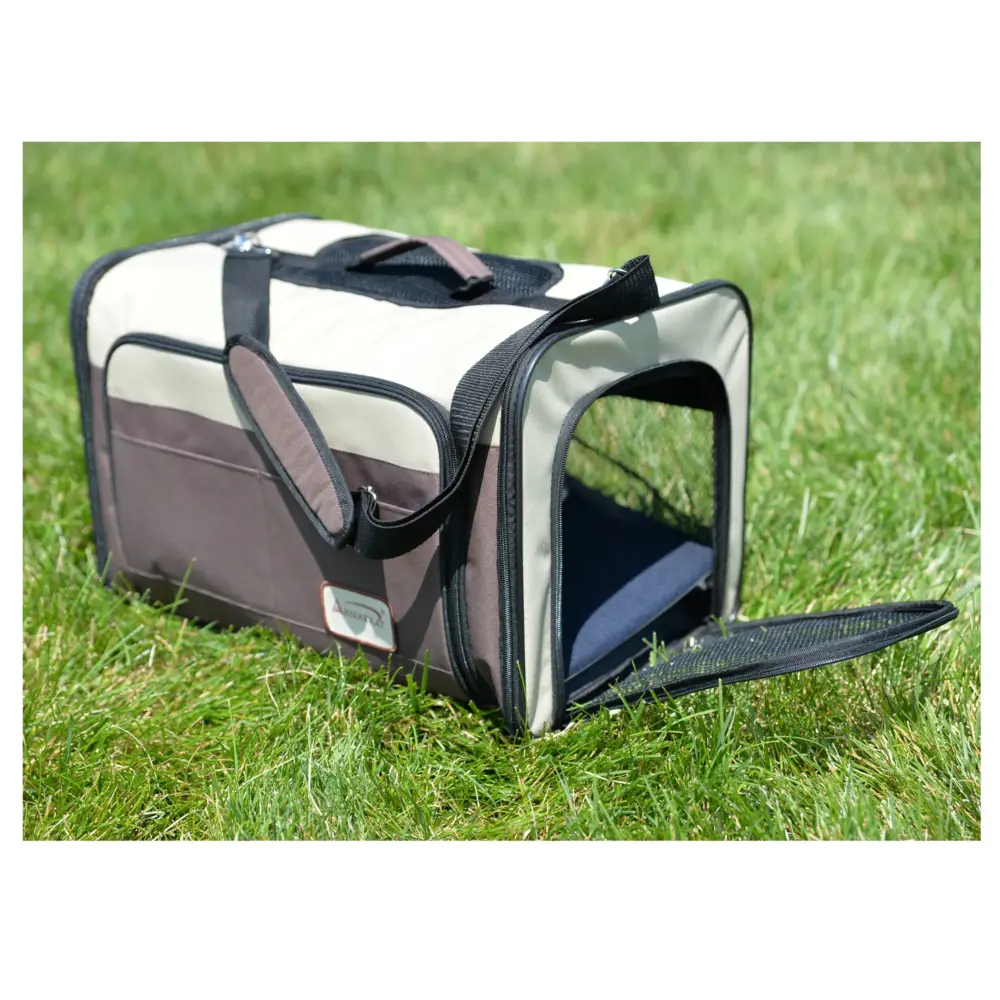
- Check the carrier and your cat against the airline’s limits. Under-seat space varies by airline and aircraft, and some airlines cap the weight of pet and carrier together, so weigh your cat in the carrier on a bathroom scale. Our guide to what the airline-approved label really covers shows how to measure both. Armarkat’s own listing gives the soft-sided carrier we stock as 19 by 12 by 12 inches for pets up to 22 lb; hold those numbers up against your airline’s.
- Sort the paperwork. Carry proof of rabies vaccination, and ask both the airline and your destination whether your cat needs a health certificate from your veterinarian and how recently it must be issued; VCA notes that most airlines require one. Flying abroad? Start with USDA APHIS pet travel, which recommends contacting a USDA-accredited veterinarian as soon as you decide to go.
- Book a pre-trip vet check. The Merck Veterinary Manual advises a complete checkup to make sure your pet is healthy enough to travel. It matters most for a kitten (airlines set a minimum age), a flat-faced breed such as a Persian, a senior or a cat with a health condition.
- Update ID. Make sure the microchip record has your current phone number, and put your name and number on the carrier and a breakaway collar; Merck also suggests a travel tag with your destination details.
Still deciding? Driving vs flying with a pet compares the cabin, cargo and the car. Bringing a small dog as well? See flying with a small dog in the cabin, and ask the airline how many pets one passenger may bring.
Carrier and harness practice at home
A cat that already naps in its carrier has the hard part done. If yours still hides when the carrier comes out, start with our plan to get a cat used to a carrier, and if a harness is new, follow how to harness train a cat first. Both take weeks, so begin as soon as the trip is booked, then add four rehearsals that are specific to flying:
- Under-seat time. Zip your cat in, slide the carrier under a desk or chair and sit beside it reading or working. Build from a few minutes toward the length of your travel day, and end with a treat and the carrier open.
- The harness inside the carrier. Buckle the harness on, check the fit (snug, with room for a finger or two under each strap), and let your cat rest in the carrier wearing it. A strap that rubs or twists over an hour at home will be worse over a whole travel day.
- The checkpoint lift. In a small room with the door shut, open the top zip a few inches, reach in and attach the leash, then lift your cat out, hold it against your chest for a minute and settle it back in. This is the exact move you will make at security.
- Noise and motion. Carry the zipped carrier past the vacuum or the TV and on a short drive, so the airport is not the first place it sways.
Trim your cat’s nails a few days before you fly, too; short nails are less likely to snag the mesh if your cat paws at it. Our picks below are limited to what Nilosi stocks, and neither replaces checking your airline’s limits.
-
Armarkat
Soft-Sided Pet Carrier, View product
$65.95
Why it fits: Soft-sided and made for under-seat travel, with a top opening for lifting your cat out at screening. 19 x 12 x 12 in, pets up to 22 lb, per Armarkat: check both with your airline.
-
Lupine Pet
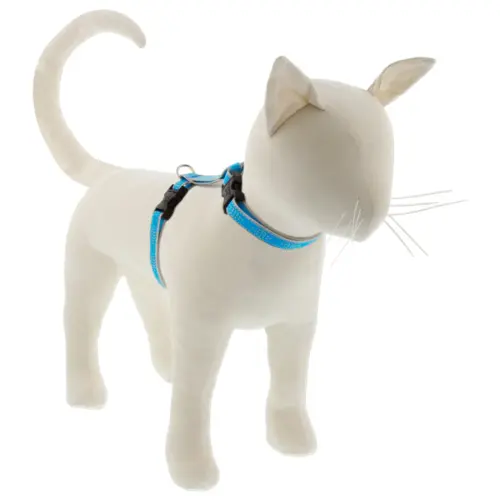
Reflective H-Style Cat Harness, Choose size & design
$28.95
Why it fits: A lightweight H-style cat harness with quick-release buckles to put on at home, so the leash clips on before your cat leaves the carrier. Girth 9 to 14 in or 12 to 20 in.

Food, water and litter: timing on travel day
Aim for a cat that travels on a light stomach, isn’t thirsty and has had every chance to use the litter box before the carrier closes.
- The night before: a normal dinner, fresh water and a freshly scooped litter box. Set up the carrier with an absorbent pad under its own pad or a towel that smells of home.
- Food on the day: keep it light. VCA suggests skipping breakfast on travel day to lower the risk of nausea and vomiting, and Merck suggests a light meal at least six hours before departure. Kittens, cats with diabetes and cats whose medication is given with food need their own plan from your veterinarian.
- Water: leave the bowl down until you head out; International Cat Care’s travel advice is to offer water right up until you leave.
- Litter: you can’t make a cat go, but you can give it the chance. Keep the box available while you pack, and make the harness and carrier the last things you do before you walk out.
- In the terminal: the carrier stays zipped. On a long connection, use a family restroom if the terminal has one: with the door locked, offer your harnessed, leashed cat water in a small dish and a disposable litter tray. Many cats ignore both, and International Cat Care notes that a cat may be unlikely to use a tray mid-journey, which is why the pad matters.
What to pack in your carry-on
- Two or three spare absorbent pads, zip bags, disposable gloves and paper towels, so an accident doesn’t mean a soaked cat for the rest of the day.
- A light cloth or thin scarf that can shade one side of the carrier when your cat wants to hide.
- Your cat’s usual food and a collapsible bowl, with extra for delays. Dry food packs easily; TSA limits wet pet food in a carry-on to 3.4 ounces unless it is prescription or medically necessary, so bring small pouches or check the rest.
- A disposable litter tray and a zip bag of your cat’s usual litter for a long travel day or a connection.
- One folder with the rabies certificate, any health certificate, medications and your veterinarian’s phone number, plus a recent photo of your cat on your phone.
The checkpoint: preventing an escape
Cats go through security in your arms, not in the carrier. TSA’s small pets guidance asks you to take your pet out, send the empty carrier through the X-ray, keep control with a leash and take the leash off while you carry your pet through the metal detector; officers then inspect the carrier. That is a lot of noise and handling for a cat, so plan the escape risk out of it:
- Buckle the harness on at home, never in the terminal, and keep the leash in your pocket.
- Tell the officer you have a cat. If your cat may struggle or jump, TSA advises asking for screening in a private room, which it calls especially important for cats. You are escorted there with your cat still in its carrier.
- In the main lane, load everything else first: shoes, laptop, liquids, jacket. Your cat should be out of the carrier for as little time as possible.
- Clip on before you lift. Through a small gap in the top zip, attach the leash to the harness; only then open up, lift your cat out and hold it close against your chest, one arm under its body. The empty carrier goes on the belt.
- Walk through with both arms around your cat. Take the leash off for the metal detector, as TSA asks, and clip it back on the moment you are through. An officer may swab your hands.
- Don’t repack at the belt. Collect the carrier and your bins and, as TSA suggests, move to the re-composure area away from the lanes, then settle your cat back in from above and zip every opening.
If a working dog team is at your checkpoint, TSA asks pet owners to consider moving to another one so the dog can work without distraction.
Safety note
Never send your cat through the X-ray machine inside the carrier; TSA’s X-ray is for bags only. If your cat does slip away, tell the nearest officer or airline employee at once instead of chasing it through the crowd.
On the plane: a cat who cries or claws at the mesh
Once you board, the carrier slides beneath the seat ahead of yours and stays zipped. VCA notes that the FAA requires cabin pets to stay in their carriers for the entire flight, so your lap is off-limits even on a quiet flight. Crying is common during boarding and takeoff, and most of what helps is quiet and patience:
- Give your cat somewhere to hide. Shade one side with the cloth, ideally the one where feet and bags pass, and keep at least two sides of mesh clear so air still moves through.
- Stay close. Talk softly and rest your fingers against the mesh; a familiar voice and smell help some cats settle.
- Secure the zippers. If your cat claws or noses at an opening, clip the zipper pulls together with a small carabiner or luggage clip, and check the mesh for snags. Don’t unzip to comfort your cat; a frightened cat can be out and under the seats in a second.
- A soiled pad can wait for the seat-belt sign to go off. Then ask a flight attendant whether you can take the carrier to the lavatory, and with that door locked, swap the wet pad for a fresh one through a side opening without lifting your cat out.
Safety note
Cats rarely pant. Open-mouth breathing, heavy panting or drooling that doesn’t ease once the carrier is uncovered and out of the warmest spot means telling the crew, and having your cat seen by a veterinarian when you land.
Should you sedate your cat for the flight?
Not on your own judgment. Merck’s advice is to avoid tranquilizing a pet before flying, because of the risk of a bad reaction in the air. If travel badly distresses your cat, talk to your veterinarian well ahead; VCA suggests testing any prescribed medication at home before the trip so you know how your cat responds. Never give a cat medication meant for people.
After you land: the first hours
Expect your cat to want to hide after a flight, and give it that chance before anything else.
- Choose one small room with a door: a hotel bathroom, a guest room or one bedroom in a new home. Close the windows and block gaps behind furniture and appliances before the carrier opens.
- Set up the litter box first, in a quiet corner with the litter your cat uses at home, then water on the other side of the room. Food can wait until your cat is out.
- Open the carrier and step back. With the door shut, take the harness off, unzip the carrier and let your cat choose when to come out; some take minutes, some most of the evening. The open carrier stays in the room as a hiding place.
- Offer a small meal once your cat is out and exploring.
- Keep the door shut whenever people come and go, and make sure everyone knows it stays closed.
Moving rather than visiting? Our guide to helping a cat adjust to a new home picks up from this first room and covers the first week and beyond.
When to call a veterinarian after the trip
Hiding and a skipped meal on the first evening are common. Call your veterinarian if your cat still won’t eat after about a day, vomits repeatedly or seems weak. Watch the litter box as well: Cornell’s Feline Health Center lists changes in routine, such as a move, among the stresses linked to urinary problems. A cat that keeps straining in the box with little or nothing to show for it, especially a male, needs a veterinarian right away, because a urinary blockage is an emergency.
Mistakes that cause escapes and messes
- Buckling on the harness for the first time at the airport.
- Opening the carrier anywhere except a closed room, including at the gate and on board.
- A full breakfast shortly before you leave, and no spare pads in your bag.
- Reading an “airline-approved” label as a promise that your airline will take the carrier.
Related guides
-
Guide
How to Travel With a Cat in the Car, From Vet Trips to Long Road Trips
From a ten-minute vet run to a two-day move: where the carrier goes, how to practice, what to pack, and how to handle rest stops, hotels and moving day without giving your cat a chance to bolt.
-
How-to
How to Measure a Pet for a Carrier So It Actually Fits
Carrier sizing catches people out because the weight limit and the internal dimensions are separate constraints and a pet can fail either. This covers the three measurements that matter, the height mistake almost everyone makes, and how to test the fit before a journey.
-
How-to
Traveling With a Dog and a Cat in the Car: Seating, Stops and Hotels
How to set up one car for a dog and a cat: the carrier wedged in a footwell away from the dog, a tether short enough to keep a nose off the mesh, who goes in and out first, stops where only the dog gets out, and a hotel room that keeps the cat behind a closed door.